Turkey Travel Guide
Linking Europe and the Middle East, suspended between the new and the long-established, Turkey retains a disconcerted balance of both east and west, representing a cultural mix with many discrepancies and contradictions. Modern city boutiques and exotic bazaars clamour for customers, the weekly tolling of church bells interrupts the daily call of the muezzin, and Roman ruins and the beginnings of Christianity compete for attention with the history of the Ottoman Empire and modern secularity.
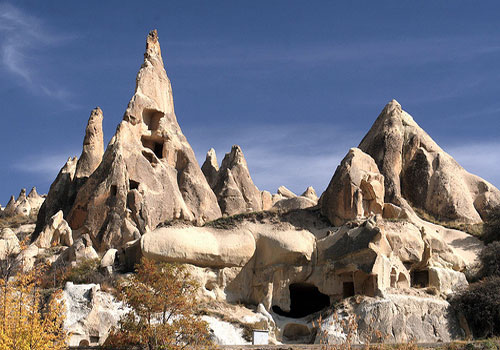
The different regions of Turkey offer an assortment of landscapes, activities and characters, and whether one is a history or archaeology enthusiast, a sun-worshipper, sailor, or city-lover keen on shopping, there is something on offer for everyone. Istanbul, with one part in Europe and the other in Oriental Asia, is a fascinating city with its frenzied market places, imperial residences and minarets, and sporting a lively ambience of contemporary art and musical entertainment. Cappadocia in Central Turkey offers an astounding landscape of eroded volcanic rock cones and fairy chimneys, remarkable subterranean cities and rock-hewn houses that merge harmoniously with the ochre-coloured landscape; while further south the 'Turquoise Coast' is a haven for boat cruises. One can enjoy a variety of water sports, sunbathe on golden sands, or explore the wonderful ancient cities of Troy and Ephesus on the shores of the Aegean Sea.
Most visitors concentrate on Western Turkey, with its picturesque seaside resorts along the Aegean and Mediterranean coasts, scenic and recreational attractions, well-preserved archaeological sites and fascinating museums that bring its rich history to life. Wherever one ventures in Turkey there is certain to be a warm welcome and traditional hospitality, making this a deeply satisfying corner of the world in which to travel.
Hagia Sophia (Aya Sofya)
Address: Sultanahmet Square Istanbul
Admission: 15 YTL Open daily except Mondays from 9.30am to 4.30pm
Telephone: (212) 518 1802
Famous for its impressive size, remarkable architecture and beautiful mosaics and frescoes, the massive ochre-coloured domed structure known as Hagia Sophia is one of Istanbul's most popular attractions. It was commissioned as a cathedral in the 6th century and remained the most important church in Christianity for over 900 years. In the 15th century Mehmet II conquered the city and converted it into a mosque, adding the minarets and fountains. It functioned as such for the next 481 years until the founding of the secular Turkish Republic in 1934 when it was declared a museum. Hagia Sophia is one of the greatest Byzantine buildings in the world, and the vast interior, with its huge soaring dome, is extraordinary. The interior contains different features from its time as a cathedral and then as a mosque, including incredible Byzantine mosaics, icons and marble columns, a mihrab (niche indicating the direction of Mecca), and Islamic calligraphy inscriptions on the dome from the Ottoman period.
Blue Mosque (Sultan Ahmet Camii)
Address: Hippodrome, Sultanahmet Istanbul
Admission: There is no charge for visiting the mosque, but the museum has a small entrance fee Open daily, access restricted during prayer times, especially at midday on Fridays. The museum is open from Tuesday to Saturday between 9am and 4pm
Telephone: (212) 518 1319 or (212) 518 1330 (for museum information)
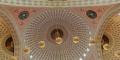
The Sultan Ahmet Camii, commonly known as the Blue Mosque, with its tiers of magnificent domes and six graceful minarets is one of the most striking and immediately distinguishable structures on the Istanbul's skyline. Constructed as an Islamic rival to the Hagia Sophia in 1609, it is one of the finest examples of Ottoman architecture and is still used by hundreds of worshippers. The interior is splendidly decorated with thousands of blue and white Iznik tiles embellished with traditional Ottoman flower patterns, and it is this special feature that gives the mosque its name. Its design of successively descending smaller domes, soaring columns and 260 stained glass windows leaves a lasting impression of graceful accord and open space. At the back of the mosque is a Carpet and Kilim Museum exhibiting antiques from all over Turkey.
Topkapi Palace Museum
Address: Topkapi Sarayi, Sultanahmet Istanbul
Admission: US$10 -15 depending on exchange rate; concessions available. The Harem can only be visited on a guided tour and a separate ticket is required Open daily except Tuesdays from 9am to 5pm
Telephone: (212) 512 0480
The Topkapi Sarayi, built by Mehmet the Conqueror as a Sultan's Palace, consists of a sprawling collection of buildings arranged around several interconnecting courtyards. Magnificently situated on one of the seven hills of Istanbul with uninterrupted views over the Bosphorus River and the Golden Horn, it was the seat of the Ottoman Empire for almost four centuries. Home to nearly 3,000 people, it served as royal residence, harem, state administration and military barracks. One of the most popular sections is the harem, once the quarters of about 300 women who were the sultans' wives and concubines, and their children. Visitors can view the apartments, halls and terraces of the harem, and see the lavish royal bedchamber and Imperial Hall. No expense was spared in decorating the palace and exquisitely designed rooms, intricately detailed fountains and gateways, and the splendid Treasury, housing one of the greatest collections of treasure in the world, afford insight into the opulent lifestyle of the sultans of the Ottoman Empire.
Turkish and Islamic Art Museum
Address: Ibrahim Pasa Sarayi, Atmeydani 46, Hippodrome, Sultanahmet Istanbul
Admission: 4 YTL Open daily except Mondays from 9.30am to 5.30pm
Telephone: (212) 518 1805
The grand 16th century palace of the sultan's Grand Vizier, Ibrahim Pasa, today houses the Turkish and Islamic Art Museum, containing what many consider to be the finest collection of Islamic artefacts in the world. The palace itself was the finest private residence ever built in the Ottoman Empire. From its supreme position overlooking the Hippodrome, the sultan could enjoy excellent views of the celebrations in the square below. The museum is well laid out and contains more than 40,000 examples of Selçuk, Mamluk and Ottoman Turkish art, including ceramics, Koran cases, calligraphy, textiles, metalwork and illuminated manuscripts. Its antique carpet exhibit is renowned; the carpets, kilims and prayer rugs forming one of the richest and oldest collections in the world.
Covered Bazaar (Kapali Çarsi)
Address: Kapali Çarsi, Beyazit to Eminönü Harbour Istanbul
Admission: Free Open daily except Sundays from 8.30am to 7pm
The oldest and biggest enclosed bazaar in the world, also known as the Grand Bazaar, is one of the most enticing and mesmerizing attractions in Istanbul. Consisting of a vast labyrinth of 65 twisting streets crammed with more than 4,000 shops, teahouses, hamams (Turkish baths), mosques, storehouses and fountains. It is a fascinating experience to wander around the alleyways, looking and enjoying, or bargaining and purchasing. Here you can find almost anything, from meerschaum pipes, carpets and jewellery, to Turkish Delight, textiles, spices, clothing and hand-painted ceramics. Protracted bargaining over a cup of tea is an important institution. Built during the rule of Sultan Mehmet the Conqueror in 1461, the bazaar grew by covering an increasingly large area of shops and streets with roofs, arches and domes, and it became the centre of trading during the Ottoman period. Caravans of silk traders traditionally stayed here and rested their camels while selling their merchandise, and many of these 'hans' or caravanserais still exist as storehouses today.
Ephesus
Address: Selçuk-Ephesus road Aegean Coast
Admission: US$4.75 (adults), concessions available Daily 8am to 6.30pm
Telephone: (232) 892 6402 or 892 6940
Ephesus is the biggest and best-preserved ancient city in the country and is one of the world's spectacular historical sites. The city was established with a harbour on the mouth of the Cayster River, and in the 2nd century BC it became the most important port and commercial trading centre in Anatolia, from Alexander the Great and the Hellenistic period to capital of Roman Asia under Augustus in 133 BC. The city went into final decline during the Byzantine era with the silting up of the harbour and by 527 AD it was deserted. The city is also important as the early seat of Christianity, visited by St Paul, whose letters to the Ephesians are recorded in the New Testament. The site needs little imagination to see what a functioning Roman city would have looked like, but guides are available and can offer a rich insight into the history and architecture of the ruins. Among the amphitheatres, murals and mosaics, baths, fountains, brothels and columns, the chariot-worn streets lead to some of the highlights, including the enormous Library of Celsus, the impressive Temple of Hadrian, a row of public latrines and the Grand Theatre where Paul preached to the Ephesians. The city was originally dedicated to the goddess Artemis and her once-magnificent temple was considered to be one of the Seven Wonders of the Ancient World.
Pamukkale
Address: Aegean Coast
Admission: US$4, and US$5 for a swim in the mineral water at the Pamukkale Thermal Open daily. The Pamukkale Thermal is open 8am to 8pm (to 5pm in winter)
Telephone: Pamukkale Thermal: (258) 272 2024
Calcium-rich mineral springs surging over the edge of a mountain plateau for thousands of years has resulted in an intriguing natural masterpiece. The rock formations of Pamukkale ('Cotton Castle') are a series of natural shelves and ridges, terraces that have been turned white from the solidified chalky calcium deposits left behind as the thermal waters tumble into further basins clinging to the cliff edge below. From a distance it appears to be a dazzling white fairytale castle, with a formation of tiers rising from the ground containing warm water pools. The hot springs have been used since Roman times to cure certain ailments. On the plateau is the Pamukkale Thermal enclosing the bubbling 'sacred pool of the ancients', the main source of the springs creating the white terraces, and its mineral waters are open for public bathing. Pamukkale is also the site of the ancient Roman spa-city of Hierapolis, and there are several ruins scattered about the area, including an impressive Roman theatre. It was considered a sacred site for its magic healing waters and was the weekend destination of kings and emperors of the Pergamum and Roman Empires.
Olympos and the Fires of Chimaera
Address: Çirali Mediterranean Coast
The ancient site of Olympos dates back to Hellenistic times when it was an important Lycian city and became famous as a place of worship honouring Hephaestos or Vulcan, the God of Fire. Located on a beautiful sandy bay, the ruins are spread out on either side of the Ulupinar River and include a Byzantine bathhouse with mosaic floors, a marble temple entrance, a theatre, and some excavated tombs. The shoreline is also a major protected nesting site for sea turtles. On the rocky slopes above the ancient city are a series of eternal flames issuing from cracks in the rock, caused by the combustion of natural gas seeping out of the mountain. It is possible to extinguish them briefly, but they will always re-ignite and are most impressive in the dark when at their most visible. The fire that comes out of the ground is said to be coming from the mouth of Chimaera, a mythical fire-breathing monster with the head of a lion, the body of a goat and a snake's tail, who was slain by the Lydian hero, Bellerophon on his winged horse, Pegasus.
Goreme Open-Air Museum
Address: The museum is about a mile (two km) outside the town Cappadocia
Admission: US$8.50 Daily 8am to 5.30pm
Telephone: (0)384 271 2167
The Goreme Open-Air Museum is the most visited of the monastic communities in Cappadocia and is one of the most famous sites in central Turkey. It is a complex comprising more than 30 rock-hewn churches and chapels containing some superb frescoes, dating from the 9th to the 11th centuries. Inconspicuous from the outside, the interiors are characteristically Byzantine with a central dome and a floor plan in the shape of a cross. The three columned churches, the Elmali, Karanlik and Carikli churches are the best known, and are superbly painted. The largest and best preserved is the Tokali Church, its interior walls covered in some of the richest frescoes in the region depicting scenes from the New Testament.
Underground Cities of Derinkuyu and Kaymakli
Address: Cappadocia
Admission: US$7 per city Daily 8am to 5pm
Central Cappadocia was overlooked by most as a dusty, infertile and barren landscape, making it a perfect refuge for the early Christians who established the first Christian communities here. They carved chambers, vaults and labyrinthine tunnels into the soft volcanic rock for use as churches, stables and homes. Of the 40 underground cities and settlements discovered in the area, Derinkuyu and Kaymakli are the biggest and most interesting, inhabited by Christians fleeing persecution in the 7th century and hiding from Arab invasions. These cities were well-hidden complexes, a safe and self-sufficient environment that could accommodate up to 30,000 people. The most thoroughly excavated is Derinkuyu, consisting of eight floors with stables, a school room and dining hall, churches, kitchens, living quarters, wine cellars, store rooms and a dungeon. Original airshafts still function and the maze of tunnels and rooms are well lit. Kaymakli is similar but smaller with only five of its levels having been excavated so far.
Ancient Troy
Address: 340 km (211 miles) west of Istanbul on the highway to Izmir Aegean Coast
For about 3,000 years the fascinating story involving the destruction of the prosperous city of Troy in a long war fought over the legendary beauty, Helen, was thought to be fiction. The story, told by Homer in the Iliad, was regarded as just a myth, until the ruins of the city were found in western Turkey at Hisarlik in the mid-19th century. Today the romantic story draws tourists and archaeologists alike to the site, where not a great deal remains to be seen beyond the ancient walls and a replica of the famed Trojan horse which enabled the final conquering of the city. The setting is also spectacular, offering views of the Dardanelles and the hills of Gallipoli. The recent Hollywood epic film, Troy, has revived interest in this piece of ancient history.
Goreme
Address: Cappadocia
The small town of Goreme is situated in the middle of the Valley of Fairy Chimneys, surrounded by the eerie shapes and fantastic rock formations that have made the region famous. It is one of the few remaining villages where fairy chimneys and rock-hewn houses are still inhabited, and several pensions, restaurants and cafes are carved into the rock. Its biggest attraction is the Goreme Open-Air museum with over 30 beautifully frescoed Byzantine rock churches. The town makes an excellent base from which to explore the surrounding rock formations, villages, vineyards and attractions. For shoppers, carpets and kilims are plentiful.
Anitkabir
Address: Entrance on Akdeniz Cad, Anitepe Ankara
Admission: Free 9am to 5pm Tuesday to Sunday
Telephone: (0)312 231 7975
The mausoleum of the founder of the Turkish Republic, Ataturk, is a revered monument in the city, accessed by a wide avenue lined with lion statues, drawing Turks from all over the country who come to pay their respects to their hero. It is also a fascinating attraction for visitors to Ankara, its stark, but imposing colonnaded aspect giving onto a courtyard, which contains a museum. The ceiling of the main hall is decorated with beautiful gold leaf mosaics, and there are plenty of reliefs and statuary to be admired.
Museum of Anatolian Civilizations
Address: Old city (Ulus) near the entrance to the Citadel Ankara
Admission: 10 YTL Daily except Monday 8.45am to 5.15pm
Telephone: (0)312 324 3160
The museum which charts the history of Asia Minor is housed in a lovely 15th-century restored building (originally a market and caravanserai) close to the centre of Ankara, and is the ideal place to visit for anyone intending to travel through Turkey, delving into the past. It is filled with fascinating collections of archaeological finds, from monolithic statues to delicate jewellery, including some from Catal Huyuk, believed to be the earliest known human social community in the world. From the Palaeolithic and Neolithic, and through all the great civilizations since, this museum is like a time machine for antiquity buffs.
Temple of Augustus
Address: Ulus Square Ankara
The Roman Temple of Augustus was built by the Romans in the 2nd century AD, and contains the best-preserved copy of Emperor Augustus' last will and testament, inscribed on the vestibule walls. The temple itself is in ruins and not open to the public, but together with other Roman ruins in the vicinity (including the Roman baths and the column of Julian) it is an exciting port of call for classical history addicts.
Ethnographic Museum
Address: Talat Pasa Boulevard, Namazgah Ankara
Admission: Daily except Monday 8.30am to 12.30pm, and 1.30pm to 5.30pm
When the founder of the Turkish Republic, Ataturk, died in 1938 he was buried in the internal courtyard of the building, which now houses the Ethnographic Museum, until he was moved to his final resting place at the imposing Mausoleum in Ankara in 1953. Today the Museum, guarded by an imposing bronze statue of Ataturk astride a horse, is well worth a visit. It contains a vast collection of folklore artefacts, including costumes, arts, crafts and art works.
Natural History Museum
Address: Eskisehir Road Ankara
Admission: Weekdays 9am to 5pm, weekends 10am to 3pm
Telephone: (0) 312 287 3430
Anyone with an interest in the natural world will enjoy Ankara's Natural History Museum, which contains some fascinating exhibits and dioramas detailing the (often extinct) wildlife of Anatolia, as well as a large collection of fossils and minerals. Most interesting are the fossilized footprints of humans who walked the Anatolian steppes 25,000 years ago, and the skeleton of a Maras elephant which lived in the area 193 million years ago.
Sunken Palace
Address: Istanbul
Admission: 9am to 5pm daily except Tuesday
Telephone: 212 522 1259
Also known as the Underground Cistern or Yerebatan Saray, this eerie cavern was built by Constantinople the Great around 532 AD and is held up below ground by 336 columns. Once a set for the James Bond film, From Russia with Love, the cavern today sees tourists crossing over 2 acres of 12 inch thick water, on wooden walkways, to take in the occasional art exhibit or marvel at the intricate design on the columns themselves. There is a pleasant little café topside where the eyes can adjust over some tea.
Galata Tower
Address: Galata Kulesi Sokak Istanbul
Admission: 9am to 6pm daily
Telephone: 212 293 8180
Erected as a bastion for the walls of the 14th century colony of Galata, the tower offers a 360º panoramic view of the old town. Today it is a sought-after conference venue, offering fine dining at the resident restaurant and belly dancing displays in its own night club.
Dolmache Palace
Address: Sultanahmet Istanbul
This second palace of the Ottoman Sultans was once the Sultan's harem and is an ostentatious interior of crystal chandeliers, the one adorning the grand hall weighing in at four tons (4,000 kg). On the exterior, the palace has an extensive and beautiful garden, yours for the strolling.
Istanbul Dolphinarium
Address: 2 4 Silahtaraða Caddesi, Fulya Istanbul
Admission: 20 TL (adult), 15 TL (child), free for children under 3
Telephone: (212) 581 7878
Kids on holiday in Istanbul will jump at a chance to visit the dolphinarium, its six pools home to a few dolphins and seals, as well as white whales and walruses. Children can swim with the dolphins, visit the toy store and learn many great sea-life facts while they're there. The restaurant or café are great for a snack or lunch break.
Sisli Science Centre
Address: Sisli Belediyesi Bilim Merkezi, Fulya Istanbul
Admission: 5 TL (adult), 4 TL (child)
Telephone: (212) 266 00 46
The fascinating world of science can be explored by children at the Sisli science centre in Istanbul. Interactive programs and animations cover a range of subjects from maths and physics to earthquakes and fire-fighting. Take a ride on the Bouncing Electrons or see the destructive force of a 7.4 magnitude earthquake.
Discovery Sphere Planetarium
Address: 5 Hasköy Caddesi, Hasköy Istanbul
Admission: 5 TL (adult), 3 TL (child) Daily; 10am to 5pm on weekdays, 10am to 7pm on weekends.
Telephone: (212) 369 6600
In a true space odyssey, kids can marvel at the wonders of the universe projected onto the walls of the Discovery Sphere Planetarium. They will be amazed at the night sky as it reveals infinite stars and the fascinating Milky Way. All children's space questions will be answered by the planetarium's friendly on-site specialists or the latest digital animation systems.
Yacht cruises
The coastline along the Aegean and Mediterranean Sea holds a wealth of islands, hidden coves and inlets, rocky peninsulas, bays and secluded beaches that are ideally explored by yacht. A Blue Voyage, or cruise along Turkey's Aegean or Mediterranean shores, is one of the most favoured ways of seeing the coast. Tours can last from a few days to a few weeks aboard traditional Turkish 'gulets' (sturdy wooden yachts), which can be charted with experienced crews, and well-established marinas provide yachtsmen with the services and provisions they require. Bodrum, Marmaris and Fethiye are the main yacht charter ports.
Taksimoda Café
Address: Taxim Hill Hotel, Sýraselviler Caddesi 5, Taksim Istanbul
Food Type: Café
This New York-style café has excellent views of the bustling Taksim Square, as well as a stunning summer terrace to enjoy. While the menu offers everything from Mexican to traditional Turkish cuisine, the café is renown for its fantastic coffee and cake selection. Open daily for breakfast, lunch and dinner. Reservations recommended.
360 Istanbul
Address: Misir Apartmani K8, 311 Istikal Caddesi, Beyoglu Istanbul
Food Type: Fusion
An aptly named restaurant, 360 is situated on a rooftop terrace and has beautiful views and a sleek concrete and glass design. The menu offers fusion cuisine featuring Turkish, Mediterranean and Oriental ingredients. Signature dishes include the '360 Alternative pizza' and their 'Death by Chocolate' is phenomenal! Open for lunch and dinner Monday to Friday, and dinner only on weekends. Reservations required.
Cezayir
Address: Hayriye Cad. 16, Beyoglu Istanbul
Food Type: Turkish
Cezayir serves Turkish cuisine with an international influence; Indian spices are used in a Turkish samosa, and other menu favourites include the salmon carpaccio and the 'börek' grilled spinach and cheese pastry. With wicker chairs and pale yellow walls, the mood in this restaurant is very calm and relaxed. Open daily for breakfast, lunch and dinner. Reservations essential.
Asitane
Address: Kariye Camii Sokak 6, Edirnekapi Istanbul
Food Type: Turkish
Set in a 19th century mansion overlooking the Golden Horn, Asitane (one of Istanbul's Ottoman Empire names) serves authentic Ottoman cuisine, featuring Central Asian, Anatolian, Middle Eastern and Balkan influences and 500 year-old recipes. Veal in apple sauce and cinnamon flavoured chicken kebabs are just two of the delicious menu options. Open daily for lunch and dinner, and brunch on Sundays. Reservations recommended.
Çintemani Restaurant
Address: Ritz-Carlton, Askerocagi Cad. 15, Sisli Istanbul
Food Type: International
Çintemani is both chic and laid-back, yet functions with all the efficiency of its Ritz-Carlton host. Its varied menu features cuisine with Mediterranean and Asian tastes, as well as local favourites. Try the pistachio crusted lamb loin with sautéed spinach and pestil sauce and keep space for the rice pudding with homemade ice-cream. Open daily for breakfast, lunch and dinner. Reservations required.
The House Café (Ortaköy)
Address: Salhane Sokak 1, Ortaköy Istanbul
Food Type: Café
Boasting two terraces on the Ortaköy's waterfront, this trendy restaurant's décor blends beautifully with its seaside location. While the menu features excellent seafood dishes, the pizza with pears, honey and Roquefort is also sublime. Open daily, reservations required.
Körfez
Address: Körfez Cad. No:78 Kanlýca Istanbul
Food Type: Seafood
The Körfez lies nestled in a cove on the Asian side of the Bosphorus Straight, with tables set on a deck right over the water and a view of the bridge. Körfez is often purported to be the best seafood restaurant in Istanbul; start the meal with Turkish vegetable starters or from a selection of seafood appetisers. Fish meals are salted lightly and grilled to perfection. The restaurant provides a ferry for customers coming to dine there from the European side of the straight. Open daily except Mondays. Reservations essential.
Feriye Lokantasi
Address: Çýraðan Cad. 40 Ortaköy Istanbul
Food Type: Local
The Feriye Lokantasi is a multi-purpose venue with its own bar, café, conference hall and two separate seasonal venues for the one restaurant. The best way to enjoy this facility is on the outdoor terrace on a balmy summer evening. The menu, like the venue, is flexible and based on what is seasonal, offering Turkish cuisine cooked in the ottoman tradition. The menu offers delicious meals such as grilled turbot, with saffron and courgette balls, in raspberry puree. Open daily for lunch and dinner, reservations required.
Mikla
Address: Mesrutyiyet Cad. 167, Tepebasi Istanbul
Food Type: Mediterranean
Located on the top two floors of the 18 storey Marmara Pera Hotel, this gourmet restaurant offers a glorious 360º vista of the lights of Old Town. Chef and owner Mehmet Gürs prepares Turkish and Scandinavian meals such as sautéed scallops with vegetable risotto, and ragu beef cheeks with porcini mushroom soup. An absolute favourite is the lamb escargot for mains, followed by a tachio and tahini ice-cream dessert. Reservations essential.
Saf
Address: Club Sporium (Mayadrom Arkasý), Cumhuriyet Cad. 4/8 Akatlar Istanbul
Food Type: Organic
Saf cuisine can be enjoyed at Hayal Kahvesi in Club Sporium Akatlar, perfect for a light meal after a good workout or an afternoon by the pool. The menu offers fresh organic food such as a 'Taco Trio' with Mexican pâté, guacamole, salsa and sour cream. Open daily for breakfast, lunch and supper, reservations recommended.
Personalise this page
- London:
Voltage230 VFrequency50 Hz
- New York City:
Voltage120 V Frequency60 Hz
- Hong Kong:
Voltage220 V Frequency50 Hz