South Africa Travel Guide
South Africa has been billed as 'a world in one country', and any visitor who has experienced its delights, from the jumble of Johannesburg, the city built on gold mines in the north, to the sophistication of Cape Town in the south, is bound to agree.
Throughout the second half of the 20th century South Africa was regarded by most of the world as a pariah state where the ruling white minority passed a range of draconian laws to subdue and enslave the black majority. All this changed in 1994 with the release from prison of world-renowned freedom fighter and icon of the oppressed, Nelson Mandela. A new age of democracy was ushered in, and South Africa was suddenly revealed to the world in her beautiful true colours: a rainbow nation with a kaleidoscope of cultures and a host of attractions to enthral and entrance visitors.
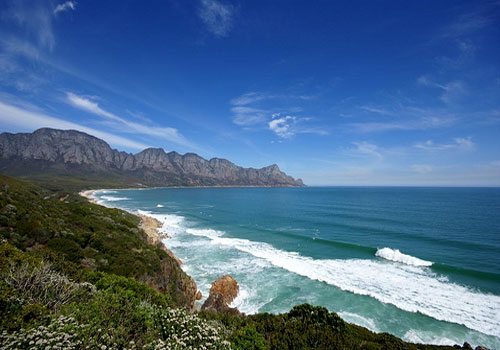
A decade later tourists are flocking to sunny South Africa in droves, particularly to the Western Cape with its magnificent scenery, beautiful beaches, majestic mountains and green winelands.
The Republic, at the southern tip of Africa surrounded by ocean on three sides, offers a taste of the African experience with the chance to visit traditional tribal villages, game reserves and sprawling townships. At the same time it also offers all the pleasures of a first world holiday experience, with luxury hotels, sophisticated shopping, exciting theme parks and clean beaches. Have breakfast in a New York style deli; lunch in an African shebeen; cocktails on a sunset cruise; and dine in style in a fine British colonial restaurant. This is all possible in a South African city.
It is not only cultural diversity that makes South Africa magical. The country has a wealth of animal and plant life scattered across its varied climactic zones from desert to snow-covered mountains, forests to grasslands and mangrove swamps. Historically, too, there is plenty to discover, from the fossils of ancient hominids, to the pioneering spirit of the Dutch 'voortrekkers' and the settlement of the Eastern Cape frontier by the British colonialists.
Kruger National Park
Address: Johannesburg
Admission: R132 (foreign adult), R66 (foreign child under 12) per day; R33 per day for South African residents Park gates: daily 5.30am to 6.30pm (January, February, November and December), 6am to 5.30/6pm (March to October). Camp gates open 4.30am (January), 5.30am (February, March and October to December), 6am (April to September); closing times same as park gates
Telephone: 013 735 4000
The Kruger National Park is South Africa's oldest, largest and best-known wildlife conservation area, home to a huge variety of wildlife and most famous for its 'Big Five' viewing opportunities. Visitors have an excellent chance of seeing lion, elephant, leopard, buffalo and rhino among the enormous variety of wildlife, including over 140 species of mammals, 500 species of birds, reptiles and amphibians. Situated on South Africa's north eastern border, Kruger is a primary destination for international tourists, and is visited by more than half a million local and international people every year who are attracted by the different safari options as well as the park's excellent range of visitor facilities and choice of accommodation, from luxurious game lodges to cottages and camping.
Table Mountain
Address: Tafelberg Road Cape Town
Admission: Cable car: R145 return, R74 one way (adults); R76 return, R38 one way (children under 18). Other concessions available. Bookings are not available due to changeable weather conditions Cable car operates daily (weather permitting) every 10-15 minutes from 8am to 8pm (November); 8am to 10pm (December to January); 8am to 8.30pm (February); 8am to 7.30pm (March); 8am to 6.30pm (April); 8.30am to 6pm (May to mid-September); 8.30am to 7pm (16 September to October). Closed for annual maintenance for about three weeks in July and August
Telephone: 021 424 8181 (weatherline) or 021 424 0015
Cape Town's most popular tourist attraction is also its most famous physical feature, the flat-topped mountain that stands sentinel over the city. Table Mountain has been proclaimed a nature reserve, protecting its diverse floral species, some unique to its slopes. The views from the top of the mountain are quite spectacular. A Swiss-built rotating cable car carries visitors smoothly up the mountain and back. The mountain-top is equipped with a restaurant and small gift shop, as well as numerous pathways and vantage points. It is possible to climb the mountain via different routes, but inexperienced hikers should take care because Cape Town is prone to sudden weather changes. The walk up can take anything between one and four hours depending on the route and level of fitness. Route maps can be bought at the cable-car station. It is always best to check the website or call the weatherline to see if the cable car is in operation.
Castle of Good Hope
Address: Buitenkant Street, opposite the Grand Parade Cape Town
Admission: R20 (adults), R10 (children); half-price on Sundays. Concessions available Daily 9am to 4pm, with tours at 11am, 12pm and 2pm from Monday to Saturday. Self guided tours are possible with the aid of a map, provided by the Castle
Telephone: 021 787 1249
South Africa's oldest building, the Castle was completed in 1679 (replacing an earlier mud and timber fort built by the first Dutch Governor, Jan van Riebeeck). Situated adjacent to a parking lot and bus station in Buitenkant Street, its walls mark the original boundary of the seashore where the waves washed up against the fortifications. Its outside aspect is somewhat foreboding, but inside are some interesting features and collections that have been restored, offering a good insight into the early days of the Cape when it was the centre of social and economic life. The castle is a pentagonal fortification with a moat and five bastions, each named for one of the titles of the Prince of Orange. The entrance is a good example of 17th century Dutch Classicism, and a bell, cast in 1679 by Claude Fremy in Amsterdam, still hangs from the original wood beams in the tower above the entrance. The castle contains a Military Museum depicting the conflicts that arose during the Cape's early settlement, and also houses the William Fehr Collection of decorative arts, including paintings, furniture and porcelain. Of interest are the dungeons, which bear the graffiti carved by prisoners incarcerated here centuries ago.
South African Museum and Planetarium
Address: 25 Queen Victoria Street, Gardens Cape Town
Admission: Museum: R10 (adults), R5 (children), free on Saturdays; Planetarium: R20 (adults), R6 (children) Daily 10am to 5pm. Planetarium shows Monday to Friday at 2pm and Tuesday evening show at 8pm; Saturday and Sunday 12pm, 1pm and 2.30pm
Telephone: 021 481 3800 (museum), 021 481 3900 (planetarium)
The imposing South African Museum, dedicated to natural history and the human sciences, contains a huge variety of fascinating exhibits from entire chunks of caves bearing rock art, to traditional arts and crafts from several African tribes. The natural history galleries are full of mounted mammals, dioramas of prehistoric reptiles and a collection of whale skeletons, which can be viewed with the eerie sound of whale song echoing in the background. Alongside the museum is the Planetarium, which has a changing programme of thematic shows involving the southern constellations.
Greenmarket Square
Address: Cape Town
Admission: Greenmarket Square open daily till 3pm, closed Sundays. Old Town House open Monday to Saturday from 10am to 5pm
Situated in the Central Business District, near the main station, is Greenmarket Square, the perfect spot to observe South Africa's 'rainbow nation' in all its hues. Once the scene of slave markets, this is the site of one of the city's most vibrant flea markets, where clothing, jewellery, knick-knacks and souvenirs are on sale every day, and tourists and business people rub shoulders in the many sidewalk cafes that surround this busy cobbled square. Be prepared to haggle at the market to get the best prices and be warned, touts are prevalent. On the west side of the square is the Old Town House, dating from the mid-18th century, which is a wonderful example of Cape Dutch architecture and houses the Michaelis collection of Dutch and Flemish landscape paintings.
St George's Cathedral
Address: Wale Street Cape Town
Telephone: 021 424 7360 (Cathedral office)
Cape Town's Victorian Gothic style Anglican Cathedral, founded in 1901, is situated in Wale Street and is historically significant for it is where the enthronement of South Africa's first black archbishop, Nobel Peace Prize winner Desmond Tutu, took place. The Cathedral is unique in that it became a political powerhouse in the struggle against Apartheid, known as 'the people's cathedral', stating openly from the 1950s onwards that it was open to all people of all races at all times. This was a brave stand in the racially segregated society of the time. In subsequent years the cathedral became the venue for many protest gatherings and vigils and on occasions the building was surrounded by police, water cannons and barbed wire. Victims of forced removals were even accommodated in the cathedral at times. As far as architectural merit goes, the cathedral does feature some fine Gabriel Loire windows, including a magnificent Rose Window above the south transept.
Kirstenbosch Botanical Gardens
Address: Rhodes Drive, Newlands Cape Town
Admission: R30 (adults), R5 (children 6-18). Concessions available. Concert fees are applicable on Sunday afternoons during the Summer Sunset Concert series Daily 8am to 6pm (April to August); 8am to 7pm (September to March)
Telephone: 021 799 8783
Five miles (eight km) south of the city centre lies the magnificent Kirstenbosch National Botanical Gardens, covering a huge expanse of the rugged south-western slopes of the Table Mountain range. Kirstenbosch was bequeathed to the nation by mining magnate Cecil Rhodes in 1895, and today contains more than 22,000 plants, a research unit, botanical library and nursery. Numerous paths meander through the gardens, including a Braille route for the blind, which are full of lush shrubs and 'fynbos', the Cape's indigenous floral heritage. A tearoom, restaurant and coffee bar are on site. In summertime the delightful setting becomes the venue for Sunday evening open-air concerts, when picnickers relax on the lawns, sipping Cape wine, and enjoying the sunset entertainment.
Beaches
Address: Cape Town
Cape Town has some great beaches, but the most easily accessible are on the Atlantic Ocean where the water is unbelievably cold; the locals rarely venture in beyond knee-high depths. The most popular is Camps Bay beach; a long, wide stretch of golden sand packed with locals and tourists alike and backed by a strip of fashionable bars and restaurants. Just towards town is Clifton, whose four beaches, imaginatively called First, Second, Third and Fourth, are situated beneath exclusive houses and apartments set into the cliff that protects sunbathers from the harsh southwesterly wind. First Beach is the largest and most popular with families (the steps are shorter), Second Beach is preferred by the 'camp' and 'hip' crowd, and Third and Fourth are usually frequented by well-toned locals and, when the waves are up, surfers. The small suburb of Llandudno, 15 minutes south of Camps Bay, is home to another excellent beach and is popular with locals from the Southern Suburbs or those keen to avoid the crowds. There are no bars or restaurants here, the nearest being at Hout Bay, another 10 minutes south. Hout Bay's long beach is popular with families and walkers but is not as stunning as its neighbours.
Robben Island
Address: Cape Town
Admission: Tours are R150 (adults), R75 (children 4-17), which includes the return boat trip across Table Bay Boats leave at 9am, 10am, 12pm, 1pm, 2pm and 3pm (weather dependent)
Telephone: 021 409 5100 or 021 413 4200
South Africa's most widely known tourist attraction is probably Robben Island, seven miles (11km) from Cape Town in the centre of Table Bay. For nearly 400 years this tiny rocky island outcrop was utilised as a place of banishment, exile, isolation and imprisonment for numerous categories of people ostracised by society, ranging from political protestors to lepers. During the years of Apartheid, Robben Island became synonymous with institutional brutality as numerous freedom fighters, including the island's most famous resident Nelson Mandela, were imprisoned here for more than a quarter of a century. The island is now a museum, symbolising liberation and the triumph of the human spirit. Regular island tours are conducted, lasting three and a half hours. The tours, which are guided by former prisoners, include a visit to the maximum-security prison on the island where an estimated 3,000 freedom fighters were incarcerated between 1962 and 1991.
District Six Museum
Address: 25A Buitenkant Street Cape Town
Admission: R15 (adults), R5 (children) Monday 9am to 3pm, Tuesday to Saturday 9am to 4pm
Telephone: 021 466 7200
Until the 1960s, District Six was a vibrant district of Cape Town, close to the city centre and the harbour. In 1966 the government declared District Six a 'whites only' area under the Group Areas Act and over 60,000 residents were forcibly moved to the outlying Cape Flats, a barren area several kilometres away, and their homes flattened by bulldozers. Communities and families were uprooted and torn apart, and this moving museum serves to safeguard the memories and the spirit that was District Six. The museum houses an impressive collection of historical materials, including photographs and relics such as street signs, much of which were donated by former residents. The museum also offers a guided tour of the area led by an ex resident, but these must be booked in advance.
Chapman's Peak
Address: Cape Town
Admission: Chapman's Peak Drive is operated as a toll-road. Light motor vehicles cost R23 Open 24 hours; the road closes occasionally due to heavy rainfall, or rockfalls
Telephone: 021 791 8222
Chapman's Peak Drive is one of the most spectacular coastal roads in South Africa, linking the seaside community of Hout Bay to the Noordhoek Valley along the Atlantic Coast, with breathtaking views from along the narrow, winding road blasted into the cliffs. Constructed in 1915, the six-mile (9km) route took about seven years to complete and was built as a shorter, alternative route between Cape Town central and the South Peninsula. Many visitors use this scenic route to reach Cape Point Nature Reserve situated at the tip of the Peninsula.
Victoria & Alfred (V&A) Waterfront
Address: Cape Town
Admission: Aquarium: R76 (adults), R35 (children 4-17). Concessions available Aquarium: daily 9.30am to 6pm
Telephone: 021 408 7600, or 021 418 3823 (aquarium)
This working harbour, historical site and shopping and entertainment development has become one of Cape Town's most visited tourist attractions. The waterfront offers everything from shopping malls, and arts and crafts markets, to live music, cinemas, buskers and a variety of festivals throughout the year. There are also more than 70 eateries ranging from pubs and fast food outlets to five star restaurants, luxury hotels, and a variety of boat trips, harbour cruises and helicopter charters. The Two Oceans Aquarium is the largest of its kind in Africa and is an impressive display of life in the oceans surrounding the Cape Coast (www.aquarium.co.za).
Simonstown and Boulders Beach
Address: Cape Town
Admission: Boulders Beach Penguin Colony: R15 (adults), R5 (scholars)
A recommended day excursion from the city includes a trip through the southern suburbs and along the scenically beautiful False Bay coastline via Muizenberg to Simonstown, South Africa's principal naval base. Simonstown lies about 25 miles (40km) from the city and is a quaint town built around a naval dockyard, with well-preserved Victorian buildings, museums, sidewalk cafes and local legends to learn about. One such legend is about a dog called 'Just Nuisance' who 'joined' the British navy, becoming their mascot, when Simonstown was a British base. A short distance from the town is Boulder's beach, famous for its protected colony of African Penguins (formerly Jackass Penguin) that can be viewed from the boardwalks.
Cape Point
Address: Cape Town
Admission: R75 (adults), discounts for children under 12. Funicular: R33 one way (adults) or R43 return, concessions available Daily 6am to 6pm (October to March), 7am to 5pm (April to September). Funicular: 9am to 6pm (summer), 9am to 5.30pm (winter)
Telephone: 021 780 9010/11
Most visitors to Cape Town are keen to make a day trip 40 miles (65km) from the city to the Cape of Good Hope Nature Reserve, not only to take in its floral diversity in what at first sight appears to be a bleak landscape, but to stand at the top of the towering promontory at the most southerly point of the Cape Peninsula (not of Africa, visitors must go further afield to Cape Agulhus for this). From the viewpoint and lighthouse at Cape Point, reached via a funicular, it is awesome to watch the thundering waves crashing at the base of the cliffs 686ft (209m) below. The reserve itself is worth exploring, particularly on foot, for those interested in birds and botany. The restaurant at Cape Point has a terrace offering spectacular views. Resident baboons here enjoy the spoils from tourists' snacks - particularly their ice-cream; they can be quite aggressive. Because feeding of the baboons carries a stiff penalty, it is worth ensuring there are no free lunches for these hirsute scavengers!
Bayworld
Address: Beach Road, Humewood Port Elizabeth
Admission: 1 December to 31 January and Easter holidays: R37 (adults) and R19 (children). R35 (adults) and R17 (children) at other times. No 7 Castle Museum: R9 (adults), R5 (children) Museum, Oceanarium and Snake Park: daily 9am to 4.30pm, dolphin and seal shows are twice daily at 11am and 3pm
Telephone: 041 584 0650
Port Elizabeth's most popular attraction consists of a complex on the beachfront that includes the Oceanarium, a museum, and a snake park. The Bayworld Oceanarium is famed for its performing Bottlenose dolphin shows, enjoyed by thousands every year. Besides the large dolphin pool with its underwater viewing area, the oceanarium also features an aquarium tank where visitors can watch a vast array of marine life through glass portholes as they glide by, including sharks, turtles and rays. The snake park contains an impressive variety of indigenous reptiles in natural-looking enclosures. The PE Museum focuses on cultural and natural history with a wide variety of exhibits, from models of sailing ships and period costumes to giant replicas of dinosaurs that roamed the area in prehistoric times; it is the third-oldest museum in the country.
Market Square
Address: Port Elizabeth
Port Elizabeth's architectural heritage can be traced by taking a walk around the central city Market Square, which features several historic buildings. The centrepiece of the square is the aesthetically pleasing City Hall, dating from 1858, topped with an attractive clock tower. Also in the square is a replica of the Diaz Cross that commemorates the first European to set foot in Algoa Bay in 1488, when Portuguese explorer Bartholomew Diaz stopped over on his way east. Alongside the city hall is the Prester John Memorial, dedicated to the Portuguese explorers who landed in South Africa. On the northwest flank of the square is the city's public library, built in 1835 and originally used as a courthouse. The beautiful building is regarded as an excellent example of Victorian Gothic architecture and is interesting in that its façade was manufactured in England and shipped to Port Elizabeth to be recreated piece by piece. In front of the library stands a marble statue of Queen Victoria, which was unveiled in 1903. Slightly downhill from the square, at the entrance to the harbour, stands the Campanile, containing the biggest carillon of bells (23) in the country. Visitors can climb 204 steps to enjoy the view from the top of this monument, which commemorates the landing of the 1820 settlers.
Donkin Reserve
Address: Port Elizabeth
On a hill above the centre of the city stands a stone pyramid monument with an adjacent lighthouse. The open public space was proclaimed in perpetuity by Sir Rufane Donkin, acting British Governor of the Cape, when the 1820 Settlers arrived in Algoa Bay. Donkin named the new settlement after his wife, Elizabeth, who had died in India two years' previously, and erected the pyramid in her memory. The lighthouse was built in 1861, and today houses the city's Tourist Information Centre. Maps are available from the centre describing a three-mile (five km) discovery trail through the hill area and central city, taking in 47 historic sites and architectural delights.
St George's Park
Address: Port Elizabeth
St George's Park has been a recreational centre for the city for more than 150 years, boasting well-landscaped gardens covering 73 hectares. On site is the world famous Port Elizabeth Cricket Club, scene of many an exciting test match series, and the oldest bowling green in South Africa. The park also features the 1882 Edwardian Pearson Conservatory, a national monument filled with orchids, water lilies and other exotic plants. Every second Sunday of the month the park plays host to a vibrant arts and crafts fair. The other major park in Port Elizabeth is Settler's Park, set in the Baakens River valley, which boasts indigenous flora and fauna and offers a delightful stroll along the riverbank.
Addo Elephant Park
Address: Port Elizabeth
Admission: R100 (foreign adult), R50 (foreign child); South African residents pay R25 per day Daily 6am to 5.30pm
Telephone: 042 233 0556
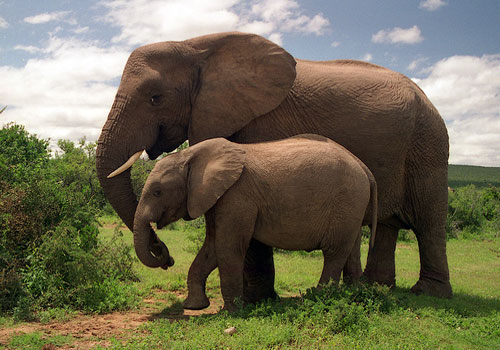
The most popular game reserve in the Port Elizabeth area is the Addo Elephant Park, just a 45-minute drive from the city. There are currently more than 300 elephants in residence in the park, which was recently enlarged. Addo was proclaimed in 1931 in an effort to save the remaining 11 elephants indigenous to the area. The elephants are drawn to watering holes at certain times and sightings are virtually guaranteed all year round. There are other animals in the park too, including black rhino, buffalo, zebra, warthog and several types of buck. Guided game drives are available or visitors can do a self-drive tour using the map issued at the entrance. Serviced accommodation is available and there is a restaurant and picnic site at the Park.
Shamwari Game Reserve
Address: Port Elizabeth
Telephone: 041 407 1000
The multi-award winning private game reserve of Shamwari lies less than an hour's drive from Port Elizabeth and has been responsible for re-introducing numerous species into the Eastern Cape plains, including all of the Big Five - lion, elephant, rhino, leopard and buffalo. The reserve offers luxury accommodation, but also hosts visitors on day trips from the city. Day tours include a visit to an African art and culture village to sample Xhosa culture and traditionally brewed beer, and a visit to the Born Free centre for abused animals.
Grahamstown
Address: Port Elizabeth
The historic settler town of Grahamstown, 78 miles (125km) northeast of Port Elizabeth, is presided over, from the top of Gunfire Hill, by the 1820 Settler's National Monument, an arts and theatre complex which forms the focus of the town's annual internationally recognised Arts Festival held in July. Grahamstown was founded in 1815 as a garrison to drive the Xhosa eastwards across the Fish River frontier, giving rise to a century of frontier war. The town has an English colonial flavour, and is home to the renowned Rhodes University and some top private boarding schools. There are several museums, including the JLB Smith Institute of Ichthyology where two stuffed specimens of the coelacanth are on display. The town also boasts the only Victorian camera obscura in the southern hemisphere.
Jeffrey's Bay
Address: Port Elizabeth
A short drive to the west of Port Elizabeth is the surfing Mecca of Jeffrey's Bay (known colloquially as 'J-Bay'). The seaside town plays host to the world Billabong Professional surfing contest every July, and is famed for its 'supertubes', South Africa's perfect wave. The town is bustling, with several stores selling branded surfing gear, and several flashy cafes and restaurants. The long stretches of sandy beach around the town are also renowned for their shells.
Francis Farewell Square
Address: Durban
This historic square in the middle of Durban is the spot where the city originated as a tiny settlement of itinerant traders and hunters in the early 19th century. It is named for Henry Francis Flynn, one of the prominent inhabitants of the time. Around the square are some interesting sights, particularly the 1910 City Hall on the south side, which is an exact replica of the City Hall of Belfast, Ireland. On the first floor of the City Hall is the Natural Science Museum with an interesting insect section; on the first floor is the renowned Durban Art Gallery. Various musical, song and dance performances are held on the City Hall steps every Wednesday at 1pm. Alongside the City Hall is Durban's local history museum housed in the Old Court House, which was the first public building ever erected in Durban, in 1866.
uShaka Marine World
Address: 1 Bell Street Durban
Admission: Combined tickets: R135 (adult), R90 (children). Sea World: R92 (adults), R62 (children); Wet 'n Wild: R70 (adults), R55 (children); other concessions available Sea World: Daily 9am to 6pm, Island activities closed Mondays. Wet 'n Wild: Wednesday to Sunday 9am to 6pm. Open daily on public holidays and during government school holidays
Telephone: 031 328 8000
In January 2004 Sea World closed its doors to the public and reopened as uShaka Marine World, which has become the largest marine theme park in Africa. The park is tastefully themed with African imagery and has five zones offering entertainment, dining, a retail village, water slides and access to uShaka Beach. The Sea World zone incorporates an aquarium, dolphinarium, a seal pool and penguin rookery, as well as interactive activities in the dive tank, snorkel reef and touch pool, while Wet 'n Wild offers heart-stopping, adrenalin-pumping rides as well as water-based activities for the less adventurous.
KwaMuhle Museum
Address: 130 Ordinance Road Durban
Admission: Monday to Saturday 8.30am to 4pm; Sundays and public holidays 11am to 4pm
Telephone: 031 311 2223
The notorious building that was once the 'Department of Native Affairs' where every black South African in Natal was required to register in the days of Apartheid, now houses a museum dedicated to tracing the history of racial laws in Durban, including memorable video and photographic exhibits. Despite this the building is known to all as KwaMuhle, meaning 'place of the good one', the name honouring a white man who ran the department but did his best to fight the system within its constraints.
Juma Masjid Mosque
Address: Grey Street Durban
Admission: Weekdays 9am to 4pm and Saturday mornings. Tours are recommended
Telephone: 031 304 1518
The magnificent Juma Masjid Mosque, the largest mosque in the Southern hemisphere, dominates Durban's central Indian district. It's gilt-domed minarets tower over the bustling commercial area, but inside the marbled worship hall is peaceful and boasts a simple elegance. Tours of the mosque can be arranged. Around the mosque, on Grey Street, are several Indian food outlets, most offering the uniquely Durban 'bunnychow' (half a loaf of bread scooped out and filled with curry). Off of Grey Street is the Madressa Arcade bazaar. Also in the area is the brightly painted Victoria Street Market (on the corner of Queen and Russell streets) offering incense, henna tattoos, spices and other exotic goods.
Durban Botanic Gardens
Address: 70 St Thomas Road Durban
Admission: Daily 7.30am to 5.45pm. 5.15pm in winter
Telephone: 031 2011 303 or 031 309 1170 (tour bookings)
Durban's botanical gardens are renowned for having the finest collection of plantlife anywhere in Africa. Established in 1851 the gardens, on Sydenham Hill Road west of the Greyville Race Track, are the city's oldest natural attraction, providing a relaxing spot to stroll among huge indigenous and exotic trees, and the stunning orchid house display. The gardens are also abuzz with birdlife and boast a lovely tea garden.
The BAT Centre
Address: SAS Inkonkoni Building, 45 Maritime Place, Small Craft Harbour, Victoria Embankment Durban
Admission: Monday to Friday 9am to 5pm; Saturday 10am to 2pm
Telephone: 031 332 0451
On the Victoria Embankment beside the Durban harbour is a haven for traditional artists known as the BAT Centre (an acronym for Bartle Arts Trust). The centre features an enormous studio where artists work, a theatre, exhibition galleries and a restaurant serving authentic African dishes. There are stunning views of the harbour from the restaurant deck. Nearby is the Maritime Museum, which details the history of the harbour and houses a restored tugboat and other interesting exhibits.
Zululand Battlefields
Address: Durban
Telephone: 031 366 7500 (Tourism KwaZulu-Natal)
Zululand, ancestral home of the Zulu people and site of many a bloody battle between the British, the Boers and the Zulus during the 19th century, is best explored as a self-drive adventure, although many tours are available from Durban. Every town in this area of northern KwaZulu-Natal has a story to tell or an event to commemorate and tourism offices throughout the region provide maps and guides to assist visitors in making the most of the history, culture, scenery and wildlife. The landscape varies from plains, to rolling hills, river valleys and lush forests. This land once encompassed the Zulu kingdom led by legendary Shaka Zulu, who clashed with the British and the Boers in many epic battles. Centre of the Zulu nation is the small town of Eshowe. King Shaka was born close to the town, and it was also the site of a 10-week siege during the Anglo-Zulu War of 1879. Other towns of note are Ladysmith and Dundee, near which were fought the historic battles of Rorke's Drift, Blood River and Isandlwana. There are numerous 'living museums' in the form of Zulu cultural villages open to visitors in the area.
Greater St Lucia Wetland Park
Address: Durban
Admission: Entrance to St Lucia village is free. An entrance fee is applicable to all the reserves Open 24 hours daily, office hours are daily 8am to 4.30pm
Telephone: 033 845 1000 (KZN Wildlife)
In the far north of Kwa-Zulu Natal are a string of nature reserves and game parks, of which the largest and most exciting is the Greater St Lucia Wetland Park, dominated by the fascinating St Lucia estuary and lake system. It covers five distinct ecosystems varying from dry thorn scrub to tropical forest and is bordered by giant dunes, beaches and tropical reefs. Big Five game viewing is on offer, and this is the only place in the world where you will see hippos, crocodiles and sharks co-habiting in the same lagoon. There are comfortable rest camps in the park. The Wetland Park has been declared a UNESCO World Heritage Site.
Midmar Dam
Address: Durban
North-west of Durban in the Midlands of KwaZulu-Natal is the Midmar Public Resort Nature Reserve, offering accommodation, picnic sites and recreational opportunities around the huge Midmar Dam. At the main entrance is the Midmar Historical Village, a reproduction of a 19th century redbrick village with tree-lined streets, a village church and Hindu Temple. Many of the buildings are originals that have been relocated to the site from towns and villages elsewhere in the province. There are also vintage steam train rides on offer and Shire horse carriage rides, as well as several shops, restaurants and exhibition halls. Midmar is also the centre of the Midlands Meander arts and crafts route, which winds through the Midlands along the R103 road, taking in more than 65 participating attractions dotted across the countryside, ranging from herb farms to antique shops and artists working with stained glass. The huge dam stages the annual Midmar Mile, the world's largest open water swim.
Drakensberg Mountains
Address: Durban
Telephone: 031 366 7500 (Tourism KwaZulu-Natal)
The jagged peaks of the Drakensberg (Dragon Mountains) tower over the eastern border of Kwa-Zulu Natal with Lesotho, providing a paradise for outdoor enthusiasts. The mountains abound with hiking trails, climbing routes, 4x4 trails, pony treks and adventure pursuits, all accessible from numerous resorts in the lower reaches. Some of the more popular resorts are Champagne Castle, Cathkin Peak and Cathedral Peak, while Giant's Castle and its game reserve are famed for the more than 500 rock paintings left behind by the San people on cave walls. Eagles soar around the peaks in the Royal Natal National Park in the north, where the dramatic scenery includes the Amphitheatre, a five-mile long (8km) curved basalt wall. The region is largely untamed, and criss-crossed by lengths of rugged dirt roads. The only road that breaches the mountain range and crosses the border to Lesotho is the hair-raising Sani Pass, which is topped by the highest pub in Africa.
Gold Reef City
Address: Johannesburg
Admission: Weekdays: R80, which includes minor rides, and all shows and entertainment; access to major rides costs an additional R30. Weekends and holidays: R110 inclusive of all rides and entertainment. Concessions and family tickets available Theme park: Tuesday to Sunday 9.30am to 5pm; open daily during Gauteng school holidays; closed on Christmas day
Telephone: 011 248 6800
This entertainment complex is essentially a theme park full of thrill rides, but was designed to be a re-creation of Victorian Johannesburg during the gold-rush era. The park, four miles (6km) south of the city centre via the M1 motorway, was built around the No.14 Crown mineshaft that began operations in 1887 and closed in 1975. During its production years 1,400 tons of gold came out of the shaft. Visitors can now descend into the old mine shaft to experience life at the rock face, and watch gold being poured and minted. Gold Reef City also houses a number of museums, and offers performances by traditional gumboot dancers. Youngsters particularly enjoy the rides like the Anaconda roller coaster and Thunder Mountain River Rapids. There are also plenty of restaurants, bars, a massive casino, and a Victorian hotel for those wanting to stay the night.
Newtown Cultural Precinct
Address: Johannesburg
Admission: Museum: R7 (adults), R2 (children) Museum Africa open Tuesday to Sunday from 9am to 5pm
This complex of buildings in the city centre has been upgraded and restored as part of the city fathers' urban renewal policy and provides several attractions. The Market Theatre and Museum Africa, for instance are housed in a Victorian building in Bree Street that was originally Johannesburg's fresh produce market. The Museum of Africa is particularly worth a visit with its exhibits that tell the story of the city from its beginnings to the present day, including an interesting section about the Treason Trial of the 1950s in which Nelson Mandela and other activists were accused of plotting against the state. The same building houses a photography museum and the Museum of South African Rock Art. At its eastern end is the Market Theatre, famed for being the venue for many protest theatre productions in the Apartheid era. Also in the area, in President Street, is the South African Breweries Centre, which offers a tour detailing brewing history through some reconstructed gold-rush pubs and shebeens (township bars). Along Jeppe Street is the Oriental Plaza, the commercial centre for the Indian community.
Johannesburg Zoo
Address: Jan Smuts Avenue, main public entrance on Upper Park Drive, Parkview Johannesburg
Admission: R36 (adults), R21 (children 3-12); other concessions available Zoo open daily 8.30am to 5.30pm
Telephone: 011 646 2000
The Johannesburg Zoo is a favourite place for locals to take a stroll among the numerous enclosures that house more than 3,000 species of animal, including polar bears that can be viewed underwater in their pool. Of course the Big Five are all in residence too. A tractor-tram does circuits of the zoo for those who don't fancy walking. On the eastern edge of the zoo is the Museum of Military History, which has some interesting exhibits like tanks, fighter aircraft and submarines.
Sterkfontein Caves
Address: Kromdraai Road, seven miles (12km) north of Krugersdorp Johannesburg
Admission: R75 (adults), R45 (children) Daily 9am to 5pm; tours run every 30 minutes until 4pm
Telephone: 011 956 6342
The ancient dolomite caves with an underground lake, situated a few miles north of Johannesburg, form part of what archaeologists call the 'Cradle of Humankind'. Sterkfontein is recognised as one of the world's most important palaeontological sites, having yielded fossil deposits dating from up to three and a half million years ago, spanning the development of hominids. Among the most famous finds are the 'Taung child', 'Little Foot' and 'Mrs Ples'. Because the cave environment is fragile, visitors are not allowed into certain areas, particularly those that scientists are working on. There are however guided tours of one of the sections, which include the massive Hall of Elephants. A visitor centre includes the Hominid exhibition, conference facilities and a restaurant.
Pretoria
Address: Johannesburg
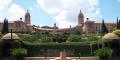
Only half an hour's drive beyond Johannesburg's northern suburbs lies South Africa's administrative and diplomatic capital city, Pretoria, founded by the pioneering Afrikaans Voortrekkers who built the city as the capital of their Zuid-Afrikaansche Republiek in the mid-19th century. Pretoria is an attractive, green city, with purple-hued Jacaranda trees lining its streets that are presided over by the Union Buildings, designed by Sir Herbert Baker. They perch like an acropolis on a hilltop and house the offices of the President and senior government officials. There are numerous other historic buildings too, including the Voortrekker Monument, a memorial commemorating the pioneers' penetration of the interior. Pretoria is also home to South Africa's National Zoological Gardens, which is one of the world's finest zoos.
Hartbeespoort Dam
Address: Johannesburg
Telephone: 012 253 1567
North of Johannesburg lies one of South Africa's oldest dams, built in 1923, which provides a favourite day trip for city dwellers set against the Magaliesberg mountain range. A scenic road encircles the dam, culminating in a tunnel just before it reaches the dam wall and the Hartbeespoort village. The village offers a small zoo and snake park, cableway, bird park, aquarium and several restaurants and curio shops.
Warmbaths
Address: Johannesburg
On the national road north towards Zimbabwe is the flat area known as the Springbok Flats, part of the Great Rift Valley. About 80 miles (125km) north of Johannesburg on the edge of the Flats lies the town of Warmbaths, named for the hot mineral springs that rise to the surface there. The spring yields about 20,000 litres of water, enriched with sodium chloride, calcium carbonate and other minerals every hour. The town has now become a popular spa and holiday resort, considered to be one of the most modern of its kind in the world. It has a large indoor pool with underwater jets, outdoor hot and cold swimming pools, wave pools, and water slides.
Sun City and the Palace of the Lost City
Address: Johannesburg
Telephone: 014 557 1000
Situated in the Bojanala region of the North West Province, the 'Las Vegas' of South Africa is one of the largest adult entertainment centres in the world, with casinos, golf, live shows, and the architectural wonder of the Lost City. The vast resort complex is one of South Africa's top attractions for gambling, entertainment and opulence, a luxury theme park for adults that was the multi-million dollar dreamchild of South African entrepreneur, Sol Kerzner. The Lost City, with its African theme of life-size animals, has at its centre a luxurious 'palace' decorated with mosaics, frescoes, palm fronds and elephant tusks. Surrounding it are lakes, forests and a tropical beach. There are a variety of watersports and The Valley of the Waves, the most advanced waterpark in the country, has among other things a wave machine capable of generating almost seven-foot (2m) waves. The resort complex also borders on the Pilanesberg National Park, home to the 'Big Five' and a popular game-viewing destination.
Lowveld National Botanical Garden
Address: Off White River Road Mpumalanga
Admission: R15 (adults), R5 (children) Daily 8am to 6pm (September to March)and until 5pm from April to August
Telephone: 013 752 5531
Covering 393 acres (159 hectares) on the banks of the Crocodile River at Nelspruit, the Lowveld Botanic Gardens has the largest collection of cycads in the world and the biggest assortment of indigenous trees in South Africa, totalling 650 of the 1,000 known species. The gardens have 600 plant and 245 bird species occurring naturally on its turf, but about 2,000 more plant species have been added to this collection making this haven a feast for botanists. A two-hour trail meanders along the Crocodile River banks and passes three waterfalls.
Pilgrim's Rest
Address: Mpumalanga
Telephone: 013 768 1060
Had it not been for its picturesque setting, Pilgrim's Rest would probably be a ghost town. It is, however, a popular tourist destination, existing today for little other purpose than to entertain and inform visitors about its colourful heyday. It all began in 1873 when a Scots miner, Alex 'Wheelbarrow' Patterson, shouted 'Eureka', having discovered gold at Pilgrim's Creek. Before long fortune seekers had clogged the little valley, and the town of Pilgrim's Rest was born. Mining continued for decades, but started to dry up in the 1940s and the final mine closed in 1972. The town has now been declared a national monument and many of its corrugated iron buildings have been restored. These now exist as living museums, and some as souvenir shops. There is an Information Centre on the Main Road where visitors can learn the history of the town before exploring it. Pilgrim's Rest is part of the scenic 'Panorama Route' north of Nelspruit.
Blyde River Canyon
Address: Mpumalanga
The spectacular vista of the Blyde River Canyon, with its sheer cliffs dropping into a bush-covered valley, is part of the scenically breathtaking Panorama Route, worth doing as a self-drive trip from Nelspruit, or on a bus tour. Other sights on the route include the Three Rondavels, a trio of green-clad peaks set in the canyon and the Bourke's Luck Potholes, huge holes in the mountainside formed by grinding sand. The Blyde River Canyon is the biggest 'green' canyon in the world, and the third largest canyon on earth, smaller only than the USA's Grand Canyon and the Fish River Canyon in Namibia. The river itself also offers some challenging white water rafting.
Tsitsikamma National Park
Address: Garden Route
Admission: R80 (foreign adult), R40 (foreign child) per day; South African residents pay R25 per day Daily 7am to 7pm
Telephone: 042 281 1607
Tsitsikamma is the word of the indigenous Khoi-San people meaning 'place of many waters', which accurately describes the naturally beautiful thin 50-mile (80km) stretch of coastline that makes up the Tsitsikamma National Park, Africa's oldest and largest marine reserve. The park boasts many attractions, including a giant Outeniqua yellowwood tree that is hundreds of years old. The region is criss-crossed by hiking trails, including the world-renowned Otter Trail, starting at Storm's River and running along 25 miles (41km) of spectacular coastline to Nature's Valley. A number of private operators, notably Storms River Adventures, offer numerous adventure activities in the area such as black-water rafting and abseiling, mountain bike tours and fishing trips. A particularly exciting diversion is to undertake a 'canopy tour' of the forest, gliding across the treetops on steel cables strung between platforms.
Bo-Kaap
Address: Cape Town
Bo-Kaap, or the old Malay Quarter, was declared an exclusive residential area for the Muslim Cape Malays under the Group Areas Act of 1950 during the Apartheid years, forcing people of other religions and ethnicity to leave, and today is still closely associated with the Muslim community. The houses have been restored and colourfully painted, and the steep cobbled streets, mosques, minarets and blend of Cape Dutch and Edwardian architecture make it one of the most interesting historical and cultural areas of the city. The Bo-Kaap Museum on Wale Street documents the history of the Cape Malays Tel: (021) 481 3939.
Spier Wine Estate
Address: R310 Lynedoch Road Cape Winelands
Telephone: 021 809 1100
Not only one of South Africa's most famous and most popular wine estates, historic Spier is also an internationally renowned cultural resort that offers luxurious accommodation, conference facilities, shopping, fine dining, and a variety of recreational activities, including golf, horse riding, picnics, and a cheetah park. An outdoor amphitheatre traditionally presents a variety of music, theatre and dance during the Spier Summer Arts Season that also seeks to promote, showcase and develop emerging South African talent. Situated in the heart of the Stellenbosch winelands region, Spier also boasts world-class wines in what is the oldest working cellar in South Africa, and together with its other facilities, is the most unique development in the wine world.
Oom Samie se Winkel (Uncle Sam's shop)
Address: 84 Dorp Street, Stellenbosch Cape Winelands
Telephone: 021 887 0797
This famous Stellenbosch institution is a shop set back in time, where a huge variety of interesting products can be purchased from shelves crammed with sweets, dried fish, wine, clothing and tobacco. It is well worth a look, if not to buy anything, then to experience how locals traded 200 years ago.
Huguenot Monument and Museum
Address: Franschhoek Cape Winelands
Admission: R5 (adults), R1 (children) Monday to Saturday 9am to 5pm, Sunday 2pm to 5pm
Telephone: 021 876 2532
A major tourist attraction in the Franschhoek valley, the historic Huguenot Monument was erected in 1938 to remember and honour the French Huguenots who arrived in South Africa in 1688 after fleeing persecution in their home country. The nearby museum documents the history of the settlers, from their flight from France to their arrival and successful establishment of the Franschhoek wine region in the Cape of Good Hope. The museum contains a variety of Bibles, documents, furniture, utensils and artefacts, which illustrate the life of the Huguenots in the Cape.
Afrikaanse Taalmonument (Afrikaans Language Monument) and Museum
Address: Museum: Gideon Malherbe House, 11 Pastorie Avenue, Paarl. Monument: Paarl Mountain Cape Winelands
Admission: Museum: R10 (adults), R2 (children). Monument: Adults R10, R2 for children Museum: Monday to Friday 9am to 4pm, Saturday 9am to 1pm. Monument: Daily 8.15am to 5pm
Telephone: 021 872 3441
The Afrikaans Language Museum pays tribute to a unique language that is only 300 years old, created from the melting pot of nationalities and languages in the Cape. The Dutch settlers, French Huguenots, slaves from Malaysia, Indonesia, Madagascar and West Africa and the local Khoi people all needed to communicate, and so was born the language that could be used by all. The struggle to gain recognition of Afrikaans as an official language was carried out from Paarl, and the museum commemorates the people that played an important role in the process, as well as exploring the language in its diversity and learning about the people who speak it today. Conspicuously absent from the material is the integral role Afrikaans played as the language of the Apartheid oppressors. The Language Monument on Paarl Mountain was erected in 1975 to honour the Afrikaans language and is the only language monument in the world. The supposed contribution to Afrikaans from the Western world, as well as from Africa, are represented by the three linked columns and three rounded shapes respectively, while the 187-foot (57m) pillar symbolises the growth of the language.
Blood River/Ncome Heritage Site
Address: The site is 30 miles (48km) east of Dundee, off the R33 Battlefields
Admission: R30 (adults), R8 (children). Ncome Monument and Museum free Ncome Monument and Museum, daily from 9am to 4pm. Voortrekker Monument daily from 8am to 5pm/6pm in Summer
Telephone: 034 271 8121
Following the treacherous murder of Piet Retief and his men at the hands of Dingaan, the Zulu chief, the Voortrekkers, led by Andries Pretorius, prepared for battle against the Zulu kingdom on the banks of the Ncome River on 16 December 1838. They formed an impenetrable laager (a defensive camp encircled with their ox-wagons) and fought the 15,000-strong impi attack until the Zulus finally fled, leaving thousands dead and the river red with blood. The violent encounter became known as the Battle of Blood River. The Blood River/Ncome Heritage Site commemorates this significant battle with monuments and museums to both the Voortrekkers and the Zulus on either side of the river, so giving the visitor a more complete perspective of events. On one side is the Ncome Monument and Museum Complex, dedicated to the fallen Zulu warriors, while the Blood River Monument and Museum is located on the west bank and features a life-size replica of the Boer wagon laager.
Isandlwana Hill
Address: The battlefield is 50 miles (80km) south east of Dundee off the R68 Battlefields
Admission: Daily 8am to 5pm
Telephone: 034 271 0634
The battle at Isandlwana Hill on 22 January 1879 stunned the British Empire in what was to be the worst defeat in the history of their imperial warfare. The news that an entire battalion of British troops had been wiped out by a 'native' army was unbelievable. The Zulu kingdom, under the leadership of King Cetshwayo, had been gaining strength and was perceived to be a threat to the British colonists, refusing to submit to British rule. British troops were ordered to invade Zululand, but grossly underestimated the Zulu warriors, and the surprise attack on the British camp on the slopes of Isandlwana Hill left thousands dead. Today the battlefield is dotted with memorials, and mounds of white stones that mark the British mass graves.
Rorke's Drift
Address: The site is 26 miles (42km) from Dundee, off the R68 Battlefields
Admission: R10 adults, concessions available Daily 8am to 5pm
Telephone: 034 642 1687
Fought on the same day as the nearby battle at Isandlwana Hill, the Battle of Rorke's Drift is remembered as one of the most famous sieges of the Anglo-Zulu War. Survivors from Isandlwana fled to the Swedish mission station that was used as a British field hospital and storehouse, and sounded the alarm. Inside, the 139 men, many of them seriously ill or wounded, barricaded themselves in and prepared for the onslaught of 4,000 Zulu warriors. The Battle Museum dramatically tells the tale of the 'Heroic Hundred' who desperately defended the station for 12 hours, until the Zulus finally retreated with a heavy loss of life. Eleven Victoria Crosses were awarded to the defenders, the most ever given at any other battle in British history.
Ladysmith Siege Museum
Address: Murchison Street, Ladysmith Battlefields
Admission: R2 Monday to Friday 9am to 4pm, Saturday until 1pm, Sundays by appointment only
Telephone: 036 637 2992
During the Anglo-Boer War, Ladysmith was besieged for 118 days, when thousands died, either during battle, or from the lack of food and water. The museum is considered to be one of the best Anglo-Boer War museums in the country, with a collection of artefacts, documents, firearms and uniforms on display, as well as a series of excellent photographs, which vividly tells the story of the siege of Ladysmith that involved numerous battles between the Boer and British forces.
Township Tours
Address: Cape Town
Telephone: Cape Town Tourism Visitor Information Centre: 021 487 6800, or Sivuyile Tourism Centre: 021 637 8449
The N2 highway that connects Cape Town International Airport to the city is lined with townships, consisting of a mixture of shacks and solid buildings. During the days of apartheid, people of colour were not allowed to live in the white suburbs and were banished to areas away from the city. Township tours allow visitors to experience how the majority of Capetonians live in the townships that surround the city. Guides, often residents, take visitors around to meet the people, see community projects, have a drink in a 'shebeen' (township pub) and shop for local crafts. Each township has its own colourful character, and despite their difficult living conditions, residents are generally hospitable and delighted to receive visitors. Townships were once no-go areas for many people, but today a visit is becoming a popular experience for tourists to Cape Town. Visit Langa, the oldest of South Africa's black townships, established in 1923, or the newest and second largest in the country, Khayelitsha, which dates from the 1980s. Guguletu and Nyanga were set up in the 1950s. Visitors are advised not to visit the townships alone; there are many tour companies that offer tours, including transport to and from the township areas. Contact the Cape Town Tourism Visitor Information Centre or its satellite, the Sivuyile Tourism Centre in Guguletu for information about tours, accommodation and entertainment in the townships.
Stellenbosch
Address: Cape Winelands
At the heart of the wine industry is the pretty town of Stellenbosch, the second oldest town in South Africa and regarded as the wine capital of the country with over 110 cellars in the area. The Stellenbosch vineyards were established by the Dutch governor of the Cape, Simon van der Stel, who arrived in 1679 and noted that the combination of rich soil and ideal climate were perfect for viticulture. In 1971 the first wine route in South Africa was opened, and today the Stellenbosch wine route is perhaps the best known and finest that the country has to offer, producing award winning wines from estates such as Morgenhof, Kanonkop, Warwick and Zewenwacht. Spier Estate is renowned as a unique cultural resort that is famous for its Summer Arts Festival, and boasts the oldest working wine cellar in the country. Stellenbosch is also steeped in South African history and Afrikaans culture and was settled by the Dutch East India Company to produce food for passing ships. Old oak trees line the streets where Cape Dutch architecture, museums and national art collections are a reminder of the town's heritage. The town also boasts the world's only Afrikaans university, a premier educational institute, which has produced many great sporting heroes, including more than 155 Springbok rugby players.
Constantia
Address: Cape Winelands
Admission: Museum: R10 (adults), R5 (children) Groot Constantia opens daily, museum open 10am to 5pm
Telephone: 021 795 5140
Constantia is the origin of wine production in South Africa, and one of Cape Town's most exclusive suburbs. The Constantia wine route is the oldest yet smallest wine route in the Cape, consisting of just five wine farms that concentrate on producing few wines of international quality. The historic Cape Dutch homestead at Groot Constantia is on the oldest wine estate in South Africa, home to the first governor of the Cape, Simon van der Stel, and the valley's most recognised wine farm. The house itself is furnished with items from the period while an adjacent wine museum exhibits drinking and storage vessels in glass, silver, copper and stoneware dating from 500BC to the 19th century. Between the estates of Klein and Groot Constantia, Steenberg, Buitenverwachting and Constantia Uitsig, visitors will also find some of the most highly acclaimed restaurants in the country.
Franschhoek
Address: Cape Winelands
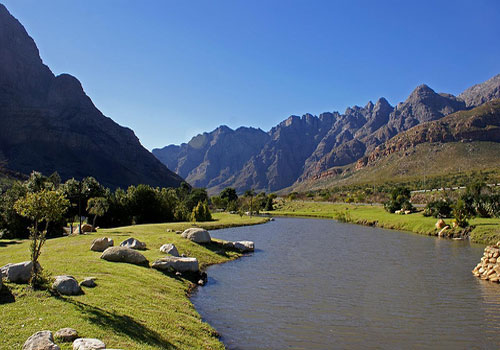
Fleeing religious persecution in France in the 1700s, more than 200 French Huguenots arrived in the Cape and were settled in the valley that soon became known as Franschhoek (French Corner), which is today situated in the heart of the Cape Winelands region. Many of the settlers were experienced wine producers and they soon recognised the potential of the region for wine and fruit production, establishing wine estates throughout the spectacular Franschhoek Valley in surroundings of magnificent scenery and towering mountains. Today the town is famous not only for its splendid wines and beautiful vistas, but also as the gourmet capital of South Africa, boasting the highest number of award-winning eateries in the country. Restaurants such as Le Quartier Français, La Petite Ferme, Haute Cabriere and Boschendal are among those that are internationally acclaimed and some of the top restaurants in South Africa. The Huguenots did not only bring their viticulture and French culinary flair however, they also left behind a rich legacy of arts, architecture and hospitality, which are still visible today.
Paarl
Address: Cape Winelands
Situated at the foot of the second-largest granite outcrop in the world, the town of Paarl in the picturesque Berg River Valley is the biggest town in the Cape Winelands, and features some of the most superb examples of Cape Dutch, Victorian, Edwardian and Art Deco architecture. It has a rich history, boasting the Drakenstein Prison where Nelson Mandela spent his last years in captivity, and overlooking the town from the slopes of the Paarl Mountain is the Language Monument, which symbolises the birth of the Afrikaans language. Along with its historical background, Paarl is also known for its award-winning wines, particularly its reds, which can be sampled along the world's first 'Red Route'. Paarl's wine route includes over 40 cellars, among them Nederburg and KWV, and many of them also make a variety of delicious cheeses.
Mossel Bay
Address: Garden Route
The rather industrialised town of Mossel Bay, about 250 miles (400km) east of Cape Town, is traditionally regarded as the gateway to the Garden Route and is famed for being the spot where the first European set foot in South Africa. The Portuguese explorer, Bartholomew Dias, came ashore here seeking water after battling a fearsome storm at sea in 1488. The town now commemorates this event with the Bartholomew Dias Museum complex in Market Street, which houses a Maritime Museum and a life-sized replica of the caravel in which Dias sailed. Mossel Bay has some good beaches and all the trappings of a seaside holiday town, with cruises available from the small harbour to view seals, whales and dolphins, and shark cage-diving adventures. The nearby village of Albertinia sports the only Aloe factory in South Africa, and visitors can call in to sample medicinal and skincare products made from this indigenous plant.
Wilderness
Address: Garden Route
The village of Wilderness, set on the Touws River estuary, is fast developing with a plethora of luxury holiday homes lining the cliffs and hills along the long sandy beach and river. It is, however, a pretty spot surrounded by a chain of fresh-water lakes, and encompassing the Wilderness National Park with about nine miles (15km) of inland waterways. There are some wonderful hiking trails and canoe trips offered through the Park wardens, and numerous accommodation facilities are available.
Two Oceans Aquarium
Address: V&A Waterfront Cape Town
Admission: R76 (adults), R35 (children 4-17). Tickets valid for the day. Shark/Kelp forest dive: R450 (R350 with own equipment) Daily 9.30am to 6pm
Telephone: 021 418 3823
The Cape sits at the meeting place of the Atlantic and Indian Oceans, and over 3,000 sea animals from both oceans are showcased in the aquarium, highlighting the diversity of marine life found in the waters around Cape Town. The Two Oceans Aquarium is one of the city's top attractions and visitors of all ages will be fascinated by the variety of exhibits, such as the Predator Exhibit, featuring large sharks and rays, a kelp forest, and animals such as seals, penguins and turtles among thousands of different fish. It is also possible to dive with the ragged-tooth sharks, or in the kelp forest while feeding hundreds of fish, but advanced booking is required and divers must present dive qualifications.
West Coast Ostrich Ranch
Address: Van Schoorsdrif Road, Philadelphia Cape Town
Admission: R32 (adults), R24 (children 6-16) Tours are run daily, every half an hour on the hour
Telephone: 021 972 1955
The ostrich farm is home to over 220 ostrich species as well as other birds, including dwarf ostriches, black-necked ostriches, peacocks, emus, and rheas. Tour guides are informative, and a 45-minute tour includes an opportunity to sit on a live ostrich, stand on an ostrich egg, and visit the breeding enclosures where newly hatched chicks can often be seen. There is also an Egg Factory, Leather Factory, curio shop and a restaurant specialising in ostrich dishes.
Muizenberg
Address: Cape Town
A historical beach-side suburb on the False Bay coast, Muizenberg is popular with families for its long, gentle-sloping beach, warm water, beautiful views, and activities such as mini-golf and supertubing. The beach is famous for its row of colourful changing houses and is a photo favourite from the mountain road far above. Muizenberg beach has also long been the preference of beginner surfers and several popular surf schools have been established at Surfers Corner, the closest side to the mountain. False Bay is known for its Great White Shark population, but a shark watch service is in operation to give warning to bathers and surfers. A scenic walkway below the railway line links Muizenberg to the next seaside village of St James with its tidal pool. The delightful fishing village of Kalk Bay is a few minutes drive away with its protected harbour, and its main street lined with fascinating antique and art shops, as well as cafes and restaurants.
SAB World of Beer
Address: Corner of President and Miriam Makeba Roads, Newtown Johannesburg
Admission: R25 pp Tuesdays Saturdays. From 10am, last tour at 5pm.
SABMiller started in South Africa and has expanded to become one of the world's largest brewers of beer. The World of Beer offers a fun short tour, which summarises the history of the company, beer in general and details the brewing process. Afterwards visitors can enjoy a draught or two on the house in the resident pub.
Walter Sisulu National Botanical Gardens
Address: end of Malcolm Road, Poortview, Roodepoort Johannesburg
Admission: R20 for adults, concessions available. Daily, 8am to 6pm, no entry after 5pm
Not known for being an especially green city, this oasis in the west side of Johannesburg covers 741 acres (300ha), offering lush gardens and scenic hiking trails. The gardens are a terrific place for bird watching (over 200 species) and garden-enthusiasts interested in seeing a variety of flora and fauna (over 600 species). After a walk or hike, it is common practice to enjoy a picnic on the lawns at the foot of the breathtaking Witpoortjie waterfall.
Melville
Address: west of the city centre Johannesburg
This trendy suburb is a hive of activity on any given night of the week; it is the place to go out and carouse. Anything from hip and upmarket to just plain odd coffee shops, bars and dance venues throng the streets. Partygoers barhop on foot well into the small hours.
The Apartheid Museum
Address: Northern Parkway and Gold Reef Road, Ormonde, Johannesburg Johannesburg
Admission: R30 Adults, concessions available Tuesday to Sundays, 10am to 5pm
South Africa's history of black oppression is chronicled in this building, situated near Gold Reef City. Relics of the Apartheid system, which banned non-whites from certain areas and from receiving an education, as well as forbidding interracial relationships, can be found here, right down to a bench marked for 'Whites Only'. Visitors often describe the experience of the Apartheid Museum as 'heart wrenching', but at the same time find the story of the struggle over adversity inspirational.
Constitution Hill
Address: Constitutional Court, Johannesburg Johannesburg
Admission: Guided tours adults: R22. Concessions available Monday to Friday 9am - 5pm (last tour at 4pm); Saturday 10am 3pm. Closed Sunday
Telephone: 011 381 3100
A guided tour of the National Heritage Site of Constitution Hill takes visitors on a journey through South Africa's turbulent past, but also illustrates its incredible transition into democracy. Visitors are guided through the Old Fort Prison Complex where the peeling walls and rusty barred cells have many a story to tell of South Africa's past 100 years; from British soldiers in the Anglo Boer War and rebellious youths caught in the Soweto uprising to Nelson Mandela, Joe Slovo and infamous murderess Daisy de Melker. The tour concludes with a look at South Africa's Constitutional Court, the keeper of the basic rights and freedom that those imprisoned here had struggled to win.
Hector Pieterson Memorial site and Museum
Address: Hector Pieterson Sq., corner of Khumalo and Pela Sts., Orlando West, Soweto Johannesburg
Admission: Adults: R15, students: R5 Monday to Saturday from 10am-5pm; Sunday 10am-4:30pm
Telephone: (011) 536 0611
Hector Pieterson became the iconic image of the 1976 Soweto uprising during apartheid South Africa, when a news photograph of the dying Hector being carried by a fellow student was published across the globe. He was just 12 years old when the police, unprovoked, opened fire on school children who had gathered to protest the imposition of Afrikaans as a medium of instruction in township schools. The museum fuses memorabilia with modern technology and cultural history and is located two blocks away from where Hector was killed. In 2007 Hector's sister Antoinette, who is seen in the famous photograph holding her hands held out in panic, was working at the museum as a tour guide and today 16 June is a public holiday named National Youth Day to honour young people.
Cradle of Humankind and Maropeng Visitor Centre
Address: Johannesburg
Admission: R85. Combination ticket (Maropeng and Sterkfontein Caves) R130. Concession available. Daily from 9am to 5pm
Telephone: 011 956 6342 (Sterkfontein Cave); 011 957 0106 (Wonder Cave)
The Cradle of Humankind is a UNESCO World Heritage Site and contains a complex of dolimitic limestone caves, including the Sterkfontein Caves, where the fossil, Australopithecus africanus (nicknamed Mrs. Ples) was found in 1947 by Dr Robert Broom and John Robinson. 'Mrs Ples' is estimated to be between 2.6 and 2.8 million years old and ranks high on the long list of australopithecine discoveries for which Sterkfontein is now famous. At present only the Sterkfontein Caves and the Wonder Cave are open to the public. The Maropeng Visitor Centre is a stirring, world-class exhibition space, focusing on the development of humans and our ancestors and evolution over the past few million years.
Ratanga Junction
Address: Century City on the N1 highway Cape Town
Admission: R120 (adult Adventurer Rider); R60 (child Adventure rider); Concessions available Open from 10am 5pm (25 June - 19 July and 23 September to 4 October 2009)
Telephone: 021 550 8504
Cape Town's most famous theme park, Ratanga Junction is a must for all those up for a thrilling day out in the sun with plenty of rides and activities to keep even the most active of children occupied. The park features gift shops and a food hall for weary riders, or those just looking to rest their legs for a while. The most popular ride by far is the Cobra, a snake like rollercoaster ride that flips the occupants round 360 degrees.
Butterfly World
Address: Just off the N1 highway, Exit 47, Route 44 on the Stellenbosch & Wellington Wine Routes Cape Town
Admission: R35 (adults); R20 (children); Concessions available Open daily from 9am to 5pm. Closed Christmas Day
Telephone: 021 875 5628
Butterfly World is one of Cape Town's more unique attractions. The tropical greenhouse features hundreds of exotic butterflies flying freely. Visitors are urged not to touch them, but the humid environment makes the perfect butterfly watching setting. Butterfly World also features a Spider Room where exotic spiders and scorpions can be viewed in their glass terrarias. There is a small gift shop tearoom for those wanting to take a break from all the invertebrate antics.
Scratch Patch
Address: Dido Valley Rd, Simonstown Cape Town
Admission: Small plastic bag or container ranging from R14 to R85 for a large container Open Monday to Friday from 8:30am - 4:45pm; Saturday/Sunday/Public Holidays from 9am - 5:30pm
Telephone: 021 786 2020
An amazing place for kids to learn about the wonders of precious stones, minerals and gems, the Scratch Patch gives children a little piece of what they have learnt to take home with them. And children love nothing more than little gifts! They will be able to scratch around in a pit of off-cuts of precious stones, such as Tiger's Eye, Jasper, Amethyst, and Rose Quartz, to name a few and for small price, of course.
World of Birds and Monkey Park
Address: Valley Road, Hout Bay Cape Town
Admission: R55 (adults); R35 (children) Open daily from 9am to 5pm
Telephone: 021 790 2730
Boasting over 400 different species of birds and a wide variety of other animals including squirrel monkeys and meerkats, the World of Birds features a children's play area and a tearoom for the parents to stop and take a break. Children will love exploring the grounds and discovering and learning about all the birds and animals here.
Seal Island
Address: Hout Bay Harbour Cape Town
Admission: Operates daily from 8.30am 08h30, 09h15, 10h00, 10h45
Telephone: 021 791 4441
Take a trip to Seal Island, also known as Duiker Island, located just outside of Hout Bay. Boats leave regularly from Hout Bay docks and take passengers on a trip outside the harbour and into the ocean, where breathtaking views of can be enjoyed of Hout Bay and all the way across to Noordhoek, Chapman's Peak and Kommetjie. The boat stops just below the Hout Bay Sentinal where hundreds of Cape Fur Seals bask on the small island in the sun. The sight is a smelly, yet magical one and it is a treat these creatures in their natural habitat.
Union Buildings
Address: Pretoria
Designed by renowned South African architect, Sir Herbert Baker, the Union Buildings are located on Meintjieskop hill, a sentinel overlooking the city of Pretoria. The official seat of the government and housing the offices of the South African President and other government officials, the Union Buildings are a South African Monument and have seen such icons at former South African president, Nelson Mandela, inaugurated here. With spectacular terraced gardens full of indigenous flora, the Union Buildings are not only historically important, but also magnificently beautiful.
National Zoological Gardens of South Africa
Address: 232 Boom St Pretoria
Admission: R45 (adults); R30 (children) Open daily from 8.30 - 5.30pm. Last tickets sold at 4.30pm
Telephone: (012) 328 3265
Commonly known as the Pretoria Zoo, the National Zoological Gardens on South Africa is regarded as one of the leading zoos in the world. Featuring a zoo, an aquarium and a reptile park, the Pretoria Zoo boasts 209 mammal species, 202 bird species, 190 fish species, four invertebrate species and 93 reptile species. There is even a Zoo Choo-Choo Tractor Train for the kids to enjoy, cableway, a picnic area with barbeque facilities, a cafeteria and a souvenir shop.
Loftus Versfeld Stadium
Address: Pretoria
A shrine to Pretoria's Afrkiaaners, the Loftus Versfeld Stadium seats over 50,000 people and will be one of the stadiums hosting matches in the 2010 FIFA World Cup. The land on which the stadium was built was first used for sporting events in 1903 and is named after Robert Owen Loftus Versfeld, who is attributed with establishing organised sport in Pretoria. Loftus Versfeld stadium is home to the local team, the Blue Bulls and has hosted numerous sporting events such as the 1995 Rugby World Cup and the 1996 CAF Africa Cup of Nations.
Kruger House Museum
Address: 60 Church Street Pretoria
Admission: R25 (adult); R10 (children) Open Monday to Friday from 8.30am 5.30pm; Saturday, Sunday and public holidays from 8.30am 5pm
Telephone: (012) 326 9172
The former residence of Boer leader and President of the Republic of South Africa, Paul Kruger, is now the Kruger House Museum. Built in 1884, the house was the last one in which President Kruger would live, between 1883 and 1901, before leaving South Africa to go into exile in Europe. The house contains original furnishings and items from that historical period as well as many gifts that were presented to Kruger, such as the lion statues on the veranda, as well as other memorabilia.
Pretoria National Botanical Garden
Address: 2 Cussonia Avenue, Brummeria Pretoria
Admission: Open daily from 8am 6pm
Telephone: (012) 843 5194
Featuring indigenous plants and flowers from all over South Africa, the Pretoria National Botanical Garden bridges the gap between scientific research and recreational environment. The garden is home to over 198 bird species, a few reptiles and even small mammals, such as the duiker, a small type of buck. A great place for a relaxing walk or picnic, the gardens also feature Mokha Restaurant which overlooks a small wetland.
President Brand Street
Address: President Brand Street, Bloemfontein Bloemfontein
Telephone: National Music Museum (0)51 405 4013; National Afrikaans Literature Museum (0)51 405 4713
Declared a national conservation area, and home to a number of monuments and buildings of historical value, President Brand Street is one of Bloemfontein's most renowned attractions. This stately street is the address of the South African Court of Appeal, Fourth Raadsaal, City Hall and the Supreme Court of South Africa. See the original transcript of Die Stem at the National Afrikaans Literature Museum, or visit the equally cultural National Music Museum.
Oliewenhuis Art Gallery
Address: 16 Harrismith Street, Bloemfontein Bloemfontein
Admission: 8am to 5pm (Monday to Friday), 10am to 5pm (Saturday), 1pm to 5pm (Sunday)
Telephone: (0)51 447 9609
From its distinguished setting in a Cape Dutch mansion, the Oliewenhuis Art Gallery is a must-see Bloemfontein attraction featuring an expansive display of South African art. Contemporary paintings and sculptures are exhibited here, as well as acclaimed masterpieces from days gone by. The gallery also has a café and outdoor sculpture park for visitors to enjoy.
King's Park
Address: Bloemfontein
Admission: The park is open 8am to 5pm daily
Opened by the Prince of Wales in 1925, King's Park boasts over 4,000 beautiful rose bushes, and is thus well placed as Bloemfontein literally means 'flower fountain' and is often referred to as the 'city of roses'. King's Park is also home to the Bloemfontein Zoo and its fascinating 'liger' (an African lion crossed with a Bengal tiger). There is an arts and crafts market at King's Park on the first Saturday of each month, another must for visitors.
Sun City
Address: Pilanesberg, in the North West Province (187km from Johannesburg). Johannesburg
Telephone: 014 557 1000
In Sun City, 'where the sun always shines', kids will love the various activities and attractions. A must-see is the Valley of the Waves, its fantastic 2m surf breaking onto a artificial beach. Fun activities include horse riding, elephant rides, quad biking and archery. There is also a great games arcade to enjoy.
Unicorn Wish
Address: Partridge Road, Sun Valley Johannesburg
Admission: 8am to 5pm weekends, 10am to 5pm weekdays (closed on Wednesdays)
Telephone: 011 464 2424
Kids will be enchanted by the wonderful world of unicorns, fairies and gnomes to be found at Unicorn Wish. While all the kids enjoy the pony rides, the fairy garden is a favourite for little girls and the boys love seeing the exotic llamas and camels. Fun children's crafts include candle making and fabric painting.
Color Café
Address: Hyde Square Shopping Centre Johannesburg
Admission: Daily, 9am to 5pm
Telephone: 011 341 0734
Children can let their creative tendencies run rampage at Color Café, which has a selection of pottery items just waiting to be painted. From plates, mugs and vases to money boxes and fairy ornaments, the choice of ceramics is vast, and painted items will be glazed and collectable in a week. The cakes and muffins at the café are also great!
Fun World Amusement Park
Address: Opposite Marine Parade Holiday Inn on Durban's Beachfront Durban
Admission: Free. There is a charge for individual rides Opening times vary according to season
Telephone: 031 332 9776/ 304 4934
A place of nostalgia for the parents who bring their children here, the Fun World Amusement Park situated on Durban's bustling beachfront provides safe and secure family entertainment that kids of all ages will enjoy. Take the cable car to enjoy a scenic view of the beachfront from the air, let the older kids enjoy rides such as the Breakdance, Hully Gully, Tilt-a-Whirl or Swingboat, while the tiny tots can get their thrill on in the Elephant Ride or the Carousel. And after an exhilarating day of fun in the sun, let the kids cool off in the nearby paddling pools.
Natal Sharks Board
Address: 1a Herrwood Drive, Umhlanga Durban
Admission: Presentation and dissection: R25 (adults); R12 (children). Boat trip: R250. Bookings for boat trip essential. Tel: 082 403 9206 Open Tuesday to Thursday at 9am and 2pm; Sundays at 2pm. Closed public holidays
Telephone: 031 566 0499
For something fun and educational, take the kids to the Natal Sharks Board just 9 miles (15km) north of Durban to learn about the marine life that lives off the shores of Durban's 'golden mile' as well as the shark nets that provide protection against shark attacks across the Kwazulu-Natal coastline. There are daily presentations and shark dissections at the complex in Umhlanga Rocks and kids will love visiting the display hall to view the variety of lifelike replicas of sharks, fish and rays, including that of a 1966-pound (892kg) great white shark. There are even boat trips running seven days a week to view the shark nets being serviced and to see and learn about the dolphins, seabirds and fish life that abound off Durban's coast.
Mini town
Address: 114 Snell Parade, Beachfront Durban
Admission: R15 (adults); R10 (children) Open daily from 9am 5pm
Telephone: 031 337 7892
This knee-high miniature replica of Durban makes a great outing for families and kids of all ages. Located on Durban's beachfront, Mini town is a popular and well-loved tourist attraction for kids and adults alike. It features moving models of planes and trains, a movable bridge, which makes way for passing ships, landmark buildings, and even a tug boat, which makes its way around its very own miniature dock. All models and buildings have been created on a 1:24 scale. Mini Town is owned by the Quadriplegic Association of KwaZulu-Natal and is used as a method of raising funds for their organisation while providing employment for some of their members.
Durban Natural Science Museum
Address: 1st Floor, Durban City Hall, Smith Street Durban
Admission: Free Open Monday to Saturday from 8.30am - 5pm. Sunday and Public Holidays from 11am 5pm. Closed Easter and Christmas Day.
Telephone: 031 311 2242
The Durban Natural Science Museum is the most utilised natural science museum in South Africa where children will love exploring and discovering all that is on offer. Attracting almost 300,000 visitors annually, the museum features a reconstruction of a Tyrannosaurus Rex, various diorama exhibitions and plasma screens showing natural history scenery.
Shark Diving
Observing and diving with Great White sharks can provide one of the most thrilling experiences of a lifetime. Numerous operators run cage diving trips around Gansbaai (two hours from Cape Town) where the open stretch of water between Dyer Island and the mainland is referred to as the shark diving capital of the world. Trips aim to educate people about the Great White shark as well as provide an up close and personal encounter from within the safety of a cage lowered into the water from the boat. People have the opportunity to watch and photograph the sharks feeding at the surface alongside the boat, and the very brave can then take turns inside the cage, which is let down about three feet (1m) below the surface of the water. Great White sharks are in the Gansbaai area all year round, but are here in their highest density during the winter months from May to October.
Game Safaris
One of the main attractions of a trip to South Africa is a game-viewing safari. Numerous game parks are scattered throughout the country, but it is the oldest, largest and most well-known wildlife conservation area, the Kruger National Park, that is the destination of choice for most international visitors. 'Big Five' viewing opportunities abound in many of the parks and many private game reserves, such as Shamwari in the Eastern Cape, have the added attraction of being malaria-free. Parks offer guided walking and jeep safaris, and night drives, as well as self-drive safaris for those with their own cars.
Bungy jumping
The historic Bloukrans River Bridge at Storms River, situated on South Africa's scenic Garden Route, is the setting for the highest commercial bungy jump in the world, at 525ft (160m). The actual bridge is higher, but jumpers gain access to the arch support below the road by way of a specially designed walkway, which is a breathtaking experience in itself. The jump is operated by Kiwi Extreme who have more than 10 years experience in bungy jumping.
Whale watching
Every year from July to November whales can be seen along the southern coast of South African shores, travelling thousands of miles to mate and calve in the safe and warm waters of protected bays. The 'heart of the Whale Coast' is Hermanus, renowned as the best whale-watching area in the country, where Southern Right whales can be seen in Walker Bay, often within 33 feet (10m) from shore. Walker Bay is recognised by the World Wildlife Fund as one of the top 12 whale viewing destinations in the world. In general, the whale route stretches from the Western Cape up the east coast, including places along the Garden Route such as Mossel Bay, Knysna, Plettenberg Bay (especially Keurbooms River and Robberg Peninsula), and the Tsitsikamma National Park coastline. The De Hoop Nature and Marine Reserve is also popular during the whale season for its relatively new Whale Trail, a five-day hiking trail that offers fantastic whale viewing opportunities for three days along its coastal stretch. Numerous whale-watching boat excursions are offered in the Western Cape.
Wine tasting
Known for producing some of the best export quality wines in the world, wine tasting in South Africa is a must. With a plethora of farms to whet the appetite, visitors can meet the winemakers, enjoy the fruits of their labour and order their wines to be shipped home at discounted rates, all while enjoying cheese, olives or fine food in the beautiful countryside dotted with rolling vineyards and mountains. The main wine producing terroirs of the South Africa are nestled together in the Western Cape and most are accessible from Cape Town on a day trip. Key regions include the R62 route, which covers world-renowned farms in Stellenbosch, Robertson, Franschhoek and Paarl. Some of the oldest and most picturesque vineyards in the Western Cape are Groot Constantia only a short drive form the centre of Cape Town - and Boschendal in the heart of Stellenbosch whose wines are highly acclaimed and awarded. Nederberg in Paarl is South Africa's leading and most decorated winery, winning more international and domestic awards than any other in South Africa. But although young, Kleine Zalse in Stellenbosch is hot on its heels.The Swartland, Overberg and Botrivier terroirs are all known for their distinctive Cabernet Sauvignon and spicy Shiraz, while the south coastal region is renowned for its crisp dry Sauvignon Blanc due to the Atlantic sea breeze. The eastern KwaZulu-Natal coast is new to the wine scene but is showing signs of promise while some top wine is produced in the Orange River valley where the river creates a cool microclimate that favours white wines. Whether opting to drive yourself or do an organised tour, there are so many farms to be visited that wine-tasting in South Africa, like a fine, well-aged Cabernet, should be enjoyed slowly with friends.
Golf
That some golf tour operators are also safari operators should hint at some of the course features. Adventure sportsmen and golfers don't usually find common ground but the Kruger National Park's course Skukuza balances the golf game with game of lions, rhinos, snakes, and leopards. At the country's best course, Leopard Creek, wildlife such as giraffes and wildebeests grace the scenery. The most scenic, Cathedral Park, wraps around lush but rugged African landscape. While these are highlights for those that arrive, most choose to visit because of warm weather and cheap green fees. Cape Town, Johannesburg and Durban all have great courses with mountain or ocean scenery. Cape Town can mix golf vacations with other tourist attractions such as famous beaches, nightlife and nearby wine estates. A Jack Nicklaus signature course is playable nearby at Pearl Valley. From Johannesburg it is worth travelling to Sun City and staying in the spectacular palace like resort. Less travelled, but perhaps making for the best golf vacations, are the courses along the Garden Route. Here hometown hero Ernie Els has a course design to his name. Just make sure to be careful searching for a ball in the rough.
Surfing
South Africa offers some serious world-class surfing with two oceans (Indian and Atlantic) delivering grinding swells to a vast expanse of coastline extending all the way from the Namibian border on the arid west coast to the Mozambique border at the far northern corner of the sub-tropical east coast. Surfers should pack 4mm wetsuits for the west coast, 3mm wetsuits for the south and south-east coastlines and a shorty for the winter months along the Kwazulu-Natal coastline. The west coast extending from Cape Town up to the Namibian border receives reasonably consistent Atlantic swells. The cold Benguela current predominates in this area and it is common for surfers to wear a hoody and booties, particularly in the summer months when upwelling can bring surface water temperatures down to 53ºF (12ºC). Surfing spots abound in the vicinity of Cape Town and crowding is usually not a big factor. Key breaks include Llandudno, Noordhoek, Long Beach, Outer Kom, Kalk Bay and Muizenberg (a tame wave, perfect for beginners). Gary's Surf School is located in Muizenberg and many amateurs and intermediate surfers frequent this renowned school for coaching. About 3 hour's drive up the west coast is Elands Bay with its classic left hand point break as well as some other good beach breaks in the vicinity. The Garden Route is a region of South Africa blessed with great right hand point breaks and warmer water than the west coast, due to the temperate Agulhus current flowing through the Indian Ocean. Surfing highlights dotted along this stretch of coast include Stilbaai, Mossel Bay, Victoria Bay, Cape St Francis and the infamous Jeffrey's Bay, the perfect excuse for a road trip. The all have right-hand point break setups and are best visited in the winter months when swells are more consistent and winds more often offshore. Jeffrey's Bay is often regarded as the best right-hand breaking wave in the world, although one may well encounter crowding and fierce locals, of both the human and fish variety. The Wild Coast (known as the Transkei homeland during the apartheid era) extends from East London to the southern border of Kwazulu-Natal. As the name implies, the area is largely unexplored and road access to the coast is generally poor. There are some epic and well-known right hand point setups such as Coffee Bay and Mdumbe, but generally many of the spots are kept under wraps as secret reef and beach breaks for those willing to explore the region. The epicentre of the South African surfing industry is located in Durban on the sub-tropical east coast, an area bathed by the warm waters of the Mozambican current. Ditch your wetsuit, but expect crowds. Good beach breaks in the Durban area include New Pier and North Beach, while heavy reef breaks such as Cave Rock will test even the most experienced surfers in an area known as the Bluff. Further north, Umhlanga Rocks, Ballito and Richards Bay are all blessed with consistent waves in the winter months.
Wedding and Honeymoon
A wedding and honeymoon in South Africa is unforgettable. Its beautiful weather and friendly people are enjoyable at a variety of romantic wedding and honeymoon settings; from forests on the Garden Route to stunning beaches in KwaZulu-Natal, or the wilds of the Kruger National Park and surrounds. Cape Town is another beautiful wedding or honeymoon destination, perhaps even the best due to its variety of attractions, cultures and facilities. There are various hotels, lodges and holiday resorts in South Africa that provide unique wedding and honeymoon venues. Wedding and Honeymoon things to see and do A wedding or honeymoon couple in South Africa will find many intriguing things to see and do. In Cape Town, visit the world-famous Table Mountain or Nelson Mandela's Robben Island. Travelling through the Garden Route, the Knysna waterfront and lagoon or the Tsitsikamma Rainforest are worth exploring, as are some of the many coastal dive sites. The water gets warmer further up the coast and there are lovely beach towns to visit in the Transkei and KwaZulu-Natal. And of course, the Kruger National Park is undoubtedly a truly African 'Big 5' experience! South Africa Wedding Formalities Couples wishing to get married in South Africa will need to provide identity documents and birth certificates. If either party is not a resident of South Africa, they will need to show a valid passport. Two witnesses need to be present at the wedding, with their identity documents, to sign the marriage register. Civil marriages in South Africa can only be officiated by an authorized marriage officer. The South African Department of Home Affairs and About.com have detailed marriage information for couples.
Wakame
Address: Beach Road, Mouille Point Cape Town
Food Type: Japanese
The sister restaurant of Wasabe in Constantia, Wakame has a great position overlooking the ocean and is always packed with food and fashion connoisseurs. The focus is on sushi, but Wakame also serves excellent Modern European fare. There is a good bar and a outdoor terrace, ideal for sundowners. In peak season there are two sittings and booking is essential.
Constantia Uitsig
Address: Constantia Uitsig Farm, Spaanschemat River Road, Constantia Cape Town
Food Type: French
A huge success story from day one, Constantia Uitsig is an Italian-French restaurant with Asian fusions set in picturesque wine country, backed by the Constantiaberg. Chef Frank Swainston continues to create food with broader influences now than this original Provencale-Tuscan mix, he claims Australian and Asian influences too these days. Next door is Uitsig's sister restaurant, La Colombe, serving richer food which some prefer, but the views are not as good. Booking essential.
Blues
Address: The Promenade, Victoria Road, Camps Bay Cape Town
Food Type: Modern Eclectic
For over 15 years Blues has been synonymous with the spectacular views of Camps Bay. Be it a stormy winter's day or perfect sunlit afternoon, you will always find Blues as buzzy, busy and as fashionable as ever. The restaurant that introduced modern California cuisine to the Cape today boasts a menu incorporating Mediterranean and fusion influences with a focus on seafood. Book well in advance during peak season and expect slightly chaotic waitering. Open daily for lunch and dinner.
Millers Thumb
Address: 10b Kloofnek Road, Tamboerskloof Cape Town
Food Type: Seafood
Solly and Jane Solomon's refreshingly-casual seafood restaurant in uptown Cape Town, Miller's Thumb's ever-changing chalkboard menu means that the customer, though reasonably assured of always finding something familiar, will just as surely find a couple of unlikely options. Cajun and Creole dishes have their influence in this kitchen, as does a winning Japanese dish which must be tried at least once: 'Yaki Soba', a noodle dish with prawns, chicken and cashews, which has become a staple. There's generally a pasta dish or two on the menu with interesting sauces, complemented by a good choice of wines.
Five Flies
Address: 14-16 Keerom Street, Cape Town Cape Town
Food Type: Modern Eclectic
Five Flies is a sassy upmarket dining venue situated in the hub of Cape Town's legal and financial district. Great care has been taken with the interior renovations of this historic 18th-century building in order to create one of the most unique dining experiences in the Cape. Executive Chef, Gerard van Staden has become renowned for his artistic and delicious creations, which are presented together with some of the Cape's finest wines. Secure street parking available.
The Codfather
Address: 37 The Drive, Camps Bay Cape Town
Food Type: Seafood
Situated just behind Camps Bay's main strip, the Codfather offers a unique presentation of fine fish. There is no menu at this low-key restaurant - you make your choice after a personal discourse with your waiter on the daily specials. It is then weighed, prepared to the highest standard and served at your table. Staff are all first class and provide a fine act. There is also a sushi bar. Open daily for lunch and dinner.
Beluga
Address: The Foundry, Prestwich Street, Green Point Cape Town
Food Type: Modern Eclectic
Beluga is a stylish eatery located in the Foundry, a wonderful 100-year-old red-brick building that once housed one of the city's oldest metal works, now converted into a modern interior design and office centre in the heart of what is rapidly becoming Cape Town's film and modelling district. The restaurant offers the best of New World cuisine - plenty of robust flavours, interesting ingredients and generous portions - while the cocktail bar serves great drinks and retro-cocktails, and a welcoming café spills out onto an enclosed courtyard, serving light meals and coffees from early till late.
Gramadoelas
Address: Market Theatre Complex, Bree Street, Newtown Johannesburg
Food Type: Local
For over 30 years celebrities, heads of state and royalty have graced Gramadoelas to sample its traditional South African and Cape cuisine, as well as other African fare. The Cape Malay-spiced bobotie, melktert and malva pudding are renown. Game meat, such as crocodile tail and ostrich steak, is also on the menu. The more adventurous can try Hillary Clinton and Nelson Mandela's favourites: mopani worms and mogodu (black tripe and wild African spinach stew), respectively. Closed on Sunday and no lunch on Mondays. Reservations recommended.
Moyo
Address: 5 Melrose Square, Melrose Arch Johannesburg
Food Type: African
This restaurant takes up five floors, decorated with a combination of modern African designs. Traditionally attired staff serve exotic cuisine, and live African music adds a funky vibe. The menu is varied with dishes from around the continent, such as fragrant North African stews, East African fish curries and huge Mozambique prawns. The unusual African desserts, like sweet potato and chocolate pudding, are not to be missed! Booking is essential, open daily for lunch and dinner.
Al Dente
Address: 173 Rochester Place, Rivonia Road, Morningside Johannesburg
Food Type: Italian
Al Dente is popular for its warm and casual ambience, excellent Italian cuisine and the genial presence of its owner, Federico, who is always close at hand to advise on the menu specials. The food here is authentically Italian and homemade with an extensive menu of pastas and pizzas, as well as specialities such as lightly roasted rump steak with garlic and rosemary. Reservations are recommended. Open for lunch and dinner Monday to Friday, dinner only on Saturdays and lunch only on Sundays.
Assaggi
Address: Post Office Centre, 30 Rudd Road, Illovo Johannesburg
Food Type: Italian
Assaggi is an Italian, family-run restaurant with a warm and friendly ambiance. The menu features authentic Italian cuisine prepared with the freshest seasonal ingredients. In true Italian style, their pastas are extraordinary, especially the lasagne with asparagus and brie, but there are also great meat and veal dishes on the menu. Open for lunch and dinner from Tuesday to Saturday, with dinner also served on Monday. Reservations recommended (no children under 12).
Turtle Creek
Address: 58 Wierda Road, Wierda Valley Johannesburg
Food Type: Mediterranean
The Turtle Creek wine bar and restaurant in Sandton's Wierda Valley offers diners a relaxed atmosphere and an exquisite Mediterranean menu. Favourites include the Mauritian chicken and prawn curry with rice an onion sambal, as well as Moroccan-style lamb shank in red wine. The terrace dining area is beautifully shaded by large oak trees, a very popular spot! Open Monday to Saturday for lunch and dinner, with lunch on Sundays. Reservations recommended.
Wombles
Address: 17 3rd Avenue, Parktown North Johannesburg
Food Type: Steakhouse
Reminiscent of its 1980s predecessor in Harare (Zimbabwe), Wombles Steakhouse has white linen and candlelit décor, giving it a relaxed and romantic, colonial-style atmosphere. This is further enhanced by the smiling, khaki-clad staff. The main menu boasts steaks to suit all appetites and tastes, served with fresh vegetables and a choice of potato dishes. Open Monday to Friday for lunch and dinner, with dinner also served on Saturdays. Reservations recommended.
Montego Bay
Address: Shop 31, Nelson Mandela Square, Rivonia Road, Sandton Johannesburg
Food Type: Seafood
With excellent service and a comfortable setting, this trendy restaurant boasts a variety of delicious seafood, as well as some excellent international cuisine. Menu favourites include the signature Montego Bay platter with baby crayfish, langoustines (Norwegian lobsters), prawns and calamari, or perhaps something from the world-famous fresh oyster and sushi bar. Open daily for lunch and dinner, reservations recommended.
Café Royale
Address: 273 Long Street Cape Town
Food Type: American
Royale is the gourmet burger joint in Cape Town and it is not uncommon to see scruffy jeaned skater types rubbing shoulders with trendy executives. Royale offers a spectacular range of burgers (and an entire list of different veggie burgers too) and one can chop and change toppings, choose between ostrich, chicken, veggie burgers, regular burgers or even seared tuna burgers and feast on a mix of potato wedges, sweet potato fries, regular fries and delicious salad. The burgers sport amusing names such as the 'Miss Piggy' (with bacon and guacamole) and the 'Fat Bastard' (double everything) and the restaurant also offers a range of pizzas and mouth-watering milkshakes. Royale now boasts an upstairs bar and lounge known as the Waiting Room that features live music, as well as a third floor that caters for private functions and has a sundowner deck.
Ginga
Address: 121 Castle Street Cape Town
Food Type: Modern Eclectic
The trendy Ginga restaurant, situated in the Bo-Kaap district is a fine dining experience. The lofty, industrial restaurant amalgamates a French brasserie ambiance with a modern capetonian design creating an intimate and stylish environment. Chef Michael Bassett serves up contemporary fusion cuisine with a wine list to compliment and upstairs is the laid back Shogo bistro/bar, the perfect place for a pre or post-dinner drink.
Pigalle
Address: 57 Somerset Rd, Greenpoint Cape Town
Food Type: Modern Eclectic
Famed as Cape Town's most stylish dinner-dance venue, Pigalle is a vast, split-level restaurant divided into intimate dining areas, each boasting a view of the dance floor and band. The lavish furnishings, elegant tables and background music create the perfect atmosphere to indulge in the sumptuous offerings from either one of the set menus or from the à la carte menu. Start with black mussels; choose between the ostrich fillet with mushroom and peppercorn sauce, the fillet medallions, or the Pigalle Platter (prawns and langoustines in lemon butter), and share the crème brûlée or baked cheesecake with someone special. Open Monday to Saturday for lunch and dinner.
Bukhara
Address: 33 Church Street Cape Town
Food Type: Indian
Offering Cape Town's finest Indian cuisine in an elegant setting, Bukhara is situated in the CBD of Cape Town, and attracts business people, politicians, food critics and lovers of fine food. The glass-walled kitchen allows diners to watch the Indian chefs at work, while enjoying a savoury taste experience that explores the spices and flavours of authentic India. The fare includes meat, poultry, seafood and vegetarian favourites, as well as a variety of breads and rice. Open for dinner nightly and lunch from Monday to Saturday.
Café Mozart
Address: 37 Church Street Cape Town
Food Type: Café
Something of a Cape Town institution, Café Mozart has been attracting locals and foreigners for over thirty years. Reputed to serve the best coffee in town, Café Mozart is a great breakfast stop with tables spilling out onto a shaded pedestrianised walkway where buskers amuse passers-by with jovial tunes. With superb fruit juices, a mouth-watering selection of sandwiches made on freshly baked bread and an attractive daily menu created at the whim of chef and proprietor Tom Kelley, there is something for everyone. For teatime lovers head to Café Mozart and sample their variety of looseleaf teas that are served in elegant silver teapots and quirky crockery. Open Monday to Saturday for breakfast and lunch.
Browns of Rivonia
Address: 21 Wessels Road, Rivonia Johannesburg
Food Type: International
Set in one of Johannesburg's most affluent suburbs, Browns of Rivonia offers a truly upmarket, fine dining experience. Outside seating is available on the veranda for those balmy summer evenings, and inside the restaurant there is a large, neat dining area. The food is of the highest quality, especially the roast duck with a Drambuie and orange glaze. The restaurant offers a separate menu for functions and for Sunday lunches. Closed on Saturday for lunch and reservations recommended.
F!sh
Address: Corner of Cradock and Baker Street, Rosebank Johannesburg
Food Type: Sushi
Located near the Rosebank Mall, F!sh is a very trendy seafood restaurant offering a good selection of sushi platters. In addition, their cocktail menu has many strong temptations to lure the young proffesional drinking crowd down a very slippery slope! The seating area on the deck, under the palm trees, is very popular. Open daily for lunch and dinner, bookings recommended.
Cool Runnings
Address: Fourways, Melville, Benoni Johannesburg
Food Type: Café
With a decidedly Rastafarian theme, this vibey Jamaican-style café offers a good selection of cheap Caribbean food in huge portions. Students and young professionals frequent this spot to wash down Jamaican schwarma's, curries and stir fries with potent shots of liquor and exotic cocktails. Hookah pipes (Okka pipes or bubblies), with a variety of flavoured tobaccos, are also on offer. Open daily for lunch and dinner.
Pride Of India
Address: 22 Groenkloof Plaza, 43 George Storrar Drive, Groenkloof Pretoria
Food Type: Indian
This award-winning restaurant is a real treat for those who love a bit of Indian food. The stylish décor, warm ambience and delicious food make this restaurant a favourite with most locals. There are plenty of vegetarian options and seafood options, such as the crab curry, will not disappoint. Open for dinner Monday to Friday for lunch and dinner. Saturday dinner only and Sunday lunch only. Bookings recommended.
Bistango
Address: Court Classique Hotel, Corner Schoeman & Beckett Streets Pretoria
Food Type: Mediterranean
With a distinct cosmopolitan feel and fantastic Mediterranean cuisine, Bistango has consistently been rated as one of Pretoria's top restaurants. The blue and yellow décor and colour theme are warm and welcoming and this restaurant is popular with everyone from politicians and businessmen to tourists and locals. The escargots with creamy bacon and champagne sauce come highly recommended. Open daily for breakfast, lunch and dinner. Bookings recommended.
Cynthia's
Address: Pretoria
Food Type: International
This stylish restaurant has become one of Pretoria's most recognized and popular restaurants. A firm favourite with locals and tourists alike, Cynthia's serves up delicious dishes in a warm, cosy and professional atmosphere with an art gallery and individual dining rooms. The Chateaubriand comes highly recommended. Bookings essential.
La Pentola
Address: Cnr. Soutpanberg & Well Street Pretoria
Food Type: International
One of Pretoria's most critically acclaimed restaurants, La Pentola serves an eclectic mix of food in a laid-back and cosy atmosphere. With authentic South African dishes such as Game Bobotie and Honey Mustard Warthog, La Pentola also serves a variety of other dishes, such as Mexican Crocodile Pastry and Thai style butternut and mussel soup to name a few. Open Monday to Saturday for lunch and dinner. Closed Sundays. Bookings recommended.
Café Riche
Address: 2 Church Square, City Centre Pretoria
Food Type: Café
This famous bistro was first opened in 1905 and is popular with locals and businessmen in Pretoria. The outside seating area is perfect for people-watching over Church Square, while the indoor dining area is cosy a comfortable and makes the perfect environment for a few drinks and some tapas or a light meal. Open daily for breakfast, lunch and dinner.
Catch 22
Address: Shop U30, Mimosa Mall, Nelson Mandela Drive Bloemfontein
Food Type: Seafood
The Mediterranean/Cape style of Catch 22, enhanced by soft linens and aquamarine tones, gives it a laid-back seaside atmosphere, which is tastefully complimented by authentic Mediterranean seafood, chicken and meat dishes, as well as traditional Japanese sushi. The seafood platter is a favourite featuring line fish, prawns, mussels in a creamy white wine sauce, and deep fried calamari. Open daily from 10am to 11pm, reservations recommended.
Primi Piatti
Address: Shop 6.12, Loch Logan Waterfront, Henry Street Bloemfontein
Food Type: Italian
Bloemfontein's Primi Piatti overlooks the scenic Loch Logan Waterfront and has two large fireplaces to warm winter diners, as well as a beautiful terrace from which to enjoy summer meals. True to style, the authentic Italian cuisine is served in generous portions and menu favourites include the pancetta, with bacon in a creamy tomato sauce. Open daily from 9am to 10pm, reservations recommended.
The Famous Butchers Grill
Address: Holiday Inn Garden Court, Cnr Nelson Mandela and Mellville Drive, Brandwag Bloemfontein
Food Type: Steakhouse
With its origins in the popular American culture, the Famous Butchers Grill serves delicious cuts of fresh, grain-fed beef personally selected by diners. There is also a selection of local and imported wines on offer to enhance the restaurant's warm, friendly atmosphere. Open daily for lunch and dinner, reservations recommended.
Kyoto Garden Sushi
Address: 11 Lower Kloofnek Road, Tamboerskloof Cape Town
Food Type: Japanese
Adored by locals and run by a passionate American restaurateur, Kyoto Garden Sushi is one of Cape Town's most popular sushi and seafood restaurants. Oozing in minimalist Japanese style, the Zen-like decor is tasteful and the food to-die-for! Specialising in quality seafood, only the finest ingredients are used, including Canadian Sockeye Salmon, Alaskan King Crab and fresh wasabi couriered straight from Japan. Try the Squid sautéed with tofu, greens and sea urchins to start, immerse yourself in a platter of indulgent sushi and end off with ginger and green tea ice cream for dessert. Open for dinner from Monday to Saturday. Closed Sundays. Bookings recommended.
Jewel of India
Address: Southern Sun Elangeni, Snell Parade Durban
Food Type: Indian
For some of Durban's finest authentic Indian cuisine, Jewel of India was the second restaurant in Durban to introduce the Tandoori oven, Bengali sweetmeats, Idli and Dosa. With plenty of vegetarian options too, Jewel of India has plenty of fare to suit just about everyone's tastes. Try the mixed kebaab platter to start, followed by the Paneer Makhani, fragrant Kadhai Prawns or the Lamb Vindaloo and end things off with the traditional warm pudding, Phirni (Kheer). Open daily for lunch and dinner. Bookings recommended.
Indian Connection
Address: 485 Windermere Road, Morningside Durban
Food Type: Indian
Situated on the vibrant Windermere Road, Indian Connection boasts two chefs from Mumbai who love nothing more than serving a range of Korma (curries), chicken dishes, fish and mutton, as well as equally delicious vegetarian options. Amongst popular dishes such as the Rogan Josh, Butter chicken and Chicken Tikka masala, the Madras fish curry is delightful while the chicken Jalfrezi and Lamb Achari send taste buds soaring to new heights. Open daily for lunch and dinner. Reservations recommended.
The New Café Fish
Address: 31 Yacht Mole, Victoria Embankment Durban
Food Type: Seafood
With airy décor, floor to ceiling windows and fabulous views over the water, the New Café Fish is one of Durban's trendier seafood eateries. Sip on a cocktail in a ray of afternoon sunshine or enjoy the twinkling city lights at dark while feasting on some of the freshest fish in the city. With exotic twists on classic dishes, such as wok fried calamari in a Thai red curry coconut sauce, seafood crepes, Cajun grilled linefish and Fisherman's pie, you won't be disappointed. Open daily for lunch and dinner. Reservations recommended.
Butcher Boys Morningside
Address: 170 Florida Road, Morningside Durban
Food Type: Steakhouse
With red face-brick, rich mahogany, and the chance to choose your own cut of meat from the in-house butchery, Butcher Boys caters to serious carnivores, though vegetarian and seafood dishes are also available. Start with the juicy bite size pork ribletts or the sosaties, traditional South African kebabs, sink your teeth into your own hand-picked cut of rump, sirloin or fillet complimented by a delicious glass of aged Cabernet Sauvignon, and indulge in a Lindt Chocolate Panna Cotta for dessert. Open Sunday to Friday for lunch and daily for dinner. Bookings recommended.
Fusion Café
Address: Shop 4, Silvervause Centre, Cnr Silverton & Vause Roads, Berea Durban
Food Type: Fusion
Chefs Shaun Smith and Caryn England, co-principals of The Fusion Cooking School, run this unpretentious, stylish and highly popular restaurant as an extension of their renowned Westville-based chef school. They aim to bring customers trendy, modern, health-conscious cuisine which encompasses elements of molecular gastronomy. Start with the bobotie spring rolls, tuck into the half Duck on breyani with a tropical salsa or the 4 hour 'dishwasher' beef fillet (cooked in a dishwasher!) and finish off with the super smooth and creamy liquid Nitrogen ice-cream. Open Tuesday to Friday for lunch and dinner from Monday to Saturday. Bookings recommended.
Personalise this page
- London:
Voltage230 VFrequency50 Hz
- New York City:
Voltage120 V Frequency60 Hz
- Hong Kong:
Voltage220 V Frequency50 Hz