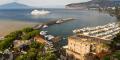







Italy Travel Guide
Italy dips down out of Europe and into the Mediterranean like a women's leg firmly planted in a sleek stiletto, so it's hardly surprising that Italians are known for their impeccable style and fashionable dress sense. They're also known for once having an empire that stretched across the globe, and for having the most spectacular churches, frescos, sculptures and Renaissance paintings in all of Europe.
The Italy of today is littered with the relics of more than 3,000 years of history, and an atmosphere that ranges from the Armani-wearing-scooter-driving-espresso-drinking buzz of its cities to the quiet, pastoral existence of its hillside olive farms and seaside fishing villages.
From the depths of the canals in Venice, which floats on a series of islands in an Adriatic lagoon, and the bleached sands of San Remo on the Riviera, to the rocky crags of the Alps, Dolomites and Apennines, Italy has everything from beach holidays to luxury mountain ski resorts.
Italy's cities reveal awe-inspiring architecture from the curved arches of the Ponte Vecchio in Florence to the crumbling magnificence of the Colosseum in Rome. Home of da Vinci, Michelangelo, Carvaggio and Botticelli, its artworks are a visual delight to all visitors.
Nestled into the outskirts of Rome is the independent Vatican City, the seat of the Pope and home to the famous St Peter's Basilica and the Sistine Chapel. The influence of the Holy Catholic Church on the people of Italy is still evident today in a series of holy festivals, carnivals, and parades involving young and old alike in almost every city, town and village.
Trastevere
Address: Rome
Separated from central Rome by the Tiber River, Trastevere is a picturesque medieval neighbourhood characterised by a quirky Bohemian atmosphere. Its narrow cobblestone streets are lined with overhanging flower boxes and washing lines, and home to numerous cafes, boutiques, pubs and restaurants. The area has long attracted artists, famous people and expats, and is a charming place to explore, having escaped the grand developments of central Rome.
Galleria Regionale
Address: Via Alloro 4, Palermo Sicily
Admission: EUR6 Daily 9am to 1pm and Tuesday, Wednesday and Thursday 2.30pm to 7pm
Telephone: (091) 623 0011
Palermo's largest art museum, devoted to medieval works, is housed in the Gothic Palazzo Abbatellis, built in 1488. The collection includes several particularly interesting works. The Bust of Eleanor of Aragon by Francesco Laurana, for example, dates from 1471 and is considered to be the epitome of Renaissance Sicilian sculpture, while the beautiful masterpiece painting Our Lady of the Annunciation is considered Antonello da Messina's greatest work. Also renowned is the chilling Triumph of Death fresco by an unknown 15th-century artist that covers an entire wall.
Capitoline Hill
Address: Piazza del Campidoglio, Rome Rome
Admission: EUR6.50, concessions available, Free to EU citizens under 18 and over 65. Museums open Tuesday to Sunday 9am to 8pm
Capitoline Hill was the original capitol of the ancient city and continues to serve as the seat of the city's government. The main feature of the area is Michelangelo's Piazza del Campidoglio, a testimony to the superiority of Renaissance town planning. The piazza is bordered by three palaces: the Palazzo dei Conservatori and the twin structures of the Palazzo dei Senatori and Palazzo Nuovo which house the Musei Capitolini, containing the largest collection of classical statues in the world. Among the notable statues found here are the Dying Gaul and the Satyr, the Capitoline Wolf with Romulus and Remus and the Spinario. Paths cut along the side of the hill from the Campidoglio giving way to panoramic views of the ancient sites of the Forum and Colosseum.
Roman Forum (Foro Romano)
Address: Via dei Fori Imperiali Rome
Admission: Free Daily 9am to 7.30pm (April to September) and 9am to 4.30pm (October to March)
Telephone: (06) 3996 7700
The site of ancient Rome's commercial, political and religious centre retires in the valley between the Capitoline and Palatine hills. The Forum's main thoroughfare, Via Sacra, slices through the old market square and former civic centre. To make sense of the ruins and relics of the old Republic it is helpful to consult a map of the area. Some of the best preserved and most notable monuments include the impressive Arch of Septimus Severus - a construction designed to celebrate Roman victory over the Parthinians - and the former atrium of the House of the Vestal Virgins and Temple of Vesta. Also of note are the Temple of Antoninus and Faustina, and the Arch of Titus, built to celebrate Titus' destruction of Jerusalem in AD 70. To the right of the arch are stairs snaking up the Palatine hill through a series of terraces to the Farnese gardens. The scented avenue festooned with roses and orange trees gives way to a vista over the Forum.
The Colosseum
Address: Piazza del Colosseo Rome
Admission: EUR10 Daily; 9am to 6.15pm in summer, 9am to 4.30pm in winter.
Telephone: (06) 700 4261
This enduring symbol of ancient Rome tenaciously clings to its foundations as the site of former gladiatorial conquests. Its architecture boasts an impressive array of Doric, Ionic and Corinthian columns and an underground network of cells, corridors, ramps and elevators that were used to transport animals from their cages to the arena. The magnificence of the original structure has been eroded through the years of pillaging and earthquakes so that only a skeletal framework remains.
Pantheon
Address: Piazza della Rotonda Rome
Admission: Free Monday to Saturday, 8.30am to 7.30pm; Sunday 9am to 6pm
Telephone: (06) 6830 0230
The stately Pantheon is one of the world's most inspiring architectural designs. Fittingly built as a temple to the Gods by Hadrian in 120AD, its perfectly proportioned floating dome rests seductively on sturdy marble columns. The only light source flowing through the central oculus was used by the Romans to measure time (with the aid of a sundial) and the dates of equinoxes and solstices. The south transept houses the Carafa Chapel and the tomb of Fra Angelico rests under the left side of the altar.
The Spanish Steps and Piazza di Spagna
Address: Rome
The graceful steps built in 1725, elegantly curve their way from the Piazza di Spagna to the Church of Santa Trinit dei Monti, a pastel tinted neoclassical building. The shopper's paradise of Via Condotti leads back from the Spanish steps to Via del Corso, and during spring the steps are decorated with pink azaleas. At the foot of the steps lies Bernini's boat-shaped Barcaccia fountain and to the right is the unassuming Keats-Shelley Memorial House.
Trevi Fountain (Fontana di Trevi)
Address: Rome
The tiny Piazza di Trevi has been immortalised through this fountain built for Pope Clement XII. The statues adorning this watery display represent Abundance, Agrippa, Salubrity, the Virgin and Neptune guided by two tritons. Tossing a coin into the fountain is supposed to guarantee a return trip to Rome.
St Peter's Basilica (Basilica di San Pietro)
Address: Piazza San Pietro Rome
Admission: Free. Dome: EUR4 (EUR5 with lift); Necropolis: EUR10 Daily; 7am and 7pm (April to September), 7am to 6pm (October to March)
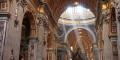
The Basilica lies above the reputed site of St. Peter's tomb. It is an overwhelming interior containing notable sculptures including Michelangelo's Pieta, which is protected by bullet-proof glass since the damaging attack on it in 1972. In the central aisle stands Arnolfo da Cambio's bronze statue of St Peter, its foot worn down by the constant flow of pilgrims' kisses. Proudly resting above the papal altar is Bernini's Throne of St Peter. The Vatican Grottoes, containing papal tombs, can be reached by steps from the statue of St Longinus. The Necropolis is located one level below the grottoes. This is the legendary site of St Peter's tomb and advance permission has to be obtained to view it. A strict dress code is in place for the Basilica and no shorts, bare shoulders or miniskirts are allowed (for men and women).
The Sistine Chapel & Vatican Museums
Address: Viale Vaticano Rome
Admission: Museum EUR14, concessions EUR8 Museums open Monday to Friday, 9am to 6pm
The Sistine Chapel's famous ceiling painted by Michelangelo looms above the frescoes on the side walls that were painted by an illustrious team of artists that included Botticelli, Ghirlandaio, Roselli, Pinturicchio, Signorelli and della Gatta. The altar wall is covered by Michelangelo's Last Supper, revealing the figure of Christ hovering above centre and flanked by Mary and other saintly figures. The Vatican Museums provide an inspiring visit to one of the world's greatest collections of art. The galleries stretch over four miles (6km) and include the magnificent Raphael rooms, the Etruscan Museum and the Pio-Clementino Museum, which boasts the world's largest collection of Classical statues.
The Uffizi (Gallerie degli Uffizi)
Address: Loggiato degli Uffizi 6 Florence
Admission: EUR6.50, concessions available Tuesday to Sunday 8.15am to 6.50pm. Closed on Mondays, 1 January, 1 May and 25 December
Telephone: (055) 238 8651
The Uffizi is one of the world's greatest art galleries with a collection of Renaissance paintings that include the works of Giotto, Masaccio, Paolo Ucello, Sandro Botticelli, Leonardo da Vinci, Michelangelo, Titian and Caravaggio. The collection is housed on the top floor of a building designed as the offices (uffizi) of the Medici, commissioned by Duke Cosimo I. From 1581, Cosimo's heirs used the upper storey to display the Medici art treasures. Ancient Greek and Roman sculptures line the inner corridors of the gallery and a series of rooms jut off from here, showcasing the chronological development of Florentine art from Gothic to High Renaissance and beyond. The scale and magnitude of the collection may need to be enjoyed over two visits. Rooms 1-15 (Florentine Renaissance) could be explored more thoroughly on the first trip and on the next visit one could concentrate on rooms 16 to 45 (from High Renaissance to later Italian and European painting).
The Accademia Gallery
Address: Via Ricasoli, 58-60 Florence
Admission: EUR6.50, concession available Tuesday to Sunday 8.15am to 6.50pm
Telephone: (055) 238 8609
Michelangelo's David stands self-assured above the crowds that flock to admire him. In the hallway leading up to the famous sculpture are further examples of Michelangelo's genius in the figures of the four Prisoners. The statues were deliberately left unfinished revealing the marble in its unfashioned state.
Piazza del Duomo (Cathedral Square)
Address: Piazza Duomo Florence
Admission: Cathedral entry is free, but there is a fee to the baptistry (EUR3), the cupola (EUR6) and museum (EUR6) Cathedral open daily, 10am to 5pm (Thursdays until 3.30pm; Saturdays until 4.45pm; Sunday 1.30pm to 4.45pm). Museum open daily 9am to 7.30pm (Sunday 9am to 1.40pm)
Telephone: (055) 215 380
Santa Maria del Fiore, the Duomo or Cathedral of Florence, is set in the heart of the city and perches above the metropolis like an emperor before his subjects. Its most distinctive feature is the enormous dome designed by Filippo Brunelleschi and built between 1420 and 1436. Visitors can climb between the two shells of the cupola for an unrivalled panorama of the city. The original Gothic exterior was destroyed in 1587 so that it could be replaced by the styling of the High Renaissance. This vision however died prematurely with its patron, the Grand Duke Francesco de Medici and the funding to build the neo-Gothic façade that we see today was not found until the 19th century. The Campanile (bell tower) was built according to Giotto's designs in 1334 and is an elegant prop to Brunelleschi's stout Cathedral. The tower is decorated with two garlands of bas-reliefs, strung around its pink, white and green marble façade. Above, sculptures of the Prophets and Sybils, carved by Donatello, look down upon the city below. The Campanile can also be climbed for the magnificent views over the square and the adjacent cathedral. The neighbouring Baptistry, with its famous doors designed by Lorenzo Ghiberti, is one of Florence's oldest buildings, and was originally a pagan temple. The gilded brass doors, dubbed the 'Gates of Paradise' were commissioned in 1401 to mark Florence's deliverance from the plague. The original panels are in the Museo dell'Opera del Duomo (the Duomo Works Museum) that exists largely to safeguard the sculptures removed from the doors and niches around the Piazza del Duomo. The museum also contains the machines used in the construction of the cathedral's dome and has displays devoted to the problematic construction of the cathedral's façade. A room containing Ghiberti's baptistry doors provides an opportunity to closely examine the stiacciato relief technique used. Other noteworthy artefacts found in the museum include Michelangelo's Pieta, the carved figures of Donatello's Prophets as well as his Magdalene sculpture. In the anteroom are Andrea Pisano's panels from the first few levels of the bell tower.
The Bargello (Museo Nazionale del Bargello)
Address: Via del Proconsolo 4 Florence
Admission: EUR4, Concessions available Daily, 8.15am to 5pm. Closed 2nd and 4th Monday of each month; 1st, 3rd, 5th Sunday of each month; New Year Day, May 1st and Christmas Day.
Telephone: (055) 238 8606. Reserve tickets on (055) 294 883
This Gothic Palazzo shelters a treasured national collection of Renaissance sculpture. Before its renovation to become Italy's first national museum, the building, constructed in 1255, functioned as a town hall, private residence and prison. An extensive collection of decorative arts is on display in addition to the magnificent sculptures of Michelangelo, Donatello, Giambologna and Cellini. The Palazzo's inner courtyard is ornamented with numerous coats of arms and the grand stairwell leading to the second-story loggia overflows with bronze birds created for the Medici's gardens. Other notable displays include an Islamic collection, an assortment of ivories (the largest collection in the world) and 16th-century majolica porcelain from Urbino, Faenza and Florence.
Santa Croce
Address: Florence
Admission: EUR4 Monday to Saturday 9.30am to 5.30pm, Sunday 1pm to 5.30pm
Telephone: (055) 244 619
Santa Croce, a magnificent Gothic church built in 1294, contains the tombs of many celebrated Florentines such as Michelangelo, Galileo, Ghiberti and Machiavelli. The Gothic interior is graced by the radiant frescoes of Giotto and his pupil Taddeo Gaddi and integrated into the cloister next to the church is Brunelleschi's Pazzi Chapel (Cappella de' Pazzi). When Lord Byron first laid eyes on the church he declared himself 'drunk with beauty'.
Ponte Vecchio
Address: Via Por Santa Maria/Via Guicciardini Florence
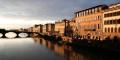
The Ponte Vecchio's status as the oldest bridge in Florence saved it from destruction during the Nazi retreat from Italy in 1944. They defied orders to blow up the stately bridge straddling the Arno River and bombed the ancient buildings on either side of it instead. The Arno flood of 1966 also tested the bridge's resilience and swept parts of it away in its powerful current. The most affected sections were the overhanging shops belonging to the gold and silversmiths. In 1593 the original tenants - butchers, tanners and blacksmiths - were evicted from the workshops because of the noise and stench they created. To one side of the bridge is the majestic bust of the most famous Florentine goldsmith, Benvenuto Cellini. Perched above the shops is a secret passageway, the Vasari Corridor, providing an elevated link to the Palazzo Pitti via the Uffizi. It was the private walkway of the Medicis who could move between the various residences without having to rub shoulders with the riff raff.
Palazzo Pitti and Giardino Boboli
Address: Piazza Pitti 1 Florence
Admission: From EUR4 to EUR8.50, a ticket for all museums is EUR10.50. Gardens EUR4 Each museum has its own opening hours, but most are closed on Mondays
Telephone: (055) 294 883
Originally owned by wealthy banker, Luca Pitti, the Palazzo later became the property of the Medici family. It is a grand structure that now boasts no less than seven museums. Amongst these are the Medici treasures that are showcased in the Museo degli Argenti, the Museum of Costumes and the Porcelain Museum. The Galleria d'Arte Moderna provides a fascinating display of works from the Macchiaioli school - early 19th century proto-impressionist paintings - as well as a collection of Neoclassical and Romantic art. Extending behind the palace are the elaborately landscaped and beautifully maintained Giardino Boboli (Boboli Gardens). The most celebrated aspects of the gardens include the Grotta del Buontalenti located close the entrance. In the deepest recess of the cave is Venus Emerging from her Bath attended by curious imps. Another notable structure is the enormous amphitheatre designed on a scale to serve the Medici's tastes.
Etruscan Sites
Address: Lazio and Umbria Tuscany
Attracted by the mineral wealth found in the regions of Tuscany, Lazio and Umbria, the Etruscans made their way to Italy around 900 BC. Traces of Etruscan civilisation can be found in their burial sites and in the artefacts found in their tombs. They were preoccupied with the afterlife and dedicated much effort in building burial sites carved into rock or constructed from stone slab and reached by dedicated rock-cut roads. For an exploration of Etruscan artefacts start at Grosseto. The Museo Civico Archeologico in Grosseto contains a selection of Etruscan artefacts that were found in tombs nearby. Head north from here to Roselle, the most important excavated Etruscan and Roman remains in Tuscany. From here follow the road leading east for 34 miles (54km) to the Etruscan village of Saturnia to explore its rock-cut tombs and on to Sovanato the famous Ildebranda Tomb. The town of Pitigliano is peppered with Etruscan tombs and tunnels. The town itself is a spectacular vista of houses jutting out over soft limestone cliffs and caves bordering the River Lente. The cliffs contain numerous caves that have been used to store local wines and olive oils and the town itself is a labyrinth of medieval streets that have carried the passage of many a traveller. From this quaint town, head west to the extensive necropolis on the outskirts of Marsiliana. Complete the trip with a stop at Talamone and Maremma for a visit to the Etruscan temple, Roman villa and baths.
Chianti Region
Address: Tuscany
A circular route from Siena through the Chianti hills is a scenic and sensory experience. The route covers the villages of the Chianti Classico wine region garnished with ancient castles and rambling farmhouses. The vineyards and wooded hills of the Chianti are best explored along its winding back roads or from within its sleepy hamlets. By car, visitors would keep a lookout for signs marked 'vendita diretta'. The first stop is at Castello di Brolio, a magnificent vineyard owned by the Ricasoli family since 1167. The SS484 will take you south of Brolio and north past the hamlets of San Gusme, Campi and Linari before rejoining the road for a diversion to the Meleto castle. Another worthwhile stop is at Badia a Coltibuono for its restaurant and Romanesque church. The winding road west to Radda in Chianti is especially picturesque. A further nine miles (15km) from here north to the hamlet of Volapia is a delightful travel back in time as is a visit to Castellina in Chianti. Within the ramparts of this walled village is the Bottega del Vino Galla Nero at Via della Rocca 13, showcasing the region's delectable wines and olive oils.
Montepulciano
Address: Via Ricci 9 (Tourist office) Tuscany
Admission: Palazzo Communale tower is open 9am to 2pm, Monday to Saturday.
Montepulciano is Tuscany's highest hilltop town, built along a narrow limestone ridge at 1,950ft (605m) above sea level. Sheltered within the town's fortified walls are charming streets packed with Renaissance-style palaces and churches. Its most celebrated achievement is its Vino Nobile wines. Also of interest is the Madonna di San Biagio, a delightful pilgrimage church on the outskirts of the town. For a dip into Etruscan reliefs and funerary urns collected by Pietro Bucelli, visit his Palazzo on Via di Gracciano del Corso 73. For splendid views, take a stroll to the Palazzo Communale and climb the tower.
Museo Archeologico Nazionale
Address: Piazza Museo Nazionale 18-19 Naples
Admission: EUR6.50, concessions EUR3.25 Wednesday to Monday, 9am to 8pm.
Telephone: (081) 440 166
This world-class museum houses the Farnese collection of antiquities from Lazio and Campania and the incredible treasures of Pompeii and Herculaneum. Notable among these collections are the Farnese Hercules and the Farnese Bull, the largest known ancient sculpture. On the mezzanine level is the Alexander Mosaic and at the furthest end of the mezzanine floor is the Secret Room (Gabinetto Segreto). The fascinating collection contained here showcases the erotic material found in the brothels, baths, houses and taverns of Pompeii and Herculaneum. The top section of the museum houses the Campanian wall paintings, well preserved creations attesting to a mysterious past world. These are supported by a range of artefacts in the form of glass, silver, ceramics, rope and even foodstuffs surviving from the Campanian cities.
Duomo San Gennaro
Address: Via del Duomo 147 Naples
Admission: Cathedral: free; archaeological site: EUR3 Monday to Friday between 9am and 12pm and 4.30pm to 7pm
Telephone: 081 449 097
The Chapel of San Gennaro is accessed from the south aisle of the Cathedral of Naples and this 13th-century Gothic building is dedicated to the patron saint of the city. Tradition tells the story of how two phials of San Gennaro's blood liquefied in the bishop's hand after his martyred body was transported to the church. Legend has it that disaster will strike if the blood fails to liquefy on specific festival days - the first Saturday in May, on September 19 and December 16. The liquefaction ceremony takes place during a special Mass in full view of the congregation. The first chapel on the right on entry into the cathedral is dedicated to San Gennaro and holds the famous phials of blood and a silver reliquary containing his skull. Beneath the Duomo are the excavations of well-preserved Greek and Roman roads that stretch beneath the modern city. Special tours of the excavations can be arranged.
Museo e Gallerie di Capodimonte
Address: Via Milano 2, Capodimonte Park Naples
Admission: EUR8 Tuesday to Sundays 8.30am to 7.30pm
Telephone: (081) 749 9111
The museum occupies a restored 18th century palace perched on the city's hills and its artworks are arranged by collections and not chronology. The Farnese and Bourbon rulers amassed impressive collections of Renaissance paintings and Flemish masterpieces that can be viewed along with other great works. Notable amongst these are Masaccio's Crucifixion, Filipino Lippi's Annunciation and Saints, Raphael's Leo X, Bellini's Transfiguration, Michelangelo's Three Soldiers and Breughel's The Allegory of the Blind.
Pompeii
Address: Naples
Admission: EUR11, concessions EUR5.50 Daily 8.30am to 7.30pm (April to October), 8.30am to 5pm (November to March)
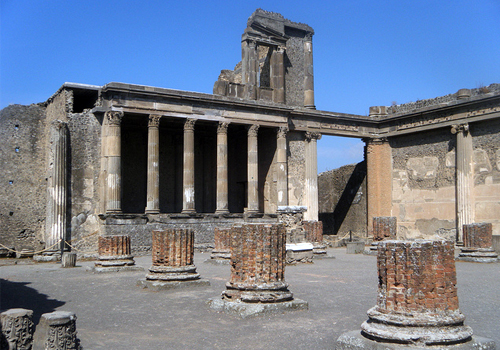
Mount Vesuvius' fiery temper erupted in the volcanic lava that buried the Roman city of Pompeii. The most evocative testimony to its victims is the 'frozen people', plaster casts of the victims' whose anguished contortions and facial expressions reveal the horror of their untimely deaths. Excavation of Pompeii is an ongoing process and every decade has brought to light new finds that provide insight into daily Roman life. A comprehensive tour of Pompeii's attractions will take approximately five hours. Guided tours are available but are pricier alternatives to doing it alone. There is an informative 'How to Visit Pompeii' guidebook for sale outside all the site entrances.
Paestum
Address: Campania region, southern Italy Naples
Admission: Museum EUR4 (EUR6.50 including the site) Museum daily 9am to 7pm (closed first and third Monday each month)
The well-preserved Greek temples of Paestum are the best of their kind in the world, rivalling those of Sicily and Athens. The city was founded by its Greek colonists in the 7th century BC and later fell under Roman rule until it was no longer commercially viable and its inhabitants finally left for greener pastures. The north-south axis of the city is marked by the paved Via Sacra and most guided tours begin at its southern end. A guide to the excavations and Archaeological Museum can be bought at any of the roadside shops. Notable amongst the remains are three Doric temples, the best preserved in the world. Built without the use of cement or mortar these remarkable structures comprise the basilica, Temple of Poseidon and Temple of Ceres. Heading north along Via Sacra will take one to the Roman Forum gymnasium and amphitheatre. Paestum's museum contains a fascinating collection of pottery and paintings found in the tombs of the area.
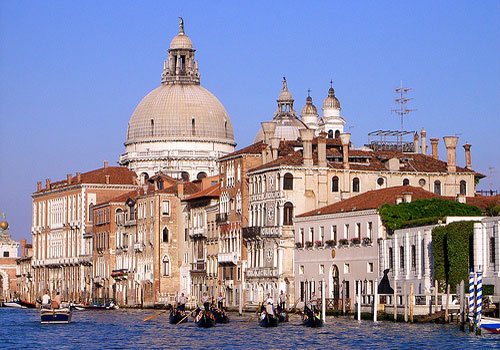
The Grand Canal (Canalazzo)
Address: Venice
Venice's main waterway splits the city in half with sestieri in equal parts to the west and east of it. It is the hub around which much activity in Venice is concentrated and is encircled with elegant facades of the palazzi, which testify to the city's past opulence. The best way to explore the architectural splendour of these Renaissance buildings is on board a vaporetta. Pedestrian access across the canal is only provided along three bridges situated at the station, Rialto and Academia. Gondolas cross the canal at regular intervals and provide a romantic interlude to the sightseeing itinerary. The Grand Canal palaces and buildings to look out for include the Ca da Mosto, with its rounded arches in low relief. The 'House of Gold' (Ca d'Ora) is a beautiful Gothic building constructed between 1424 and 1430. Palazzo Corner-Spinelli and Palazzo Vendramin Calergi combine classical and Byzantine elements designed by Mauro Codussi. Architect Jacopo Sansovino was inspired by Codussi's style and infused this in his creation of the Palazzo Corner (Ca Granda). Another notable Palazzo is the Grimani di San Luca, designed by Michele Sanmicheli.
St Mark's Square
Address: Venice
St Mark's Square (Piazza San Marco) has always been the nucleus of Venice. The first citadel and church were erected on its stony foundations, the Palazzo Ducale and the Basilica di San Marco respectively. The Basilica di San Marco is a unique juxtaposition of Byzantine, western European and Islamic architectural styles. The Basilica's most precious relic is the Pala d'Or, a Venetian-Byzantine gold relief adorned with precious gems. Travellers and pigeons flock to the Piazza with equal zeal. It is the tourists however who pay dearly to eat or drink at the elegant cafes that spill onto the pavements. Designer shops line the streets that radiate from the square. There are worthwhile places of interest to explore beyond the square that include the Museo Correr, the Archaeological Museum and the Museo del Risorgimento, which are housed within the Procuratie Nuova. Attached to the Procuratie Vecchie is the triumphal Torre dell'Orologio. The adjoining archway guides one through to the Mercerie, Venice's main commercial street that stretches to the Rialto.
Rialto
Address: Venice
The Rialto has long been the commercial core of Venice and is famed as the place where the first bridge over the Grand Canal was built. The original wooden bridge collapsed under the strain of the crowds gathered here to admire a wedding procession. It was replaced by the sturdier single stone arch design of Antonio da Ponte, built in 1588. Today the area still resembles the bustling fruit and vegetable market of former times but is additionally swamped with tourists and the accoutrements geared towards them.
Basilica dei Frari
Address: San Polo 3003 Venice
Admission: EUR2.50 Monday to Saturday 9am to 6pm, and Sunday 1pm to 6pm. Closed to visitors during services
Telephone: (041) 272 8611
This great Gothic Franciscan church was constructed in the 14th century and is primarily known as the burial place of Titian and the Venetian sculptor, Antonio Canova. Titian's tomb in the south aisle watches over large marble pyramid created for Canova. The interior of the church is adorned with the works of famous artists. These include Donatello's St John the Baptist, Giovanni Bellini's triptych of the Madonna and Saints, Titian's famous Assumption of the Virgin and his Madonna of Case Pesaro.
School of St Roch (Scuola di San Rocco)
Address: Campo San Rocco, San Polo 3054 Venice
Admission: EUR7 Daily 9.30am to 5.30pm
Telephone: (041) 523 4864
A Scuola in Venice was a mixture of guild and religious fraternity where members paid annual fees to support fellow members and to decorate the school's premises. The School of St Roch is known for the canvasses of Jacopo Tintoretto that adorn its interior. Tintoretto was commissioned to decorate the School in 1564 and dedicated 23 years to this task. The paintings are arranged in chronological order that can be followed by beginning on the second floor in the Sala dell'Albergo. Notable amongst his works are the scenes from the Life of the Virgin and the Crucifixion.
Academia
Address: Dorsoduro 1055 Venice
Admission: EUR6.50 Tuesday to Sunday 8.15am to 6.50pm. Closed Monday, New Year's Day, May 1st, Christmas Day
Telephone: 055 294 883
The Gallerie dell'Academia houses one of Europe's finest art collections. Its display follows the progression of Venetian art from the 14th to 18th centuries. Notable works in the gallery include Paolo Veneziano's Coronation of Mary, Carpaccio's Crucifixion and Apotheosis, Giovanni Bellini's Madonna with Child between Saints Catherine and Mary Magdalen, Giorgione's Tempest, Lorenzo Lotto's Portrait of a Young Gentleman in His Studio, Paolo Veronese's Feast in the House of Levi, and Tintoretto's Theft of St Mark's Body and Crucifixion.
Peggy Guggenheim Collection
Address: Palazzo Venier dei Leoni, 701 Dorsoduro Venice
Admission: EUR10; concessions available Daily except Tuesdays 10am to 6pm
Telephone: (041) 240 5411
The Guggenheim collection is housed in the former Palazzo of the wealthy American heiress and has become one of the most illustrious collections of Modern Art in Italy. It spans the artistic movements of Cubism, European Abstraction and Surrealism with notable works by Brancusi, Marino Marini, Kandinsky, Picasso, Magritte, Rothko, Max Ernst, Dali and Jackson Pollock. Peggy Guggenheim built up her collection between 1938 and 1947 and bought the Palazzo Venier dei Leoni in 1948 where she lived until her death in 1979.
Duomo (Cathedral)
Address: Piazza del Duomo 18 Milan
Admission: Cathedral free; Roof EUR4 by stairs, EUR6 with elevator; Crypt EUR1.50; Baptistery EUR1.50 Cathedral 6.50am to 7pm; Roof 7am to 7pm; Crypt 9am to 12pm and 2.30pm to 6pm; Baptistery Tuesday to Sunday 10am to 12pm and 3pm to 5pm; Museo del Duomo Tuesday to Sunday 9.30am to 12.30pm and 3-6pm
Telephone: (02) 8646 3456
The looming Duomo, the world's largest Gothic cathedral, presides over the Piazza that bears its name. Its construction began in 1386 and continued sporadically until Napoleon ordered its completion in 1809. Its lengthy creation bestowed on it 3,400 statues, 135 spires and 96 gargoyles. It is best visited in full sunshine when the interior is illuminated by the colourful mosaic of its stained glass windows. The church is a five-aisled cruciform seating 40,000 worshippers. The 16th-century marble tomb of Giacomo de Medici lies in the south transept and lying buried at its heart is St Charles Borromeo, the cathedral's most important benefactor. Every year in May and September a nail from the cross of Christ is displayed to worshippers and is retrieved from its resting place by the bishop who is hoisted to the nivola to reach it. Across the piazza in the Palazzo Reale is the Museo del Duomo that displays the treasures from the cathedral. It also houses the Museo d'Arte Contomporanea, showcasing a collection of Italian Futurist art.
Galleria Vittorio Emanuele II
Address: Piazza del Duomo Milan
This four-storey, glass-domed arcade is entered from the Piazza in front of the Cathedral and extends to the Piazza della Scala. It was originally built as a link to the opera house but has become a fashionable place to hang out, sip coffee or camparis, or take a stroll through its many exclusive shops. Milanese gather in this conservatory to escape the winter rains or to socialise after a busy working day.
Theatre Museum at La Scala (Museo Teatrale alla Scala)
Address: Largo Ghiringhelli 1, Piazza della Scala Milan
Admission: EUR5, concessions available Daily 9am to 12.30pm and 1.30pm to 5.30pm
Telephone: (02) 8879 2473
This world famous opera house rests on the site of the Church of Santa Maria alla Scala, its namesake. The Museum provides a wealth of mementos from the opera house dedicated to the nation's beloved composers and performers. These include Rossini, Puccini and Toscanini. Two halls are devoted to Verdi alone and contain memorabilia such as the spinet on which he learnt to play, hand-written scores and the baton given to him after the momentous reception of Aida.
Santa Maria delle Grazie
Address: Piazza Santa Maria delle Grazie 2, Corso Magenta Milan
Admission: Church free; Painting EUR6.50 plus EUR1.50 reservation fee Tuesday to Sunday 8.15am to 7.30pm. Reservations are essential and visitors must arrive 15 minutes before allocated time of visit
Telephone: (02) 8942 1146
Located next to the church in the former monastery's refectory is Leonardo da Vinci's famous painting, The Last Supper (Cenacolo Vinciano). The fresco depicts the moment of Christ's revelation of the betrayal. Judas hovers to the right of the painting with his hand placed protectively on the bag of silver. Scaffolding covers the bottom of the painting (an ongoing restoration project), leaving the rest in full view. Controversy has erupted over the removal of layers of corrective over-painting completed in the 18th and 19th centuries. The painting has endured more than hot debate however as it escaped the bombing during WWII that destroyed the roof of the refectory.
Museo Poldi-Pezzoli
Address: Via Manzoni 12 Milan
Admission: EUR8, concessions EUR5.50 Free audioguides in English, Italian and Japanese available Tuesday to Sunday 10am to 6pm
Telephone: (02) 796 334
The Museo Poldi-Pezzoli contains a spectacular private collection that was bequeathed by its namesake Poldi Pezzoli to the city in 1879. Numerous masterpieces hang from the walls of the Golden Room with its vista onto a picturesque garden. Antonio Pollaiolo's Portrait of a Lady has become the symbol for Milan's own style and elegance and depicts the profile of an elegant woman. Other famous paintings include a Virgin and Child by Andrea Mantegna, Bellini's Ecco Homo, Piero della Francesca's St Nicholas and Guardi's Gray Lagoon.
Museum of Historic Art of the Sforzesco Castle
Address: Piazza Castello Milan
Admission: Castle: free. Museums: EUR3, concessions available. Free admittance daily from 4.30pm to 5.30pm (admittance until 5pm), Fridays from 2pm to 5.30pm Castle: Daily 7am to 6pm (winter), closing at 7pm in summer. Closed 25 December, 1 January and 1 May, Easter Monday. Museums are closed on Mondays
Telephone: (02) 8846 3700
The gargantuan Sforzesco Castle built in the 15th century is one of Milan's foremost monuments. It was restored after being bombed in 1943. The vast interior, which is broken here and there by smaller courtyards, contains three museums, the most notable of which is Museum of Historic Art (Museo d'Arte Antica del Castello Sforzesco). Within its collection of sculptures is the famous Pieta Rondanini, Michelangelo's final work. The picture gallery features paintings by Mantegna, Bellini, da Vinci and Fra Filippo Lippi. The two other museums within the Castle's ramparts are the Museum of Applied Arts and the Archaeological Museum.
Leonardo da Vinci National Science & Technology Museum
Address: Via San Vittore 21 Milan
Admission: EUR8 (adults), concessions EUR6 Tuesday to Friday 9.30am to 5pm. Holidays and weekends 9.30am to 6.30pm
Telephone: (02) 485 551
Within the Leonardo Gallery of the museum is a collection of Leonardo's ingenious designs from war machines to architectural visions. Applied physics is the focus of another room in keeping with the museum's tribute to the history of science.
The Gallery of Modern Art
Address: Villa Reale, Via Palestro 16 Milan
Admission: Free Tuesday to Sunday 9.30am to 5pm
Telephone: (02) 7600 2819
The Gallery of Modern Art (Civica Galleria d'Arte Moderna) is housed in the building, which once served at Napoleon's summer palace and was occupied by the famous statesman and Josephine between 1805 and 1814. It is now recognised for its collection of modern art with works by Picasso, Matisse, Renoir, Gaugin and Cézanne.
Portofino
Address: Milan
Telephone: (0185) 269 024 (tourist office)
Nestled in a sheltered inlet within the stretch of the Italian Mediterranean is the coastal village of Portofino. It has long been the playground for the rich and famous, attracting the likes of Humphrey Bogart, Sophia Loren, Richard Burton, Elizabeth Taylor and Princess Grace. It is not surprising therefore that its exclusivity and prices rose to match its holidaymakers. The scenic surrounds can be explored from the outlying nature reserve graced with cypress and olive slopes. Set off from here on a 90-minute trek to San Fruttuoso or a 2½-hour hike to Santa Margherita. Other sights around Portofino include its castle and the lighthouse (faro) with its breathtaking view of the coastline.
Cinque Terre
Address: Milan
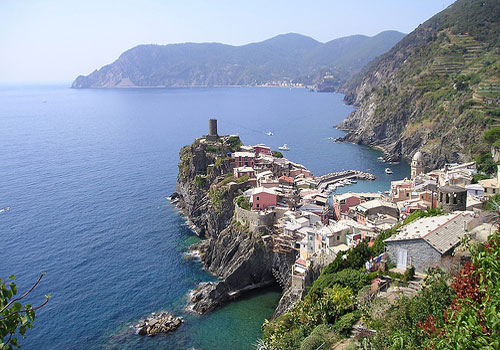
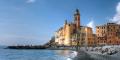
Cinque Terre means 'Five Lands'. These are the five related fishing villages that nestle precariously on the cliffs overlooking the azure ocean of the Italian Riviera, off the country's northwestern coast. It is a picture postcard dream of sparkling clear waters and dramatic vistas contained within the tranquil embrace of the villages that are connected to one another by a scenic pathway that curves through the hillside among olive groves and vineyards. Monterosso is the largest of the towns and is recognisable through the huge statues carved into the rocks facing its shores. The village of Riomaggiore is quickly identified through the myriad fishing boats festooning its shores and is linked by the 'lovers lane' to the charming town of Manarola. Corniglia perches precariously onto the mountainside and is accessed through a steep climb and Vernazza's promenade and piazza have beautiful sea vistas.
Marionette Museum
Address: Via Butera 1 (around the corner from the Palazzo Chiaramonte), Palermo Sicily
Admission: EUR5 (adults), concessions available Monday to Friday 10am to 1pm and 3.30pm to 6.30pm
Telephone: (091) 328 060
One of Palermo's most unique attractions is the engaging Museo Internazionale delle Marionette, a museum dedicated to the art of puppetry, which is an age-old traditional Sicilian entertainment. Free shows are often put on in summer, but the museum collection itself, the greatest of its kind in the world, is entertainment enough. Most of the antique puppets on display evoke Norman Sicily, representing chivalrous heroes and Saracen pirates, knights, ladies and troubadours. The collection includes puppets from the Far East and even some English 'Punch and Judy' dolls.
Time Elevator Rome
Address: Via dei SS. Apostoli 20 Rome
Admission: Daily, 10.30am to 7.30pm
Telephone: 069 774 6243
Time Elevator Rome is an interactive movie theatre featuring panoramic screens, flight simulators and surround-sound. This modern technology offers kids the opportunity to be enthralled by a cinematic, 3-D journey back through 2750 years of Roman history.
The Citadel of Museums
Address: Piazza Arsenale Sardinia
Sardinia's history and culture is conveniently packaged in the Citadel of Museums complex in the centre of the capital, Cagliari. Here is sited the National Archaeological Museum, the National Picture Gallery, the Cardu Siamese Museum and a collection of anatomical waxes by Florentine sculptor, Clemente Susini, all administered by the University. The Archaeological Museum houses artefacts from all the ancient cultures of the island, including ceramics from Phoenician tombs, Punic jewellery and Nuragic bronzes. The Picture Gallery contains a collection of contemporary art and sculpture, while the Siamese museum exhibits fascinating items from the east. The unique Collection of Waxes consists of 23 models of parts of the human body created by Clemente Susini, from waxes, resin, tallow, pitch and balsam.
Nuraghe
Address: Sardinia
Admission: Most Nuraghe are free Most Nuraghe are closed afternoons and Sundays
The mysterious Nuragic people who arrived in Sardinia around 1500 BC festooned the island with about 30,000 circular fortified structures. Today about 7,000 of these remain standing to be marvelled at by tourists. The complex of Nuraghe in Barumini has been added to UNESCO's World Heritage List and is the finest and most complete example of this prehistoric architecture. The Barumini site can be reached from Oristano or Cagliari on route 131 and turning off onto route 197. Other well-preserved nuraghe can be seen at Sant Antine. At Nora on the very southern tip of the island are the remains of an extensive Nuragic village including an amphitheatre, forum, baths, temple and Kasbah. Other good Nuragic sites are near Villanovaforru, Alghero, and Abbasanta.
Trenino Verde
Address: Sardinia
Admission: Daily between 30 June and 1 September
Telephone: (079) 245 740 (schedules and routes)
Sardinia has an unforgettable coastline, but the interior of the island is equally beautiful. A fun way to explore it is aboard the Trenino Verde (Little Green Train), a vintage steam locomotive that puffs its way through forests, over bridges and through tunnels into some of the island's most scenic mountain areas. The narrow gauge train tracks were laid in 1888 to serve the more isolated areas of Sardinia, and the picturesque restored train and locomotive is just as old. The train runs on scheduled routes, connecting Nuoro and Bosa, Sassari and Alghero, Sassari and Palau, and Cagliari and Arbatax. Most popular is the Cagliari to Arbatax route, which departs each morning at 6.45am.
Neptune's Grotto (Grotta di Nettuno)
Address: Alghero Sardinia
Admission: EUR10 (cave tour) Daily; 9am to 7pm (April to September), 10am to 5pm (October), 9am to 2pm (November to March); Tours run hourly.
A popular sightseeing expedition from Alghero is a boat ride to Neptune's Grotto, an impressive deep marine cave in the sheer cliffs at Capo Caccia. The boat ride takes 45 minutes past the bay of Porto Conte. At the cave visitors can take a 45-minute tour entering through the long snaking passage that delves into the rock, to view dramatically lit, fantastic stalagmites and stalactites. The cave can also be reached by bus from the main terminal in Alghero, or by car, which on arrival necessitates climbing down 650 steps to the cave entrance.
Garibaldi's House
Address: Caprera Island Sardinia
Admission: Daily 9am to 1pm and 3pm to 6pm
Famous revolutionary, Giuseppe Garibaldi, lived the last third of his life on the woody, undeveloped island of Caprera, a short ferry-ride from Palau on Sardinia. The trip to view Garibaldi's house and museum is very popular in season, with visitors queuing to catch one of the regular ferries to Caprera. Garibaldi came to live in Caprera in 1855 after a 20-year exile from Italy. He led his famous 1,000 Red Shirts on his campaign to conquer Sicily and Naples from here in 1861. The elegant homestead has been preserved as he left it. Tours of the property end with his tomb in the garden.
Monreale Cathedral
Address: Piazza Vittorio Emanuele, Monreale Sicily
Admission: Daily 8am to 6pm
Telephone: (091) 640 4413
Of all the many architecturally beautiful and fascinating places of worship in Palermo, probably the most renowned is the 12th century cathedral in the suburb of Monreale, high on the mountain slope about five miles (eight km) from the city centre. The dazzling cathedral is a mixture of Arab, Byzantine and Norman artistic styles, a blend of medieval Christian and Muslim architecture. The magnificent mosaics that cover 68,243 square feet (6,340 sq metres) of the cathedral's dome and all of the walls on the interior are unsurpassed. The adjacent Benedictine abbey features a cloister with 228 carved stone columns, many inlaid with mosaics, depicting scenes from Sicily's Norman history.
Capuchin Catacombs
Address: Piazza Cappuccini 1, Palermo Sicily
Admission: EUR1.50 Daily 9am to 12pm and 3pm to 5pm (until 7pm in summer)
Telephone: (091) 212 117
The subterranean catacombs that contain the mummified remains of about 8,000 ancient inhabitants of Palermo may be macabre, but are fascinating to visit. The Capuchin friars began mummifying and embalming the bodies of the city's nobles back in 1533, and the tradition continued for centuries with the last body (a seven-year-old girl named Rosalia) being embalmed in 1920. After embalming, the corpses were hung along the walls of the catacombs, dressed in their best, which they still wear proudly, like the military officer in an 18th-century uniform complete with tricorn.
Palazzo Mirto
Address: Via Merlo 2, Palermo (off the Piazza Marina) Sicily
Admission: EUR3 Monday to Saturday, 9am to 7pm; Sunday, 9am to 1pm
Telephone: (091) 616 4751
The excessive opulence of Baroque is nowhere better demonstrated than in the magnificent Palazzo Mirto, one of the few aristocratic homes of Palermo that is open to the public, offering visitors a glimpse into the lifestyle of Sicily's noble 19th-century families. The Palace was the residence of the Lanza Filangeri family whose last heir left the estate to the Ministry of Cultural Assets in 1982. Most of the princely rooms and salons are furnished with original items that belonged to the family.
Regional Archaeological Museum
Address: Piazza Olivella 24, Palermo Sicily
Admission: EUR4.50 (adults), EUR2 (children) Tuesday to Saturday 8.30am to 6.15pm, Sundays 9am to 1pm
Telephone: (091) 611 6805
Some of Europe's greatest archaeological treasures are tucked away in Palermo's somewhat musty museum, which is well worth visiting even though it's rather shabby. The collection is housed in several old convent buildings, dating back to the 13th century, and includes artefacts from the Phoenician, Punic, Greek, Roman and Saracen periods found on the island. Highlights include two Phoenician sarcophagi dating from 5 BC, and the Pietra di Palermo, a black slab discovered in Egypt containing hieroglyphics that is known as the 'Rosetta Stone' of Sicily. One room is devoted to the marvellous finds unearthed at the temples of Selinunte. There is also an interesting section devoted to underwater archaeology.
Ustica
Address: Sicily
An underwater city and a landscape of petrified black lava are the characteristics of the unusual little island of Ustica in the Tyrrhenian Sea just a short ferry ride 36 miles (57km) north west of Palermo. The ancient volcanic island was originally inhabited by the Phoenicians and fell prey to pirate raids often during the Middle Ages. In the 20th century Ustica became a penal colony. Today the island is a designated national marine park and its crystal clear waters and undersea treasures, particularly the submerged ancient city of Osteodes, attract divers from all over the world. Every year in July the island is the venue for an International Underwater Activity Show.
Solunto
Address: 10 miles (16km) east of Palermo Sicily
The Roman ruins at Solunto overlook the coast near Santa Flavia, on the slopes of Mount Catalfamo. The site was originally a Phoenician village that was expanded by the Greeks who conquered it in 396 BC. By 255 BC it had fallen to the Romans, who rebuilt much of the original town. No complete structures remain and the ruins consist mainly of floors and the lower portions of walls and columns. Portions of mosaics and paintings are still visible. An impressive view of the Gulf of Palermo can be had from the hilltop above Solunto, and there is a small archaeological museum at the site, although most of the artefacts from Solunto are in the Palermo's Regional Archaeological Museum.
Ortygia
Address: Sicily
The Ponte Nuova (New Bridge) connects the mainland city of Syracuse to the island of Ortygia, where most of the worthy sights are located. The remains of the Temple of Apollo are sited in the Piazza Pancali; this is the oldest Greek temple in Sicily, built in the Doric style in around 565 BC. The cathedral in the nearby Piazza Duomo is uniquely made up of the original walls of a 5th-century BC Greek temple known as the Athenaion and near the sea, reached along Via Capodieci, which is the mythical Spring of Arethusa. There are medieval relics on the island too, including Maniaces Castle dating from the 11th century. Apart from the many historic sights, the island of Ortygia also offers numerous boutiques and craft shops, as well as restaurants and cafes galore. Several hours are required to explore the island fully.
Paolo Orsi Regional Archaeological Museum
Address: Viale Teocrito 66, Syracuse Sicily
Admission: EUR6 Monday to Saturday, 9am to 6pm; Sunday, 9am to 1pm
Telephone: (0931) 464 022
Syracuse's archaeological museum is one of the most extensive in all of Italy, preserving relics and remains from the Greek, Roman and early Christian eras of Sicily's history. The museum building itself is ultra-modern, consisting of glass and steel exhibition halls connected in a hexagonal shape. The exhibits cover a vast range, from the skeletons of prehistoric animals to the renowned Landolina Venus statue.
Parco Archeologico della Neapolis
Address: Via Del Teatro, Syracuse Sicily
Admission: EUR4.50 Daily 9am to 6pm (April to October), 9am to 3pm (November to March)
Telephone: (0931) 66206
The archaeological park on the western edge of the city of Syracuse contains the celebrated rock-hewn Greek amphitheatre, capable of holding about 15,000 people, where Euripides and Aeschylus' works were performed in antiquity. Today Greek dramas are still played here on occasion. Inside a leafy quarry at the site near the theatre is the ear-shaped cavern, the Orecchio di Dionigi, reputedly used by Dionysius as a prison. Nearby is the Roman Amphitheatre, built in the time of Augustus, where gladiators fought each other and wild animals in gory contests.
Catania
Address: Sicily
The second largest city in Sicily, Catania sits in the shadow of Europe's highest volcano, Mount Etna, on the east of Sicily between Syracuse and Taormina. Ugly, decayed and crime-ridden today, it was once called the 'city of black and white' because of the use of white marble and black lava to construct its elegant buildings, many of which have since fallen into ruins or been destroyed by war, earthquakes and lava flows. In summer Catania sizzles; it is regarded as the hottest city in Italy with temperatures often soaring to 104ºF (40ºC). Despite its unattractive aspects, Catania is an ancient city, founded in 729 BC, and boasts some interesting historical relics. There are two Roman amphitheatres, one reminiscent of Rome's Colosseum, and a 13th-century fortress, Ursino Castle, which is now a museum. The city's cathedral contains some royal tombs and was built in the 11th century.
Mount Etna
Address: Sicily
Sicily's greatest natural attraction is the very active volcano, Mount Etna, which has been spewing lava and shaking the earth for centuries, most recently in 2002. About 20 miles (32km) from Catania the craters below the summit can be reached from the town of Piano Provenzana at the base by mountain bus or on foot. This town also serves as a ski resort in winter, and during summer is a base camp for hikers intent on enjoying the wooded scenery and exploring the interesting caverns in the area. Various species of oak and stone pine, birch and beech trees cover the lower mountain slopes, while frogs, toads, tortoise and Sicily's ubiquitous lizards hide in the forest streams. Foxes, weasels, squirrels and other small mammals stalk the forests and a plethora of bird species fill the trees and the Gurrida Lake area.
Capri
Address: Naples
Telephone: 081 837 5308.
Capri's beauty captured the imagination of the Roman Emperor Augustus in 29 BC and continues to draw admiring crowds to its picturesque banks. Ferries and hydrofoils transport travellers from Sorrento, Positano, Amalfi and Naples to its embarkation point at Marina Grande. From here a funicular runs to the town's Piazza Umberto. The island's main attraction is the Blue Grotto. The cave is illuminated by a fantastic neon blue, created through the interplay of light and water. The ruins of Villa Tiberio can be explored through a 45-minute trek up the hill. Legend has it that Tiberius tossed those unfortunate enough to anger him off the precipice; walking down is luckily an option nowadays. On the descent along the path one can take a short detour to the Arco Naturale. The weathered stone arch on the island's eastern cliffs provides the perfect perspective from which to contemplate the vista that stretches to Paestum. Another interesting villa to explore is the Villa San Michele (in Anacapri), the magnum opus of Swedish author and physician Axel Munthe. Henry James described it as 'the most fantastic beauty, poetry, and inutility that I have ever seen clustered together.' It is open in summer between 9am and 6pm, and winter 10am to 3pm. Still in Anacapri, take the 12-minute chairlift to the summit of Monte Solaro to experience the breathtaking views stretching to the distant Apennines and Calabria mountains.
Basilica di San Giovanni
Address: Piazza S. Giovanni in Laterano Rome
Admission: Free, cloisters EUR2 Daily 7am to 6.45pm
Telephone: (06) 6988 6433
The Basilica of St John Lateran was built in the 4th century by Constantine the Great and was the first church built in Rome. It is the cathedral of the diocese of Rome, and as such ranks above all other Roman Catholic churches, even St Peter's Basilica in the Vatican. It is the official ecclesiastical seat of the Pope, and it is here that he celebrates Mass on certain religious holidays. The building has suffered much damage in the past and has been rebuilt several times, leaving only fragmented parts of the original church. The present building is characterised by its 18th-century façade and contains several important relics, a 13th-century cloister and an ancient baptistery. Inside are numerous statues, paintings, the High Altar that can only be used by the Pope, and a cedar table that is said to be the one used by Christ at the Last Supper. Across the street is one of the holiest sites in Christendom that is visited by pilgrims from around the world: the Palace of the Holy Steps, believed to be the 28 marble steps originally at Pontius Pilate's villa in Jerusalem that Christ climbed the day he was brought before Pilate. They have been in Rome since 1589.
Verona
Address: Venice
Just two hours west of Venice is Verona, the famous historical city where Shakespeare placed his star-crossed lovers, Romeo and Juliet. Located in the centre of the city is the house which inspired the residence of the Capulet family, dating back to the 13th century. Other highlights include several beautifully preserved Roman structures and examples of architecture, ranging from the Middle Ages up to the 19th century. The city is also a good place for shopping and browsing.
Lido di Venetia
Address: Venice
The Lido di Venetia looks out on to the Adriatic. The area's best beaches can be found here and a day spent relaxing on the sand is well worth the trip. Lido has various restaurants, cafés, shops and bars to keep everyone happy.
Aqualandia
Address: Via Buonarroti 15, Lido de Jesolo Venice
Admission: EUR25 (adult), free for children under 1m tall Daily from May to September, 10am to 6pm
Telephone: (042) 137 1648
On the Lido de Jesolo is Aqualandia, a great new water/theme park. A wonderful selection of attractions such as pools, slides and shows will entertain younger visitors especially for hours on end.
Padua (Padova)
Address: Venice
Once second only to Rome in terms of wealth, Padua is a gorgeous city. The fabulous architecture of the old town, dating back as far as 1000AD, is a magnificent backdrop for the wealth of culture the city contains. The main attraction is the cathedral dedicated to St Anthony. The high altar is decorated with bronzes by Donnatello, who was also responsible for the proud equestrian statue of General Erasmo da Narni (il Gattamelata) that stands in the Piazza del Santo. Padua is situated just 35km west of Venice.
Pinacoteca di Brera
Address: Via Brera 28 Milan
Admission: Adults EUR10, concessions EUR7.50 Open Tuesday to Sunday from 8.30am to 7.15pm
Telephone: 02 92 800 361
Housing one of Italy's finest collections of medieval and Renaissance art, the 17th-century Palazzo is by far the best collection of northern Italian paintings. Many of the masterpieces here are the work of Napoleon, who used the Palazzo as a storeroom for all the art he confiscated from public and private holdings and his a bronze sculpture in his likeness greets visitors as they enter the courtyard. Three of Italy's great masterpieces can be found here, namely Andrea Mantegna's Dead Christ, Raphael's Betrothal of the Virgin, and Piero della Francesca's Madonna with Saints (the Montefeltro Altarpiece).
Milan Aquarium
Address: 2 Viale Gadio 20121 Milan
Admission: Free Tuesday to Sunday 9am to 1pm, and 2pm to 5.30pm. Closed Mondays
Telephone: 02 8 846 5750
One of the oldest and largest of its kind in Italy, the Milan aquarium houses 36 gigantic pools filled with more than 100 different species of fish, living in recreated environments ranging from the Amazon to the Mediterranean. The main focus of the pools is more towards native Italian fish life, both fresh and saltwater, and plenty of exotic sea life from other continents. The Amazon freshwater pool contains a wonderful exhibit of the infamous piranha. The aquarium hosts events throughout the year suitable for the family and the library is one of the most important resources for marine biology and oceanic studies in Italy.
Orto Botanico di Brera
Address: Brera Palace, Via Brera Milan
Admission: Free Weekdays
The Orto Botanico di Brera is a botanical garden located behind the Pinacoteca di Brera in the centre of Milan, and is operated by the Istituto di Fisica Generale Applicata of the University of Milan. The garden was established in 1774 under the direction of Maria Theresa of Austria, transforming an existing Jesuit garden to be used by students of medicine and pharmacology. The garden has greenhouses from the 19th century that are now used by the Academy of Fine Arts, as well as flowerbeds and elliptical ponds from the 18th century. Orto Botanico di Brera is home to one of the oldest Ginkgo biloba trees in Europe and various other mature flora specimens can be found within the grounds; a true plant lover's paradise.
Basilica of Sant'Ambrogio
Address: Piazza Sant'Ambrogio, 15 Milan
Telephone: 02 8645 0895
The Basilica of Sant'Ambrogio is one of the oldest churches in Milan, built by Bishop Ambrose in 379-386 AD. Located in an area where numerous martyrs of the Roman persecutions were buried, it was originally called Basilica Martyrum. In 1099 the church was rebuilt in the Romanesque architectural style but the basilica plan of the original edifice was maintained, including a portico with elegant arches in the front entrance. In keeping with Lombard medieval architecture, the hut-like façade has a typically flat appearance. Of the two bell towers, the left and higher tower dates back to 1144 AD. Inside there is an apse mosaic from the early 13th century that portrays the Christ Pantokrator (Ruler of All), an inspirational religious and artistic artefact. The church also houses the tomb of Emperor Louis II, who died in Lombardy in 875 AD.
Bell Tower (Campanile di San Marco)
Address: San Marco, Piazza San Marco Venice
Admission: Adults: EUR6 April to June, 9.30am to 5pm; July to September 9am to 9pm
Telephone: 041 522 4064
Originally built in the 9th century, this 318-foot (97-metre) bell tower is the highest structure in Venice and offers visitors breathtaking views of the cupolas of St. Mark's, the lagoon, its neighbouring islands and the red rooftops and church domes of Venice. When the air is clear, one can even spot a snow-capped peak of the distant Dolomite Mountains but, strangely enough, not one canal can be seen from this bell tower. The tower collapsed unexpectedly in 1902 and was rebuilt exactly as before, even rescuing one of the five historical bells that are still in use today (each bell was rung for a different purpose, such as war, the death of a doge, religious holidays, etc).
Clock Tower (Torre dell'Orologio)
Address: San Marco, Piazza San Marco Venice
Admission: Adults EUR12 Daily from 9am to 3.30pm
Entering the Piazza San Marco, the clock tower is one of the first things to be seen, towering above the Procuratie Vecchie (the ancient administration buildings for the republic). Built in 1496, the clock mechanism of that same period still keeps perfect time. The two bronze figures, known as 'Moors' because of their dark colour, pivot to strike the hour.
Unusual Rome for Kids
Address: Via Paolo Emilio, 7 Rome
Telephone: 348 329 6384
Unusual Rome offers fun, tailor-made tours and activities for children, planned and presented according to age and interests. With options ranging from visiting the popular sites of Ancient Rome to modern museums and shows, as well as taking part in cultural and outdoor activities, kids in Rome certainly won't be bored!
Villa Doria Pamphili Park
Address: Via San Pancrazio Rome
Villa Doria Pamphili is a wonderful park to take children to while on holiday in Rome. The park's playground, skating rink and soccer fields will keep kids happy (and very active!) for hours, and the pony rides around Villa Doria Pamphili are also great fun.
Looney's
Address: R. B. Bandinelli 130, Ciampino Rome
Telephone: 067 932 1977
Looney's Indoor Entertainment Center is a great place for kids to hang out, featuring costumed characters and entertaining shows, as well as fun play areas. While the centre offers recreation for children as old as 14, there are also play groups for toddlers and their mothers to enjoy together.
Puppet Shows
Address: Rome
There are many theatres throughout Rome staging excellent puppet shows (in English) that will keep the kids amused. Well-known venues include the Pulcinella Puppet Theatre, an open-air theatre on Gianicolo Hill, and the Teatro delle Marionette degli Accettella, on Via Genocchi. The Teatro San Carlino is a puppet theatre in Borghese Gardens, while Teatro Verde is located in Circonvallazione Gianicolense.
Museum of Natural History
Address: Santa Croce 1730 - 30125 Venice
Admission: Free Open Tuesday to Friday from 9am 1pm. Saturday and Sunday from 10am 4pm. Closed Mondays, 12 May, Christmas Day and 1 January
Telephone: 041 275 0206
Kids will love the Museum of Natural History, which is home to the skeleton of an Ouranosaurus, which was found in the Sahara Desert by a Venetian palaeontologist in 1973. The museum also features an aquarium where children will be able to view and learn about the marine life living off the Venetian cost.
Naval Museum
Address: Riva degli Schiavoni, Castello Venice
Admission: EUR1.55 each Open Monday to Friday from 8.45am 1.30pm. Saturday from 8.45am 1pm
With a rich and fascinating maritime history, Venice's Naval Museum is a great place for kids to explore. Displaying intricate models and, in many cases, the real life thing, kids will find this museum mesmerizing. Gondola making is also demonstrated.
Murano
Address: Isola di Murano, Venice Venice
The Venetian Island of Murano is a great trip for the whole family. Visitors can enjoy watching the local art of glass-blowing and amaze in the products that are created. And, since glass-blowing is the thing to do here, there are plenty of glassware shops and factories, most of which can be visited free of charge, where visitors can take home souvenirs, or simply enjoy looking around. The Museo Vetrario is another great place to admire glassworks.
Parco delle Rimembranze
Address: Via Sant'Elena Venice
Admission: Free
One of the nicest parks in Venice, Parco delle Rimembranze is the best suited to kids in Venice. Featuring plenty of play areas for children and a roller-skating rink, this park is a must for a family day out on a sunny day.
Po Delta Natural Park
Address: Ca' Vendramin Venice
Admission: Open daily
Telephone: 042 681 219
Visitors to the Po Delta Natural Park can enjoy exploring a day in the great outdoors. Discover the park by bike, boat, canoe, horseback, or on foot. Tours are also available for those who want to discover the more protected areas of the park and avid fisherman can enjoy the fishing lagoons where they can catch bream, bass and grey mullet. There are great bird-watching opportunities here too, so bring the binoculars.
Leaning Tower of Pisa
Address: Campo dei Miracoli Pisa Tuscany
Telephone: 050 560 547
The world-famous Leaning Tower of Pisa was built as a freestanding bell tower (campanile) behind the city cathedral. Constructed during the 11th and 12th centuries, the tower is the third oldest building in Pisa's Cathedral Square. Originally intended to stand vertically, the tower now leans towards the south-west due to uneven foundations in the loose earth. At its highest point the tower reaches 186 feet (57m) above ground level, and has 296 steps leading to the top floor. It is not certain who the original architect was but it was most likely designed by Diotisalvi.
Cooking Lessons
Tuscany is known for its Italian culinary flair and is home to many schools and holiday destinations offering Italian cookery lessons and courses. Visitors are invited to learn the delicious art of preparing and cooking homemade pasta, pizza, olive oil and Pecorino cheese; these delicacies are beautifully accompanied by Tuscan breads and wines. Many of the culinary institutes provide accommodation in exquisite villas, as well as planned excursions to vineyards and olive groves. The most popular places for cookery lessons in Tuscany are in the city of Florence or in the Lucca and Grosseto areas, both of which also offer historic sightseeing and various cultural experiences such as a 15th century Franciscan monastery, traditional music, local theatre and art exhibitions. Lessons vary from introductory classes, which teach a basic knowledge of Italian food and wine, to advanced courses taught by top Italian chefs. The duration of the courses are also optional, offering anything from 3 days to a full week of lessons. This could be an opportunity to learn and taste Tuscan recipes that have been enjoyed through the ages, drenched in tradition and flavour.
Cruise
Italian cruise operators offer both Eastern and Western Mediterranean tours, taking in essential tourist destinations with attractions such as the Leaning Tower of Pisa, Rome's Colosseum, Pantheon and Forum, or the canals of Venice. There are also cruises which offer wine tasting excursions in Tuscany, trips to Mount Vesuvius or Pompeii, and passage to islands like Capri, Portofino and Sicily. With a 'floating resort' to ferry passengers to all these beautiful sites, avoiding irritations like traffic or dull bus rides, there is a no more relaxing way to discover Italy.There are various cruises available, some including on-board facilities such as swimming pools, mini-golf course, ice-skating rinks and rock climbing walls, as well as scuba diving and snorkelling opportunities. The vessels used for cruises range from gigantic cruise liners to sailing yachts and riverboats. Aside from the Mediterranean voyages, there are also Italian Riviera trips offered and various river cruises (such as the Po River cruise in Northern Italy).Most vessels call in at the ports of Rome, Genoa, Naples and Venice, while some also dock at Capri, Sardinia, Savona and Livorno. While a cruise in Italy is recommended at any time of year, the most popular months are from May through to September. The off-peak winter season (November to April) is also pleasant, featuring discounted cruise rates, mild weather and fewer crowds at the tourist attractions. A cruise of Italy and the luxurious beauty it holds is a fantastic vacation experience!
Naples Cruise
A top cruise destination included in almost every Mediterranean cruise itinerary visiting Italy, Naples is a popular cruise destination and offers cruise passengers a wonderful port and city to explore.The port of Naples, Stazione Maritima, is centrally located with two cafes located in the terminal and is just a short walk into town. The city of Naples is easily navigated on foot and cruise passengers should take a day to explore the sights, sounds and tastes of Naples, famous for thin crust pizzas. A must is a trip to the ancient city of Pompeii as well as Herculaneum, which were both destroyed by Mt. Vesuvius in 79AD. The shopping is simply fantastic and with the retails hub just a short 10-minute walk from the Stazione Maritima, it's worth scratching round some of the designer boutiques in Via dei Mille, Via Calabritto and other streets in this part of the city.Take a trip to Sorrento, the capital of the Amalfi Coast, for the day either by shore excursion or hired driver. Some ships even call at Sorrento but this is mostly unpredictable due to the frequent windy conditions. Other interesting and elegant villages to see include Positano and Ravello.Passengers wishing to stay in Naples for a few extra days after their cruise will have no problem finding accommodation.
La Terrazza dell'Eden
Address: Hotel Eden, Via Ludovisi 49 (Via Veneto) Rome
Food Type: Italian
Michelin-starred La Terrazza serves some of the city's finest cuisine, along with sweeping views over the Seven Hills of Rome and Michelangelo's dome of St Peter's. Executive Chef Adriano Cavagnini is dynamic and creative, having worked at Harrod's and cooking for the Al Fayed family, as well as for members of the British government. A seasonally changing menu includes modern Italian cuisine, fresh seafood dishes and creative flavours of the Mediterranean that are light and delicious. Reservations essential. Open for lunch and dinner daily.
La Rosetta
Address: Via della Rosetta 8 (Piazza Navona) Rome
Food Type: Seafood
Possibly the best seafood restaurant in Rome, the cuisine at La Rosetta is world-class. A selection of marinated seafood appetizers, such as squid with ginger and French beans, is the best way to appreciate the flavours, followed by one of the superb pasta dishes dressed with fish or seafood. The menu includes almost every type of Mediterranean fish, grilled or roasted to perfection, and desserts such as the ricotta cheesecake with honey are worth saving space for. Reservations essential. Open for lunch and dinner Monday to Saturday.
La Pergola
Address: Hilton Hotel, Via Cadlolo 101, San Pietro Rome
Food Type: Mediterranean
This sophisticated rooftop restaurant boasts a spectacular view of the city below, and has an elegant setting with candlelit tables and impeccable service. Many Roman food critics claim it is the best restaurant in the city, which is attested to by a list of regulars that includes Prince Rainier of Monaco, Bruce Springsteen and Glen Close. Food is the very best of Mediterranean haute cuisine and each dish is a work of art in presentation and taste. A sundowner at the chic cocktail bar is a fine way to start the evening. Reservations essential. Closed Sunday and Monday. Dinner only.
Alberto Ciarla
Address: Piazza San Cosimato 40, Trastevere Rome
Food Type: Seafood
This is one of Rome's best fish restaurants and owner Alberto Ciarla puts priority on finding the freshest fish for the à la carte menu and the six tasting menus available. Near the entrance is a lavish display of seafood on ice. Original dishes include a variety of seafood pastas and fried, grilled or roasted fish from the Mediterranean, and the trademark sea bass fillet prepared in various special ways. Closed Sunday. Dinner only. Reservations required.
Agata e Romeo
Address: Via Carlo Alberto 45 (Termini) Rome
Food Type: Italian
For a gourmet treat, this charming restaurant is elegant yet relaxed, run by a husband and wife team who produce outstanding Roman 'nouvelle cuisine', exceptional desserts and a fabulously stocked wine cellar. Roman specialities include broccoli pasta in skate broth, a gourmet version of a traditional vegetable soup, or sheep's cheese flan with a dried fig sauce. An Agata e Romeo taster menu allows one to sample a variety of specialities, and includes wine. Closed weekends. Reservations recommended.
Ai Tre Scalini
Address: Via SS. Quattro 30 Rome
Food Type: Italian
Small, unpretentious and serving top-quality Roman cuisine, Ai Tre Scalini is one of the nicest restaurants in the area close to the Colosseum. The small menu is a gourmet experience, from the cheeses and salamis to porchetta and cacio al coccio, complemented by the wide variety of wines on offer. Reservations required. Closed Mondays. Open from 6pm.
Arancia Blu
Address: Via dei Latini 55-65 (Via Veneto) Rome
Food Type: Vegetarian
Arancia Blu offers Rome's best vegetarian fare in a trendy, friendly atmosphere. Individual dietary needs are catered for as staff assist in redesigning menu suggestions to suit everybody's tastes. The dishes are inspired by country Italian cuisines and include things like potato and mint ravioli, or eggplant parmigiana in a pastry crust. There is an excellent dessert menu and extensive wine list. Open for dinner daily. Reservations recommended. Credit cards are not accepted.
Il Leoncino
Address: Via del Leoncino 28 (Piazza di Spagna) Rome
Food Type: Italian
This tiny pizzeria is immensely popular and one of the best for the distinctive thin and crispy-based Roman pizza. The service is quick and the food delicious, including starters like crostini topped with anchovies, cheese and ham. Closed Wednesday. No lunch weekends.
Ristorante Quadri
Address: Piazza San Marco 120 Venice
Food Type: International
Oozing with old-fashioned romance and elegance coupled with breathtaking views across St Mark's Square, Ristorante Quadri lays it on thick when it comes to fine dining and style. Try the Sea-bass puff pastry marinated in vinegar, white wine and basil with baby spinach, cherry tomatoes and mustard, or the Beef fillet steak rolled in Colonnata lard with black truffle and Pioppini mushrooms. This restaurant might be perceived as being kitsch, but it definitely doesn't disappoint. Open Tuesday to Sunday for lunch and dinner. Closed Monday. Reservations essential.
Vino Vino
Address: San Marco 2007, On Ponte delle Veste Venice
Food Type: Italian
Located next to the Antico Martini, Vino Vino is a wine bar-cum-restaurant boasting the largest selection of top-quality Italian and imported wines. The food's not bad either, where dishes such as octopus salad, rabbit baked with thyme, veal stew and braised beef in Barolo wine, are paired with a delicious selection of wines. Specials can be found scrawled on the blackboard or displayed under the glass counter. Open daily for lunch and dinner. Reservations not accepted.
Lineadombra
Address: Ponte dell'Umilta, Dorsoduro, 19
Food Type: Mediterranean
Enjoy sitting outside on a starry night, taking in a beautiful view of the Giudecca from the deck at Lineadombra, one of Venice's most modern restaurants. The bass fillet with potatoes and vanilla perfume comes highly recommended.
Trattoria Altanella
Address: Calle delle Erbe, 268, Giudecca Venice
Food Type: Local
Trattoria Altanella has been in the same family for over a hundred years and the French president, François Mitterrand, used to dine here whenever he was in Venice. However, the real attraction to this ambient trattoria is the sumptuous gnocchi, which is homemade and served with tomatoes or nero di sepia (squid ink).
Antico Martini
Address: Campo San Fantin (on the same square as La Fenice opera house) Venice
Food Type: Venetian
With grand paintings that occupy entire walls, Persian carpets and beautiful views onto the square of the Fenice theatre, Antico Martini is one of the oldest restaurants in Venice, steeped in almost 300 years' history. The superb cuisine will not disappoint and is always made form the freshest ingredients. Open Thursday to Monday for lunch and Wednesday to Monday for dinner. Reservations essential.
Trattoria alla Rivetta
Address: Castello 4625, Salizzada San Provolo Venice
Food Type: Seafood
This bustling seafood eatery serves some of the most authentic Venetian cuisine and for the right price. Locals and tourists alike flock to this restaurant for delicious pastas, seafood and other mouth-watering Italian fare. Even in off-season there can be a waiting list. Open from Tuesday to Sunday for lunch and dinner. Closed Mondays. Reservation recommended.
Fiaschetteria Toscana
Address: Salizzada San Giovanni Venice
Food Type: Italian
This perpetually well rated location is richly decorated with Venetian glass lamps, humorous prints and painted plates from various restaurants in northern Italy. Monkfish cheeks are served perfectly fried and the tiny, sweet razor clams are fittingly un-garnished.
Grand Canal
Address: Hotel Monaco, Calle Vallaresso, 1325 Venice
Food Type: Local
Located in Calle Vallaresso, this elegant restaurant belongs to the Hotel Monaco and Grand Canal, and serves traditional Venetian cuisine, including seafood and fresh vegetables. Celebrities such as Brad Pitt and Angelina Jolie have been spotted dining here and, only a few metres from the Vaporetto stop, the location is both convenient and appealing, with a very romantic terrace to sit on.
Ristorante Ai Quattro Rusteghi
Address: Campo del Ghetto Novo, Canareggio 2888 Venice
Food Type: Venetian
The airy spaciousness of this Venetian restaurant owned by the local Rossi family, coupled with its wonderfully varied menu creates a wonderful dining experience. Located in the heart of the local 'Ghetto' of the Cannaregio district, this eatery is popular with both locals and tourists alike. Try the delicious homemade pastas with mouth-watering sauces, or the gondola, fish baked with tomatoes, olives, capers, potatoes, and white wine in parchment paper and then folded to look like a gondola. Indoor and outdoor dining available. Open daily for lunch and dinner.
Ristorante alla Madonna
Address: Calle della Madonna San Polo, 594 Venice
Food Type: Seafood
This traditional trattoria is just a few metres from the Rialto market (a fish market), so it has a fine selection of fresh fish all year round. The majority of this restaurant's first course meals are served with seafood, such as the risotto or spaghetti with frutti di mare (seafood) or pasta with sepie (cuttlefish). Many of the day's fish are simple and delicious alla griglia (grilled). Closed Wednesdays.
Da Claudio
Address: Via Ponte Vetero 16 Milan
Food Type: Seafood
It may be a landlocked city, but somehow Milan manages to get some of the freshest seafood in the country and Da Claudio knows how to prepare it! Affordable and stylish, this is one of Milan's finest fish eateries. Most popular is the mixed pate, consisting of raw tuna, sea bass, salmon, red snapper, sturgeon, shrimp, prawns and cod which is eating standing at the counter with a free glass of presecco (sparkling wine). Open Monday to Saturday from 9am to 10pm. Closed Sunday. Reservations not accepted.
Ponte Rosso
Address: Ripa di Porta Ticinese 23 Milan
Food Type: Italian
With small tables dotted along the banks of a canal, this trattoria serves simple, hearty and unfussy fare. Guests can sample some Triestino cuisine by starting off with a mixed platter of cured meats called salumi friuliani, from the region famous for the most delicate prosciutto in Italy and the minestrone soup is to-die-for. Other favourites are Triestino sarde in saor (vinegar-kissed fried sardines) and for the carnivores, the manzo in salsa verde (beef in a herb sauce). Closed Sunday lunch and Wednesday dinner. Reservations recommended.
Il Verdi
Address: Piazza Mirabello 5 Milan
Food Type: Italian
This trendy Milan eatery earned itself the distinction of spawning the city's first yuppie scene in the 90s. The clientele are still young but the menu is much more diverse, offering something for just about any taste. Favourites on the menu include risotto with pears topped with a drizzling of balsamic vinegar, and the crabmeat and avocado salads are fabulous. Diners will find the right wine to ccompany their meal as the wine list is just about as varied as the menu. Open Monday to Saturday for lunch and dinner. Reservations accepted.
Premiata Pizzeria
Address: Via Alzaia Naviglio Grande 2 Milan
Food Type: Pizza
One of Milan's most popular pizzeria is bustling from early dinnertime until the night owls pop by for a late-night snack. The restaurant exudes a wonderfully rustic ambience with exposed copper pipes tracing across the ceilings of rooms overflowing with laughter and long, raucous tables. The wood oven pizzas are excellent while the menu of pastas and meat dishes is equally as appetising. Open Wednesday to Monday for lunch and daily for dinner. Reservations recommended.
Da Giacomo
Address: Via Pascale Sottocorno, 6 Milan
Food Type: Italian
Giorgio Armani and other trendy fashionistas frequent Da Giacomo restaurant, and its elegant dining area was put together by world-famous interior designer Renzo Mongiardino. The menu features a selection of traditional Tuscan cuisine such as grilled turbot, or linguini with scampi and zucchini flowers. Open for lunch and dinner daily, reservations essential.
Trattoria Milanese
Address: Via Santa Marta, 11 Milan
Food Type: Local
Established in 1933 and located down a narrow lane in one of the oldest sections of the city, the Trattoria Milanese has a three-beamed ceiling sheltering its long, communal tables. Serving traditional local cuisine such as risotto alla Milanese, with saffron and beef marrow, and an excellent minestrone soup, this is a favourite with locals. Open Monday to Friday for lunch and dinner, reservations essential.
Cracco Peck
Address: Via Victor Hugo 4 Milan
Food Type: International
Linked to the Peck Store, adorned with beautifully modern décor and with masterchef Carlo Cracco at the helm, this is a fantastic choice for a night of fine dining. Serving first class starters and mouth-watering mains, this restaurant was voted one of the world's top 50 by Restaurant Magazine. Closed Sundays.
Armani/Nobu
Address: Armani World, Via Manzoni 31 (restaurant entrance at Via Pisoni 1) Milan
Food Type: Asian
This eatery is the place to be seen! As part of a worldwide chain of exceptional restaurants, this is where trendoids can sample such famous dishes as black cod in misu sauce, as well as sushi and sashimi, while sipping on sake with gold leaf. Closed for Sunday lunch. Reservations essential.
Anema e Cozze
Address: Via Palermo, 15 Milan
Food Type: Italian
Famous for its Neapolitan pizzas topped with the freshest selection of seafood, such as clams, mackerel, mussels and sardines, Anema e Cozze is a firm favourite in this neighbourhood. It may not be Milan's most stylish restaurant, but it serves tasty affordable food and the fish infused pastas and other antipasti are also delicious. Bookings advisable.
Al Pont de Ferr
Address: Ripa di Porta Ticinese 55 Milan
Food Type: Italian
'Good cooking is the friend of living well and the enemy of a hurried life' is the welcoming quip you'll find as you open the menu. Known for its tranquil setting overlooking the canal with tables set out on the flagstones, Al Pont de Ferr is famous for its delicious fare. The paste e fagioli is a taste explosion with bits of sausage, and the tocchetti di coniglio (oven-roasted rabbit with potatoes), is a must. Or for those with a taste for cheese, order a tavolozza selection of excellent cheeses accompanied by a great selection of half-bottles of wine. Closed Sundays. Bookings recommended.
| Description Round pins. |
Voltage 230 V |
Frequency 50 Hz |
Type C |

| Description "Schuko" plug and receptable with side grounding contacts. |
Voltage 230 V |
Frequency 50 Hz |
Type F |

| Description Round pins with an inline grounding pin. |
Voltage 230 V |
Frequency 50 Hz |
Type L |
Personalise this page
- London:
Voltage230 VFrequency50 Hz
- New York City:
Voltage120 V Frequency60 Hz
- Hong Kong:
Voltage220 V Frequency50 Hz