Indonesia Travel Guide
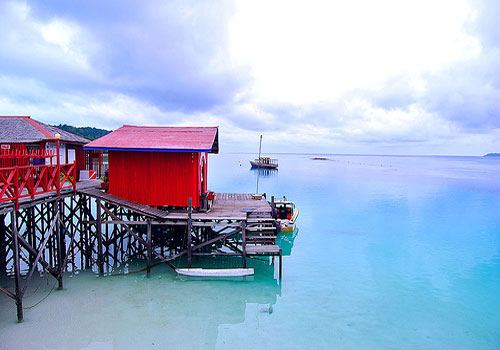
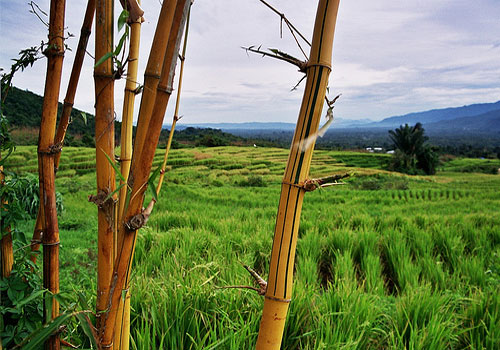
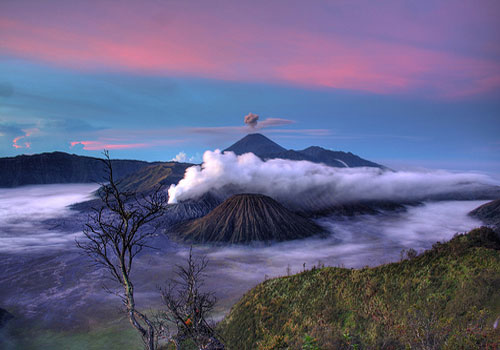
A rich history of warring kingdoms, conquests, colonialism, trade and natural disasters has bequeathed Indonesia with an exhilarating kaleidoscope of cultures and traditions, languages and religions, aspirations and problems, and the dramatic scenery of volatile landscapes.
Unfortunately it is this very diversity of ethnic groups and religions that has put a country of such exotic natural resources to the test. Racial divides and fierce religious hostility, government corruption, uprisings, economic negligence and, more recently, terrorist attacks have been frequent blights on the fabric of Indonesian society. However, for the traveller, this diversity and overdose of traditions and religions is fascinating. For decades the country has been a magnet drawing thousands of people to its shores despite its turbulent nature. Its position along the Pacific 'ring of fire' contributes to its status as a destination for the adventurous: Indonesia is prone to frequent earthquakes and volcanic eruptions. Having said that, in addition to the adventurous thrill-seekers and nature-lovers, Indonesia attracts many tourists wanting nothing more than a peaceful beach holiday, and the country offers many renowned resorts.
A holiday in Indonesia offers something for everyone. Sumatra is an almost untouched wilderness with a diversity of wildlife, highland tribes, unique architecture, wonderful resort-lined lakes, and quaint hilltop towns. Java features steaming volcanoes, astonishing historical monuments, a sprawling capital city and traditional dance, music and art. The image of paradise is epitomised in Bali, an island of artistic people and elegant temples, resplendent scenery, palm groves, beach resorts and fabulous diving sites. Further east, Komodo is the home to the world's largest lizard, the Komodo dragon.
Indonesia is a land of vigorous colour, of tensions and upheaval, but also of festivals and dancing, golden sunsets and friendly white-toothy smiles.
One visa extension, of a further 30 days, is possible, via an application made to the Immigration Office. Note that the day of arrival in Indonesia is counted as the first day of stay, and that fines will be levied against tourists who exceed their permitted period of stay.
Visitors wishing to travel to the Indonesian province of Irian Jaya must obtain a special permit ("Surat Jalan") after arrival in Indonesia from the Dinas Intel Pam Pol MABAK in Jakarta, or other regional police headquarters in Biak or Jayapura. It normally takes about two days to obtain this permit. Upon arrival in Irian Jaya, visitors must report to the local police office.
Note that a yellow fever vaccination certificate is required, if arriving in Indonesia within six days of leaving or transiting through an infected area.
NOTE: It is highly recommended that your passport has at least six months validity remaining after your intended date of departure from your travel destination. Immigration officials often apply different rules to those stated by travel agents and official sources.
Wayang Kulit (Shadow Puppets)
Address: Yogyakarta
Shadow Puppet performances are a proud part of Indonesia's
cultural heritage. In fact, UNESCO has declared wayang kulit a
Masterpiece of Oral and Intangible Heritage of Humanity, which
means that the art form is considered a global treasure. The
puppets are lovingly handcrafted out of buffalo hide or goat skin,
and mounted on bamboo poles, with moveable limbs that are worked by
a highly skilled puppeteer from behind a backlit screen, casting
the shadows of the puppets onto the surface to tell spellbinding
stories.
The puppeteer is usually the creator of the puppets, the
director, producer and main narrator of the shadow world. The
masters of wayang kulit are called dalangs and these talented
artists are known to perform through the night at times. The
stories have their origins in classic Hindu mythologies and
Ramayana tales and are narrated in the local dialects. Although
shadow puppet shows in English are not unheard of it is unlikely
that you'll find one. However, don't be discouraged by the language
barrier, as even without understandable words the puppets express
themselves eloquently through movement and action and the effect is
amazing. Watching the story unfold narrated in a local dialect is
arguably far more interesting and authentic. Catching one of these
unique shows is a wonderful addition to an Indonesian holiday.
Prambanan Temple Complex
Address: Bokoharjo, Prambanan, Sleman Regency, Special Region of Yogyakarta Yogyakarta
Rivalling the Buddhist monument of Borobudur, this magnificent
Hindu temple is the largest in Java and arguably the most beautiful
in Indonesia. Prambanan was built in the 9th century, possibly to
compete with the splendour of Borobudur, or to celebrate the return
to power of the Hindu dynasty in Java at the time. The complex is
dominated by three main temples, Shiva, Brahma and Vishnu, each
dedicated to their namesake, and the walls are decorated with
exceptional relief carvings depicting scenes from the famous Hindu
classic tale of Ramayana.
The Shiva Temple is the largest of the three, soaring above the
others at a height of 154 feet (47m), and contains the impressive
statues of Shiva, his elephant-headed son, Ganesh, and the goddess,
Durga. From May to October the Ramayana Ballet, a traditional
Indonesian dance based on the Ramayana story, is performed on an
open-air stage in the complex during the full moon - it is a
spectacular sight involving hundreds of dancers, singers and
musicians. Prambanan is a UNESCO World Heritage Site and never
ceases to amaze visitors; there is nowhere else in the world quite
like it. It is a good idea to walk a little away from the temples
to get a view of the whole complex, and to walk around the outside
is also interesting. Avoid the heat and crowds of midday by going
early in the morning or late in the afternoon.
Borobudur
Address: Borobudur, Magelang, Central Java Yogyakarta
One of the greatest Buddhist monuments in South East Asia,
Borobudur was built in the 8th century and stands on top of a hill
surrounded by volcanoes and overlooking green fields. It is an
immense, multi-tiered structure with the Great Stupa (bell-shaped
monument) at the top standing 128ft (40m) above the ground,
surrounded by numerous smaller stupas, some still containing Buddha
statues inside. It is part of a 2.5 mile-long (4km) chain of
smaller temples, with the Mendut Temple containing three
exquisitely carved giant statues of Buddha and two disciples
inside. The terraces of Borobudur are covered in sculpted reliefs,
with narrative panels illustrating Buddhist beliefs and teachings,
and covering an estimated length of 3.5 miles (6km). These
masterpieces of individual artistic value have been acknowledged as
the most complete and splendid collection of Buddhist reliefs in
the world. Built out of millions of blocks of the local volcanic
rock joined without the use of mortar, Borobudur is listed as a
UNESCO World Heritage Site and is the primary tourist attraction in
Java, as well as one of the most iconic sites in Indonesia.
The temple lies 25 miles (41km) northwest of Yogyakarta.
Unsurprisingly for such a famous attraction, Borobudur can get very
crowded, which diminishes the impact of the place for some - try to
get there for sunrise to avoid the throng and for the magical
experience of seeing the day begin at the temple.
Tanah Lot
Address: Located at Beraban village, Kediri district, Tabanan Regency on the South Coast Bali
Meaning 'land in the middle of the sea', Tanah Lot is an
exquisite sea temple built atop a rock formation off the island of
Bali. A very popular tourist spot and a great location for
photographs, Tanah Lot sits on a rocky island, in waters occupied
by poisonous sea snakes which are believed to guard the temple from
evil spirits and intruders. If you think its sounds like a
fairytale you're not wrong; the place has a mystical quality.
Despite the alleged presence of the snakes it is possible - and fun
- to walk or wade to the temple cave at low tide. The temple was
built by one of the last priests to arrive in Bali from Java in the
16th century and unfortunately the main temple can't be
entered.
Sunrise and sunset are the best times to visit, although sunset
is the most popular time and the crowds can somewhat ruin the
atmosphere. There are a number of vantage points from which you can
get lovely views of the temple, so its best to find one of them and
settle down to admire the views and take some photographs. The
complex is very touristy and commercial, with lots of shops and
stalls selling souvenirs, snacks and the like, but it is still a
remarkable attraction to visit and the coastline is very beautiful
in itself.
Bromo-Tengger-Semeru National Park
Address: Park office: Jl.R.Intan No 6, Malang, East Java Yogyakarta
The Bromo-Tengger-Semeru National Park encloses spectacular
volcanic landscapes and one of the most impressive natural sights
in Indonesia. The ancient Tengger crater in its midst stretches for
six miles (10km) and within its sheer volcanic walls are three
peaks; Batok, Kursi and the smoking Mt Bromo. Thousands of tourists
make the journey up Mt Bromo for the unforgettable spectacle at
sunrise (during the dry season) when the surrounding landscape
takes on an otherworldly quality. The views from the top and into
the smoking crater are unbelievable. To reach the foot of the
volcano one must cross the vast Sea of Sand out of which Mt Bromo
rises, either on horseback or by foot, and then climb a flight of
stairs that leads to the crater rim where the unmistakable smell of
sulphur permeates the air. Mount Semeru, another volcano in the
park, is one of Indonesia's most active volcanoes and every 20
minutes or so it belches out smoke, to the delight of visitors. The
small village of Cemora Lawang, perched at the edge of the Tengger
crater, is the most popular place to stay and has the best views of
the area. With unique landscapes that look like something out of a
fantasy novel, this National Park is an exciting area to explore
and a dream come true for photographers.
The nearest big city to the park is Yogyakarta, and although it
takes more than 10 hours to drive to the volcanoes, it is a popular
excursion and is included in many tour packages.
Ubud
Address: Bali
Set in the hills north of Denpasar, Ubud is the cultural centre
of Bali. The major attractions of the town and its surrounding
villages are the art museums and galleries, notably the Neka
Museum, containing a huge collection of traditional and modern
Balinese paintings. An enormous variety of Balinese art and crafts
line the streets and crowd the marketplace of Ubud. Frequent
performances of traditional dance and music, and restaurants
offering some of the best food on the island, compel visitors to
stay much longer than intended.
In response to the demand from visitors all sorts of interesting
attractions and activities have sprung up and you can now do things
like attend silver smithing classes, learn yoga, or watch locals
perform the Kekac Fire and Trance Dance. Ubud is also close to
several sites of interest, including the 'Mother Temple' of
Besakih, majestically situated high on the slopes of the Agung
Volcano, and the popular Monkey Forest, where you can feed the many
macaques in the temple complex. Hiking in the scenic Batur region
with its volcano and lake are popular excursions. Many adventure
trips can be organised from Ubud including canyoning, hiking, bird
watching tours and the like.
Ampenan
Address: Lombok
Ampenan-Mataram-Cakranegara-Sweta, or more simply referred to as
Ampenan, is a vibrant district located on Indonesia's lush Lombok
Island. The sprawling metropolis is comprised of four towns, the
boundaries of which are indistinguishable to the casual visitor,
and is host to a population of around 250,000 people. While Sweta
is the main transport hub and site of the island's biggest market,
it is bustling Ampenan, the old port town furthest west, that is
the main tourist area and the location of most shops, hotels and
restaurants.
Most visitors pass through the area fairly quickly but there are
one or two sights worth seeing nearby, including the weaving
factories in the capital Mataram, whose processes have remained
largely unchanged for hundreds of years, and a weaving village to
the south where traditionally dressed women work on wooden
handlooms. There are a number of shrines and temples open to
visitors, the best of which are centred around the Mayura Water
Palace, dating from 1744 and used by the royal court during the
Balinese rule of Lombok.
Ampenan, being an old port town, has a beach still lined with
hundreds of fishing canoes. As the fishermen mostly go out at
night, it is fun to watch the boats setting off in the late
afternoon, and seeing the sun set over the water. Ampenan's market,
which is the areas primary attraction, is located along the main
road to Senggigi, north of the city proper. The Pura Segara
Balinese temple is close by on the beach.
Bukit Lawang
Address: Sumatra
The little village of Bukit Lawang is situated on the eastern
banks of the pretty Bahorok River, facing one of the grandest
forest areas in South East Asia, the Mount Leuser National Park.
With its restful and pleasant setting, this was once one of the
most popular tourist destinations in Northern Sumatra, the town
existing primarily to cater to the tourist trade, with guides,
restaurants and a variety of delightful guesthouses strung along
the river. Since November 2003, however, Bukit Lawang has struggled
to recover from the massive flash flood that wiped out most of its
infrastructure, causing a huge dip in the tourism that once formed
the backbone of its economy. Rebuilding is underway and Bukit
Lawang has maintained its charm despite disaster. Its major
attraction, the Orangutan Rehabilitation Centre across the river,
welcomes visitors more enthusiastically than ever.
The Rehabilitation Centre helps orphaned orangutans that have
been displaced because of land clearing, or rescued from captivity,
and teaches them the necessary skills to be able to survive in the
wild. Visitors have an opportunity to view the apes twice daily
when they come swinging through the trees to collect the bananas
and milk left on feeding platforms in the forest, one of the more
memorable experiences in Indonesia. Jungle trekking and tubing down
the river are other popular activities.
Bukittinggi
Address: Sumatra
Bukittinggi, or 'high place', is situated on a hill and set
among majestic mountains, green plantations and rice terraces. One
of the friendliest and most easy-going cities in Sumatra, it is
home to the Minangkabau people and the area is steeped in the
Minang culture, which is Muslim and strongly matrilineal.
Bukittinggi is the commercial, educational and administrative
centre of the highlands. One of the features of the town is the
characteristic architecture: wooden houses with curved roofs
soaring to a point representative of buffalo horns and decorated
with beautiful wooden carvings.
The Jam Gadang (Great Clock) is a Minangkabau-style clock tower
and the town's landmark, overlooking the bustling market place that
is crammed with fruit, vegetables and clothing stalls, and rickety
horse carts whose drivers insist on squeezing them through the
colourful chaos. Pagaruyung Palace is another famous landmark and
example of traditional architecture. Nearby Mount Merapi is an
active volcano which can be reached on a beautiful hike; this is
one of the most popular excursions from Bukittinggi for tourists.
There is lots to see and do in the area and Bukittinggi itself is
an intriguing city to explore.
Jalan Jaksa
Address: Jakarta
Most South East Asian capitals have a backpacker area, and
Jakarta's Jalan Jaksa district is grubbier than most. Plopped in an
unremarkable part of downtown, it is thick with travel agencies,
laundromats, currency exchange offices and guesthouses. A few bars
and live music venues cater to the travel crowd. The cheapest
guesthouses are bare to say the least, and it is perhaps worth
spending the extra money on renting a nicer room. Jalan Jaksa is a
good place to stay if you want to spend as little as possible on
accommodation in Jakarta, but don't expect to get much real local
flavour.
Jalan Jaksa is actually the name of a single street but a wider
area around the road has started catering to budget travellers. The
street was once frequented by students studying at the Jakarta Law
Academy, which is perhaps the origin of the area's youthful vibe.
It is friendly and cheap, good for those travellers who want to
save their money for attractions and activities and don't mind
simple sleeping arrangements.
Jalan Jaksa hosts a street festival annually to encourage
tourism and showcase local traditions, cuisine, dancing and
music.
Jayapura
Address: Lombok
The city of Jayapura is often the first stop for travellers to
Papua, but even so its remoteness is such that many of the visiting
Westerners are thought to be either mine workers or missionaries.
Although the wilds of Papua are a quick trail away, the city itself
provides visitors with reasons to stay. Beautiful beaches and bays
stretch below thick jungle hills and some of these contain remnants
of WWII landing crafts, just as some of the caves in the area are
said to retain Japanese skeletons from the war. The nicest swimming
beach is Base G, with aqua blue water and a palmed shoreline.
Nightly arrays of seafood tents are erected, allowing eaters to
pick their favourite fish to barbecue.
The mix of Indonesian immigrants and Papuan locals seem to get
along well in Jayapurna, despite being somewhat locked in conflict
elsewhere in Papua. The city is deeply religious and a normal
greeting often asks visitors to describe their faith. This also
means there is a general lack of nightlife, although the occasional
pool hall serves expensive beer and offers free karaoke. There are
a number of mid-range hotels and one or two luxury options for
accommodation. Papua New Guinea is a hop and a skip away and visas
and transport can be arranged in Jayapura.
Indonesia Miniature Park/Taman Mini
Address: Ceger, Cipayung, East Jakarta City Jakarta
Indonesia is a vast place and it would take many holidays to
explore the whole archipelago. A trip around Indonesia Miniature
Park is useful and interesting because it offers samples of the
different cultures and architecture to be found on some of the
islands, including replicas of famous landmarks. Contrary to its
name, the park itself is not small and covers 100 hectares of land.
It includes examples of traditional buildings and cultural
artefacts from all of the 27 provinces that make up Indonesia.
The park also regularly hosts food sampling, dancing and other
cultural performances from each province. For those who like even
more variety the park has a great orchid garden, fauna museum, and
bird aviary - useful for those interested in seeing some of the
wildlife found around the archipelago. Visitors can get a bird's
eye view of the exhibits on the cable car, and there is even an
IMAX movie theatre in the grounds.
Attached to Taman Mini is the Museum Indonesia which exhibits
both historic and contemporary art collections. Visiting the museum
and the park together gives tourists a great overview of the
country and it isn't a bad place to start your Indonesian travels
if you have some time to spare in Jakarta.
National Monument of Indonesia
Address: Lapangan Merdeka, Monas, Gambir Jakarta
Visitors will inevitably be pulled to the National Monument
(MONAS) to inspect the enormous obelisk that can be seen from much
of the city. The first president, Sukarno, began to build the
structure as a symbol of nationalism complete with an impressive
weight of gold shaped into the tip's flames. For visitors it serves
as a great landmark in an otherwise confusing city centre. Elevator
rides to the top are available, providing a bird's eye view of the
city. The monument and surrounding park are open to the public and
there is a museum to visit which documents the Indonesian fight for
freedom and independence; there is also a hall of mediation at the
monument's base.
People often gather in the monument grounds at night and it is a
popular meeting place for locals and tourists. The grounds are big
and there is plenty of room for picnics and social gatherings - on
weekends the park can get quite full. Although it is the city's
main landmark, and a pleasant place for a stroll, the National
Monument has little to offer except the views from the top and the
small museum. However, it is still true that a visit to Jakarta
would seem incomplete without seeing MONAS, and as it is situated
near many other attractions you are unlikely to get through the
city without stumbling across it.
Kota
Address: Jakarta
Kota, also called Old Batavia or Old Town Jakarta, is the only
surviving piece of the Dutch colonial district. The Dutch had their
Indonesian heyday in the 16th century when Jakarta was at the
centre of Asia's trade with the West. Today, many of the area's
colonial buildings are falling into disrepair but the central
cobblestone square, Taman Fatahillah, still invites visitors to
imagine life in the 16th century, when there was little outside the
colonial fortifications of Kota save for orchards and rice fields.
The area is open to roam about in and there is no admission charge
or distinct boundary to delineate the old district. Although
information on what you are seeing is non-existent and landmark
attractions are lacking, exploring Kota still allows for a rare
glimpse into the city's history which has been mostly swallowed up
by new developments.
A few somewhat dilapidated but still interesting landmarks in
the area include the Luar Batang Mosque, the Maritime Museum, the
Jakarta History Museum (housed in the former City Hall building),
the Jin De Yuan Temple, and Sunda Kelapa Harbour. The area is set
pleasantly on the waterfront and gives a quiet and cool reprieve
from the bustle of Jakarta's inner city. There are plans to
rejuvenate this historic area and some of the roads around the
square have been pedestrianised as a first step in this
process.
Gunung Batur Volcano
Address: Bali
The still-active Gunung Batur volcano is known as Bali's second
holiest mountain and symbolises the female element of the island.
The male element is symbolized in Gunung Agung, a neighbouring
smaller volcano. The walk up Mount Batur is not easy, but the views
are spectacular and if you're lucky you might even spot a few
monkeys along the way. Gunung Batur rises from a volcanic crater
which also contains a lake and the view of this otherworldly
landscape from the crater rim is spectacular. Look out for the
remanants of black lava flows on the western side of the mountain
from this vantage. There is also a great lookout point for those
who'd rather hire a car and drive to the old crater rim overlooking
Lake Batur.
The sunrise walks are recommended, and remain the best way to
avoid hiking during Bali's infamous year-round heat. Unfortunately,
those visiting during the rainy season may be unlucky with the
views as visibility is often poor. There is a guide hut situated at
the bottom of the path and passing by usually attracts a mob of
eager locals who insist on your taking one of them along for
safety. If you want a guide, then this arrangement is convenient,
however the hut can be avoided by taking alternative paths. It is
safe to ascend on your own, but caution is always advised for less
experienced hikers.
Pura Besakih
Address: Desa Besakih, Kec. Rendang, Karangasem, Besakih, Karangasem, Kabupaten Karangasem Bali
Locally known as the Mother Temple of Bali, Pura Besakih is
located on the slopes of Mount Agung and is the biggest and holiest
of all Balinese temples. Dating back to the 14th century, the three
main temples are dedicated to Shiva, Brahma and Wisnu, and another
18 separate sanctuaries belonging to different regencies and caste
groups surround these. The complex has been built over centuries
and is very impressive.
However, the magnificence of the experience can be somewhat
blighted by the insistent local touts at the site. Apart from
paying the official entrance fee, visitors are coerced into paying
'donations' to the temple and are forced into hiring tour guides.
For this reason you may be advised to skip Pura Besakih in favour
of some of the less famous and less crowded temples. Being aware of
some of the common tourist scams, however, does makes the visit
easier: it is possible to explore without a guide but you will be
endlessly bothered, so it may be preferable to be with a local. If
you do visit Pura Besakih, or any other temple for that matter, it
is customary to wear a sarong out of respect for local traditions.
Despite the hassle of dealing with touts, this is a beautiful and
interesting attraction and many will find it rewarding
regardless.
Pura Kehen
Address: Desa Cempaga, Cempaga, Kec. Bangli, Kabupaten Bangli Bali
One of the most valued temples in Bali, Pura Kehen is a garden
temple located in the town of Bangli in East Bali and can be traced
back to the 11th century. Founded by Sri Brahma Kemuti Ketu, Pura
Kehen is the second largest temple on Bali and the most sacred in
the region. Many visitors are mesmerized by the temple's grandeur
and the steep steps leading dramatically up to the gateway. Like
the Mother Temple of Pura Besakih, Pura Kehen was built on the
slope of a hill and has eight terraces. The temple complex is
surrounded by palm tree plantations which adds to the visitor's
impression of being a jungle explorer discovering something ancient
and profound. The fire god, Brahmen, protects the temple and it is
named for him - kehen means hearth or fireplace. The 38 steps lead
to an ornately carved entrance and through this doorway there are
three courtyards. There is a lot to see but be sure not to miss the
remarkable stone lotus throne dedicated to Brahma, Shiva and Vishnu
in the third, main courtyard.
You will need to dress appropriately to visit the temple which
means that your legs must be covered and you must have a
temple-scarf (sarong) around your waist. You can rent sarongs at
the temple.
Batubulan
Address: Bali
The small village of Batubulan is marked by stone figures of
gods and demons on the side of the road. Known mostly for its stone
carvings, Batubulan is a popular centre for cultural tourism and
attracts travellers looking for a unique souvenir to take home with
them. Visitors to the village can even enjoy visiting the workshops
and watching the artists at work. Batubulan actually means
'moonstone' and stone carving has been the main industry of the
village for a long time. Everybody seems to be an expert in the art
and children learn how to coax statues out of rock at a young age.
The village does also showcase other crafts, like woodwork and
textiles, and is known for its antiques but the stone work
dominates.
The temples in the area reflect the traditional talent of the
local inhabitants and some remarkable stone carvings are on display
at temples such as Pura Puseh. Another of the village's
specialities is the performance of the blessing dance of Barong,
which is performed on a daily basis at five different locations or
stages: the Puseh Temple, Tegal Tamu, Denjalan, Sahadewa and Sila
Budaya. As the village has become such an artistic hub, other
villages nearby have perfected their own crafts, and the whole
region is slowly transforming in to a vast open-air market.
Elephant Cave
Address: Bedulu Village, Jalan Raya Goa Gajah, Blahbatuh, Gianyar Bali
Built in the 9th century, Goa Gajah, or Elephant Cave, is
located near Ubud and originally served as a sanctuary; it is now a
UNESCO World Heritage Site. With a wonderfully carved entrance
featuring menacing creatures and demons, children will find a visit
to this historic cave an unforgettable experience (as will
adults!). The main figure was once thought to be an elephant, hence
the name, and in the 1950s a bathing pool was excavated, thought to
have been built to ward off evil spirits. Visitors can wash their
hands and feet in the fountains and there are usually locals on
hand selling prayer offerings and the like - sometimes monks will
offer blessings for travellers. Those who would like a tour guide
will find that there are always locals offering this service and
the tours can be very informative. The entrance is the most
impressive feature of the cave and the interior will not take long
to explore. There are some lovely gardens and trees surrounding the
cave though, and a few stone carvings, so it is worth having a
stroll around.
All visitors will require a sarong or cover-up to enter the
temple and there are many shops selling them on the way but they
will lend you one for free (or a very small price) at the entrance.
In the early morning the temple grounds are almost deserted and
this is a magical time to explore if you prefer to avoid
crowds.
Bali Bird Park
Address: Jl. Serma Cok Ngurah Gambir, Singapadu, Batubulan Bali
The Bali Bird Park is home to a spectacular collection of more
than 1,000 birds of about 250 different species. Kids will love
spotting their favourite birds and learning about the exotic
species they have never encountered before. Birds such as Macaws,
peacocks, parrots, white herons and many more can be seen. The park
is divided into regions that recreate natural habitats for the
birds, complete with indigenous plant life and other artefacts from
the region in question. Regions represented in the park include
Bali, Papua, Java, Sumatra, South America and South Africa.
Visitors stroll through giant aviaries on winding pathways and
bridges under a jungle canopy, and there are several special
vantage points for spotting birds. In the Guyu-Guyu Corner you can
experience the creatures in close contact, with birds perching
comfortably on your shoulders or in your hands. Visitors can also
participate in park feeding times (these times are subject to
change - check the website or contact the park for details). A Free
Flight Bird Show showcases various birds in flight. The bird park
also features a restaurant, café and gift shop for visitors to get
refreshments and take home a souvenir. The experience should
delight the whole family.
Sacred Monkey Forest of Padangtegal
Address: Jalan Monkey Forest, Padangtegal, Ubud Bali
Featuring more than 180 species of trees, many of which are
considered holy and used in various Balinese spiritual practices,
the Monkey Forest in Ubud is a fantastic place for kids and adults
to spend the day exploring. The forest is seen as a marriage of
nature with human endeavour and is considered a sacred place - in
Balinese culture it is not just the temples which are considered
holy but the surrounding gardens and forests as well. Traditionally
monkeys are often seen as guardians of temples and are thought to
ward off evil spirits. Children can see the Balinese long-tailed
Macaques up close as they scramble through the forest of banyan
trees and lush tropical vegetation. There are about 700 macaques in
the forest which move in four distinct troops. Evidence suggests
that although these monkeys can live in developed areas like
villages, their survival ultimately depends on the conservation of
their natural forest habitat because people tend to eradicate them
when they interfere with farmlands, crops and food.
There are also a few temples to explore while visiting the
forest: the Bathing Temple seems like part of its natural
environment and feels magical. The Cremation Temple is interesting
and a good place to learn about Balinese Hindu burial
traditions.
Nias Island
Address: Sumatra
Famed for its right-hand reef breaks, Nias is a key surfing
destination for many travelling through the area, with the best
known surf spots being Sorake Bay and Lagundri Bay. But this
fascinating island also boasts a rich cultural history with
prehistoric remains which are thought to have been built in the
megalithic Stone Age. Tourists visiting Nias Island can enjoy the
war dances performed by locals, among other traditional
festivities, and the local music, which is mostly sung by women, is
known to be hauntingly beautiful and unique. The beauty of the
island is the main draw for those who visit its shores but for the
anthropologically-inclined this area is of great interest as its
relative geographical isolation has allowed its traditional culture
to thrive. Popular activities other than surfing include scuba
diving and snorkelling in the clear waters, which brim with rich
marine life.
More than 1,000 people died in Nias in the 2004 and 2005
earthquakes which shook the region and some evidence of this
tragedy may still be visible on the islands, but the tourism
industry has recovered. The locals tend to be extremely friendly
and they have a respect for the tourism industry as it provides
many of their livelihoods.
Lake Maninjau
Address: Sumatra
Lake Maninjau is set like a burning sapphire stone in the crater
of the mountain and is a spectacularly beautiful place to relax and
unwind. It is a caldera lake, located in west Sumatra, and is
thought to have been formed by a volcanic eruption around 52,000
years ago. The lake is set at about 1,545 feet (471m) above sea
level, and the average temperature of the water in the lake is
around 86°F (30°C). Visitors can enjoy cycling the 37 mile (60km)
circumference of the lake, or plodding through the neighbouring
rice paddies while others can swim, canoe and hike the surrounding
mountains or explore the local villages.
Villages on the shores of the lake include Maninjau and Bayur.
Maninjau is a notable tourist destination in the region due to its
scenic beauty and situation on the lake; if you're interested in
doing some paragliding Maninjau is a great base. There are some hot
springs to enjoy close to the village of Mukomuko, on the opposite
side of the lake to Maninjau. On the dramatic road that winds down
to the lake from Bukkittinggi there are spectacular views and 44
hairpin turns. Beware of the monkeys that gather on the side of the
road; they wait there because people throw food out of the cars for
them but they are wild animals and shouldn't be approached.
Padang
Address: Sumatra
The capital of Sumatra, Padang offers a compact and enjoyable
cross-section of Sumatran life and its various cultures. Many
surfers stop here on their way to the Batu or Mentawi Islands, but
the town itself boasts a few noteworthy attractions such as the
Adityawarman Museum, which features a collection of antiques, and
the cultural centre where locals perform traditional dances on
Sundays or even
(martial arts). Many people come here
for the markets, for which Padang is famed, but Padang Beach is
also popular for its spectacular sunsets and hundreds of colourful
food stalls. Another popular beach is Air Manis, which gets mixed
reviews from tourists - depending on how clean it is when they
visit - but boasts the attraction of a small island which can be
waded to at low tide.
Lake Maninjau is close enough to make a really pleasant
excursion from the city, and Sikuai is less than an hour away by
boat. Sikuai Island is renowned for its natural beauty and earns
rave reviews from almost all that make the trip. Although not cheap
it is still relatively unspoiled and feels like an undiscovered
paradise. Padang makes a good base for excursions of this sort and
is in close proximity to a number of lovely areas.
Berastagi
Address: Sumatra
A great place to stop off for travellers en route to the holiday
resort of Lake Toba, the town of Berestagi is famed not only for
its passion fruit, but also for the two active volcanoes on its
doorstep: Gunung Sibayak and Gunung Sinabung. Gunung Sibayak boasts
fantastic hot springs whose warm waters are not only open to the
public, but are also believed to have therapeutic properties.
More active travellers can climb this mountain instead, earning
breathtaking views over the island of Sumatra from the top. This is
the most commonly climbed volcano in Sumatra as the hike to the top
is comparatively easy, with beautiful and unusual scenery to enjoy
along the way. It only takes about two hours to summit and can be
done safely without a guide. However the addition of a local expert
who can explain the geological significance of the area, as well as
identify the local flora and fauna, is worth considering. The
volcano is still active and as such the boiling sulphur imbues the
region with an unmistakable stench, but the breathtaking views will
quickly distract you from this unpleasant factor. Why not reward
yourself and head to the hot springs after the hike? The pools
range in temperature from pleasantly warm to boiling hot, so be
sure you test the water and don't burn yourself!
Sidemen Valley
Address: Bali
A typical Balinese village tucked away in a lush green valley,
Sidemen is a popular excursion on Bali for tourists looking for
peace and quiet. Terraced rice paddies lie under the shadow of a
volcano, which offers good opportunities for hiking. Other active
pursuits in the valley include cycling and whitewater rafting.
The village of Sidemen is known for its skilful weavers, who
make the intricate silver-and-gold songket fabric used in
traditional weddings. The Pelangi Workshop allows visitors to watch
the weaving process, and there are several shops in town to buy
songket fabric along with other souvenirs.
One of the most pleasant activities for those who want a relaxed
break is strolling through the rice paddies and exploring the
enchanting scenery of the valley. Most of the hotels have basic
maps to give visitors and there are some beautiful little temples
hidden in the countryside. Getting lost round here is a joy. There
are some hotels and restaurants to cater to tourists but there are
no real banking facilities and only limited internet access.
Sidemen is a truly wonderful place to visit if you want to
experience a quiet, traditional village, and it is worth spending
at least one night to experience the surroundings. Many choose to
spend more than that.
Gili Islands
Address: Lombok
Situated a few miles off the northwest coast of Lombok, the
three Gili Islands - Gili Trawangan, Gili Meno and Gili Air - were
'discovered' by backpackers in the 80s and until recently remained
a laid-back haven for budget travellers in search of a peaceful and
secluded holiday paradise. The islands are surrounded by glorious
soft sandy beaches, colourful coral reefs and crystal clear
turquoise waters, ideal for diving.
There are almost no roads or motor vehicles on the islands, with
scooters and donkey-drawn carts acting as their replacements. Small
ferries transport guests between the Gili Islands, none of which
are more than twenty minutes apart. Most of the holiday
accommodation is on Gili Trawangan, and this generally consists of
small bamboo bungalows a few metres from the beach, like those
found on Thailand's islands twenty years ago.
Mainstream tourism is beginning to establish itself on the Gili
Islands and a few exclusive hotels have opened up, most recently on
the smallest, least developed island of Gili Meno. While there are
no major sights or landmarks to see, the scuba diving and
snorkelling opportunities are enough to make it a popular
destination and the atmosphere and scenery are splendid enough to
enchant visitors.
Kuta Lombok
Address: Lombok
Not to be confused with its better-known namesake on Bali,
Lombok's Kuta is almost totally undeveloped by comparison, having
only been 'discovered' by surfers a few years ago and still devoid
of any large holiday resort hotels. The whole south coast is
characterised by miles of stunning curved sandy bays set beneath
empty, rolling hills. There are plans for development but that is
still many years away, to the delight of many tourists who prefer
to explore Indonesia's undeveloped coastlines.
Kuta's southeast peninsula and Awang Bay are dotted with tiny
fishing villages untouched by tourism, while inland villages
specialising in local crafts such as pottery, weaving, basket ware
and carving can be visited. There are bars and restaurants in the
town, but no ATMs, and internet is patchy. Locals sell crafts like
hand-woven sarongs and even pearl jewellery and they can be a bit
persistent and annoying if you don't buy from them - but generally
the lack of crowds and touristy stalls is a refreshing change from
the most popular areas of Indonesia which have been thronged by
tourists. Kuta Lombok is still relatively rustic and unspoiled so
it is ideal for those travellers who don't mind foregoing luxury
and the occasional convenience to experience a place that still
feels like a secluded island paradise.
Lake Toba
Address: Sumatra
The holiday paradise of Lake Toba, sparkling like a precious
stone, is embedded in the northern highlands of Sumatra and is
surrounded by steep and fertile mountains. Filling in a giant
volcanic crater, it is the largest lake in South East Asia, with
depths of up to 1,680 feet (525m) in places. In the middle of Lake
Toba sits the jade-green island of Samosir, which is thought to be
the origin of the friendly Batak people. Evidence of their culture
and traditions is visible in the little Batak villages with their
characteristic curved roofs, the traditional dance performances at
Simanindo's Batak Cultural Centre, and the distinctive woodcarvings
and weavings sold around the island. Apart from this cultural
wealth, there are also several hot springs near Pangururan, which
attract visitors.
Numerous holiday resorts and villages are scattered around Lake
Toba's Samosir; the Tuk Tuk peninsula and village of Ambarita being
the most popular places for tourists to linger. The area was once
very fashionable for holidaymakers, but is now fairly quiet.
Despite the amount of guesthouses and restaurants on Samosir, there
is little other tourist infrastructure, but the variety of
activities and the cultural experience makes this one of Sumatra's
most fascinating and relaxing holiday destinations.
Senggigi
Address: Lombok
Just a few miles south of Ampenan, Senggigi is the most
developed holiday resort on Lombok, characterised by broad bays,
towering headlands and first-rate hotels and restaurants, and
boasting the only real nightlife in Lombok. Being close to the
airport it makes a good first or last night stop for those intent
on exploring the island. The drive north along the coast from
Senggigi to Pemenang is a great day out for those with a car,
offering spectacular views of the Gili Islands and across to Bali
when the weather is clear. The twisting road takes holiday visitors
to an expanse of coast that is totally undeveloped with only a few
coastal villages dotted behind sweeping bays of turquoise water and
palm trees.
Just south of Senggigi is the Batu Bolong Temple. Weighed down
under an excess of lurid pink paint, its shrines are spread around
a rocky promontory with fabulous views in both directions along the
coast. The main part of the temple is built over an archway in the
rock, a hole through which virgins were once supposedly sacrificed
to appease the gods. Today this is a quiet and peaceful spot and a
favourite with local fishermen. Spear fishing is a popular
activity, along with scuba diving, snorkelling, hiking, and
cycling.
Scuba Diving
Travelling to Bali promises many joys, but Bali's dive sites are
in a class of their own. With deep drop-offs, steep banks, coral
ridges and a world famous wreck, these waters are home to a great
wealth of ecological, geological and historic sights, framed by a
coast dotted with volcanoes and rice paddies. The most popular dive
destinations around this island are Nusa Penida, Tulamben, Amuk Bay
and Menjangan. The famous wreck of the USAT Liberty is located just
outside of the village of Tulamben and is one of the world's most
celebrated wreck dives, making it an obvious favourite among divers
visiting Bali.
Bali, however, is just the tip of the iceberg when it comes to
dream scuba spots in Indonesia. Raja Ampat, an underwater
wonderland off the northwest tip of Papua, is celebrated as one of
the world's best dive spots. With over 1000 species of sealife to
explore, it could easily be the only destination visited on any
Indonesian diving odyssey. The beautiful Togian Islands near
Sulawesi, the Komodo Islands with its rich coral life, as well as
Lombok and its crystal waters, are just a few of the many sought
after scuba sites on offer in the region promising memorable diving
experiences.
There is also an array of extraordinary local marine life on
offer, including
(sunfish), hairy frogfish and pygmy seahorses,
while more 'usual' sightings include reef sharks, blue spotted
stingrays, turtles and parrotfish. Visibility can be anywhere
between six and 45 metres, and current strengths also vary
substantially from one dive site to another. The best diving months
are considered to be from April to December, when the water is at
its most comfortable temperature.
There are various locally based dive operators and resorts
offering everything from beginner snorkelling to dive excursions,
as well as full scuba diving courses. Visitors may use their own
kit or rent equipment from the operator or resort. All divers must
carry valid scuba certification. For those interested in underwater
photography the dive centre in Tulamben hosts courses.
Surfing
A surfer's playground made up of thousands of islands, with some
of the best and most consistent breaks in the world, the surfing in
Indonesia brings passionate surfers to its shores in droves. In
fact, the country tops the bucket list of many surfers worldwide,
and for very good reason.
The best time to surf Indonesia is between April and September
when the trade winds blow. Finding a break with offshore conditions
is easy since there are waves facing almost every direction. The
early and late seasons (March to May and October to November) are
great for a more mellow surf and there are more opportunities for
inexperienced surfers as the waves are less crowded. Hiring a boat
to get to waves is cheap and easy and a popular option with many
locals more than happy to help.
Since there are no surf shops on the smaller islands, and the
ones in Bali are known to be overpriced, surfers should aim to
bring everything they think they'll need, including plenty of
sunblock, a rashie vest, extra leashes and a couple of spare boards
of varying size for different conditions. Bali offers plenty of
rentals, surf schools and camps along its shores for beginners,
with Kuta Bali being one of the best places for amateurs to learn
to surf.
Bali's key spots include Uluwatu, Dreamland, Bingin, Pedang
Pedang and the ever-popular Kuta Bali. A novel and thrilling
experience is to surf Airport Rights in Jimbaran Bay, and Airport
Lefts on the Kuta side of Bali. Surfers can enjoy getting barrelled
as passenger planes overhead come close to skimming the water's
surface while coming in to land at Bali's nearby Ngurah Rai
Airport.
The East Nusa Tenggara and Nusa Lembongan regions of Indonesia
offer some really good surfing opportunities with islands such as
Lombok and Sumbawa providing plenty of gnarly waves. Lakey peak,
Scar Reef, Yo-yo's and Supersucks are key breaks on Sumbawa. Kuta
Lombok boasts waves such as Grupuk, Ekas, Mawi and the infamous and
still quite isolated Desert Point, widely regarded as one of the
heaviest and best left-hand barrels in the world. Surf this wave
just after a full or new moon when high tide is at midday.
Surfers looking for hollow, deep waves can't go wrong visiting
Nias in northern Sumatra, which boasts Lagundra Bay, one of the
best right-handers in Indonesia. The neighbouring Mentawais islands
have also become well-known surfing destinations and are definitely
worth a visit, but these are only accessible by package boat tours,
which can be quite pricey.
Travellers' diarrhoea is a major risk; visitors should only drink sealed bottled water and avoid dairy products, uncooked meat, salads and unpeeled fruit. Poor sanitation and eating contaminated food can increase the risk of cholera, typhoid and other diseases. The standard of local medical care is poor and very expensive. It is essential to take out comprehensive medical and travel insurance.


 |
Description Round pins. |
Voltage 127/230 V |
Frequency 50 Hz |
Type C |
 |
Description "Schuko" plug and receptable with side grounding contacts. |
Voltage 127/230 V |
Frequency 50 Hz |
Type F |
 |
Description Rectangular blade plug |
Voltage 127/230 V |
Frequency 50 Hz |
Type G |