Explore Portugal

Portugal Travel Guide

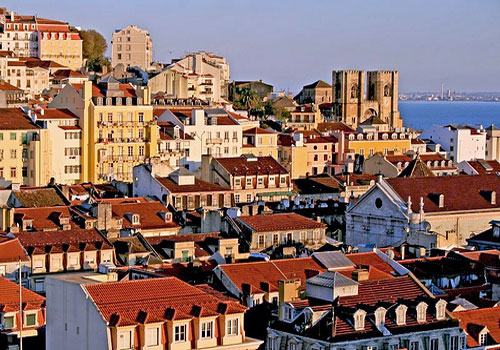
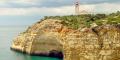
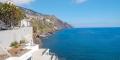
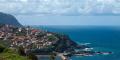
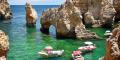
Portugal shares the Iberian Peninsula with Spain, and is bordered by the Atlantic Ocean to the west and south. Its long, varied coastline, sunny climate, and the relaxed lifestyle of the inhabitants of its charming towns and villages have made it a sought after holiday destination. The delight of Portugal is that, although it is undeniably part of modern Europe, it retains some rural enclaves where time has stood still and traditions flourish. In the southern province of the Algarve, modern high-rise resorts line the coast and buzz with all the trappings of a package tour destination; the capital city, Lisbon, on the west coast, is a bright, busy, crowded metropolis surrounded by bustling tourist resorts. Travel a few miles north or east, however, and discover a largely undeveloped picturesque countryside full of medieval villages and towns where life has changed little over several centuries.

The Portuguese have a close affinity to the sea; for centuries their famed mariners led the way in the exploration of Africa and the Americas, and opened trade routes to the East. The country became a strong colonial power, and remained so until the mid-20th century, resulting in distinctive foreign influences on the local culture and architecture. From Africa, for example, was imported the now traditional, sentimental fado music, which is one of the country's unique experiences for visitors, particularly in the cafés of Lisbon.

In recent years Portugal, long overlooked on the list of the world's top vacation stations, has been investing time, money and effort into ensuring it is discovered by the world's travellers, just as once it was the Portuguese who discovered the world. This new age of discovery is paying off, as increasing numbers of visitors arrive each year and hotel and resort construction has exploded. From the visitor's point of view the compactness of the country makes it easy to take in all the best elements: sandy beaches, scenery, history, wonderful cuisine, lively entertainment, charming handcrafts, thrilling nightlife, country fairs, excellent sporting facilities and warm, friendly people.

From the cobbled winding streets of Lisbon's medieval citadel to the cork forests in Alentejo, and from fishermen mending their nets on remote beaches to the shopping malls and sophisticated glitzy resorts, Portugal is a country well worth discovering.

All visitors, except EEA member states, must hold tickets and documents for their return or onward journey, and proof of paid accommodation (equivalent in convertible currency accepted). The borderless region known as the Schengen area includes the following countries: Austria, Belgium, Czech Republic, Denmark, Estonia, Finland, France, Germany, Greece, Hungary, Iceland, Italy, Latvia, Lithuania, Luxembourg, Malta, The Netherlands, Norway, Poland, Portugal, Slovakia, Slovenia, Spain and Sweden. All these countries issue a standard Schengen visa that has a multiple entry option that allows the holder to travel freely within the borders of all.

Castelo de Sao Jorge

Address: Lisbon

Admission: EUR5, concessions available Daily, 9am to 6pm (November to February) and 9am to 9pm (March to October)

Telephone: 218 800 620

The walls of Saint George's Castle, sitting atop a hill guarding the Tagus, date from the Moorish occupation in the 10th century, but the site has been a fortress for centuries, possibly from 500 AD. The castle is regarded as the cradle of Lisbon, and today it provides a panoramic view of the River Tagus and the Alfama medieval district, which is spread out below it. Visitors can walk the esplanades and climb the ramparts. A multimedia show is available during the day which brings alive the history of Lisbon. The castle grounds are planted with olive, pine and cork trees and provide a pleasant spot to relax.

Alfama

Address: Lisbon

The oldest part of Lisbon, the Alfama quarter sprawls down the hillside from below the Castelo de Sao Jorge, retaining much of the traditional colour and atmosphere from the days when it was the ancient seat of the Saracens. Along the narrow cobblestone alleyways are taverns and street markets, interspersed with close-packed houses still occupied by stevedores, fishmongers and sailors. At the edge of the Alfama, Lisbon's renowned flea market, the Feira da Ladra, is held in the Campo de Santa Clara every Tuesday and Saturday. The Alfama is also full of historic buildings and churches, which are well worth exploring. Some of the buildings display fading coats of arms, which bear testimony to the fact that the Alfama was once home to aristocrats. At night the Alfama takes on a more mysterious aspect with street lanterns throwing shadows on the medieval walls, and it is advisable to avoid the area after dark in favour of the Bairro Alto café and nightclub district.

Sé de Lisboa

Address: Lisbon

Admission: Free Daily, 10am to 7pm.

Telephone: 21 886 6752

Although this cathedral in Largo da Se in the Alfama district is not outwardly appealing, it was the first church in Lisbon, built on the site of a Saracen mosque after the city was captured by the Crusaders in the 12th century. Inside, this ancient church features some treasures, like the font where St Anthony of Padua was baptised in 1195, and numerous notable relics, images and icons.

Calouste Gulbenkian Museum

Address: Avenue de Berna 45A Lisbon

Admission: EUR4, concessions available. Tuesday to Sunday 10am to 5.45pm

Telephone: 21 782 3000

Gulbenkian was an Armenian oil magnate who died in 1955 having put together one of the world's finest private art collections. The collection is now housed in a modern centre where the Calouste Gulbenkian Foundation sponsors a host of cultural and performing arts projects, and has a rotating exhibition of works by Portuguese and foreign artists. The Gulbenkian collection itself covers Egyptian, Greek and Roman antiquities, Islamic ceramics and textiles, Syrian treasures, Chinese ceramics, Japanese prints and lacquerware and European medieval illuminated manuscripts. The collection is so vast and varied as to be breathtaking. Among the paintings are two Rembrandts, a Rubens and a Renoir.

Bairro Alto

Address: Lisbon

The Bairro Alto district (literally the Upper City) is, like the Alfama, an historic enclave dating from 1513, which is reached in a novel way via the Santa Justa Elevator (a structure reminiscent of the Eiffel tower in Paris) from the lower city. The colourful district resounds to the calls of vendors and fishmongers, and the windows and balconies are festooned with laundry and bird cages. At night the area comes alive with some of the finest fado cafes in the city, along streets lit by Victorian lanterns. Fado is the famous brand of music and dance brought to Portugal by African slaves in the 19th century, characterised by songs of sadness and despair, and there is no better place in Portugal to experience this musical genre than in the Bairro Alto of Lisbon.

Monument to the Discoveries

Address: Lisbon

Admission: Tuesday to Sunday, 9.30am to 6pm.

Telephone: 21 303 1950

One of the most famous sights in Lisbon is the imposing Padrão dos Descobrimentos, situated on the riverbank in the Avenida de Brasilia in the district of Belem and designed to commemorate the Portuguese Age of Discovery. Belem, where the Tagus meets the sea, is the point from which the maritime explorers of yore set forth in their sailing ships to discover the world. The monument was unveiled in 1960 on the 500th anniversary of the death of Prince Henry the Navigator in 1460, the monarch who was largely responsible for Portugal's role in world exploration during the 15th and 16th centuries. The massive monument takes the form of a caravel with Prince Henry at the prow, backed by images of renowned mariners, royal patrons and others who participated in the golden age of discovery.

Tower of Belem

Address: Avenida de Brasilia Lisbon

Admission: EUR4 (adults), free for children under 14. Concessions available Tuesday to Sunday 10am to 5pm (October to April), 10am to 6.30pm (May to September)

Telephone: 21 362 0034

The famous Tower of Belem is a UNESCO World Heritage Site, and is one of Lisbon's most photographed landmarks because of the decoration on its exterior. The outer walls are adorned with a stone-carved rope and beautiful openwork balconies, along with Moorish watchtowers and battlements shaped like shields. The tower was built in the 16th century to serve as a fortress in the middle of the River Tagus.

Parque das Nacoes

Address: Avenue D. João II, Lote Lisbon

Admission: Oceanarium: EUR10.50 (adults), EUR5.25 (children 4-12) Oceanarium: daily 10am to 8pm (until 7pm in winter)

Lisbon's exhibition park was upgraded and renamed for the Expo '98 world exposition, which revitalised the city and brought international tourists and interest flooding in. The site is now worthy of a full day's sightseeing, featuring several attractions, not least of which is the Lisbon Oceanarium with its 15,000 living examples of marine life. The main tank holds enough water to fill four Olympic-sized swimming pools, and is viewed from two floors through curved glass panels that provide a 180-degree view. Another popular diversion is the Virtual Reality Pavilion, which showcases the Portuguese age of discovery. Other attractions include a science centre, cable car, the Vasco da Gama Tower and numerous bars and restaurants offering Portuguese cuisine.

Fatima

Address: Lisbon

In 1917 the Virgin Mary allegedly appeared above an oak tree and spoke to three peasant children in the valley of Cova da Iria, 88 miles (142km) north of Lisbon. The children claimed to have seen the apparition on five different occasions, and the spot has now become one of the great pilgrimage shrines of the world, known as Fatima. Between May and October the 13th day of every month is pilgrimage day, when hundreds of the faithful gather in a square twice the size of St Peter's in Rome before the Chapel of the Apparitions. The original oak tree is gone, but has been replaced by a simple white column inside a basilica, which is flanked by statues of the saints.

Museu Nacional de Soares dos Reis

Address: Palacio dos Carrancas, Rua de Dom Manuel II Oporto

Admission: EUR4 (adult), free for children under 15. Tuesday 2pm to 6pm, Wednesday to Sunday 10am to 6pm

Telephone: 223 393 770

This extensive art museum opened in 1840, and is today dedicated to Soares dos Reis, the famous sculptor born and bred in Porto. The gallery also houses a foreign art collection which includes works by the Dutch, Flemish, Italian and French masters. There is a large collection of Portuguese 19th century works, including those from the Porto school, and exhibits of ceramics, glassware, gold and silverwork and furniture.

Igreja de Sao Francisco

Address: Rua do Infante D. Henrique Oporto

Admission: EUR3.50 (Museum) Daily from 9am.

Telephone: 222 062 100

On the Oporto waterfront stands the church of St. Frances, dating from 1383, which, while not very imposing from the outside, has a lavishly Baroque decorated interior that was created in the 17th and 18th centuries. Pillars and columns within the vault are festooned with gold-gilded cherubs and flower garlands, entwined animals and fruit cornucopia. This feast for the eyes is set off by wide Gothic arches made of marble, which soar into the roof.

Solar Vinho do Porto

Address: Rua de Entre-Quintas 220 Oporto

Admission: Monday to Saturday 4pm to midnight

Telephone: 22 609 4749

Visitors come to Oporto for the port wine. The place to head for samples of every port produced in the region (and also the rest of Portugal) is the Solar Vinho do Porto in the Quinta de Macieirinha. Inside the rose-bedecked villa is a relaxed, upmarket tasting room, staffed by knowledgeable hosts who offer glasses or bottles of port, along with some complimentary snacks and information on the port-making process. Also in the villa is a small museum containing a collection of 18th century furniture and some paintings.

Vila Nova de Gaia

Address: Oporto

This suburb of Oporto lies on the south bank of the River Douro, on the site of an ancient fortified village. Today it is home to more than 50 wine companies who operate their 'lodges' in the winding narrow streets flanked by red-roofed buildings. Most of the lodges welcome visitors for tours and tastings. Among the best known are Sandemans, housed in a former 16th century convent, and Taylors. The suburb also features a 16th century monastery that has interesting circular cloisters and a terrace where the Duke of Wellington planned his attack on the French in 1809.

Frederico de Freitas Museum

Address: Calçada de Santa Clara, 7 Madeira

Admission: Tuesday to Saturday 10am to 12.30pm, and 2pm to 6pm

Telephone: 91 220 578

Named for the Madeiran lawyer who amassed the fascinating collections on display as a hobby, the Frederico de Freitas Museum in Funchal houses a vast array of decorative Turkish, Moorish and North African tiles, as well as about 2,000 mugs, trophies and vases. Besides these highlights the de Freitas collection also includes Madeiran artefacts, porcelain pieces, religious sculptures, ancient sacred paintings and Chinese and North African metal and woodwork. The museum is a treasure trove for antique lovers.

Sao Vicente Caves

Address: Madeira

Admission: EUR8 (adults), concessions EUR6 Daily 9am to 9pm (until 7pm in winter)

Telephone: 291 842 404

Beside the river at Pe de Passo are the Sao Vicente Caves, a series of lava tubes left after an eruption that occurred about 400,000 years ago. These volcanic tunnels extend for about 3,281ft (1,000m) and can be explored on a 30-minute tour. The caves feature formations like lava cakes, volcanic stalactites and erratic blocks and give a sense of walking through the bowels of the earth.

Madeira Cable Car

Address: Caminho das Babosas Madeira

Admission: Single fare is EUR10 (adults), EUR5 (children), concessions available Open daily from 10am to 6pm

Telephone: 291 780 280

One of the favourite diversions in Madeira's capital, Funchal, is to ride the cable car from the Parque Almirante Reis in the old part of the town up to the scenically beautiful village of Monte in the mountains above the city. The journey takes about 15 minutes and ends at the cableway station near the Monte Palace Tropical Garden.

Funchal Cathedral

Address: Rua do Aljube Madeira

Admission: Free; donation suggested Monday to Saturday 7am to 1pm, and 4pm to 7pm; Sundays 8am to 8.30pm

Telephone: 291 228 155

In the heart of the historic part of Funchal stands the cathedral (Sé do Funchal) which is the most impressive of Madeira's religious edifices. From outside the simple rough white stucco and brownish basalt is not all that impressive, but after entering through the Gothic portal there is plenty to admire. The ceiling, for instance, is Moorish carved cedar inlaid with ivory, and behind the Baroque altar are paintings by Flemish and Portuguese artists.

Whale Museum

Address: Caniçal Madeira

Admission: EUR2 (adults), free for pensioners and children under 18 Tuesday to Sunday 10am to 12pm, and 1pm to 6pm

Telephone: 91 961 407

On the East coast of the island of Madeira, in the little fishing village of Canical, the Whale Museum chronicles the rise and fall of the whaling industry that was a vital part of the island's economy for many decades, right up until 1982. The exhibits include photographs, hunting implements, a life-size whale model, a fishing boat, and objects carved by local fishermen from the bones and teeth of whales.

Porto Santo

Address: Madeira

Madeira's sister island, Porto Santo, lies 24 miles (39km) northeast of its larger sibling and was actually discovered before Madeira itself. In 1418 Portuguese mariners Joao Goncalves Zarco and Tristao Vaz Teixeira stumbled across it while running from a storm. Unlike Madeira, Porto Santo is rather bleak and barren, but its southern coast is bordered by a lovely five-mile (eight km) stretch of beach fringed with soft golden sand, which, together with its temperate climate, has turned it into a popular holiday resort. The main town on the island is Vila Baleira, which was visited by Christopher Columbus. There is a scenic park in the town, some cafes and pretty cobblestone streets lined with stucco houses.

Setúbal

Address: Lisbon

Telephone: 265 539 120 (Setúbal Tourist Office)

A popular touring destination 25 miles (40km) south of Lisbon is Setúbal, one of Portugal's oldest cities, renowned for producing the most delicious muscadel wine in the world. The city is also the centre of Portugal's sardine industry and has been a fish-salting centre since the 1st century. White mounds of sea salt drying in the sun are a familiar part of the local landscape. There are some outstanding beaches near the city and some pretty countryside dotted with orange groves, orchards and vineyards.

Coimbra

Address: Oporto

The central Beiras region of Portugal is dominated by its provincial capital, Coimbra, situated about 73 miles (118km) south of Oporto. Coimbra is one of Europe's oldest university towns, and its students swarm the streets in traditional black capes, with coloured ribbons affixed to indicate which faculty they belong to. The majestic university building, founded in the 12th century, overlooks the city, which is a medieval wonderland of cobbled alleys, archways and stairways. Coimbra was the birthplace of six of Portugal's kings and the country's first king, Afonso Henriques, lies in a carved Gothic sarcophagus in the Monastery of Santa Cruz. Other sights in and around Coimbra include several beautiful medieval churches, the Machado de Castro museum (one of Portugal's finest), and Conimbriga, southwest of the city, which is a fascinating Roman archaeological site.

Guimaraes

Address: Oporto

This historic town is regarded as the birthplace of Portugal, because it was here in 1128 that Afonso Henriques became the first king of the country, which was still largely under Moorish control. The town has many medieval buildings and fortifications, and has been declared a UNESCO World Heritage Site. One of the main attractions is the tiny Romanesque church where Afonso was allegedly baptised, and the imposing Palace of the first Duke of Braganza, built in the style of a French chateau. There are numerous other Gothic, Romanesque and Baroque delights to discover in walking around the town. There are also two excellent museums: The Museu Alberto Sampaio, south of the castle, contains religious art and relics and is housed in a monastery, while the Museu Arquelogico Martins Sarmento displays the finds from a nearby Celtic hill settlement.

Braganca

Address: Oporto

In the remote northeast Portuguese province of Tras-os-Montes lies traditional farming country where rural communities provide a getaway destination for those who enjoy exploring off the beaten track. The small provincial capital, Braganca, lies close to the Spanish border and is slowly being discovered by tourists, mostly because of its fine local museum and the small medieval village and castle on a hillock overlooking the town. The interesting feature of the castle is the pillar beside it that rises from the back of a carved granite pig ('Porca'), which is believed to be a fertility idol from prehistoric times. Between the medieval citadel and the cathedral is the garden of the Museum do Abade de Bacal, containing not only tombstones but also numerous representations of the 'porca' idol. The museum itself houses a collection of sacred art and watercolours painted by Alberto Souza. In the medieval citadel is the Domus Municipalis, a pentagonal 12th century civic building which is unique in Europe.

Oceanario de Lisboa (Lisbon Oceanarium)

Address: Esplanada d. Carlos I Lisbon

Admission: EUR11 (adults) and EUR5.50 (children under 12). Concessions available Daily, 10am to 8pm (summer) and 10am to 7pm (winter)

Telephone: 21 891 7002

Marketed as the second best aquarium in the world, the world-class Lisbon Oceanarium is the most impressive achievement of EXPO '98, which used to be an abandoned waterfront. The centrepiece of the stone and glass building is the 1.3-million gallon (5-million litre) holding tank and the Oceanarium consists of four distinct ecosystems that replicate the Atlantic, Pacific, Indian, and Antarctic oceans, each featuring the aboveground birds, amphibians, and reptiles associated with those waters. Otters splash and dive in the warmer Pacific waters, while penguins shuffle around in their tuxedos in the Antarctic section. This attraction is one that the Portuguese nation is proud of and is an absolute must-see for the whole family.

Museu de Marinha (Maritime Museum)

Address: Praça do Império Lisbon

Admission: EUR4 (adult) and EUR2 (6 - 18 years), free for children under 6. Concessions available. 10am to 5pm (October to April) and 10am to 6pm (May to September); closed Mondays.

Telephone: 21 362 0019

With such maritime icons as Vasco de Gama and Bartolomeu Dias, its no wonder that Portugal's Maritime Museum is one of the best in Europe, evoking a sense of what it was like when the victorious Portuguese dominated the high seas. Visitors can marvel at the hundreds of models of 15th- to 19th-century sailing ships, merchant marine vessels, fishing boats and pleasure boats as well as a full range of Portuguese naval uniforms, including one worn at a Mozambique military outpost in 1896.

Colombo Amusement Park

Address: Centro Colombo, Lusíada Avenue. Lisbon

Telephone: 217 113 636

Kids will love the indoor amusement park at the Colombo Shopping Centre, happily entertained by taking rides on the roller coaster, playing video games, going bowling and racing go-carts. The centre also boasts a vast selection of cinemas, restaurants and shops for families to enjoy together.

Vasco da Gama Aquarium

Address: Rua Direita do Dafundo Lisbon

Admission: EUR3 (adult), EUR1.50 (6-17), free for children under 6 Daily 10am to 6pm

Telephone: 214 196 337

The Vasco da Gama Aquarium is a great attraction for children in Lisbon. This aquarium is home to cute little seals with ears (otariids), which all kids will love to see. As well as its wonderful collection of live fish and sea life, there are also preserved water birds, fish and mammals from King Carlos' oceanographic expeditions on display.

Calouste Gulbenkian Planetarium

Address: Praça do Império, Belém Lisbon

Admission: EUR4 (adults), EUR2 (10-18s), free for children 6-9. Children under 6 only admitted on Sunday mornings. Tuesday to Sunday, 10am to 6pm

Telephone: 213 620 002

Older kids are enthralled by a visit to the Calouste Gulbenkian Planetarium. Here they are invited to explore the universe and its bounty of astronomical wonders. The planetarium hosts astronomical shows daily, offering an entertaining and educational experience for young minds.

Casa Nostra

Address: Travessa do Poço da Cidade 60, Bairro Alto Lisbon

Food Type: Italian

This trendy restaurant is hidden by an old, unambiguous exterior and home to a stylish yet laid-back atmosphere. All the pastas on the menu are homemade, with delicious options such as fettuccine al mascarpone (fettuccine with cream cheese) and spaghetti with Portuguese clams. The Sicilian-style tiramisu is exquisite! Open Tuesday to Saturday for lunch and dinner, Sunday lunch only and closed on Mondays. Reservations recommended.

Kais

Address: Rua da Cintura-Santos, City Centre Lisbon

Food Type: International

Kais bar and restaurant is set beautifully on an esplanade by the river and has a rich, wooden interior and warm atmosphere. The menu offers superb cuisine including shrimp in champagne sauce, lamb chops marinated in wine and garlic and a delicious lobster risotto. For dessert, the saffron crème brulée is outstanding. Open Monday to Saturday for dinner. Closed on Sundays and the first two weeks in August. Reservations recommended.

Gambrinus

Address: Rua das Portas de Santo Antão 23 Lisbon

Food Type: International

Founded in 1936 and decorated in rich, warm tones offset by stained glass windows and a beamed cathedral ceiling, Gambrinus offers some of the best shellfish and seafood in Lisbon. The menu features varied and unusual cuisine with dishes such as partridge casserole, Chicken Cafreal and smoked swordfish. Open daily for lunch and dinner, reservations recommended.

Comida de Santo

Address: Calçado Engenheiro Miguel Pais 39 Lisbon

Food Type: Brazilian

With only 12 tables available, the very trendy and first all-Brazilian restaurant in Lisbon, Comida de Santo, lends a New World flavour with oversized panels depicting jungle scenes. The potent caipirinha (aguardiente cocktail with limes and sugar) is a great way to kick things off and the feijoada (meat-and-bean stew) or vatapá (peppery shrimp) are highly recommended. Open daily for lunch and dinner. Bookings essential.

Espalha Brasas

Address: Armazém 9 Lisbon

Food Type: Portuguese

A firm favourite with Lisbon locals, a weather-beaten wooden statue of a nude man perched beside the staircase greets guests as this trendy restaurant. Espalha Brasas is comfortably cluttered with a soft candlelight glow and a display of all the fresh seafood and meats available and grilled to perfection. The codfish stuffed with prawns and spinach is highly recommended. Open Monday to Saturday for lunch and dinner (September to July) and daily for lunch and dinner (August). Booking advised.

New Wok

Address: Rua Capelo 24 Lisbon

Food Type: Asian

This is one of the trendiest restaurants in Lisbon and is the place to be seen, where the angular and minimalist décor is something you'd expect to find in London or Rome. A large window allows guests a view into the kitchen where the busy chefs are preparing such popular dishes as salmon teriyaki and pad thai with chicken, shrimp and tamarind sauce, amongst other wok and noodle dishes. Open daily for lunch and dinner. Bookings recommended.

Doca Peixe

Address: Armazém 14 Lisbon

Food Type: Seafood

Meaning 'Fish Dock' in Portuguese, Doca Peixe restaurant serves some of the best quality fish and shellfish in Lisbon, which can be seen swimming in the aquarium at the entrance. Fish can be char-grilled, cooked in salt or baked and the flagship dish is codfish cooked with clams and flavoured with coriander. The grilled platter of shellfish comes highly recommended. Open Tuesday to Sunday for lunch and dinner. Booking advisable.

Nood

Address: Largo Rafael Bordalo Pinheiro 20, Chiado Lisbon

Food Type: Asian

Set in a modern and minimalist canteen, Nood is categorised somewhere between noodle bar and sushi restaurant, offering a great selection of Asian-inspired cuisine. The menu features gyoza (Asian pastries), yaki udon (Japanese noodles) and yakitori (grilled chicken on skewers). Don't miss the signature Nood ice-cream with chocolate and wasabi for dessert! Open daily for lunch and dinner, reservations recommended.

Via Graça

Address: Rua Damasceno Monteiro 9B Lisbon

Food Type: Portuguese

With panoramic views of the Castelo de São Jorge fortifications and the Basilica da Estrêla, the romantically lit interior of Via Graça is both stylish and discreet. The menu offers a selection of traditional Portuguese food including roast duck with Setúbal wine, and stuffed fillet of sole served with shrimp. Open for lunch Monday to Friday and dinner all week, reservations recommended.

Alcântara Café

Address: Rua Maria Luisa Holstein, 15 Lisbon

Food Type: Café

Set in a building that was originally a derelict printing plant, Alcântara Café is a trendy and stylish restaurant offering modern, spicy cuisine. Try the rillettes of salmon or perhaps the Portuguese platter of the day - sometimes it holds fried bacalhau (codfish) or even feijoada (traditional Trás-os-Montes bean and meat stew). Open for dinner every night, reservations recommended.

There are no health risks attached to travel to Portugal. A yellow fever vaccination certificate is necessary for entry for anyone travelling from an infected area and destined for the Azores or Madeira. Health facilities are good and reciprocal health agreements exist with most European countries, including the UK, whose citizens can receive low-cost emergency care at state hospitals. It is advisable that travellers obtain a European Health Insurance Card (EHIC) before travel. Dental care and repatriation costs are not covered under this agreement, and medical insurance is therefore advised.
It is a legal requirement for foreigners to show some form of identification on request.
Service charges are usually added to hotel and restaurant bills, otherwise it is customary to leave a 10% tip. Bar staff and taxi drivers also expect tips, which usually entails rounding up of the bill to the nearest Euro.
Javascript is required to view this map.
Featured Cities in Portugal
Toggle Electricity of Portugal
Description
Round pins.
Voltage
230 V
Frequency
50 Hz
Type
C
Description
"Schuko" plug and receptable with side grounding contacts.
Voltage
230 V
Frequency
50 Hz
Type
F
Toggle Dialing Codes of Portugal

Trip Tools

Toggle edit

International Weather


  • New York City
  • London
  • Hong Kong
  • New York CityShowers 9° /Showers
  • LondonShowers 5° /Showers
  • Hong KongPM Rain 19° /PM Rain
© 2004 - 2010 TripExtras.com TripExtras is operated by Core8 Ltd who are an Appointed Representative of Astrenska (UK) Limited which is authorised
and regulated by the Financial Services Authority, FSA Reg No 442233
Top of Page Core8.com