Panama Travel Guide
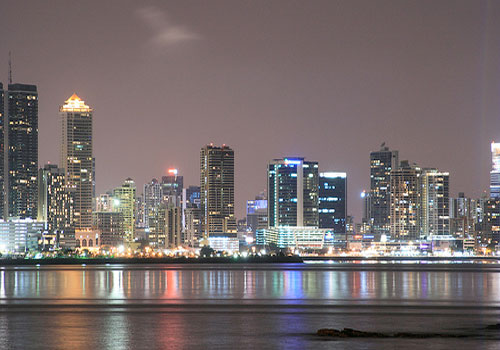
Covering a land-bridge which links North and South America, the Republic of Panama is best known for its 40-mile long (65km) shipping canal, which is cut along a gap between mountains, linking the Caribbean Sea to the Pacific Ocean. The country is largely unexplored by tourists; only a few hardy adventurers, researchers and spirited travellers have had the joy of discovering its amazing diversity of flora and fauna, secluded beaches, tropical beauty and historic treasures. The name, Panama, means 'abundance of fish and butterflies', in an indigenous language, which gives a good indication of the wild wonders to be found here, beyond its rather daunting, but fascinating capital, Panama City.
Panama has a significant history stretching back thousands of years, from its eight indigenous peoples (including the colourful Kunas of the San Blas Islands) to its turbulent colonial occupation. Spanish forts stand along the coastline, overlooking the blue waters once patrolled by famous pirates like Henry Morgan, and where Sir Francis Drake was buried at sea.
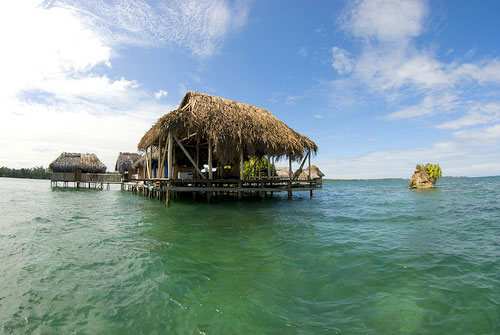
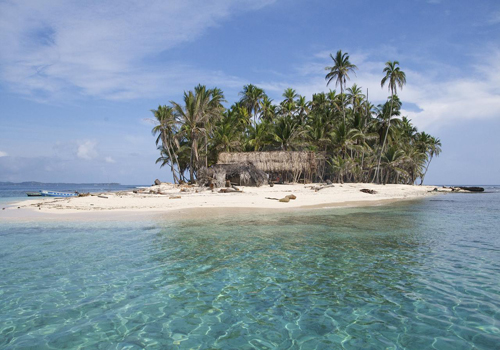
It is the natural beauty of the isthmus that offers so much for visitors, however. Around 30 percent of Panama is made up of 15 national parks and forest reserves, and 10 wildlife sanctuaries, like the incredible Parque Nacional Darién, just a short drive from Panama City, which is the most magnificent wilderness area in Central America. Archipelagos of about 1,500 offshore islands, their white soft beaches lapped by crystal clear waters, sport virgin rainforest and are an untouched paradise for divers, snorkellers, deep-sea fishing, water sports and sunbathers.
Those 'in the know' can be forgiven for keeping the delights of Panama a secret from the flood of modern tourism, because this has preserved the integrity of this overlooked part of the world where the sun always shines and it is possible to swim in two oceans in a single morning.
Cruises
Cruises have long floated through the Panama Canal although the country has been slow to ensnare the ships to its port cities. Yet Panama's impressive sites have proven too alluring to leave unvisited and it has recently grown as a cruise destination. The canal itself is the biggest lure to cruise ships. Crossings are a mixture of impressive man-made constructs in the midst of beautiful natural scenery. Ships are raised and lowered 85 feet (26m) above sea level through a series of locks, and released into the opposing ocean. A full crossing takes around ten hours of tight navigation between 50 miles (80 km) of canal. Cruises that make only a partial crossing of the canal often stop in Gatun Lake. The lake was created during construction of the canal and remains one of the world's largest man-made bodies of water. Here, passengers can dip into the canal's scenery with land excursions and boat trips along the lake shores. No city in Panama has snagged a large portion of the passing cruise ships, although Fuerto Amador and its neighbour, Panama City, are poised to soon do so. Here, at the Pacific entrance to the canal, cruisers can meander Caso Viejo, the old quarter, or watch the Miraflores Locks. The Amador Causeway, at the city's southern end, attracts visitors to its restaurants and shops. The Marine Exhibition Center of the Smithsonian Tropical Research Institute is a hands-on opportunity to learn about marine life surrounding the canal. Close by is the Canopy Tower, which gives a bird's eye view of Soberania National Park. These attractions, much like the country, are largely unexplored but worth being lured in for. On the Atlantic side the San Blas Islands, Portobelo and Colon, are also angling to land their share of cruise liners. A new port was built in Colon in preparation, although the area's attractions are largely limited to viewing the canal's locks.
Personalise this page
- London:
Voltage230 VFrequency50 Hz
- New York City:
Voltage120 V Frequency60 Hz
- Hong Kong:
Voltage220 V Frequency50 Hz