Hungary Travel Guide
Hungary's location in the centre of Europe along with its hospitable attitude makes it one of the best places from which to embark on an Eastern European journey. It is both European and distinctly Hungarian, incorporating a mixture of history and the present-day. The country proudly upholds its Magyar traditions, culture and arts, but is attentive to what is new and fashionable in the outside world.
A small landlocked country sharing its borders with seven neighbouring countries, travellers to Hungary should note that it was originally inhabited by the Magyars, an equestrian nomadic tribe. They were eventually converted to Christianity and in the year 1000 AD their Prince Stephen was crowned the nation's first ruler. Since then Hungary has seen numerous dynastic changes, from Turkish occupation to the era of Communism, and today quaint little towns, cities and ruins in the countryside bear the marks of this turbulent history with a rich mosaic of architectural styles and fortified hilltop castles. The Hungarian people, neither Slavic nor Germanic, are formal, reserved and intensely proud of their ancient nation and its cosmopolitan capital, Budapest.
Most visitors arrive in Budapest, situated on a lovely stretch of the Danube, the river that invokes feelings of romantic enchantment and musical memories. It is a city of culture and of astounding beauty and grace, and visitors are drawn to its enchanting magnetism. Outside of the capital the plains, rolling hills and rivers, lakes and vineyards hold much to offer the visitor. The Baroque town and fine wines of Eger, historical riverside villages along the Danube Bend, commanding fortresses, castles and palaces, the resort-lined Lake Balaton and the thermal spas and volcanically heated lake at Hévíz are just some of the country's many highlights awaiting discovery.
Royal Palace
Address: 1 Szent, Gyógy tér Budapest
Admission: Budapest History Museum 700 Ft (adult), 300 Ft (child). Hungarian National Gallery guided groups cost 1,000 Ft per head. Ludwig Museum 600 Ft (adult), 300 Ft (child) The Budapest History Museum is open daily from 10am to 6pm, except on Tuesdays. The Hungarian National Gallery and the Ludwig Museum are open daily from 10am to 6pm, except on Mondays
Telephone: (01) 375 7533
Located at the top of Castle Hill in the picturesque Castle District of Buda, the Royal Palace was first inhabited by King Béla in the 13th century who, after the Mongol invasion, turned it into a fortified stronghold against further attack. Over the next 700 years it was the residence of many royal figures. The strategic location of Budapest, situated in the heart of Europe and straddling the Danube, offered whoever controlled the city a defensive position and potential control of the main waterway. This led to repeated invasions, followed by rebuilding in the style of the period. The castle has a mixture of architectural styles, ranging from Gothic to Baroque. Today it is the country's most important cultural centre housing numerous museums and the majority of the buildings are historical monuments. The Budapest History Museum contains an exhibition explaining the history of the city as well as archaeological remains of the palace. Also within the palace complex are the Hungarian National Gallery, the National Library and the Ludwig Museum.
Fisherman's Bastion
Address: District I, Szentháromság tér Budapest
Built in 1905 on the medieval castle walls, the neo-Romanesque ramparts were so named after the city's fishermen whose duty it was to defend this side of the hill during the Middle Ages, but the existing bastion never actually served a defensive purpose. It is solely ornamental with gleaming white cloisters and stairways connecting seven turrets symbolic of the Magyar tribes that conquered the Carpathian Basin in the 9th century. Set back from the ramparts is an equestrian statue of King Stephen, a memorial to the founder of the Hungarian nation. The view from Fisherman's Bastion, over the Danube, the Chain Bridge and the Parliament Buildings with Pest stretching out into the distance, is outstanding. Floodlit at night, the bastion is a mesmerising sight from across the river.
Matthias Church
Address: District I, Trinity Square (Szentháromság tér) Budapest
Admission: 600 Ft (adults), 400 Ft (students, pensioners, soldiers), 1,000 Ft (family ticket, 1 or 2 parents plus children), children under 6 free, audio guide extra 300 Ft Monday to Saturday from 9am to 5pm, Sunday from 1pm to 5pm
Telephone: (01) 355 5657
Situated in the centre of the Castle Quarter, the 700-year-old Church of Our Lady is popularly known as Matthias Church after the nation's famous ruler, King Matthias (1458-90), a patron of learning and the arts who reconstructed the Hungarian state after decades of feudal anarchy. With its distinctive multicoloured tiled roof and Gothic spire, the church is one of Budapest's best-known structures, and it was here that the nation's kings were crowned and King Matthias was married. Today the church continues to hold High Mass, as well as concerts, organ and choir recitals owing to its magnificent acoustics. Matthias Church is a mixture of styles from the various kings, occupations and periods. When the Turks occupied the Castle in 1541 it was converted into a mosque, and the interior walls were whitewashed and painted over with scenes from the Koran. It suffered heavily in the later siege and was restored again in the 19th century, reconstructed in its characteristic neo-Gothic style, and remains of the original medieval frescoes were discovered underneath the whitewash. The interior is richly decorated with gilded altars, statues, rose windows and frescoes. Inside is the Church Museum, which gives access to the crypt, and a small collection of religious treasures and jewels. A fantastic paradox is visible in the reflection of the Gothic church in the sleek dark glass sides of the contemporary Budapest Hilton alongside.
Gellért Hill
Address: District XI, Szent Gellért tér 2-6 Budapest
Admission: 90 Ft (concessions available) Citadella: Monday to Friday from 6am to 6pm, Saturday and Sunday from 6am to 4pm
Telephone: (01) 385 2200
Gellért Hill offers unrivalled panoramic views of the city, taking in both Buda and Pest and the meandering Danube. The hill was named after a bishop who was asked to convert pagan Magyars to Christianity but, according to legend, was killed by being rolled off the hillside in a barrel by militant heathens. A statue of the martyred Bishop stands at the base of the hill. On its summit stands the Liberation Monument, a female figure holding aloft the palm of victory, dedicated to the memory of Soviet troops who died freeing Hungary in 1945. With the fall of communism the inscription was changed to honour those who died for 'Hungary's prosperity'. Behind the monument is the Citadella, or fortress, built after the 1848 revolution to provide military control against further uprisings. Today it houses a hostel and a museum. The hill is also home to several historic spas, valued for their medicinal qualities since the Turkish occupation. The city's most famous spa, the Gellért Baths, is attached to the grand establishment of the Art Nouveau Gellért Hotel. Here visitors can relax in the thermal waters of the Roman-styled pool with its lion-headed spouts, surrounded by columns and mosaic patterns, or indulge themselves with private therapeutic treatments or a massage.
Chain Bridge
Address: Roosevelt Square or Adam Clark Square Budapest
The Chain Bridge was the first stone bridge to be built over the Danube and is the most famous with its lion statues. Today nine bridges span the river linking Buda to Pest, but Chain Bridge takes pride of place as the city's symbol, a magnificent sight when floodlit at night. It owes its construction to Count István Széchenyi who decided to build a permanent crossing after having to wait a week to cross the river to bury his father. The Chain Bridge was built by William and Adam Clark, who also constructed London Bridge. It was considered an amazing feat of engineering when it was opened in 1849. At the foot of the bridge is Kilometre Zero, the point in Budapest from where all distances are measured.
The Great Synagogue and Jewish Museum
Address: Dohány utca 2-8 in VII district. Situated at an angle to Károly körút, between Deák tér and Astoria Budapest
Admission: Synagogue and museum 1400Ft (concessions available) In Summer, Sunday to Thursday from 10am to 6pm, Friday from 10am to 3pm. In Winter, Sunday to Thursday from 10am to 6pm, Friday from 10am to 2pm..
Telephone: +36 1 317 2754
Situated within Erzsébet Town, the charming old Jewish quarter and former ghetto, the Great or Central Synagogue is the largest in Europe and the second largest in the world, able to seat 3,000 people. Completed in 1859 the style is typically Byzantine-Moorish, with exquisitely patterned brickwork in the red, blue and yellow colours of the city's coat of arms. Gilded domed towers, archways and beautiful window designs are just some of the features that make this one of Budapest's landmarks. The splendid interior glitters with lights; gilded arches and balconies line the walls, the ceiling is covered in Stars of David, and the floor is tiled in decorative stars. On Jewish festivals it is packed with Jews from all over Hungary who come to celebrate within its splendour. Next door is the Jewish Museum containing relics from the Hungarian Jewish Community, including religious objects from festivals, and the Holocaust Memorial room. In the courtyard is the Holocaust Memorial in the shape of a weeping willow tree, each metal leaf engraved with the names of Nazi victims.
Parliament Buildings
Address: District V, Kossuth Lajos tér 1-3 Budapest
Admission: 2,300 Ft (adults), 1,150 Ft (students). Tickets sold at the gate a quarter of an hour before next tour Guided tours on the hour (or half hour during peak season) between the following times: Monday 8am to 11am; Tuesday to Saturday 8am to 4pm; Sunday 8am to 2pm
Telephone: (01) 441 4904 (for bookings)
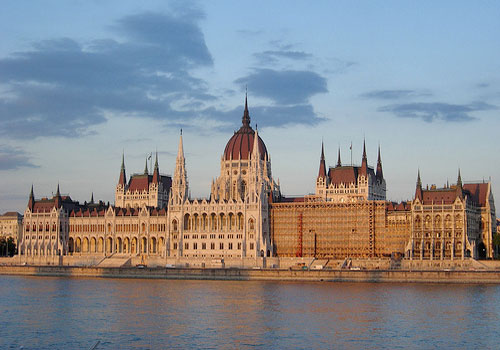
On the bank of the Danube stands one of the world's most beautiful parliament buildings, an imposing sight and a prominent feature of the city's panorama. With its red dome, white stone lace ornamentation and spires, it is the city's most decorative structure. Stone lions flank the entrance guarding a rich interior of marble and gold, statues and columns, and magnificent artefacts, including the 1,000-year-old crown of the first Hungarian King, all of which can be viewed on a guided tour. The grand edifice, stretching for 820 ft (250m) along the embankment, is one of the biggest national assemblies in the world.
Memento Park
Address: District XXII, corner of Balatoni út and Szabadkai út Budapest
Admission: 1500 Ft (concessions available) Daily from 10am until sunset
Telephone: (01) 424 7500
One of the city's popular but more bizarre attractions is Memento Park, containing the giant figures of the Communist era that once filled the streets of Budapest. After the change in the political system the monuments glorifying Communism were banished into the exile of this outdoor museum and among the statues, busts and monuments are the forms of Lenin, Marx and Engels, as well as memorials to the Soviet Soldiers and the Communist Martyrs. This is the only collection in the world from the time of Communist politics. Some of the interesting souvenirs sold at the park are cans of air from the 'last breath of socialism' and Stalin and Lenin shaped candles.
Hévíz
Address: Lake Balaton
Admission: Various rates apply for treatments, thermal baths and the medicinal pool, starting at 1,200Ft for three hours bathing
Hévíz is the site of Europe's largest and the world's second largest thermal lake, Gyógytó. It is the most extraordinary sight with its huge milky blue surface covered in water lilies and steam. The warm water wells up from a volcanic crater spring about 128 ft (40m) below the surface and provides year round swimming, although the recommended maximum time in the water during any one session is one hour. The mud on the bottom and edges is said to be slightly radioactive, good for various medical conditions, but in small doses. The complex offers indoor and outdoor swimming. A pavilion in the centre of the lake is reached by a covered bridge and indoor swimming takes place in an area enclosed with Plexiglas. Gaps in the plastic lead to the outdoor swimming area, the rest of the lake, where swimmers can float among the water lilies and swim between the 'rest' platforms bobbing on the surface.
Eger Castle
Address: Eger
Admission: 500 Ft (adults) and 250 Ft (children). On Mondays fees are 400 Ft and 200 Ft respectively. Foreign language guide 600 Ft plus admission ticket Castle grounds are open from 8am to 5, 6, 7 and 8pm depending on the season, summer being the longer hours
Telephone: (036) 312 744
The medieval castle, which sits on the small hill overlooking the town, has been the site of numerous historical events. The original buildings included a cathedral and the Bishop's Palace dating from the 13th century; the castle was later fortified, the walls providing the cover for the determined defence against the Turks by a small and outnumbered army. The women who fought alongside the soldiers claimed their place in national consciousness during this much-celebrated historical event. The Dobó István Fortress Museum, in the restored Palace, is one of the most popular museums in Hungary and has exhibitions on the history of the town and castle. Also within the castle grounds is the Heroes' Hall, which holds the grave of the celebrated leader, Dobó István, as well as the Prison Museum, Waxworks, and the underground, rock-hewn artillery enclosures. The best views of the town are from the castle walls.
Szépasszony Valley (Valley of the Pretty Woman)
Address: Eger
The beautiful valley with its rolling vineyards and century-old cellars and taverns is a favourite attraction in Eger. Wine producers welcome visitors into their quaint old cellars, hollowed out of the porous rock hundreds of years ago, where some of the country's finest red wines can be tasted, including the unique Bull's Blood. Legend has it that the name Bull's Blood originated from the times of Turkish occupation when, forbidden to drink wine by their religion, the soldiers told their officers that they were drinking bull's blood to make them strong for battle. The rows of cellars are numbered and each has a particular charm, whether it is the sociable owner, the chequered tablecloths of an underground tavern or the wooden barrels of fermenting grapes in the uneven rock passageway. It is possible to visit, by prior arrangement, the 'Istenes Pince' or Godly Cellar, the oldest historic cellar in the region. It operated as a secret church during the Turkish occupation and the stone altar and religious work of art still remains.
Keszthely
Address: Lake Balaton
Keszthely is a pleasant university town that has a life of its own outside the tourist season. It has trendy cafes, tree lined streets and a busy market area with strings of peppers and garlic decorating the stalls beside old fashioned weighing scales. Its most important sight is the Festetics Palace, the residence of the wealthy Festetics family with over 100 rooms. The Helikon Palace Museum and Library are in one of its Baroque wings. Keszthely is the best town on Lake Balaton from which to explore the surrounding area, including the nearby Kis-Balaton nature reserve, excellent for bird watching, and the thermal lake at Hévíz.
Szentendre
Address: The Danube Bend
Szentendre, 'The Pearl of the Danube Bend', is a quaint old market town situated on the slopes of the Pilis range, with a charm and character of its own. Meandering cobbled lanes, little squares, red-tiled roofs, brightly painted houses, and awkwardly positioned Orthodox churches give it an artistically picturesque setting. Serbian refugees inhabited the town in medieval times and their style contributed to the charisma of the town's haphazard structure and Balkan flavour. Numerous Serbian churches add to the collection of historical buildings. In the 1900s the town became a favourite retreat for painters and sculptors and ever since it has been known for its art and artists, resulting in a wealth of museums and art collections scattered among the tourist souvenir and handicraft shops. Being close to Budapest, the town has become one of the hotspots of tourism, and summer weekends can get rather overcrowded.
Visegrad
Address: The Danube Bend
Superbly situated on the abrupt loop of the Danube beneath steep hills, Visegrad was once a Roman stronghold on the border of the Roman Empire and the second home after Buda to Hungary's royalty in the 14th and 15th centuries. The Citadel sits high on the hill above the town with commanding views over the river bend and the position was of strategic importance to the Romans. On the banks of the river are the ruins of the magnificent palace, one of the finest ever built in Hungary, which is now the open air King Matthias Museum. Today the small, sparsely populated town has a pleasantly lethargic atmosphere that belies its past glory and importance and it makes a peaceful excursion from the crowds of the big city.
Esztergom
Address: The Danube Bend
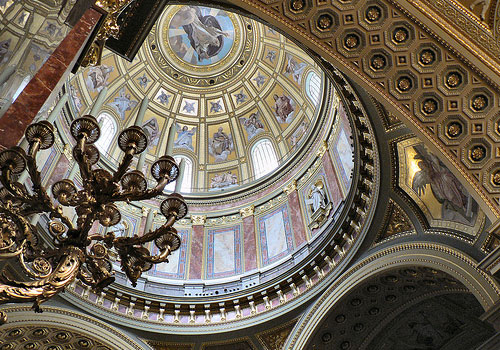
Esztergom combines history with a small-town riverside charm. One of Hungary's most historically important towns, it was the capital for over 250 years and the birthplace of their beloved first king and saint, Stephen, who was later crowned here in the 11th century. Today it remains the religious centre of the country with Hungary's largest church dominating the hill above the town next to the ruins of the medieval Royal Palace, now the Castle Museum. The colossal basilica was the first cathedral in the country and from where Roman Catholicism was introduced to the nation. It offers wonderful views from its enormous dome and contains a crypt and priceless treasury collection. Below is the pretty Watertown District with uneven cobbled streets winding up the hill towards Castle Hill and several interesting museums. Esztergom faces Slovakia across the Danube and there is an international ferry crossing here.
Great Circus
Address: Állatkerti krt. Budapest
Admission: EUR3.33 (adults) and EUR2.93 (children over 4 years) Daily shows at 3pm
There's nothing kids love more than a circus performance and Budapest offers a fantastic display of this Hungarian tradition. The Great Circus (Nagy Cirkusz) features an array of clowns, animals, jugglers and acrobats to keep children happily entertained.
Budapest Puppet Theatre
Address: 69 Andrássy út Budapest
Admission: Shows at 10am and 4pm
The Budapest Puppet Theatre (Bábszínház) is a fantastic attraction for kids in the city. While the shows are presented in Hungarian, kids are still enthralled by the enactment of familiar stories such as Cinderella and Snow White, and can often be heard calling out warnings when villains are approaching or encouraging the heroes in their endeavours.
Vidám Park
Address: Állatkerti krt. Budapest
Vidám Park is an excellent amusement park for kids in Budapest to visit. The park features a wooden merry-go-round (körhinta) that is over 100 years old, as well as a slow-moving Ferris wheel (óriáskerék) and the longest wooden roller coaster in Europe. Kis Vidám Park is the neighbouring amusement park for toddlers.
Indigo
Address: Jokai 13 Budapest
Food Type: Indian
One of Budapest's finest Indian eateries by far, the trendy Indigo is popular with locals and visitors alike and never fails to please with its mouth-watering curries and fragrant dishes. Stylish, yet modern décor and clean lines create a fresh atmosphere and the great food and service make for a memorable dining experience. Open for lunch and dinner daily. Credit cards accepted.
Café Vian
Address: Liszt Ferenc tér 9 Budapest
Food Type: Local
Those looking for a trendy eatery with both indoor and outdoor dining options need look no further than Café Vian. The food is good, the prices are reasonable and many young and hip locals frequent this popular restaurant. Try the Grilled chicken breast 'Vian' style with ratatouille and candied lemon and potato pancake, or the Red wine flavoured beef stew with dumplings. Open daily. Reservations accepted.
Fortuna Restaurant
Address: Hess András tér 4 Budapest
Food Type: Local
This stylish restaurants features five dining rooms for guests to choose from, namely the Fortuna room, the Royal room, the Knights room, the Terrace and the Sparkling wine cellar. The delicious tradition Hungarian dishes and wines are a taste sensation and visitors will not be disappointed. Try the pheasant breast filled with quince and served with curd-cheese flan, or the sirloin steak with bull's blood wine sauce served with a porcini, chantarelle and shitake mushroom trio ragout. Open daily. Reservations recommended.
Personalise this page
- London:
Voltage230 VFrequency50 Hz
- New York City:
Voltage120 V Frequency60 Hz
- Hong Kong:
Voltage220 V Frequency50 Hz