Malaysia Travel Guide
The destination is divided into two distinct parts. Peninsula Malaysia comprises the long fringe of land that extends down from Asia, and borders Thailand and Singapore. The South China Sea separates the mainland from the less-populated East Malaysian provinces of Sabah and Sarawak. Their dense jungles support an abundance of exotic plant and wildlife.
Tourists generally head to the peninsula, largely because of its different peoples, climates and activities. The highland regions offer cool relief from the mainland's clinging humidity, while Langkawi is popular among surfers. Culture lovers enjoy exploring traditional Malay life on the east coast, particularly in the northern Kelantan Province. The city of Kota Bharu and its surrounds may well be the most fascinating part of the peninsula. Travellers who appreciate rich culture and remote beauty should head there.
The capital city, Kuala Lumpur, is on the west coast, and is an icon of Asian prosperity. It's also a wonderful mix of tradition and technology.
Merdeka Square (Dataran Merdeka)
At 328 feet (100m), the flagpole rising from Merdeka Square is
one of the tallest in the world. More importantly, it marks the
place where Malaysia achieved independence at midnight on the 31th
of August 1957. The square remains the heart of Malaysian
nationalism, and one of the few places in Kuala Lumpur where
colonial buildings still stand. Indeed, the city's colonial past is
very much alive in the architecture and large field - which still
hosts the occasional cricket match. The Tudor-style Royal Selangor
Club rests on one corner of the square, and looks onto a large
video screen displaying adverts and religious messages. Once a
social centre for Kuala Lumpur's British residents, its doors are
now open to anyone who can afford the membership fees. As die-hard
custom dictates, women are not allowed to enter the bar, save by
invitation. Other buildings of interest around the square include
St. Mary's Church, which is supposedly the first church built in
the city, and the Abdul Sambad building, which was built for one of
the sultans. Travellers will also find some shops and restaurants
in the area.
Chinatown
Chinatown is an intoxicating jumble crowds, colours and
authentic food. The central section of Petaling Street is closed at
night, when the area is transformed into an exciting, brightly lit
shopping experience. Vendors spread their wares onto the pavement,
displaying anything from toys to t-shirts and jewellery. Shoppers
will need to be careful, though, as many items are fake. Also,
bargaining for the best price is expected and part of the fun. Many
stalls operate during the day, but Chinatown is more special at
night. Shoppers should be mindful of pick-pockets, regardless of
what time of day they visit. Culture lovers should note that the
area is also home to some tremendous Chinese temples.
Petronas Towers
Address: City centre. Ticket Booth: Tower 2, Concourse Level
Admission: MYR 80 (adults), MYR 33 (children). The towers are open to the public Tuesday to Sunday 9am to 9pm (closed from 1pm – 2.30pm on Fridays), but tickets go on sale at 8.30am.
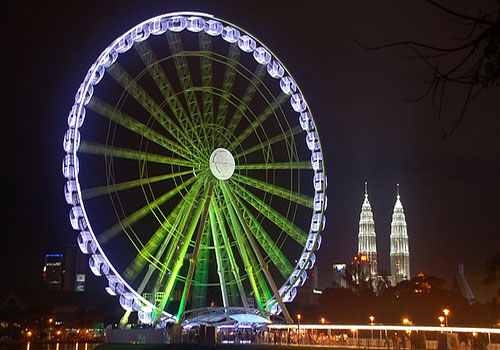
The Petronas Towers were designed to capture Malaysia's
emergence as Southeast Asia's cultural and commercial centre.
Celebrated as the world's tallest twin towers, they dominate the
city skyline. Architects followed the traditional geometric
principles of Islamic architecture when designing the buildings,
using modern technology to stunning effect. Joined by a skybridge
on the 41st floor, the towers are used as office complexes that
form part of the Kuala Lumpur City Centre Development Park. They're
particularly beautiful when lit up at night. Tours include crossing
the famous bridge and going up to an observation deck on the 86nd
floor, which offers phenomenal, 360-degree views of the city.
Visitors can also enjoy an exhibition detailing the development of
the towers, and purchase souvenirs at a gift shop.
Kuala Lumpur Railway Station
Address: Jalan Hishamuddin
British colonial architect Arthur Benison Hubback was inspired
by Moorish, Mughal and Islamic design when he conceived this
magnificent railway station. Easily mistaken for a sultan's palace,
its arches, spires, towers and minarets dazzle against a backdrop
of skyscrapers. Inside, visitors will find a small railway museum
on the evolution of railway technology in Malaysia. It may be worth
a visit for railway enthusiasts. The Kuala Lumpur Railway Station
is more of a landmark than an attraction, though, and should only
require a quick walk by and photo shoot.
Friday Mosque (Masjid Jamek)
Address: Jalan Tun Perak
Admission: Free Visiting hours are from 8.30am to 12.30pm and from 2.30pm to 4.30pm
Masjid Jamek (the Friday Mosque) lies where the Klang River
meets the Gombak River. Palm trees and curved steps lead to the
water's edge, deepening the mosque's air of tranquillity. The site
is very much a haven within the buzz and rush of Kuala Lumpur.
Visitors will find dazzling photo opportunities amid the
combination of ancient Moorish, Islam and Mughal architectural
styles, and leafy surroundings. Custom demands that they dress
conservatively and remove their shoes on entering. Mosque staff
will supply men and women with the appropriate attire if necessary.
Masjid Negara (the National Mosque) offers a modern contrast to the
Friday Mosque and is also worth visiting. Opened in 1965, it's one
of the largest in Southeast Asia.
Perdana Botanical Gardens
Address: Jalan Perdana
Admission: Theres a small admission fee for the Butterfly House, Bird Park, and Orchid and Hibiscus Gardens on weekends. Daily 7am to 8pm.
Telephone: +603 2617 6404
The beautiful gardens were established in 1888 and are Kuala
Lumpur's green belt. To many people, their backdrop of skyscrapers
is reminiscent of New York's Central Park. Lush vegetation
surrounds a vast lake, where visitors will find a number of
romantic bridges and plenty of space to read, jog or socialise.
Leisurely boat cruises are also on offer. Regarding attractions,
Bird Park, Butterfly House, the National Monument, the Orchid and
Hibiscus gardens and Malaysia's Parliament House all call the area
home. Children can enjoy some wonderful playgrounds. All things
considered, the gardens are a wonderful way to escape the city's
crowds and humidity.
National Museum (Muzium Negara)
Address: Jalan Damansara
Admission: MYR 5 (adults); MYR 2 (children aged 6 to 12). Daily 8am to 6pm.
Designed to reflect the region's Minangkabau architectural
style, the National Museum houses many of Malaysia's cultural
treasures and historical artefacts. Its ethnographic and
archaeological exhibits include life-size dioramas of traditional
Malaysian life. Puppet-shadow-play (wayang kulit) displays show the
country's ancient artistry, while exhibits of traditional weapons
such as daggers (kris) and machetes (parangs) reveal Malaysia's
pride in functional aesthetic forms. Travellers should note that
the museum covers a lot of time and subject matter, and suffers
from an occasional lack of linkage between periods. For this
reason, visitors should join one of the free guided tours.
Photography is permitted, though only with a hand-held camera and
for private use. Visitors will find a shop and cafeteria, and
features for disabled guests.
Batu Caves
Address: 68100 Batu Caves, Selangor
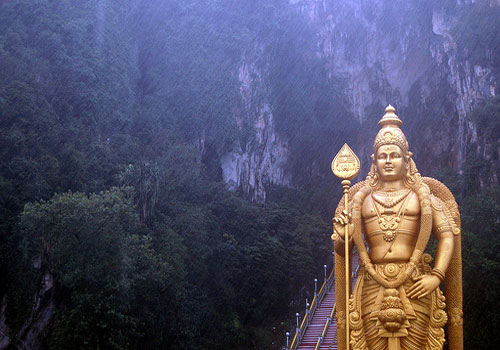
Stalagmites and stalactites festoon the interior of these
impressive limestone caves, together with shrines to Hindu deities.
American naturalist, William Hornaday, is credited with discovering
them in 1878, though they were already known Chinese settlers and
local indigenous peoples. The caves have since become a Hindu holy
site. They're especially relevant to the celebration of a three-day
religious festival called Thaipusam. Thousands of devotees visit
during the festival, paying penance and performing rites of
self-flagellation. Visitors can reach the largest cave, Temple
Cave, by climbing 272 steps. The path will lead them to Museum
Cave, which houses a dazzling display of ornamental religious art.
Travellers will enjoy the clear view from the top to the Sri
Subramaniam Temple. Onsite companies offer rock climbing
opportunities as well. Travellers who're interested should pack
water, as the routes are challenging. Visitors should also watch
out for monkeys, as they tend to steal things.
Taman Negara National Park
Address: Kampung Kuala Tahan, 27000 Kuala Tahan, Pahang
Spanning a vast area in Pahang State, Taman Negara National Park
contains some of the world's oldest rainforest. Its richly diverse
plant and wildlife have evolved over a staggering 130 million
years, and its jungle trails lead past a small, seldom-seen
population of the nomadic Orang Asli people. Their makeshift
shelters appear in clearings, and several operators offer guided
tours to their villages. Hiking the main path across the park takes
about three days, and visitors can stay in wooden lodges between
treks. Night-time jungle sounds are incredible, if a little
unnerving for the uninitiated. Park visitors can also enjoy
fishing, birdwatching, river-rafting and climbing the Peninsula's
highest mountain, Gunung Tahan.
Melaka (Historic City)
Melaka (Malacca) preserves the historic meeting of Chinese and
European cultures. Initially, its strategic position on the Straits
of Melaka encouraged a tide of trade with China, India, Siam and
Indonesia. Later, colonial powers wrestled for control of the
fascinating seaside city, and much of the 16th century Portuguese
influence is cemented in its architecture. Visitors can expect an
authentic cultural experience in this predominantly Chinese region,
where open-air markets and traditional merchants are commonplace.
Melaka is also home to a unique ethnic group called the
Baba-Nyonya. Born of Chinese and Malay ancestors, their remarkable
lifestyle is recorded in the Baba-Nyonya Heritage Museum.
Travellers should stop on Jonker Street too. The attractive
thoroughfare is almost always strung with traditional Chinese
lanterns, and hosts night bazaars and festivities on weekends.
Otherwise, trips on the Malacca River are popular and feature many
historic buildings, such as the Stadthuys. Once the Dutch
administration's seat, it now houses a history museum. Travellers
will also find some interesting ruins on St. Paul's Hill.
Tunku Abdul Rahman National Park
Address: Sabah, Malaysia
Five pristine islands make up Tunku Abdul Rahman National Park,
with each idyllic setting comprising white beaches, offshore coral
reefs and inland forests teeming with animal life. These
destinations are all perfect for camping, trekking, swimming and
snorkelling. Gaya Island is the largest of the five. Its status as
a forest reserve since 1923 has helped preserve its dense tropical
forest. Manukan Island is the second largest and the most popular
with Malaysian locals. Mamutik Island is the smallest, though it
still has its share of loveliness. Travellers seeking tranquillity
will love this beautiful retreat. Sapi Island is very popular with
foreign tourists and can get quite crowded during the day. Lastly,
Sulug Island is the most pristine and untouched of the chain, and
the farthest from the mainland. It is the ideal destination for
those seeking peace and quiet.
Sipadan Island
This mushroom-shaped island is known among divers around the
world for its unique seascape and exceptional beauty. Something
like 3,000 varieties of fish, hundreds of coral species, and
numerous rays, sharks and turtles populate its translucent waters.
Sipadan Island certainly tops the Malaysian itinerary for serious
scuba divers, given that it's located in the world's most
bio-diverse marine habitat. The famous underwater explorer Jacques
Cousteau once described it as 'an untouched piece of art'. Indeed,
the Malaysian government has taken measures to preserve the fragile
ecosystem. That is, it's ordered dive resorts off the island,
limited the daily number of divers allowed in the water, and banned
night dives.
Mount Kinabalu
Address: Mount Kinabalu, Ranau, Sabah
Mount Kinabalu rises from the Kinabalu National Park. At an
impressive 13,500-foot (4,101m), it's one of the highest peaks in
Southeast Asia. It's a relatively easy climb, though, with tourists
of varying ages and fitness levels enjoying the two-to-three-day
ascent. Most people spend a night at Laban Rata before mounting the
summit. Along with being the name of a resthouse that caters for
hikers, Laban Rata is the name most people use for the area. The
summit is a three-to-four-hour hike away from the hostel. Hikers
should leave between 2am and 3am if they want to catch one of the
area's magical sunrises. Visitors will encounter some weird and
wonderful vegetation as the scale the jungle route, and can expect
some astounding views from the top. Hikers should note that while
the climb doesn't require any special equipment or technical
skills, some people may experience the dizziness and shortness of
breath associated with altitude sickness. All in all, climbing
Mount Kinabalu is an extremely rewarding adventure and one of the
top activities in Malaysia.
Niah National Park and Niah Caves
Address: 98200 Niah, Sarawak
The Great Cave of Niah is one of the largest limestone caves in
the world. More importantly, it's where archaeologists discovered
evidence of man's existence dating back 40,000 years. A display of
tools, rock paintings and human skulls tell the story of ancient
civilisations. Limestone and lush tropical vegetation dominate the
rest of the park, which nestles beneath the magnificent Mount
Subis. Visitors reach the caves via a motor-boat trip across a
small crocodile-infested river and a one-hour-long trek through
jungle. The walk is rewarding and may include some wildlife
viewing. As for the cave, travellers should expect slippery
conditions, and should pack a flashlight. The area's ancient rock
paintings are a must-see.
Sepilok Forest Reserve and Orangutan Sanctuary
Address: Sabah Wildlife Department, W.D.T. 200, Sandakan, Jalan Sepilok, Sepilok, 90000 Sandakan, Sabah
Sabah District's vast, enchanting equatorial rainforest is home
to the Sepilok Orangutan Sanctuary, where orphaned orangutans find
temporary shelter and rehabilitation before their re-release into
the forest. The centre was set up in 1964 and gives tourists and
researchers the priceless opportunity to observe and engage with
the animals in their natural habitat. Visitors are restricted to
the walkways but orangutans often come over to interact.
Photography is permitted, though tourists will pay an extra charge
for bringing in a camera. The Sandakan Rainforest Discovery Centre
(RDC) is also within the Sepilok Forest Reserve. The remarkable
place allows guests to explore the jungle canopy on a series of
raised platforms and walkways. Nature lovers in general, and bird
watchers in particular will enjoy the experience.
Bukit Larut
Formerly known as Maxwell Hill, the holiday retreat of Bukit
Larut is Malaysia's oldest hill station. Situated in the wettest
part of the country, the peaceful site's history stretches back to
1884, and the area is blessedly cool compared to the lowlands.
Limited accommodation and a lack of development give the
destination an old-world colonial charm, which the more popular
hill stations no longer have. Eight charming bungalows nestle on
the hillside, providing the area's only holiday lodging. The route
to the top of the hill station is an exhilarating climb through
virgin tropical jungle. Travellers will need a four-wheel drive to
undertake the journey. Private vehicles are not permitted, though a
government-owned Land Rover makes regular trips up between 7am and
6pm. Visitors can enjoy magnificent panoramic views of the
Malaysian peninsula's west coast from the summit. The vista runs
from Penang to Pangkor.
Cameron Highlands
Located at the northwestern edge of Pahang state, the Cameron
Highlands hill station is the largest of its kind in Malaysia. The
fertile region is home to a scattering of villages, and terraced
plantations. Visitors will enjoy the scenic drive along the area's
main route, during which they can stop at the stunning Lata
Iskandar Waterfalls and Kuala Woh Forest Recreation Park. They can
also stroll through Brinchang's market square, potter around
handicraft stores, or sample the peace at Buddhist Temples. Ringlet
and Tanah Rata are also worth exploring for lovers of quaint towns.
Trips to tea plantations and strawberry farms are popular too.
Frasers Hill
Louis James Fraser was a controversial, solitary figure, who set
up camp on one of the seven hills' cool, lush summits. The area
became known as Fraser's Hill. The Scottish pioneer and opium-den
operator disappeared under mysterious circumstances before the
area's potential as a hill station was recognised. Others followed
him and investigated the site, ultimately finding it perfect for a
highland retreat. The area lies in the state of Pahang and is north
of the Genting Highlands. Situated around 5,000 feet (1,524m) above
sea level, it is the only hill station within two hours' drive of
Kuala Lumpur. Nature lovers and bird enthusiasts will enjoy the
cool, serene region. Jungle trails, waterfalls and colourful
nurseries nestle peacefully in the landscape, complementing golf
courses and horse-riding routes. Visitors will also find extensive
hiking trails. Regarding accommodation, travellers can choose from
a range of chalets, hotels, and colonial bungalows.
Genting Highlands
The Genting Highlands holiday resort has none of the old-world,
colonial atmosphere of Malaysia's other hill stations. Instead, its
main purpose is to entertain Kuala Lumpur's more affluent citizens.
To this end, it's home to the country's only legal, land-based
casino, a number of hotels, and a handful of theme parks. Visitors
will also find a horse ranch, a golf course and an artificial lake.
The hill resort lies less than one hour's drive from Kuala Lumpur,
though holidaymakers can reach via a cable car called the Genting
Skyway. At 6,562 feet (2,000m) above sea level, the hill station's
temperate conditions offer a welcome respite from Malaysia's
humidity. That said, its vibrant nightlife can account for the
temperature rising in other ways.
Langkawi
Address: Islands
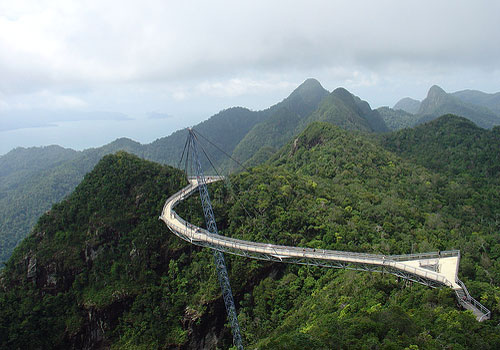
Langkawi is the collective name for a group of 99 tropical
islands located 20 miles (30km) off the northwestern tip of the
peninsula. Pulau Langkawi is the largest and most developed of
them. Much of the island's prolific development has been focused in
the town of Kuah, which is the embarkation point for visitors
travelling by ferry. Pulau's appeal flows from its hot springs,
waterfalls, pristine beaches, limestone outcrops and stunning
mountainous interiors. Visitors will also find plenty of shops and
modern amenities. Langkawi is easily accessible by air or boat,
though ferry crossings may cease during the monsoon season.
Perhentian Islands
Address: Islands
Two islands make up the popular holiday destination, which for
all intents and purposes is a backpacker's paradise. Fisherman
double as tour guides, and simple beach bars spill out onto the
pristine shore. Travellers have the option of securing more
high-end accommodation if they want, though the islands are an
iconic stop on the budget traveller's itinerary. Regarding
activities, the largely undeveloped region is located within the
Terengganu Marine Park, where divers and snorkelers can enjoy clean
water and gorgeous coral reefs. Visitors can reach the islands via
taxi boats from the town of Kuala Besut. They should also note that
the east-coast monsoon often makes the islands inaccessible between
November and January.
Tioman
Address: Islands
This picturesque, ecologically rich island is home to dense
jungles, which flourish around mountains. Clear waters lap its
pristine beaches, revealing luminous coral reefs and a stunning
marine population. Visitors will find a handful of villages along
the coast, and virgin forest farther inland. Divers and snorkelers
can hire equipment. June to August is high-season, while the island
is almost deserted over the monsoon period, which runs from
November to January. The journey there takes about two hours by
boat from the coastal town of Mersing. Alternatively, travellers
could choose the high-speed catamaran service that operates between
Singapore and Tioman. It takes more or less four and a half
hours.
Pulau Pangkor
Address: Islands
Pangkor Island was once a hideout for pirates, and where the
Dutch choose to construct a fort to assert their trade dominance in
the region. The Dutch weren't in charge for long though, as local
leaders allied with the British to force them out. Today, the
mountainous island welcomes a healthy stream of visitors to its
beautiful beaches. Eco-tourism is another drawcard, given the
destination's gorgeous scenery and impressive variety of wildlife.
The tourist infrastructure is good too, meaning holidaymakers will
find various accommodation options, and lots to keep them
entertained. Anyone looking to dive into some island history can
enjoy attractions such as the ancient Fu Ling Kong Temple, the
Dutch Fort and a granite boulder called, Tiger Rock, which bears
etchings of a tiger on its surface. Travellers can also visit tombs
and trek up Tortoise Hill.
Enak
Address: LG2, Feast Floor,Starhill Gallery 181. Jalan, Bukit Bintang, 55100 Kuala Lumpur
Food Type: Asian
This upscale Malay eatery offers guests home-style Malay dishes,
all of them based on recipes that have been in owner, Sherena
Razaly's, family for generations. Diners can expect traditional
flavours and modern presentation. Signature dishes include sambal
tumis udang (fried chilli prawns) and ayam goreng lengkuas (fried
chicken with blue ginger).
Bombay Palace
Address: Life Centre, 20, Jalan Sultan Ismail, Kuala Lumpur
Food Type: Indian
Specialising in North Indian cuisine, Bombay Palace is one of
Kuala Lumpur's most popular restaurants and welcomes hundreds of
locals and tourists every week. With majestic décor fit for a king,
Bombay Palace delivers. Diners should try the Lamb Vindaloo if they
can handle the heat, and Dil Bahar or Pista Barfi for dessert. The
restaurant opens daily for lunch and dinner. Reservations are
recommended.
Oriental Pavilion
Address: 13, Jalan Semangat, Pjs 13, 46200 Petaling Jaya, Selangor, Malaysia
Food Type: Middle Eastern
The restaurant specialises in the fine Cantonese cuisine for
which Kuala Lumpur is known. All dishes come with a modern twist;
popular specialities include Peking Duck, Braised Imperial Beancurd
with Spinach, Cod Fish with Pomelo Sauce in Whole Orange, Charcoal
Grilled Iberico Ribs, and Roast Suckling Pig.
Hospitals in Kuala Lumpur and other major Malaysian cities are of a high standard but medical facilities may be lacking in rural areas. Comprehensive medical insurance is recommended.