Explore Poland
Poland Travel Guide
Travellers to Poland will be enchanted by its remarkable history of heroic resilience and tragedy, and delight in the charming character of its cities and in the natural beauty of the countryside. From romantic tales of medieval knights and battles, kings and splendid castles, to the horrors and destruction of World War II; it's determined stand against Communism and today's modern outlook and booming economy, the country abounds with the evidence of a historically turbulent past.
It was the country most devastated by World War II in Eastern Europe, losing about a quarter of its population and almost its entire Jewish community. The aftermath of the war greatly influenced the character of the country. Former Jewish centres in the cities and the stark concentration camps where the Nazis carried out their extermination atrocities remain as the most stirring reminders of the nation's tragedies. Cities destroyed by the war had to be rebuilt from scratch and the many meticulously restored buildings and historic old towns are testimony to the pride and determination of a strong and durable nation.
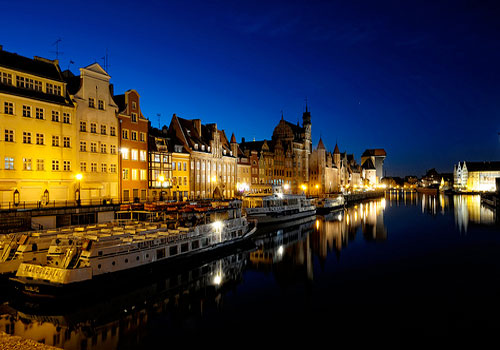
Warsaw, the capital, was almost totally destroyed by the war and now presents an unusual mix of beautifully restored historic buildings, communist-era concrete structures, and modern fashion and consumerism. The maritime city of Gdañsk, home to the historic garrison at Westerplatte and the legendary Lenin shipyards, was the stage for both the beginnings of the Second World War and the disintegration of Eastern European communism. But it is Krakow, the ancient royal capital that draws the crowds, rivalling the elegance of cities like Prague and Vienna. Having largely escaped the destruction of the war it retains its charming medieval character; the Royal Castle, the grand Market Square, the old Jewish quarter and the nearby Nazi death camps of Auschwitz are all steeped in historical importance.
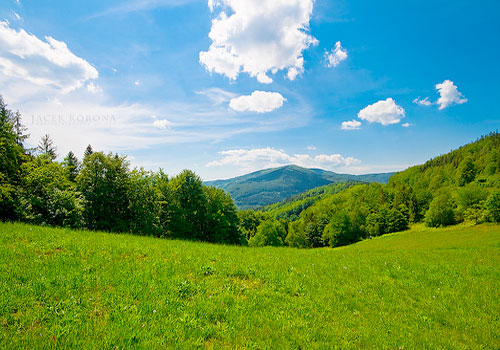
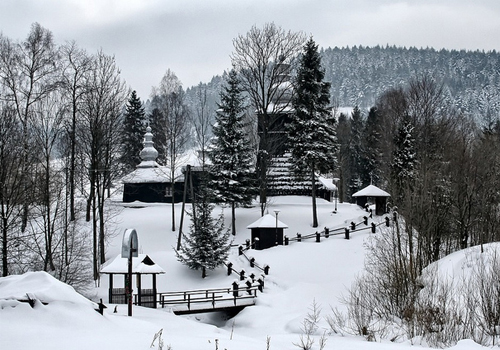
The unspoilt Baltic coastline and the splendour of the rugged mountain ranges of the Tatras will impress outdoor enthusiasts, with a variety of activities and scenery to provide a peaceful and relaxing break from the intensity of the country's history. Along with the legendary hospitality of Polish people, a sense of nationhood to which the Catholic Church is fundamental, and a strong musical and cultural sense of identity, its tourist infrastructure is flourishing and the country is experiencing a remarkable increase in the number of visitors to its shores.
Old Town (Starego Miasta)
Address: Warsaw
The busy Old Town provides the historic focal point of the city, having been rebuilt in the original 17th and 18th century style following the almost total destruction of the city during the war. The picturesque Old Market Square (Rynek) is at the centre, surrounded by restored buildings and colourful three-story merchant houses with Baroque and Renaissance facades, lively open-air restaurants, art stalls and the Historical Museum of Warsaw. Around the two old central water pumps, the atmosphere is a constant buzz of activity with buskers, painters and musicians providing entertainment for the milling crowds, while around the fringes the clattering of hooves signals the arrival of a another traditional horse-drawn carriage. Leading from the square is a network of cobbled streets and alleyways that contain beautiful Gothic churches and former palaces of the aristocracy. The impressive Royal Castle was once the home of the Polish Kings and is now a museum displaying tapestries, period furniture, portraits and other decorative collections. The narrow streets also lead to the ramparts and watchtowers of the medieval walls surrounding the old city.
Historical Museum of Warsaw
Address: Rynek Starego Miasta (Old Town Square) 28-42 Warsaw
Admission: 6 zl normal rate, 3 zl concession rate. Free on Sundays. English guide 20 zl Tuesday and Thursday 11am to 6pm, Wednesday and Friday 10am to 3.30pm, Saturday and Sunday 10.30am to 4.30pm. Closed Mondays
Telephone: (0)22 635 1625
The History Museum is one of the best of Warsaw's museums. Its three-stories are crammed with fascinating exhibitions covering every aspect of Warsaw's history and life, from its beginnings to the present day, and there are old photographs, clippings and articles on display from everyday pre-war city life. The museum's special feature is a documentary film showing the destruction and reconstruction of the city, with footage shot by the Nazis during their calculated and systematic annihilation. The film is shown in English at 12pm Tuesday to Saturday.
The Royal Way
Address: Krakowski Prezedmiecie becoming Nowy wiat Warsaw
Admission: Palace: 25zl, which includes a guide. Park: 4.50zl (15zl including a guide) Wilanów Palace: daily except Tuesdays 9am to 4pm. From 15 May to 18 September the palace is open until 6pm on Wednesdays and until 7pm on Sundays. The park is open daily 9am until dusk
Known as the Royal Way, this two-and-a-half mile (4km) route stretches from the Royal Castle in the Old Town to the stately King's palace at Wilanów on the outskirts of the city. It is the most important thoroughfare bisecting the central city from north to south and is lined with galleries, museums and historical buildings, including St Anne's Church, where the Polish princes used to swear homage to the king. Along the way are the royal gardens of Park Lazienki, one of the city's beautiful open green spaces with its lakes, peacocks and the charming 18th-century Palace Upon the Water, the royal summer residence. There is a monument to the famous Polish composer, Chopin, and outdoor concerts of his classical music are held on the lawns in summer. The Royal Way ends at the splendid Wilanów Palace, the former residence of King Jan III Sobieski that was modelled on Versailles. It is now a museum containing a marvellous collection of old paintings and furniture. In the well-kept park behind the palace is the Orangery housing an art gallery, and the Poster Museum in the former royal stables has changing exhibitions of Poland's renowned poster art.
Westerplatte
Address: Gdañsk
Westerplatte is where World War II broke out on 1 September 1939, situated at the entrance to the harbour and just a few kilometres from the city of Gdañsk. The Polish garrison held out against the attack for seven days before surrendering to the Nazi German forces, and the site is now a memorial to the defenders, including a small museum, some of the ruins left from the shelling and a massive monument that towers above the area.
Malbork Castle
Address: Ul. Staroscinska 1 Gdañsk
Admission: 25 zl (adults), concessions 15 zl. Entry to tower is 6 zl Tuesday to Sunday 9am to 7pm from May to September, 10am to 3pm from October to April
Telephone: (0)55 647 0800
Malbork Castle is a classic example of a medieval fortress; it is the world's largest brick castle and one of the most impressive of its kind in Europe. Invited by the Polish Royalty to help suppress the pagan tribes in the area, the Teutonic Knights built the immense castle in 1276 and slowly began to establish themselves as fearsome rulers, taking control of most of northern Poland until, after several unsuccessful attempts to rid the country of the Knights, they were defeated at the Battle of Grunwald in 1410. In medieval times the belief that the bigger the fortress the more powerful those within was clearly portrayed in the building of this immense brick stronghold, incorporating a system of multiple defence walls with gates and towers. The inner castle includes arcaded courtyards, chapels, a treasury, the Knights' Hall and an armoury. The interiors house several exhibitions, including displays on the castle's history, and collections of tapestries, coins and medals, medieval sculptures, and weapons. During summer the courtyard is a venue for sound and light shows.
Main Market Square (Rynek Glówny)
Address: Krakow
Dating from 1257, the Central Market Square was one of the largest squares in Medieval Europe, and is the social heart of Krakow today. Surrounded by historic buildings, museums and magnificent churches, the impressive expanse of flagstones is a hub of commercial and social activity. Flower sellers, ice-cream vendors, musicians, pigeons, students and groups of tourists fill the square. Occupying the centre of the square is the splendid medieval Cloth Hall, a covered arcade with a soaring vaulted interior where merchants once sold their wares; today it is filled with lively market stalls. The upstairs art gallery houses a collection of 19th century Polish paintings and sculptures. Along the outside walls of the building are elegant terrace cafes. Most famous of these is the Noworolski, which was the centre of Krakow social life before the war, with Lenin a notorious regular. The cafe has now regained its reputation as the prime cake and coffee venue in the city. The most striking church on the square is St Mary's, an impressive twin-spire Gothic structure. Every hour a mournful bugle sounds from the tallest church spire in memory of the lone watchman whose trumpeted warning of an invasion was cut off mid-note by a Turkish arrow in the throat. Within is the famous carved wooden altar, a majestic piece of Gothic art.
Wawel
Address: Krakow
Admission: Castle attractions range from 3 zl to 20 zl. The Cathedral is 10 zl. Concessions available Wawel Hill: open daily from 6am until dusk. The various castle attractions are open on Mondays from 9.30am to noon; Tuesday and Friday 9.30am to 4pm; Wednesday, Thursday and Saturday 9.30am to 3pm; Sunday 10am to 3pm. The Royal Private Apartments are closed on Mondays. The Cathedral is open Monday to Saturday 9am to 5pm, and Sunday from 12.15pm
Telephone: (0)12 422 1697 or 422 5155 ext 291
Overlooking the city is Wawel, a hill topped with the castle complex, including Wawel Castle and beside it, the gothic Cathedral. It was here that the Polish kings of the 14th to the 17th centuries were crowned and buried and it lies at the heart of Polish history. The Renaissance-style Royal Castle is now a museum and the historic interior houses an astonishing collection of treasures from the Polish monarchy, including tapestries, period furniture and paintings. Visitors can see the Royal Private Apartments, Crown Treasury, Armoury, and the State Rooms. The Royal Cathedral was the coronation and burial site of all of Poland's monarchs, many of whom are interred in the Royal Tombs. Of the many royal chapels, the golden-domed Renaissance Chapel of King Sigismund is the finest. The bell tower can be climbed for views over the city and to see the enormous 11-tonne bell.
Kazimierz District and the Old Synagogue
Address: Old Synagogue: Ulica Szeroka 24 Krakow
Admission: Old Synagogue: Wednesday, Thursday, Saturday and Sunday 9am to 3.30pm; Friday 11am to 6pm; closed Mondays
Telephone: (0)12 422 0962
Once a separate town and now an inner suburb of Krakow, the Kazimierz quarter was the centre of Jewish religion, culture and learning and the home of the city's large Jewish population before the war. Badly damaged during the Nazi occupation, with most of the residents either killed or deported to the nearby death camps of Auschwitz and Birkenau during the Holocaust, today it has been rebuilt so visitors can admire the restored historical architecture and experience daily Jewish life. Its renewed interest was brought about by Spielberg's film Schindler's List that was set in Kazimierz, and the Jewish culture of the area is being livened up by art galleries, kosher restaurants and specific cultural events. The Old Synagogue is part of the Historical Museum of the City of Krakow, and houses a permanent exhibition, 'Tradition and Culture of Polish Jews', where the collection of physical memories from the Kazimierz Jewish community is kept.
Wieliczka Salt Mine
Address: Ul. Danilowicza 10, Wieliczka Krakow
Admission: 48 zl, concessions available. Guided tours only. A 10 zl fee is charged for taking photos and filming Daily 7.30am to 7.30pm (April to October), and 8am to 5pm (November to March). Closed on 1 January, Easter Sunday, 1 November, and 4, 24, 25 and 31 December
Telephone: (12) 278 7302
The Salt Mine at Wieliczka is a unique underground complex that has been in continuous use since its construction in the Middle Ages and is a UNESCO World Cultural Heritage Monument. The series of labyrinthine tunnels, chambers, galleries and underground lakes are spread over nine levels and reach a depth of more than 1,000ft (304m), but visitors are restricted to a tour of three levels. Following winding passageways, hand-hewn between the 17th and 19th centuries, visitors are guided to magnificently carved chapels, past salt sculptures created by previous mine workers and through huge crystalline caverns. Among the chambers is the oldest creation in the mine, the 17th century solid salt Chapel of St Anthony. The highlight of the tour is the Blessed Kinga Chapel, dedicated to the patron saint of Polish mine workers. Everything in this huge ornate chapel is carved from salt, including the altar and chandeliers, and the walls are covered in beautiful sculptured pictures. A dark, clanking lift whisks visitors back to the surface at the end of the guided tour. The world's first subterranean therapeutic sanatorium is situated 656ft (200m) below the surface and makes use of the saline air for the treatment of asthma. There is also a Salt-Works museum that documents the history of the mine and the local geological formation with primitive mining tools and machines on display.
Auschwitz Memorial Museum
Address: Ul. Wiezniow Oswiecimia 20 Krakow
Admission: Free. Documentary film is 2 zl Daily 8am to 3pm (December to February), 8am to 4pm (March and November), 8am to 5pm (April and October), 8am to 6pm (May and September), 8am to 7pm (June, July and August)
Telephone: +48 (0)33 843 2022/844 2077
The Auschwitz concentration camp is actually made up of three camps - Auschwitz I, Auschwitz II-Birkenau and Auschwitz III. Together the complex forms the largest cemetery in the world preserved as a sombre memorial to the victims of the Holocaust, commemorating the hundreds of thousands of people exterminated there by the Nazis during the Second World War. The Auschwitz-Birkenau Museum was established in 1947 and visitors have access to both camps and can wander freely around the structures, ruins and gas chambers, and visit the exhibits displayed in the surviving prison blocks at Auschwitz I. The hushed atmosphere is one of shock and revulsion from the moment visitors enter the barbed-wire compound through the iron gate, ironically inscribed with the words 'Arbeit Macht Frei' (Work Makes Free). The buildings contain displays of photographs and horrific piles of personal articles of the victims, including battered suitcases, and thousands of spectacles, hair and shoes collected from the bodies. The experience is vivid and disturbing. There are also general exhibitions dedicated to the Jews and their history as well as an interesting documentary film screened in the museum's cinema. Birkenau sees far fewer tourists as it has less visitor facilities and much of the camp was destroyed by the retreating Nazis, but it is here that the sheer scale of the tragedy can be experienced, with a viewing platform to give some perspective over the vast fenced in area stretching as far as the eye can see. Birkenau was the principal camp where the extermination of millions took place, a chillingly efficient set-up with rows of barracks and four colossal gas chambers and ovens. Purpose-built railway tracks lead through the huge gateway, terminating in the camp, by means of which victims were transported from the ghettos to the camp in crowded box-like carts, often being led straight into the gas chambers upon arrival.
Galicia Jewish Museum
Address: Ul. Dajwor 18 Krakow
Admission: 14zl (adults) and 7zl (concessions) Daily 9am to 7pm in the summer and 9.30am to 5.30pm in the winter, closed on Yom Kippur
Telephone: (12) 421 6842
Situated in the heart of Kazimierz, the Jewish Quarter of Krakow, the Galicia Jewish Museum houses a permanent photographic exhibition, "Traces of Memory", documenting the history of the Jewish people in the villages and towns of Poland. This poignant museum also hosts a range of special events, lectures and Jewish music concerts and has a well-stocked bookshop.
Trip Tools
Personalise this page
- London:
Voltage230 VFrequency50 Hz
- New York City:
Voltage120 V Frequency60 Hz
- Hong Kong:
Voltage220 V Frequency50 Hz