Explore Greece

Greece Travel Guide

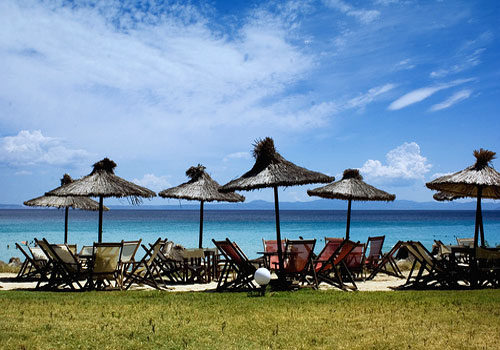
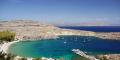
The Olympic Games were spawned in ancient classical Greece, along with democracy and the fundamentals of philosophy, science and mathematics. Modern Greece is better known as a great place to vacation rather than a centre of learning and culture. Today the country attracts by offering simple pleasures: delicious food at reasonable prices, local wine, beautiful beaches, sunshine, quaint villages, a seemingly endless lacework of coastline and little islands full of scenic surprises.

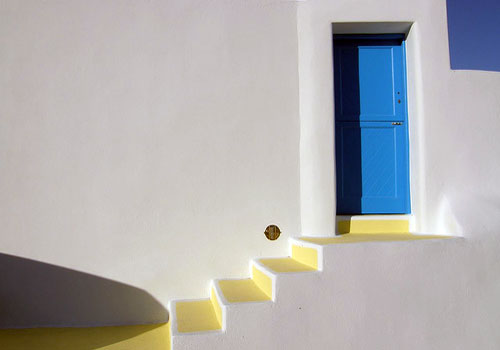
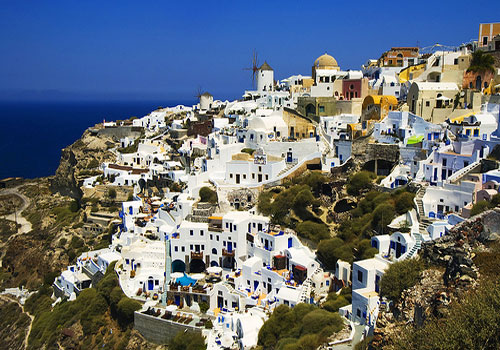
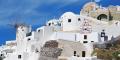
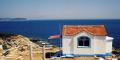
The country exudes traditional charm, particularly on its ever-popular islands, which cling to their stereotypical architecture and way of life despite being often over-run by tourists. Black-clad women still deliver vegetables to island tavernas on panniered donkeys, while bronzed, lined fishermen sit in the sun, drink thick coffee, and play dominoes or dice. The tourist infrastructure has intruded in many respects, but the timeless aspect of whitewashed buildings clustered on hillsides around narrow pebbled alleys has been retained. The myriad islands in the Aegean Sea are easily accessible from Piraeus, the historic harbour of Greece's mainland capital, Athens, by ferry or hydrofoil, offering a unique chance for 'island-hopping'. Many of the larger islands also have airports with connections to Athens or seasonally with major European cities.

On the mainland the city of Athens in the south is sprawling, overcrowded and polluted but nevertheless enthrals visitors, while Thessaloniki in the north is vibrant and modern with a Byzantine flavour. Athens is dominated by its major landmark, the Parthenon: the remains of other wonders of the ancient Greek classical world are to be found mainly on the Peloponnese Peninsula, south of Corinth, the gateway to a veritable treasure trove of history.

Greece and Greeks welcome with open arms the thousands of visitors that flock to admire their national assets every year - no one leaves without having been warmed, both by the sun and the hospitality.

The borderless region known as the Schengen area includes the following countries: Austria, Belgium, Czech Republic, Denmark, Estonia, Finland, France, Germany, Greece, Hungary, Iceland, Italy, Latvia, Lithuania, Luxembourg, Malta, The Netherlands, Norway, Poland, Portugal, Slovakia, Slovenia, Spain and Sweden. All these countries issue a standard Schengen visa that has a multiple entry option that allows the holder to travel freely within the borders of all. Non-EEA travellers to Greece must hold visible means of support. It is also recommended for non-EEA members to hold return/onward tickets. If arriving with a one-way ticket, passengers may be asked for proof of sufficient funds for the return/onward journey. Passports, other than EEA passports, must be valid for at least three months after period of stay. Visitors requiring a visa are also required to have medical insurance.

Kos Archaeological Museum

Address: Plateia Eleftherias

Admission: EUR3 (adults), EUR2 (concessions). Free entry for children under 17 years of age 8.30am to 3pm, Tuesday to Sunday

Built by the Italians in the 1930s to display mainly Hellenistic and Roman treasures found in and around Kos Town and dating from the third century BC, the Archaeological Museum allows visitors to glimpse into the former glory enjoyed by this quaint port town. From original mosaics of Hippocrates, who taught here, to statues of Asklepieion, Artemis and Hygeia found north of Decumanus Maximus, a trip to the Archaeological Museum provides a good foundation before setting off to explore the surrounding sites.

Acropolis

Address: Dionysiou Areopagitou Street Athens

Admission: EUR12 for adults, under 19s free. Daily 8.30am to 8pm (April to October); 8.30am to 3pm (November to March)

Telephone: (01) 923 8175

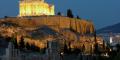
Those arriving in Athens for the first time generally head immediately for the Acropolis. There are very few visitors who are not already familiar with the image of this distinctive citadel of ancient Athens, perched on its steep flat-topped rock above the sprawling city. It is the spot where Athens, and classical Greek civilisation, began, and the site of a collection of beautiful temples, most dedicated to the goddess of wisdom, Athena. The ruins that remain visible today date from the 4th century BC, most of them erected by Pericles after the Persians destroyed many of the original Acropolis buildings. Visitors toil up the slopes past the souvenir stands and enter the site through the monumental entranceway, the Propylaia, which in ancient times contained an art gallery. To the right of the entrance is the tiny temple of Athena Nike, reconstructed and restored. The Parthenon, the greatest surviving monument of Doric architecture, is the biggest drawcard on the Acropolis, built of Pentelic marble quarried from the distant mountains, which form the backdrop to the magnificent view of Athens from the Acropolis. Alongside the Parthenon is another temple, the Erechtheion, which bears holes on its northern porch where Poseidon's trident struck it during his contest with Athena to have the city named after him. There is a museum on the Acropolis where some of the carving and friezes recovered from the temples are on show, although many of the archaeological finds from the Acropolis are now housed in the British Museum in London.

Ancient Agora

Address: Athens

Admission: EUR4 for adults), under 19s free. Daily 8am to 7.30pm

Telephone: (01) 321 0185

Clustered below the Acropolis (enter from Odos Adrianou, east of Monastiraki Square) is the remains of the Agora, ancient Athens' commercial and civic centre, where once walked and talked the great philosophers Socrates and Plato. In fact the disgraced and despairing Socrates committed suicide in a prison in the southwest corner of the Agora, by drinking poison. The area is littered with the ruins of numerous ancient buildings, including the Dionysos Theatre (the world's oldest theatre where great plays by Aeschylus, Sophocles and Euripides were first performed). One building that has been restored is the 200 BC Stoa of Attalos (a stoa is a long, low roofed promenade which served as a combination law court, municipal office and shopping arcade in classical Greece). The reconstructed building now has a museum on its ground floor containing artefacts covering 5,000 years of Athenian history.

National Archaeological Museum

Address: Patission 44 Street Athens

Admission: EUR7 (adults); EUR3 (concessions). From November to March, Sundays are free Monday 1pm to 7.30pm; Tuesday to Friday 8am to 7.30pm; weekends and public holidays 8.30am to 3pm

Telephone: (01) 821 7724

This is the largest and most popular of Athens' many museums, and is usually very crowded. Its vast collection includes treasures unearthed from Mycenae by Heinrich Schliemann; a staggering array of sculpture including the earliest known Greek figurines dating from around 2,000 BC; frescoes from the volcanic island of Santorini; and so much more that it is recommended visitors make several visits to absorb it all.

Piraeus

Address: Athens

Admission: The museum opens Tuesday to Saturday 9am to 2pm

Although not really attractive to tourists, the confusing, bustling port of Athens is the departure point for hundreds of island ferries and cruise ships, so most tourists pass through it while visiting Greece. Piraeus has been Athens' port since ancient times. It actually consists of three harbours, with most of the tourist boats using the Zea Limani section. There are several fish restaurants in the harbour precincts, and a sprawling street market. Visitors with time on their hands while waiting for ferries can also explore the Maritime Museum at Akti Themistokleous, alongside the pier used by the island hydrofoils, which features models of ancient and modern ships.

Plaka

Address: Athens

The old town section of Athens below the Acropolis has become the gathering place for travellers and tourists, particularly in the warm Athens evenings. Strolling the narrow streets of the Plaka flanked by ancient monuments, Byzantine churches and mosques, stately mansions, and inviting tavernas with vine-covered courtyards, makes a pleasant diversion.

Kolonaki/Lykavittos Hill

Address: Athens

Admission: The funicular runs Friday to Wednesday 8.45am to midnight, and Thursday 10.30am to midnight

This hill juts a steep 984 feet (300m) right up from the centre of the city, and is a great vantage point from which to take in the scope of Athens. The St. George chapel and Lykavittos Theatre perch atop this hill, which can be reached by car, cable car or a healthy hike! The cable car departs every 30 minutes, from the corners of Aristippou and Ploutarchou Streets in Kolonaki.

Syntagma Square

Address: Athens

The square that forms the heart of modern Athens is home to the Parliament Building, built in 1840 as a royal palace. Tourists flock to photograph the unusually clad guards at the palace; the skirted and pom-pommed guard is changed ceremonially every hour. The square is a central point of access to all the major attractions of Athens, particularly 'museum mile' along Vassilissis Sophias Avenue, which runs from Syntagma Square. Here most of Athens' museums are clustered, including the Benaki Museum, Museum of Cycladic Art and the Byzantine Museum.

Cape Sounion

Address: Athens

Cape Sounion, about 43 miles (69km) east of Athens, is a popular seaside resort used by locals and visitors alike. On the cliffs above the town is the 5th-century BC Temple of Poseidon, where, according to legend, King Aegeus waited for his son, Theseus, to return from Crete after slaying the Minotaur. Sounion is easily accessible by bus from the city.

Monastery of Daphni

Address: Athinon Avenue, Daphni Athens

Admission: EUR3. From November to March, Sundays is free Daily 8am to 2.30pm

This great Byzantine architectural masterpiece dates from the 4th century AD, and is situated about five and a half miles (9km) west of Athens on the road to Corinth. The church is built on a site where shrines have existed since ancient times, often destroyed by invaders and earthquakes. During the Crusades Cistercian monks turned Daphni into a Catholic monastery, but today it has been reclaimed by the Greek Orthodox Church and its beautiful mosaic work depicting Biblical scenes has been restored. A wine festival is held at Daphni each year in August/September.

Marathon

Address: 114 Plataion Street Athens

About 26 miles (42km) northeast of Athens, between the villages of Nea Makri and Marathona, is the site of the great battle between the small force of Athenians and the mighty Persian army in 490 BC. On the plain of Marathon today the burial mound of the 192 Athenians who fell in the fight can be seen, along with a small museum displaying archaeological relics from the battlefield. The battle is famed not only for the Athenian victory against huge odds, but also for the fleetness of the Athenian runner, Pheidippides, who was dispatched to Athens with news of the victory and fell dead from exhaustion after delivering the message to the city; thus the name 'Marathon' was given to long-distance running races. The Marathon race in the 2004 Olympics started here, and followed the same route as that run by Pheidippedes in the legend, ending at the Panathinaikon Stadium in Athens, which was built for the first modern Olympic Games in 1896.

Delphi

Address: Athens

Admission: EUR6 (concessions EUR3) Daily 7.30am to 7pm

Telephone: (226) 508 2346

In ancient times pilgrims came from all over the Greek world to seek advice from the god Apollo, via his oracle at the scenically beautifully situated site on the slopes of Mount Parnassus, known as Delphi. Today tourists flock constantly in the wake of the pilgrims of old up the Sacred Way to marvel at the remains of the marble Sanctuary of Apollo, the Castalian Spring and the Sanctuary of Athena. There is an excellent museum, too, at the site, which is northwest of Athens in the prefecture of Fokida.

Saronic Islands

Address: Athens

The Saronic group of islands are all within an hour or two of Piraeus by boat, making them ideal destinations for day trips from the city for those who want to experience a taste of Greek island life. Alternatively, use the islands as tranquil bases on which to stay while commuting to Athens to see the sights. Aegina is the closest island, sporting a sandy beach called Agia Marina, and a quaint fishing village called Perdika. Hydra has no sandy beaches, but the town is picturesque and offers good seafood restaurants. Poros can be reached from Piraeus in little more than an hour and sports beautiful forests that descend to the beach. It offers water sports opportunities and a lively café scene, as well as being a ferry hub offering connections to all the popular Aegean islands. Spetsi has an attractive old harbour and one of the oldest wooden boat-building yards in Greece. It is also renowned for its beaches and pine forests.

Olympia

Address: Peloponnese Peninsula

Admission: EUR6 (adults), EUR3 concessions; EUR9 ticket for museum and site (concessions EUR5)

Telephone: 262 402 2529 (Olympia Museum)

Amongst shady pine, olive and oak trees, in a valley between Mount Kronos and the Alfios River on the Peloponnese Peninsula, lie the remains of two temples and the stadium where the first Olympic Games took place in 776 BC. Since the modern Olympics were inaugurated in 1896 torchbearers have set out from Olympia to carry the Olympic flame in relays across the world to wherever the games are held every four years. The site also boasts one of the finest archaeological museums in Greece. The ruins themselves are fascinating, being the remnants of an ancient Olympic village including a gymnasium, baths, the Prytaneion where winners were honoured, and a Doric Temple dedicated to Hera. In the nearby modern village of Olympia there is another museum that is often overlooked - the Museum of the Olympic Games, which contains some interesting memorabilia from games past.

Ancient Corinth

Address: Peloponnese Peninsula

Admission: Full admission EUR6, concessions EUR3 Museum, 8.45am to 5pm (winter); 8.45am to 7pm (summer)

Telephone: 274 103 1207 (Museum)

The ruins of ancient Corinth, a short drive from the modern city, are spread around the base of the rock of Acrocorinth, which forms a natural acropolis for the city. Most of the surviving buildings are Roman rather than Greek, dating from the city's prosperous age after Caesar rebuilt much of the original Greek city, Roman armies having sacked it. The ruin that stands out particularly is the beautiful 6th century BC Temple of Apollo, built on a hill overlooking the remains of the Roman marketplace (agora). Much of the city has been toppled by recurring earthquakes over the centuries. In the southwest corner of the site is an archaeological museum containing some worthwhile collections of mosaic floors, pottery and works of art. The top of Acrocorinth can be reached via a road up the mountainside where the remains of the ancient fortifications can be seen.

Mycenae

Address: Peloponnese Peninsula

Admission: EUR8 (Concessions EUR4), free for under 19s Daily 8.30am to 8pm

Telephone: 275 107 6585

This ancient site, 31 miles (50km) south of Corinth, bears the remains of the ancient palace and citadel of Mycenae, a place of archaeological controversy but fascinating for the lay visitor. Homer's fabulous story has it that the kingdom of Mycenae was dripping in gold and revelling in riches before King Agamemnon decided to lead an assault on Troy, back in about 1,250BC. The king started a war that lasted a decade, battling to win the impossibly beautiful Helen of Troy back from Prince Paris. German archaeologist Heinrich Schliemann discovered Mycenae, which he believed gave credence to Homer's tale, in 1874 after he had excavated the remains of Troy itself. There is no doubt that Mycenae was a city of power and prosperity and the ruins, from the Lion Gate (oldest example of monumental sculpture in Europe) to the palace complex, houses and beehive tomb of Agamemnon, are well worth exploring. Most of the more exceptional finds from the site are on exhibit in the National Archaeological Museum in Athens. These include frescoes, gold jewellery, and the gold mask said to have belonged to Agamemnon, among other priceless pieces.

Epidaurus

Address: Archaeological Museum of Epidaurus, Asklepieion. Peloponnese Peninsula

Admission: EUR6, concessions EUR3. Free on Sundays between November and March

Telephone: 275 302 2009

A definite must on a tour of the Peloponnese is the famed ancient theatre of Epidaurus, built in the 3rd century BC and so well preserved that with little or no restoration it is still in use today for regular summer dramatic performances, which are lent a mystical aura by the beautiful setting. The theatre has perfect acoustics, allowing even a whisper on stage to be heard in the back row of the limestone amphitheatre, which can seat 14,000. North of the theatre are the ruins of the healing Sanctuary of Asklepios, which has a museum explaining how the original temple complex would have looked and functioned. Where the ancient town of Epidaurus once stood there is now the modern day village of Palia Epidaurus. This is a popular seaside resort with scenic beaches, a small harbour and several tavernas.

Thessaloniki Archaeological Museum

Address: Manoli Andronikou 6, Thessaloniki Thessaloniki

Admission: EUR6 (adults), EUR3 (concessions). Free for under 19s. Tuesday to Sunday, 8am to 8pm; Monday, 1.30pm to 8pm

Telephone: 023 108 30538

Regarded as one of the finest museums in Europe, Thessaloniki's Archaeology Museum near the famous White Tower and opposite the city's international fairgrounds, houses a huge collection including the incredible treasures of the tomb of Alexander the Great's father, Phillip of Macedon, which was discovered at Vergina in 1977. Another treasured artefact is the 3rd century BC Derveni papyrus, the only intact ancient papyrus found in Greece, which was discovered in the tombs of Derveni. Other rooms in the museum contain exhibits depicting the history of the city from prehistoric days through to the Roman period, including spectacular mosaics and some exquisite, delicate Hellenistic glass.

Roman Forum

Address: Thessaloniki

Close to one of the city's main bus terminals in Dikasterion Square lies the archaeological site of the ancient Greek agora or marketplace, which was later expanded to become a Roman forum on two levels. The forum was the heart of the ancient city, and was discovered by workmen in the 1960s. The best-preserved component of the forum is the large theatre, which is still used for occasional summer concerts.

The White Tower

Address: Thessaloniki

Admission: Daily 8.30am to 3pm

Telephone: (031) 267 832

The city's most famous landmark, the White Tower was originally built as part of the city walls. It now stands, no longer white but still imposing, on the seaside promenade south of the Archaeological Museum, having been restored and offering panoramic views of the city and harbour from its rooftop café. The tower was once used as a prison, and on the way up the winding staircase visitors can peep into the dim rooms that were used as cells. The tower contains a museum housing some Byzantine art and historical artefacts from Thessaloniki's history between 300 and 1,500 AD.

Churches

Address: Thessaloniki

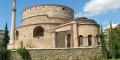
Thessaloniki has numerous beautiful churches, large and small, dating from various eras, most notably Byzantine. Most are sited in the Upper City area, which is a warren of quaint, narrow cobbled streets and has become a fashionable quarter favoured by local city slickers. Some of the most important churches are the church of Saint George, a domed building dating from the 4th century AD, which was originally the mausoleum for Roman Emperor Galerius; Agia Sofia, the domed cruciform church built in the 8th century AD that is a copy of the Agia Sophia in Istanbul (Constantinople); Agfi Apostoli from the 14th century, with its rich Byzantine decorations; and the 14th-century Agios Nikolaos Orfanos with it's beautiful frescoes. Churches are wont to close in the afternoons and sightseers are expected to dress appropriately.

Mount Athos

Address: Thessaloniki

Telephone: (210) 368 1000 (Athens); or (031) 270 092 (Thessaloniki)

Only men are welcome to make a pilgrimage to Mount Athos, the secretive 'Shangri-La' on a rugged promontory about 80 miles (129km) south east of Thessaloniki, where it is possible to step back in time and mingle with hundreds of monks, from more than 20 monasteries, in one of the most scenic spots in Europe. This unique mountainous enclave on the coast is sprinkled with huge monasteries, most resembling castles, containing wonderful frescoes, mosaics and libraries. There are also smaller monasteries known as kelions attached to small churches, as well as caves on the mountain slopes where monks retreat as hermits. There are forests and a pristine seashore, and beautiful gardens cared for by the monks. Mount Athos is a self-governing area within Greece, and to visit it is necessary to obtain a permit from the Ministry of Foreign Affairs in Athens, or from the Ministry of Northern Greece in Thessaloniki.

Vergina

Address: 38 miles (61km) west of Thessaloniki Thessaloniki

Vergina, known in ancient times as Aigai, is the most important of a cluster of three archaeological sites in the area connected with Philip, father of Alexander the Great. Vergina is where Philip built a massive palace and a theatre, and where he was assassinated in 336 BC. The palace has been excavated, as has the theatre, and the site also features hundreds of burial mounds, some dating from the Iron Age, across the plain. The tomb of Philip was found here undisturbed in 1977, full of treasures that are now on display in Thessaloniki's Archaeological Museum. Nearby is Pella, the remains of the former capital of Macedonia from the 5th century, where Alexander the Great was born; and Dion, an important religious sanctuary frequented by Philip and Alexander.

Mount Olympus

Address: Thessaloniki

Towering above ancient Dion, about 48 miles (77km) south of Thessaloniki is Greece's highest mountain, Mount Olympus, home to the Gods of Greek mythology. The mountain is rich in tree and plant life, supporting more than 1,700 species, some very rare. The main village in the area is Litohoro, which is connected to Athens and Thessaloniki by bus and train. It is possible to climb the highest peak in about two days, without experience or special equipment, along numerous mountain trails.

Corfu Archaeological Museum

Address: 1 Armeni Vraila Corfu

Admission: EUR3 (adults), EUR2 for students from countries outside EU. Special ticketing package for the Archaeological Museum, the Old Fortress, the Church of Antivouniotissa and the Museum of Asian Art: EUR8 (reduced EUR4) Tuesday to Sunday 8.30am to 3pm

Telephone: (0661) 30680

Like all good Greek towns, Corfu Town has its Archaeological Museum, on the boulevard along the waterfront. Although it is small, it is worth visiting particularly to see the pediment from the Temple of Artemis that is housed there. The temple dates from 590 BC and is south of Corfu Town. The pediment on display in the museum features a Medusa and is regarded as a fine example of archaic sculpture. The museum has some other interesting sculptures too.

Museum of Asian Art

Address: Palea Anactora, Spianada Corfu

Admission: EUR3 (Concessions EUR2) Tuesday to Sunday 8am to 2.30pm

Telephone: 266 103 0443

The building housing this collection of Chinese and Japanese works of art is a beautiful neoclassical structure built by the British in 1820 when the Ionian Islands were ruled by Britain. The museum is a peaceful oasis exhibiting Chinese porcelain and art through all the main dynasties, as well as some Japanese prints, ceramics and sculpture. The Museum is situated at the north end of the Esplanade in Corfu Town.

Kanoni

Address: Corfu

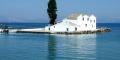
South of Corfu Town is the clifftop terraced view site of Kanoni, overlooking an inlet that contains two tiny islands. One of the islets can be reached via a causeway and bears the Monastery of Vlakherna. The other islet is known as Mouse Island, and legend has it that it is actually a ship turned to stone. A small boat ferry will carry you to Mouse Island to visit the 13th century chapel set among the trees.

Achilleion

Address: 6 miles (10km) from Corfu Town, in Gastouri village. Corfu

Admission: Monday to Friday, 8am to 7pm; Saturday and Sunday, 8am to 2.30pm

Telephone: 266 105 6245

The villa of Achilleion was built for Empress Elizabeth of Austria in 1890 as a memorial to her son, Rudolf, after his death by suicide. The villa, Neoclassical in style, features numerous statues and motifs associated with Achilles both inside and out. The gardens are also set with a number of statues commissioned by the Empress, including the famous 'Dying Achilles' by German sculptor Herter. Part of the villa is now a museum, with a casino housed on the second floor.

The Palace of Knossos

Address: Knosos, Iraklio Crete

Admission: EUR6 (Concessions EUR3), free for under 19s. Daily 8.30am to 8pm (April to October); weekdays 8.30am to 5pm, weekends 8.30am to 3pm (October to March)

Telephone: (2810) 231 940

The Minoan palace at Knossos, covering an area of 215,278 square feet (20,000 sq metres), is one of the world's greatest sightseeing experiences. It consists of four wings, arranged around a rectangular central court. The palace originally had many storeys, was built of ashlar blocks and had walls decorated with splendid frescoes. British archaeologist, Arthur Evans, who excavated most of the labyrinthine Knossos site, has painstakingly restored some sections of the palace. The remains now visible are actually not those of the original palace, which was built around 2,000 BC and destroyed by an earthquake about 1,700 BC. A subsequent more complex palace was then constructed. The palace was first unearthed in 1878 by a Cretan merchant and antiquarian, but was not systematically excavated until 1900. The Knossos site is about three miles (5km) south of Heraklion.

Heraklion Archaeological Museum

Address: Xanthoudidou Street, just off Plateia Eleftherias Crete

Admission: EUR4 (Concessions EUR2), free for under 19s. Daily 8.30am to 8pm; closed Monday mornings

Telephone: (2810) 279 086

A visit to the Minoan palace at Knossos should be complemented with a visit to the wonderful Archaeological Museum in Heraklion. Thousands of artefacts depicting the intriguing Minoan culture are on display, from magnificent bull-headed drinking vessels to the mysterious Phaistos disk inscribed with undeciphered symbols.

Historical Museum of Crete

Address: 7 Lysimahou Kalokerinou Crete

Admission: EUR5 (adults), EUR3 (concessions) Monday to Saturday 9am to 5pm. Closed Sundays and public holidays. Opening hours are shorter in winter

Telephone: (2810) 283 219

This museum deals with Crete's more modern history and highlights the islanders' long battle for independence from the early Christian times to the present day. Exhibits include some Cretan folk art, and the Medieval and Renaissance collection contains the only painting on Crete by the island's famous painter El Greco, The Landscape of God-trodden Mount Sinai. Another world-renowned Cretan, Nikos Kazantzakis, author of Zorba the Greek, is also remembered in the museum, which houses a recreation of his study.

Monastery of Arkádhi

Address: 14 miles (23km) south of Rethymnon Crete

Admission: EUR1.45 (museum) Daily 8am to 1.30pm, and 3.30pm to 8pm

Situated about 14 miles (23km) south of Rethymnon, the Monastery of Arkádhi is something of a national Cretan shrine. During the 1866 rebellion against the Turks the monastery became a refuge for Cretan insurgents and their families. They were surrounded by the Turks and after two days of fighting, ignited the gunpowder storeroom, which killed hundreds of both Turks and Cretans. The tragedy brought international recognition to the cause for Cretan independence. An ossuary displays the skulls of many of the victims and it is possible to see the roofless room where the explosion took place, as well as the surviving 16th-century church that is one of the loveliest Venetian buildings on the island. There is also a small museum.

Gortyna

Address: Aghioi Deka Crete

Admission: EUR4, under 19s free. Daily 8.30am to 8pm

Telephone: 289 203 1144

The remains of Gortyna to the south of Heraklion tell a later tale than that of the other archaeological sites in Crete, particularly the important inscribed stones, known as the Gortyn Law Code, dating back to the 5th century BC: a complete code of law based on Minoan tradition. The Code stones are still preserved and exhibited in the north round wall of the Roman Odeon at the Gortyna site (although of course the theatre was built much later in the 1st century AD). Other highlights at Gortyna (which was capital of Roman Crete and Cyrene) include the Church of St Titus, where Christianity was first introduced to the island and the Temple of Apollo Pythios, dating from 700 BC.

Phaistos

Address: 38 miles (61km) south of Heraklion Crete

Admission: November to March 8.30am to 3pm; April to October, Monday 1pm to 7pm, Tuesday to Friday 8am to 7.30pm

South of Heraklion lies Crete's second most important Minoan archaeological site, the Palace complex of Phaistos, considered by many to be a finer example of Minoan architecture than Knossos. The west propylon, the monumental entranceway to the palace, is particularly impressive, and the ceremonial staircase and great court are breathtaking. Like Knossos the site has actually been built on twice, with the original palace, built about 2,000 BC, having been destroyed by fire and replaced with a new palace around 300 years later.

The Samaria Gorge

Address: Crete

Admission: EUR5 to enter the park; free for children under 15; EUR2.50 for students The gorge is open 6am to 3pm, generally from May to October (depending on weather conditions)

It is an arduous trip but well worth it to see one of the great natural wonders of Europe, the Samaria Gorge in the White Mountains in western Crete. From the top of the gorge it is a 10-mile (16km) hike through the dramatic geological formations and wildflower-strewn cliffsides of the National Park. From the village of Agia Roumeli at the end of the gorge hikers board boats to sail to Khora Sfakion or Paleohora where there are buses back to Haniá, Rethymnon or Heraklion.

Acropolis of Rhodes

Address: Rhodes

Admission: Free The open-air site is permanently open.

Telephone: 224 102 5500

The ancient Hellenic acropolis of Rhodes sits on a hill in the western part of the city, and once consisted of a monumental zone full of sanctuaries, large temples, public buildings and underground vaults. The buildings were set on stepped terraces interspersed with gardens. The remains of the buildings on the Acropolis date back to the 2nd century BC, but all has not yet been excavated at the site. The Stadium, however, has been fully excavated and restored. Also still to be seen are the ruins of the Temple of Athena Polias on the northern edge of the site, the Nymphaia, which is made up of four cave-like constructions cut into the rock, used for recreation and worship, a small restored marble Odeon thought to have been used for musical events or lectures, the Temple of Pythian Apollo and the remains of the Gymnasium.

Karpathos

Address: Rhodes

From Rhodes it about a three hour ferry crossing to the hospitable island of Karpathos where the clock has stood still in the delightful village of Olymbos in the south. Here the locals go about their business much as they did in Homer's time, wearing their traditional costumes and preserving their language and culture with the aim of attracting tourists. They are particularly proud of the unique houses, built of carved stone and decorated inside with gorgeous embroidery and other colourful folk art décor. The island has great beaches and unspoilt villages and is a pleasure to explore, with a picturesque bay and a monastery at Kyra Panagia, Diafani village on a promontory to the north and the forested mountains. Karpathos is also renowned for its feast days and weddings. Visitors who happen to catch one in progress will usually receive a warm invitation to join the festivities. Just four nautical miles from Karpathos is the smaller island of Kassos, linked by ferry, which has a small community of fishermen living the way they have for centuries.

Patmos

Address: Kos

This island, sometimes called the 'Jerusalem of the Aegean', is an official pilgrimage site for members of the Catholic religion, because it is home of the sacred cavern where the exiled St John the Evangelist was inspired to write the Biblical Book of Revelations. Cruise ships and ferries keep the small port very active, disgorging visitors who wish to visit the holy cave and witness the cracks in the wall, said to have appeared when St John heard the voice of the Lord. Crowning the island is the immense Monastery of St John, with its buttressed walls and, inside, frescoes, icons, tapestries and pendants made of precious stones. Visitors can walk up to the monastery from Skala along the Byzantine path.

Benaki Museum

Address: 1 Koumbari Street & Vas. Sofias Avenue Athens

Admission: EUR6. Concessions available. 9am until midnight Thursday; 9am to 3pm Sundays; 9am to 5pm Monday, Wednesday, Friday and Saturday

Telephone: 210 367 1000

Established in 1930, the museum houses prehistoric to modern Greek art and artifacts, occasionally hosting exhibitions, and restoration and conservation workshops. The collection features Paleolithic and Neolithic relics, and covers the late Roman Empire as it merged into the Byzantine Empire.

Koutouki Cave

Address: Athens

Admission: EUR2 Open between 9am and 4.30pm daily

Located 4km outside the town of Peania, and a scenic hour's ride from Athens, this cavern lies under the eastern slope of Mount Ymittos. A guided tour of the cave starts every 30 minutes.

Attica Zoological Gardens

Address: Gallous Street, Spata Athens

Admission: EUR14 (adults); EUR10 (children) Children under 3 are free. Concessions available. Open Monday to Friday from 9am to 5pm. Saturday and Sunday from 9am to 6.30pm

Telephone: (210) 663 4724

The wonderful Attica Zoo is a must for children of all ages. Featuring over 2000 birds of 30 different species, as well as other exotic animals such as lynx, white lions, black panthers, snow leopards and jaguars, this zoo is the only one of its kind in Greece. It also features a reptile house and a children's farm as well as other walk-through enclosures, including a 'monkey's jungle'.

National Gardens

Address: Amalius Avenue Athens

Admission: Gardens open daily. Children's Library open Tuesday to Saturday from 8:30am to 3pm. Closed in August

Picnicking with the children at the National Gardens on a Saturday has become a common pastime for local Athenian families and is a great way to spend a sunny summers day when the days are long. The Gardens feature a small zoo, duck ponds, resident cats, a Botanical Museum a playground and lots of wide-open space for children to play in. For children who love books, the gardens are also home to a Children's Library.

Goulandris Museum of Natural History

Address: Levidou Street 13 Athens

Admission: EUR5 (adults) EUR3 (children). Concessions available Open Monday to Saturday from 9am – 2.30pm. Sundays from 10am to 2.30pm. Closed public holidays

Telephone: (210) 801 5870

Children love nothing more than exploring museums with fossils, dinosaur skeletons and animal models, and for this reason, a trip to the Goulandris Museum of Natural History is a must for all families travelling to Athens.

Allou Fun Park

Address: Agios Ioannis Rentis Athens

Admission: Open Monday to Friday from 5pm-1am; Saturday and Sunday from 10am-2am

Telephone: (210) 425 6999

One of Athens' most popular theme parks, Allou Fun Park offer children the opportunity to ride some seriously exciting rides, such as the Big Apple and Crazy Mouse. The views over the city of Athens form the to of the panoramic ferris wheel are also great for kiss of all ages. Children under 10 years of age will do better to go to the next-door section of the park called 'Kidom'.

Hellenic Children's Museum

Address: 4 Kidathineon Athens

Admission: Free Open Tuesday to Friday from 10am to 2pm. Saturday and Sunday from 10am to 3pm. Closed on Mondays

Telephone: (210) 331 29956

The Hellenic Children's Museum is a non-profit educational and cultural organization established in Athens in 1987 aims to encourage children to explore, learn, discover and question all around them.

Aqualand Water Park

Address: Aqualand Village, 49100 Agios Ioannis Corfu

Admission: EUR25 (adults); EUR17 (children) Open May to October daily. May, June, September and October from 10am – 6pm; July and August from 10am – 7pm

Telephone: +30(26610)58583

A fun day out for the whole family, Aqualand Water Park is one of the best ways to cool off for kids on holiday in Corfu. With a wide variety of slides, rides and pools to enjoy such as the Black Hole, Four Twisters and the Crazy River, Aqualand is one of Corfu's most popular attractions for kids and adults alike.

Corfu Horse Riding

Address: Corfu

Admission: Open all year round. Summer: Daily from 10am – 12pm and 5pm – 7pm. Closed Sundays. Winter: Fridays and Saturdays

Telephone: +30 26630 23090

What could be more fun than saddling up and seeing Corfu on horseback with the family? Riders have the option of trekking through woodland to the village of Ano Korakiana and down through olive groves, wide dirt tracks, vineyards, and pastures. Afterwards children can feed carrots and apples to the horses. Booking essential.

Kalypso Star

Address: Old port, Corfu town Corfu

Admission: EUR15 (adults); EUR8 (children) In high season, trips leave daily on the hour 10am-6pm, plus they make a 10pm night trip. Call for the off-season schedule

Telephone: +30 26710 46525

This is one attraction not to be missed by families travelling in Corfu with small children. A glass-bottomed boat which runs every hour from Corfu's Old Port takes visitors around Vidos Island where they can view the underwater world. The highlight of this trip for many though, especially the little ones, is the sea lions performing with their trainers in the ocean below.

Aegean Maritime Museum

Address: Enoplon Dynameon, Mykonos Town Mykonos

Admission: EUR3 each Open daily May-September 10.30am - 1pm and 6.30pm - 9pm

Telephone: +30 22890 22700

The perfect place to take children, especially little boys with a love of the sea, is the Aegean Maritime Museum which features wonderful models of pre-Minoan ships, rare engravings, maps, navigational instruments and rare coins. The ship 'Thalis o Milesios', which was built in 1909 is berthed at the Hellenic Navy's Museum wharf at the Paleo Phaliro marina and is definitely worth a visit. The garden features replicas of ancient marble gravestones of sailors lost at sea from the island of Delos.

Delos

Address: Mykonos

The UNESCO World Heritage Site of the island of Delos is a must for not only history buffs, but also for lovers of Greek mythology. Tell your children the tale of Artemis and her twin brother Apollo, who were born on the island of Delos to the King of the Gods, Zeus and his wife Leto and the island will come to life for them. The statues, sculptures temples and terraces are a must see for all visitors to Mykonos and a trip to the island of Delos will reward greatly.

Mykonos Windmills

Address: Mykonos

Children on holiday in Mykonos will love a trip to see the famed windmills. The views from the hill, which is best visited in the late afternoon towards sunset, overlook the whole town of Hora and the harbour too. Children will be mesmerized by the 16 white-walled thatched-roofed windmills.

Lido Water Park

Address: Mastichari Crete

Telephone: +30 22420 59241

A must for all families on vacation in Kos, especially with young children, Lido Waterpark gives provides wonderful games, activities, sun, fun and more. Featuring water rides, slides such as the Gigantic wave pool, the Kamikaze, Multi lane and the Black Hole. There is a bar and restaurant for food and drinks and snacks.

Kos Horse Riding

Address: Kos

Telephone: +30 22420 41908

Providing rides for children of varying capabilities, the Alfa-Horse Riding Centre takes riders on a trail down the slopes of the Mount Dikeos,or a ride to the chapel St. Theologos in the mountains, stopping for a snack on the way. There are even pony rides for younger children. A great family activity and an exciting way to see the island.

Knights Castle

Address: Kos

The 15th century medieval Castle of the Knights of St John is a great place to take kids, especially little boys who will love the double wall and moat. Built by the knights of St John on the ruins of the ancient wall between 1450 -1478, the castle is also notable for the stone bridge that used to link that particular area of Kos to the mainland when it was an island.

Crete Aquarium

Address: Filikis Etirias 7, Limani Hersonissou Crete

Admission: EUR6 (adults); EUR4 (children) Open 1 April to 31 October daily from 10am – 6pm. Last entry 5.15pm

Telephone: +30 28970 29125

Featuring a wonderful array of marine life, the Crete Aquarium features a fantastic variety of reptiles too, such as Loggerhead turtles, Balkan Green Lizards, Skinks, gheckos and snakes, guaranteed to keep the little ones captivated. Interesting fish such as Scorpion Fish, groupers eels, octopus and stingrays can be viewed too. A trip to the Crete Aquarium is a must for all families, especially those with young children.

Limnoupolis Water Park

Address: Chania Crete

Admission: EUR13 (adults); EUR13 (children). Children under 5 free Open daily from 10am – 6pm

Telephone: +30 28210 33246

A fantastic place to take the kids during the heat of summer while on holiday in Crete, the Limnoupolis Water Park offers a fantastic rides, slides, wave pools and more for children of all ages to enjoy. Those wanting a more relaxing experience can lay back and enjoy the Lazy River or Jacuzzi.

Star Beach Water Park

Address: Hersonissos Corfu

Admission: Free

Not your average water park with rides, Star Beach Water Park features traditional water activities such as jet skiing, scuba diving, waterskiing and banana boat rides, to name a few. There are also a few pools and rivers for lazy sun worshippers and parents to float along in tubes while the kids let off some steam. This is a great trip for the whole family and for kids of all ages and even features a foam party every day for the older kids to enjoy.

Eftalou Thermal Baths

Address: Lesvos

A trip to the Eftalou Thermal Baths is a wonderful excursion for the whole family. Children will be captivated by the warm waters and stunning scenery and parents can explain about the healing properties and the source of the warmth to amaze the younger ones. Highly popular with tourists, the Eftalou's Springs are located at the beach and are one of the few springs in Greece where men and women can bathe together. A novelty for children, this is one activity the whole family will enjoy.

Petrified Forest of Sigri

Address: Sigri, 57 miles (92km) from Mytilene Lesvos

One of the two largest petrified forests in the world, the Petrified Forest of Sigri on the western edge of the island, dates back 15-million years and is protected as a natural monument. A visit to the Petrified Forest of Sigri is an interesting and fascinating outing for families with children.

Donkey trekking

Address: Michaelis' Donkey farm, Petra 81109 Lesvos

Admission: Day trek: EUR26 (adult); EUR16 (children). Sunset-trek: EUR30 (adult); EUR20 (children)

Telephone: +30 69461 04785

Donkey trekking is a great activity for the whole family to enjoy and even the little ones will be thrilled to ride on the gentle animals. Day-treks from Molios to Vafios are available, travelling through verdant green valleys, past olive groves and along mountain paths to the village of Vafios. Sunset-treks to Eftalou reward with a tasty barbeque on the beach, drinks and even a swim while the sun sets over the sea. Booking recommended.

Filerimos Hill

Address: 9 miles (15km) from Rhodes town Rhodes

Filerimos Hill used to be the citadel of the ancient town of Ialysos, and its large plateau is home to some intriguing historical attractions. On the eastern side of the hill, see the foundations of the Athena Polias temple and an early Christian basilica, dedicated to Virgin Mary, as well as a Byzantine church. The Monastery of Filerimos is an important archaeological site where Mycenaean pottery and a Doric foundation have been unearthed. A path to the west, lined with cypress and pine trees, leads to an impressive crucifix at the centre of a small square.

Rhodes Old Town

Address: Rhodes

With buildings and monuments dating back hundreds of years, Old Town offers a wealth of historic attractions. The medieval streets feature Gothic windows and paved courtyards lit by traditional street lamps. The most famous of these is the Street of Knights (or Knights Avenue) which leads to the Palace of the Prince Grand Master. This palace displays several artefacts from as far back as the 13th century, when the crusades first came to Rhodes. The shops and stalls of Socrates Street are worth browsing for local jewellery, pottery and clothes.

Rhodes Beaches

Address: Rhodes

The beaches on Rhodes Island are a great attraction for visitors. Afandou beach is quite undeveloped, good for those who don't like a crowd, while Faliraki beach has sunbeds, umbrellas, water sport facilities, restaurants and beach bars to enjoy. Kalathos beach has crystal-clear waters, wooden sunbeds and bamboo umbrellas (very eco-friendly!) and Kallithea beach is renowned for its hot medicinal springs and beautiful palm trees.

Petaloudes - Valley of the Butterflies

Address: 20 minutes from Rhodes airport, near Kalamonas village. Rhodes

A wonderful place to take the kids while on Rhodes Island is Petaloudes, the valley of the butterflies. This attraction sees a myriad of beautiful moths colouring its skies and kids can follow them along the narrow streams, and over the rustic little bridges. The shaded walkways lead to rock pools and waterfalls, and carry a vanilla scent from the local storax trees. There are cafés and gift shops to enjoy, and don't miss the old Italian windmill near the entrance.

Faliraki Beach

Address: On the north-east of the island, about 7.5 miles (12km) from Rhodes town. Rhodes

The shallow waters of Faliraki Beach make it a popular holiday spot for families with children, as do the great facilities such as food stalls, umbrellas and sunbeds. The Faliraki Water Park and Luna Park distinguish this beach from others on the island as they feature water slides, kamikaze slides and a gigantic wave pool, as well as fully trained and certified lifeguards for safety.

Marine Aquarium

Address: Cos Street, Hydrobiological Station of Rhodes Rhodes

Admission: Open daily except 1 January, 25 December and Greek Easter Sunday

Telephone: +30 22410 27308

Children love the Marine Aquarium on Rhodes Island, enamoured by its diverse range of live Eastern Mediterranean specimens including sea flowers, turtles, octopuses and decapods (crustaceans with 10 limbs). This venue has been used as an aquarium-museum and research station since 1963 and as such, it displays an interesting collection of preserved and mounted marine specimens, as well as numerous scientific instruments.

Samos Beaches

Address: Samos

The coast of Samos has many beautiful beaches to enjoy. Mykali Beach, south of Samos town, is covered in white pebbles and lapped by emerald waters. On the mountainous north-west coast of Samos, visitors will find the secluded Megalo Seitani beach which can only be reached on foot. The Vlendza beach, just outside the town of Avlakia, boasts sunbeds and umbrellas, as well as a small tavern. Tsamadou Beach lies just outside of Kokkari Town and is the only official nudist beach on the island.

Temple of Hera

Address: 4 miles (7km) south-west of Pythagorio Samos

Admission: EUR3 Tuesday to Sunday 8.30am to 3pm

The largest Greek temple ever built, the Temple of Hera was one of the essential sanctuaries of ancient Greece, and is now a great sightseeing attraction. It was built near the mouth of the Imvrasos River for worship of the goddess who, according to myth, was born and lived there. Only half of one of its 115 columns stands today, but the bases of the columns and other temple foundations are still visible.

Pythagoras Cave

Address: Mt Kerkes, 2 miles (3km) from Kambos Marathokambou Samos

One of the great attractions on Samos is the cave where Pythagoras lived and worked as a philosopher, mathematician, astrologer, doctor and musician. Legend has it he used the cave as refuge from the tyranny of Polycrates. The site is made up of two caves and two chapels, with 'holy water dripping from its stalactites, and was used for prayer, teaching and residence. The cave near the base of Mt Kerkes but the climb may be a bit difficult for some.

Ancient Theatre of Pythagorio

Address: Samos

Just below the ruins of the Spiliani monastery, the tell-tale remnants of the Ancient Theatre of Pythagorio can still be seen. The stage and one tier of seats remain in place and indicate how grand this venue must have been in its heyday. Today the site is still used for theatrical performances such as plays and ancient tragedies, as well as entertaining concerts and recitals.

Potami Waterfalls

Address: 2 miles (3km) from Karlovassi Samos

Children love to visit these beautiful waterfalls on the north-east coast of Samos Island, near the Potami beach which is accessible from Karlovassi Town. A rambling walk along the river soon becomes an adventure through the forest leading to the waterfall. Swimming in the small lake is a great way for kids to cool off and there are lovely spots for the folks to sit and relax, or perhaps enjoy a picnic lunch.

Psili Ammos Beach

Address: 35 miles (56km) south-west of Vathy Samos

Kids on Samos Island love going to Psili Ammos Beach to play in its warm, shallow waters and build sand castles on the sunny shore. This long sandy strip also attracts migrant flamingos each year in December, the pink flocks a delightful sight for children to experience. There are a couple of taverns nearby for parents to enjoy.

Lykourgos Castle

Address: South-west of Pythagorio Samos

Children are enchanted by castles, and a visit to Lykourgos Castle will be reminiscent of heroic and romantic fairytales. In reality, this 19th century castle played an historical part in the Greek Revolution, but today kids can play in its courtyard gardens, imagining themselves as brave knights rescuing their distressed princesses from the tower.

Santorini Water Park

Address: Perissa Santorini

Admission: EUR6 (adult) and EUR3 (child), free after 7pm. Open from 10am to 12am, pool and slides till 7pm

What could be more fun for kids on Santorini than a day at the water park? The Santorini Water Park offers great fun in the sun with three swimming pools and slides, as well as a big playground. The pool bar and restaurant provide tasty refreshments for kids and parents alike, and the gift shop has some good holiday souvenirs. There are also sunbeds and umbrellas available at the pools.

Submarine Ride

Address: Vlihada Santorini

Admission: EUR57 Daily from May to October. Tours depart hourly between 10am and 1pm, 2.30pm and 6.30pm.

Telephone: +30 210 923 3006 (Great Blue Santorini Maritime Co.)

A great attractions for kids is a ride on Atlantis Santorini 1, the only tourist submarine in Greece. This submersible takes passengers to depths of 100 feet (30m) where they can stare into the Archipelago's blue waters and be fascinated by natural geological sculptures and exotic marine life. There is also a good selection of refreshments and snacks available on board.

Santorini Beaches

Address: Santorini

The beaches of Santorini are a great attraction for children, with black shining pebbles and unique land formations, coloured by black, white and red sands. The waters are deep though, so be cautious. The south-eastern beaches of Monolithos, Avis and Kamari are family favourites. At Monolithos beach kids love the football pitch, basketball court and play area. Trees at the back of the beach provide shaded respite from the sun, and there are also snacks available on the beach.

Skopelos Beaches

Address: Skopelos

The island of Skopelos has plenty of beautiful beaches for visitors to enjoy. Most are shingle beaches lapped by clear blue waters, great for snorkelling, fishing and swimming. There are usually sunbeds and umbrellas available at the beach, and waterfront taverns nearby. Favourite Skopelos beaches include Stafilos, Panormos and Milia, while the Amarandos coves are also a popular attraction.

Museum of Folk Art

Address: Skopelos Town Skopelos

Admission: EUR3 (adult), free for children under 12

Telephone: +30 24240 23494

The Folklore Museum of Skopelos is housed in a traditional building, its interior décor reminiscent of Skopelitian homes of the past. The museum exhibits local 19th and 20th century handicrafts including folk art paintings, embroidery, traditional costumes, ceramics and wooden carvings. There are also nautical exhibits and model ships on display.

National Marine Park

Address: North Sporades (Alonissos) Skopelos

Telephone: +30 24240 66378

The National Marine Park of North Sporades is a great attraction for visitors to Skopelos. The waters surrounding the island are a conservation area as the breeding grounds for endangered Mediterranean monk seals. There are also a number of dolphin and whale species in the area, including the striped dolphin and the long-finned pilot whale.

Prinos Streetmarket

Address: Prinos, on the west coast. Thassos

Admission: Monday mornings

Each Monday morning, the Prinos Streetmarket is a great attraction for Thassos visitors. The market offers a selection of fresh fruit and vegetables, as well as a good assortment of nuts. Leather goods and hardware are also available from the market, as well as shoes, clothes and household accessories. There is a café next to the market place offering much welcomed refreshments for weary shoppers.

Museum Theologos

Address: Theologos Thassos

Admission: EUR3 (adult), free for children under 16 10am to 8pm

The history of Thassos is uncovered at the Museum Theologos, set in an old mansion that was the home of the mountain village's former mayor, Mr Chatzigeorgiou. The mayor played an essential role in the revolution against the Turks that took place on the island in 1821. Exhibits include displays of olive presses, flour mills, tools, looms and chests from the 18th century, as well as some wonderful pictures.

Thassos Beaches

Address: Thassos

The island of Thassos has a number of excellent beaches to relax and have fun on. Tripiti is known for its natural bathtub and a cave leading to the ocean, while Livadi is popular with campers and Makriammos is home to some great mussels. Pefkari has bars, taverns and a small kiosk, and watersports include banana boat rides, jet-skiing and paragliding. The nudist beach of Paradise is one of the most beautiful on the island. The western beaches are the calmest, Scala Potamia and Golden Beach being the best for small kids.

Zante Beaches

Address: Zakynthos

The region of Vassilikos has some of the best beaches on the island and a favourite is St Nicholas, which has great watersports facilities. Gerakas is also very popular, voted one of Greece's best beaches. Many of the holiday resorts have their own beaches for visitors to enjoy. The Navagio, Kalamaki, Porto Zoro and Laganas beaches are all great; Loggerhead sea turtles can be seen at Laganas Bay, home to the National Marine Park.

Smugglers Cove Shipwreck

Address: Navagio Beach Zakynthos

The Smugglers Cove Shipwreck is one of the most popular sights on Zante, attracting thousands of visitors each year. The 'Panagiotis' was wrecked in 1982 while smuggling a large cargo of cigarettes and trying to evade a customs patrol in stormy weather. There is a view point (of somewhat dubious stability) from which the wreck can be seen, and there are also boat trips available to the beach where the ship lies.

Blue Caves

Address: Volimes Zakynthos

On the west coast of Zante, near the village of Volimes, visitors will be enthralled by stunning views of the Blue Caves. The water in the caves captures and reflects light in every imaginable shade of blue, a surreal phenomenon to experience. The caves look best at sunrise and sunset, or from under the water while scuba diving. The Blue Caves are only accessible by sea but there are many boats that make this excursion.

Byzantine Museum

Address: Solomos Square, Zante town Zakynthos

Admission: EUR3, under 18s free Tuesday to Sunday; 8am to 2.30pm (November to June), 8am to 3pm (July to October). Closed Mondays

Telephone: +30 26 9504 2714

Built shortly after the 1953 earthquake, the Byzantine Museum exhibits a selection of wooden carvings and paintings, some dating as far back as the 12th century, as well as Hellenistic, Early Christian, Byzantine and Post-Byzantine sculptures. There are also a few utilitarian implements and vessels on display to interest visitors.

Marathonisi Island

Address: Laganas Bay, across the beach from Keri village. Zakynthos

Marathonisi is a small, turtle-shaped island in Laganas Bay, completely unspoilt by human inhabitants. There are two main beaches on this island; the white sands of the larger beach are the nesting area of the endangered Caretta Caretta (Loggerhead) sea turtle, and the smaller pebble beach is home to a couple of interesting sea caves. The natural pine, olive and green oak forests on the island are another beautiful attraction. There is no development on the island, part of National Marine Park, and visitors are advised to take water and supplies for the day.

Cruising the Greek islands

The Greek islands are growing in popularity as a cruise destination. There are hundreds of islands scattered like jewels over the Mediterranean and they offer a combination of picturesque scenery and astounding history that few destinations can match. So where to start? One option is select a cruise that takes in the main highlights of the region over a 10-day period. Key attractions in the Greek islands include the perfectly preserved harbours of Mykonos; the famous white-washed houses of Santorini; the wonderful beaches and landscapes of Corfu; Keffalonia's magical scenery (setting for Captain Correlli's Mandolin); the castle guarding the port of Kos; and finally the old-walled town of Rhodes. This is only a taste of the full mezze platter of wonderful attractions awaiting you - see the Word Travels resort guides to Greece for more information. Think carefully about what type of an experience you're after. A large cruise liner offers luxury and comfort, but is somewhat out of place when looming over a tiny, historic port town. Consider looking for a smaller vessel, sailboat charter or megayacht to get a little more "up close and personal" with the islands you are choosing to visit. The smaller boats also allow for swimming stops. Another option with appeal to those with specific itineraries is to use the basic ferry system to get from island to island. Don't expect luxuries however, although the scenery is quite pleasant. Most cruises are round-trips from the Port of Piraeus in Athens, which has become the cruise ship hub of the Mediterranean. More detail on the port can be found at www.olp.gr. Athens, of course, has many attractions to offer, from iconic sights like the Parthenon and Acropolis to fabulous shopping and the best of Greek cuisine. Make sure you allocate a least three days to explore - although do it before your cruise as Athens's legendary traffic might stress you out!

48 The Restaurant

Address: 48 Armatolon Klefton Athens

Food Type: Local

Traditional Greek cooking goes for a ride through the imagination of Chef Christoforos Peskias who is on the short-list of new famous European chefs. While his inspired and constantly changing menu is blasphemy to a few, the trendy set and food critics alike find the modern blends of local ingredients and unique restaurant atmosphere an inspiring treat.

Alatsi

Address: 13 Vrasida Athens

Food Type: Mediterranean

Trying hard to stay true to its Cretan tradition, the restaurant uses only ingredients from its patron island and has captured the loyalty of Athenian diners and critics with several awards. Alatsi's hearty meals are a reminder that simple ingredients done right never goes out of fashion.

Daphne's

Address: Lysikratous 4 Athens

Food Type: Local

In Athens, Daphne's is one of the most well known Greek restaurants, the type that visiting celebrities and dignitaries are taken to for traditional and classic meals. The menu is consistently quality and even offers a few new tricks on old Greek favourites. The tables are idyllically set around a converted mansion home and a pleasant courtyard.

Chez Lucien

Address: 32 Troon Street, Ano Petralona Athens

Food Type: French

Although one may not believe me now, too much feta and olive oil can grow tiresome for anyone. Thankfully this French bistro tucked neatly into a cosy, and bit too intimate, corner of Athens can re-energise palates with a small list of French staples. In busy hours customers are expected to share benches with other diners which can be a fun way to meet locals.

Spondi

Address: Athens

Food Type: International

Voted the best restaurant in Greece by the 'Athinorama' Golden Chef's Hat Award for six consecutive years, Spondi may drain your wallet but it will fill your stomach and still leave you wanting more. Operating from a charming 19th Century townhouse with an open courtyard, the venue has a sense of grandeur tempered by friendly service.

Taverna Tou Psirri

Address: 12 Aiskilou Street Athens

Food Type: Mediterranean

A popular eating secret is Taverna Tou Psiri on Aiskilou Street, just up the street from Platia Iroon; hard to find but well worth the search. Delicious paidakia (lamb chops), keftedes (meat balls), broccoli and cauliflower salad are accompanied by the warming sounds of rembetika, 1920's music of the brothels of Piraeus.

Giouvetsakia

Address: 144 Adrianou and Thespidos Streets Athens

Food Type: Mediterranean

Those looking to enjoy something delectably Mediterranean (but less pricey) will find Giouvetsakia, situated in the Plaka area, a welcome place for respite. A small family-run business, the restaurant specializes in its own Giouvetsi pasta and offers a complimentary fruit dish after any meal.

O Glikis

Address: Corner of Geronda and Eperidou Streets Athens

Food Type: International

This ouzerie (the Athenian equivalent of a winery) will make for a good social outing at night for the young and 'young at heart'. By day, O Glikis is quiet and quaint, the perfect spot to enjoy some coffee and read the paper.

Vlassis

Address: 8 Paster Street, Ampelokipi Athens

Food Type: Mediterranean

An extremely popular choice with the local crowd, with reasonable pricing and delicious foods. Order a platter of starters for a diverse sampling of Mediterranean cuisine, or treat yourself to mouth-watering souvlaki.

Varoulko

Address: 80 Piraios Street Athens

Food Type: Seafood

This pricey psarotaverna charges decidedly modern prices for its innovative take on traditional dishes. Offering seafood with a uniquely Greek twist, Chef Lefteris Lazaro creatively combines various Greek wines and olive oil in his exquisite creations. Situated in the city centre, with a striking view of the Acropolis, this is affluent dining at its best.

There are no specific health risks in Greece, but visitors who plan to walk through forested areas are advised to consider vaccination against tick-borne encephalitis. Medical facilities in Greece vary; those in major cities are excellent but many of the islands are some distance from a decent hospital. Food and water are safe, but those visiting for short periods should consider sticking to bottled water. UK nationals are entitled to a refund on emergency hospital treatment under a reciprocal agreement between the UK and Greece, and a European Health Insurance Card (EHIC) should be taken on holiday for this purpose. Despite this, all visitors are advised to take out medical insurance. Yellow fever vaccination certificates are required for those arriving from infected areas.
Indecent behaviour is not tolerated and the police will not hesitate to arrest or fine offenders. Some form of official identification should be carried at all times.
A service charge is often included in the bill at restaurants in Greece, it is best to see if this is the case when tipping. If not, leave between 10 to 15%. For drinks at cafes, round the bill up to the nearest euro. Taxis expect change as do cloak room attendants and porters.
Javascript is required to view this map.
Featured Cities in Greece
Toggle Electricity of Greece

Description
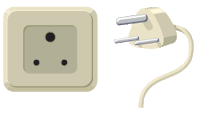
Round pins.
Voltage
220 V
Frequency
50 Hz
Type
C
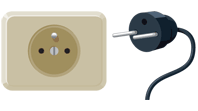
Description
Round pins and grounding pin.
Voltage
220 V
Frequency
50 Hz
Type
D
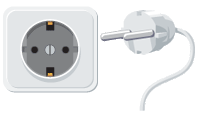
Description
Round pins, grounding pin and receptacle.
Voltage
220 V
Frequency
50 Hz
Type
E
Description
"Schuko" plug and receptable with side grounding contacts.
Voltage
220 V
Frequency
50 Hz
Type
F
Toggle Dialing Codes of Greece

Trip Tools

Toggle edit

International Weather


  • New York City
  • London
  • Hong Kong
  • New York CityRain 8° /Rain
  • LondonShowers / Clear 5° /Showers / Clear
  • Hong KongPM Rain 17° /PM Rain
© 2004 - 2010 TripExtras.com TripExtras is operated by Core8 Ltd who are an Appointed Representative of Astrenska (UK) Limited which is authorised
and regulated by the Financial Services Authority, FSA Reg No 442233
Top of Page Core8.com