Explore France

France Travel Guide

Wherever you choose to begin or end a sojourn in Europe's largest country, and however long you spend exploring you'll simply be scratching the surface of this vast and varied land. France's geography stretches from rugged coastline to seemingly infinite beaches, from bustling cities to quaint countryside villages and from a sun-drenched isle to luxury mountain ski resorts.

A civilisation dating back to 50,000 BC and a history spanning Roman and Frankish invasion, wars of power and religion, a wealthy and powerful monarchy ultimately crushed by revolution, the rise of Napoleon and a new battle between monarchy and republic, and two world wars, has left the country brimming with a rich heritage. Cave paintings, castles, cathedrals and battle scars are scattered across the land, yet much of the French countryside remains untouched, and traditional rural life still flourishes.

This is a country that has inspired Monet's reinvention of colour, Toulouse Lautrec's dark underbelly of Paris society, and the haunting harmonies of Debussy. It has tantalised our taste buds with foie gras and frogs' legs, and captured the imagination of the world's jet-set with the resorts of St Tropez and Port Grimaud. Discover France, and rediscover the meaning of .

Visitors, other than EEA state members, are advised to hold a return or onward ticket, documents for next destination and proof of financial means. The borderless region known as the Schengen area includes the following countries: Austria, Belgium, Czech Republic, Denmark, Estonia, Finland, France, Germany, Greece, Hungary, Iceland, Italy, Latvia, Lithuania, Luxembourg, Malta, The Netherlands, Norway, Poland, Portugal, Slovakia, Slovenia, Spain and Sweden. All these countries issue a standard Schengen visa that has a multiple entry option that allows the holder to travel freely within the borders of all.

Eiffel Tower

Address: Champ de Mars 7 Paris

Admission: Elevator – 1st and 2nd floor EUR8; 3rd floor EUR13 (adults). Stairs - EUR4.50 (2nd floor). Concessions available Daily; 9.30am to 11.45pm (September to mid-June), 9am to 12.45am (mid-June to August)

Telephone: (01) 4411 2323 (recorded information)

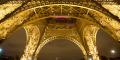
Gustave Eiffel, the architect of the Eiffel Tower (Tour Eiffel) could never have guessed that it would become Paris's signature sightseeing attraction and bring more than six million visitors a year. It was built as a temporary structure to commemorate the centenary of the French Revolution and was opened by the Prince of Wales, later King Edward VII of England. The Eiffel Tower was considered an eyesore by many and there were petitions to have it pulled down. It was saved only because it had become an important antenna for telegraphy. It towers 984ft (300m) above the Champ de Mars and until 1930 was the world's tallest building. The highest of its three levels offers a wonderful panoramic view over Paris.

Notre-Dame

Address: 6 Place du Parvis de Notre-Dame Paris

Admission: Daily, 8am to 6.45pm (7.15pmp on Saturday and Sunday)

Telephone: (01) 4234 5610

Notre-Dame looms large over the Place de Parvis, on the Isle de la Cité, and as the most enduring symbol of Paris is an alluring tourist attraction. Built between 1163 and 1345 the Cathedral is considered one of the of the world's Gothic masterpieces. The massive interior can seat 6,000 and it is dominated by three spectacular and enormous rose windows and a vast 7,800-pipe organ. The 387-step climb to the top of the towers is worth the effort for the panoramic view of the city and the close-up views of the famous gargoyles. The tower also holds the great bell that was rung by Quasimodo, the fictional hunchback. Opposite the north door is a museum that displays the Cathedral's history, while under the square in front of the Cathedral is the crypt that houses Notre-Dame's archaeological museum.

Louvre

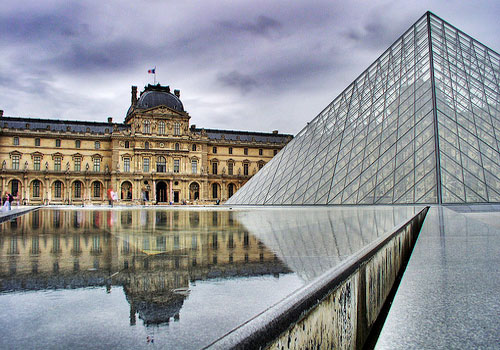
Address: Cour Napoléon, 1. Reception area is under the giant glass pyramid Paris

Admission: EUR9 full-day pass to permanent exhibitions (EUR6 after 6pm); free for under 18s and on first Sunday of every month. 9am to 6pm (10pm Wednesday and Friday, except public holidays); closed Tuesdays. Opening hours for temporary exhibitions vary

Telephone: (01) 4020 5760

One of the world's great art museums, this vast edifice houses an extraordinary collection of paintings, sculptures and antiquities from all over the world. The Louvre was opened to the public in 1793, soon after the Revolution, to display the spectacular treasures looted from the royal palaces. The best-known attraction is Leonardo da Vinci's enigmatic Mona Lisa, which is protected by bullet-proof glass within its own room. The permanent collections are divided into Egyptian, Greek, Roman and Asian antiquities, painting, drawings, sculpture and objects d'art. Don't even attempt to see it all in one day.

Pompidou Centre

Address: Place Georges Pompidou, entrance by the plaza in Rue Saint-Martin Paris

Admission: One-day Centre pass EUR10; exhibitions EUR9; MNAM EUR12 (temporary exhibitions vary) Daily (except Tuesdays), 11am to 10pm. MNAM: Wednesday to Monday, 11am to 9pm

Telephone: (01) 4478 1233

Built in the 1970s and named after former French president Georges Pompidou, the futuristic Pompidou Centre is now considered part of the Parisian landscape. The outrageous design, complete with its glass elevators, was the inspiration for the Lloyds Building in London and attracts visitors by the million; it is the city's most popular attraction by far. The building houses the Musée National d'Art Modern (MNAM), which displays a vast collection of 20th-century art from Fauvism and Cubism to Abstract and Absurd and its numerous cinemas and theatres have regular musical and dance performances. The square to the West of the building attracts a varied assortment of street performers.

Musée d'Orsay

Address: Entrances on Rue de la Légion d'Honneur and Rue de Bellechasse Paris

Admission: EUR8; free for under 18s Tuesday to Sunday 9.30am to 6pm (closing 9.45 on Thursday); closed Mondays

Telephone: (01) 4049 4814, or 4549 1111 (recorded information)

This great museum is fairly new by Paris standards. It is situated in a railway station by the Seine and houses a vast collection of works from the significant 1848 to 1914 period. There are important works from the Art-Nouveau movement but the Orsay is best known for its Impressionist and Post-Impressionist art. The collection is arranged chronologically and contains highly regarded works by Monet, Manet and Courbet. Also on permanent display is the famous painting by Gustave Doré entitled L'énigme and Henri Chapu's marble statue of Joan of Arc in Domrémy.

Musée Rodin

Address: 77 Rue de Varenne Paris

Admission: EUR6 (adult) 9.30am to 5.45pm (April to September), 10am to 5.45pm (October to March); closed Mondays

Telephone: (01) 4418 6110

The Rodin Museum is situated near the Musée d'Orsay and is housed in what was formerly the Hôtel Biron, the beautiful hotel where Auguste Rodin (1840-1917) once lived and worked. Inside are many of Rodin's great marble sculptures including The Kiss while outside, in the garden, are famous bronzes including The Thinker. The museum also includes many works by Camille Claudel, Rodin's pupil and mistress, and paintings by Van Gogh, Renoir, Manet and Rodin himself.

Musée National Picasso

Address: Hôtel Salé, 5 Rue de Thorigny Paris

Admission: EUR8.50; free for under 18s 9.30am to 6pm (April to September); 9.30am to 5.30pm (October to March). Closed Tuesdays

Telephone: (01) 4271 2521

The Picasso Museum is situated in a 17th century mansion in the heart of Paris. The collection was started in 1973, after the French government accepted Picasso's own collection in lieu of death duties, and was added to after his widow's death in 1990. All the phases of work from the Paris-based artist are represented including his paintings, drawings, ceramics, sculptures and even poetry. Memorable works include the self-portrait Paolo as Harlequin and Nude in an Armchair. Most of Picasso's great paintings however are owned by and housed in foreign museums or are in the hands of private collectors.

Versailles

Address: Paris

Admission: The Palace EUR13.50, free for under 18s 9am - 6.30pm (3 April to 31 October); 9am - 5.30pm (1 November to 2 April). Closed Mondays

Telephone: (01) 3083 7800

The Château de Versailles stands 15 miles (24km) southwest of Paris and is one of France's noted attractions. Most of the palace was built between 1664 and 1715 by Louis XIV (known as the Sun King), who turned his father's hunting lodge into the grandest palace ever built. The 'Old Château' still exists but is enveloped by the vast white stone façade of the New Château. This lavish statement of monarchical power was to become a symbol of the excess that would lead to the revolution of 1789. Perhaps the most famous room in the palace is the Hall of Mirrors (Galerie des Glaces) where the Treaty of Versailles was signed, signifying the end of the Great War. Within the palace visitors can also see the former Royal bedchambers, the grand staircase and other staterooms, and within the vast landscaped park and gardens are many wonderfully ornate fountains and ponds. There is a small train that ferries visitors from the palace to the Grand Trianon and Petit Trianon, former love nests where both the Sun King and Napoleon enjoyed the company of their mistresses.

Fontainebleau

Address: 4 Rue Royale Paris

Admission: EUR5.50, free for under 18s Daily except Tuesdays 9.30am to 6pm (until 5pm from October to May)

Telephone: (0)1 6074 9999

In the 16th century, Henry II and Catherine de Medici commissioned architects Philibert Delorme and Jean Bullant to build a new palace here within the Fontainebleau forest 40 miles (64km) south of Paris. Italian Mannerist artists Rosso Fiorentino and Primaticcio came to assist in the interior decoration, helping to found the School of Fontainebleau. Visitors will see the long Gallery of François I, which the artists adorned with scenes like The Rape of Europa and the monarch holding a pomegranate, a symbol of unity, as well as the richly adorned Louis XV Staircase and the Ballroom with its monumental fireplace and frescoes. The palace was a refuge for French monarchs from the days of the Renaissance; they valued it because of its distance from the slums of Paris and for the rich hunting grounds that surrounded it. Many important events have occurred here, perhaps none more memorable than when Napoleon stood on the grand steps in front of the palace and bade farewell to his shattered army before departing for Elba. Compared to the glories of Versailles, however, Fontainebleau can be a bit of an anticlimax; it is best to see it before Versailles.

Vieux Bordeaux

Address: Bordeaux

Admission: Musée des Beaux-Arts EUR5 Musée des Beaux-Arts is open daily except Tuesday, 11am to 6pm

Telephone: Grand Theatre (05) 56 00 85 95

Vieux Bordeaux (old town) centres on the Quartier St-Pierre, which is surrounded by narrow streets, and lined with old churches and grand mansions adorned by wrought-iron balconies and arcading. There has been a lot of restoration over the last few years, but many streets remain fairly seedy. One of the most opulent displays of Bordeaux's former glory is the Grand Theatre. It was built between 1773 and 1780 on the site of a Roman temple and is faced with an enormous colonnaded portico topped by 12 Muses and Graces. Visitors can view the impressive interior by attending one of the operas or ballets. Nearby is the Esplanade des Quinconces, which was laid out between 1818 and 1828 and covers nearly 12 hectares (30 acres) - making it the largest square of its kind in Europe. A smaller but more beautiful square is the earlier Place de la Bourse. Its centrepiece is a fountain of the Three Graces and is bordered by quays opening onto the river and flanked by the Custom House and the Stock Exchange. Crossing the river is the impressive Pont de Pierre, which was built during Napoleon's Spanish campaigns, and has 17 arches in honour of his victories. The views of the river and quays from here are memorable, particularly when floodlit at night. Important churches include the delightful Basilique St-Michel, across from which is the Fleche St-Michel, which has the tallest stone tower in France; it was built in 1472 and is 374ft (114m) high. During July and August (afternoons only) visitors can climb the 228 steps for wonderful views over the river. To the west is the 13th century Cathédrale St-André, the most impressive and ostentatious church in Bordeaux (look out for the wonderful sculptures in the doors). The city's museums are gathered around the cathedral, the best being the Musée des Beaux-Arts, which has a fine collection of European art including works by Reynolds, Titian, Rubens, Matisse and Marquet, a resident of the city. The old town is fairly compact and is best seen on foot; two-hour walking tours can be arranged through the local tourist office. Boat tours can also be arranged.

The Wine Country

Address: Bordeaux

Telephone: Château Mouton-Rothschild (05) 56 73 2129; Château Lafite-Rothschild (01) 53 89 7800; Château Margaux (05) 57 88 8383

The area surrounding Bordeaux produces over 70 million gallons of wine each year including the world's best red wine. Many vineyards are small family run businesses without staff to cater for tourists, but the larger more famous ones organise tastings and tours of the cellars and vineyards. Château Mouton-Rothschild is located just north of Pauillac. It is still run by the Rothschilds and attracts thousands of visitors each year who come as much for the impressive collection of art as for the wine. Château Lafite-Rothschild is nearby and was purchased by the Rothschilds in 1868. The vinothèque contains many vintage bottles, several dating from 1797. Château Margaux is an imposing 19th century château south of Pauillac; the estate produces three wines from its 650 acres. To see the vat rooms and wine cellars, make an appointment by letter or phone.

Mont Saint-Michel Abbey

Address: 50116 Le Mont-Saint-Michel Normandy

Admission: EUR8.50 (adult), free for under 18s with family Daily 9am to 7pm (May to August), 9.30am to 6pm (October to April)

Telephone: (02) 3389 8000

One of France's best-known attractions, the Mont Saint-Michel Abbey is situated on a rocky island just off the coast of Normandy and Brittany. It was founded in 708 by the Bishop of Avranches, who built a chapel here. Construction of the current abbey began in 1023 but was not finished for 400 years. Built with granite, it encompasses a range of architectural styles, from Norman to Gothic. The abbey was a place for pilgrimages for centuries and also served as a monastery, a prison and a fortress against the English. There is still a Benedictine monastery within the abbey, which can be visited on a guided tour. Among the maze of cobbled streets within the walls of the abbey are a number of other attractions including a maritime museum and a multimedia museum that tells the story of the island. The abbey is connected to the shore by a causeway, but there are plans to construct a bridge to it so that the sea will again flow freely around the island.

Scandola Nature Reserve

Address: Corsica

The Cape Girolata peninsula is classified as a UNESCO World Heritage Site and encompasses the Scandola Nature Reserve, an ecological treasure covering 1,000 hectares (2,471 acres) of scrub and sea. The promontory is marked by incredible rock formations that were formed by Monte Cinto's volcanic eruptions millions of years ago. The subsequent erosion has fashioned caves and grottoes deep into the rock. The headland and its surrounding waters support significant colonies of seabirds, dolphins and seals, as well as 450 types of seaweed and some remarkable fish such as the grouper, a species more commonly found in the Caribbean. Scandola is off-limits to walkers and can be viewed only by boat; trips can be arranged from both Calvi and Porto.

La Croisette

Address: Cote d Azur

The long, shop-studded promenade of La Croisette, and its seven miles (11km) of beach, is Cannes' major attraction. Palatial hotels line this strip each with their own private beach and this is where you are most likely to spot a familiar face, or topless hopeful, especially during the film festival, though you'll be lucky to see further than the sweating backs of the paparazzi. La Croisette is best viewed from the highest point of Cannes' Old Town, Le Suquet, where the remains of the fortified tower still stand, along with the 12th-century Chapel of St Anne. Le Suquet is a lovely place to stroll, with its winding streets, small boutiques and restaurants. At the end of La Croisette is the Palais des Festivals, whose endless Allées des Stars is imprinted with handprints and signatures of the famous. Just beyond is the atmospheric Vieux Port, with its odd medley of luxury yachts and tiny fishing vessels, and the rows of palm trees and fragrant flower market of the Allées de la Liberté. Further west along the seafront are the free beaches (where the locals go), along the Plages du Midi.

Ile St Honorat & Ile St Marguerite

Address: Cote d Azur

Admission: EUR8 8am to 6pm (summer); 8am to 5pm (winter)

Telephone: (04) 9299 5400 or 9298 7138 (boat trips)

The two islands of Lerins - Ile St Marguerite and Ile St Honorat lie within a 20-minute boat ride from Cannes. Ile St Honorat is a tiny forested island, the smallest and most southern of the Iles de Lerins. It has been the site of a monastery since the 5th century and today the Cistercian monks are the only inhabitants on the island. Much of the monastery is surprisingly modern, with the exception of the ruins of the 11th-century monastery on the sea's edge. The monks organise tours of the island and try to sell their produce to tourists including homemade wine, honey and lavender oil. The monastery also welcomes visitors for week-long retreats. On the neighbouring Ile St Marguerite is the fortress where the man in the 'iron mask' was imprisoned.

Antibes

Address: Nice

Admission: EUR6 entry to Musée Picasso Musée Picasso open Tuesday to Sunday 10am to 6pm (June to September); rest of year 10am to 12pm and 2pm to 6pm.

Antibes is a pleasant excursion a few miles east of Cannes. It has one of the best markets on the coast and an excellent Picasso museum in its ancient seafront castle, the 16th century Château Grimaldi. Picasso was lent a room in the castle to use as a studio in 1946. Several extremely prolific months followed before he moved to Vallauris, leaving all his Antibes output to what is now the Musée Picasso. Although Picasso donated other works later, most of the collection dates from this one period. The best known work is Ulysses and his Sirens. There are also works here by some of Picasso's contemporaries, including Nicholas de Stael. Picasso himself is the subject of some of his paintings. Alongside the castle is a cathedral which dates from Medieval times; only the choir and apse survive from the original Romanesque building, the nave and magnificent facade are Baroque. Nearby is a market which is open every morning over the summer and overflows with local produce.

Côte d'Azur Beaches

Address: Cote d Azur

People don't just come to St Tropez for the nightlife, it also has some of the best beaches in France. Most are away from the centre; although the family beaches, Plage des Graniers and Plage des Cannebiers, are within walking distance. The most serious collection of beaches are along the Baie de Pampelonne, south of St Tropez, the best known is the Plage de Tahiti which has long been favoured by exhibitionists wearing next to nothing. All beaches are lined with restaurants and shops selling endless gifts or items to prove you've been there.

St Tropez Surrounds

Address: Cote d Azur

The area immediately around St Tropez is pretty grim; congested roads are lined with billboards and neon signs, but the surrounding hills are almost uninhabited and make for a welcome excursion from the masses and the mayhem. The best view of this richly green and flowering countryside is from the hilltop village of Gassin, its lower neighbour Ramatuelle, or the tiny road between them, the dramatic route des Moulins de Paillas, where among the vineyards are three ruined windmills that were once powered by the dreaded winter mistral. Several vineyards offer wine tasting. Along the coast there are a number of good walking trails. Maps are available at the tourist office.

St Tropez Town Centre

Address: Cote d Azur

Behind the cafés, the small streets and old buildings of St Tropez form a picturesque scene, but they are popular venues for their multitude of shops and restaurants rather than their historical significance. Place aux Herbes is a lively square that has been a centre of activity for centuries; today it is a busy enclave of vegetable, fruit and flower stalls. Every May the town centre bubbles to life with the St Tropez bravade, a colourful festival dating back to the 15th century. It originated as a procession in honour of the town's patron saint - whose bust is carried through the town, accompanied by a guard of honour with gun salvos, and Provençal singing and dancing.

Musée Matisse

Address: 164 Av. des Arènes de Cimiez Nice

Admission: EUR4, under 18's free. Concessions available Daily except Tuesdays 10am to 6pm

Telephone: (0)4 9381 0808

Matisse spent the last few years of his life in Nice and he is honoured by this museum. The Musée Matisse has several permanent collections, mostly painted in Nice and many donated by the artist and his heir. The better known paintings include Nude in an Armchair with a Green Plant (1937), Nymph in the Forest (1935/1942) and Portrait of Madame Matisse (1905). There is also an ensemble of drawings including The Créole Dancer (1951) and Blue Nude IV (1952). Seeing his nude sketches today, you'll wonder why early critics denounced them as 'the female animal in all her shame and horror.'

The Château

Address: Montee du Chateau Nice

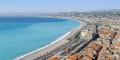
With wonderful views over the rooftops and gleaming mosaic tiles of Old Nice, along the sweep of the promenade des Anglais and out to the Mediterranean, the Château park is a lovely attraction in itself and good place for visitors to orientate themselves with the city. The Château has long gone but with cool walks in the shade of the trees, a large grassy park, Roman ruins and a waterfall, it is a great place to spend an afternoon. To reach the park, visitors can either climb the steps at the front, from the Quai des Etats Unis, or for those who aren't up to it an elevator is available.

Phoenix Parc Floral de Nice

Address: 405 Promenade des Anglais Nice

Admission: EUR5.34 (museum); EUR6.10 (park) Museum 10am to 6pm (May to September), 10am to 5pm (October to April); closed Tuesdays. Park 9am to 7pm (March to October), 9am to 5pm (November to April)

Telephone: (0)4 9229 7700

Outside Nice, near the airport, this vast tourist attraction includes a botanical garden and a bird and insect zoo where visitors can tour a greenhouse full of wonderful butterflies. There is also a tacky theme park with automated dinosaurs and mock Mayan temples but the highlight of the park is the Musée Départemental des Artes Asiatiques, which houses a collection of ethnographic artefacts, including silk goods and pottery, as well as traditional and contemporary art.

Musée des Beaux-Arts Jules Chéret

Address: 33 Avenue des Baumettes Nice

Admission: Daily except Mondays 10am to 6pm

Telephone: (0)4 9215 2828

Housed in the former residence of the Ukrainian Princess Kotchubey is a fine collection of 19th and 20th century art, including works by Boudin, Ziem, Raffaelli, Renoir and Monet. The Musée des Beaux-Arts Jules Chéret gallery includes great sculptures including works by J. B. Carpeaux, Rude and Rodin. There is also an important collection devoted to the masters of the Second Empire and Belle Epoque, a great attraction for visitors to Nice.

Cimiez

Address: Cote d Azur

In a residential area in the hills above the hustle and bustle of the city, the grounds of Cimiez include a large park set amidst olive groves, the Archaeology Museum, Matisse Museum and the Franciscan Museum and Monastery. Also within the gardens, the Musée National Message Biblique Marc-Chagall displays some 450 of the artist's oils, drawings, pastels, lithographs, sculptures, and ceramics. During a couple of weeks in August, Cimiez is the site of the Nice Jazz Festival, with music being played every day until midnight and performed on three stages, in the olive groves and the Roman Amphitheatre. It is an hour's walk, or a short bus ride from the town centre.

Château de Chenonceau

Address: Loire Valley

Admission: Castle and museum EUR12 (adult) and EUR10 (child) Open daily but hours vary month to month, see website for details.

Telephone: (02) 4723 9007

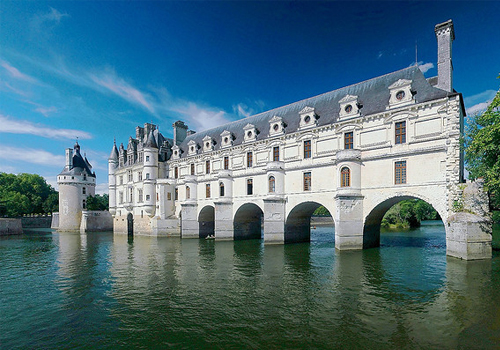
Only a few miles outside Tours, on the River Cher, the Château de Chenonceau is probably the most celebrated of the many châteaux in the Loire valley. It was used as a mill in the Middle Ages and bridges the whole width of the river. It was owned by a succession of powerful noblewomen including Henri II's mistress Diane de Poiters, the Queen Regent Catherine de Medici and Louise de Loraine and is often referred to at the 'Château des Femmes'. Inside visitors can see a wonderful 200ft (61m) gallery, Louis XIV's sitting room and Francois I's bedroom.

Villandry

Address: Loire Valley

Admission: EUR9 (château and gardens), EUR6 (gardens only). Concessions available Château and gardens open daily but the hours vary monthly, see website for details.

Telephone: (0)2 4750 0209

Five miles (8km) outside Tours is the tiny village of Villandry and its wonderful château. The château is best known for its gardens that are open between February and November. It is not your standard ornamental garden; between the vine-shaded paths and ornamental box hedges are carrots, cabbages and aubergines carefully arranged in patterns; roses climb gracefully above small herb gardens. Villandry is an easy cycle from Tours and, for those that have worked up an appetite, there are some excellent local restaurants.

Château d'Angers

Address: 2 Promenade du Bout-du-Monde Loire Valley

Admission: EUR6 (adult), free for under 18s Daily 10am to 5.30pm (September to April); 9.30am to 6.30pm (May to August). Last admittance is 45 minutes before closing

Telephone: (02) 4186 4877

A kilometre-long wall, studded with 17 circular towers, surrounds this vast medieval fortress. Visitors can tour Château d'Angers, including the courtyard, prison, ramparts, windmill tower, 15th century chapel, and royal apartments. The overriding reason however for coming here is to see the 328ft (100m) Tapestry of the Apocalypse. Woven between 1375 and 1378 for Duke Réné of Anjou, it takes as its text St John's vision of the Apocalypse, as described in the Book of Revelation. Guided tours provide insight into its architecture and fascinating history.

Château de Chambord

Address: Loire Valley

Admission: Adults: EUR8.50 (September to June); EUR9.50 (July to August) Daily 9am to 6.15pm (1 April to 30 September); 9am to 5.15pm (1 October to 30 March). Closes at 7.30pm from July to August

Telephone: (0)2 5450 4000

Eleven miles (18km) east of Blois, the vast Château de Chambord is the largest château in the Loire Valley. It was commissioned by François I, who wanted to outshine the Holy Roman Emperor Charles V, and the result is a spectacular Renaissance masterpiece with 450 rooms. It was designed by an Italian architect in 1519, but was worked on by French masons. The outside is essentially French medieval - massive round towers with conical tops, and an explosion of chimneys, pinnacles and turrets. The details inside, however, are pure Italian: the Great Staircase (attributed by some to da Vinci), panels of coloured marble, niches decorated with shell-like domes, and freestanding columns. Wandering through, you can get a good feel for the contrasting architectural styles, which have combined to create a very decadent, if at times discordant, whole. The château is surrounded by a 20-mile (32km) wall containing a 5,261-hectare (13,000-acre) deer park.

D-Day Beaches

Address: Normandy

Early on 6 June 1944 the largest armada ever known left England's south coast and set off to liberate France. Shortly thereafter British, American and Canadian soldiers began landing on the beaches. Today veterans and their families walk along the same beaches codenamed Juno, Gold, Sword, Utah and Omaha. A good place to start a battlefield tour is at Arromanches-les-Bains, a few miles northeast of Bayeux. After it was taken by the British 50th Division, this small fishing village was turned into the mammoth military harbour using a prefabricated port that was towed across the Channel. Two and a half million men and 500,000 vehicles landed here. The wreckage of 'Mulberry Harbour' remains just off the beach. A little down the coast are Omaha and Utah, the beaches where the US Division famously landed. The cliffs are still pitted with German bunkers and shell holes, but otherwise these fairly innocuous beaches show little sign of the bloody battles that took place here. Many people come to Normandy to pay respects to the Allied soldiers at the many vast cemeteries along the coast that are maintained so immaculately.

Palais Longchamp

Address: Boulevard Montricher Marseille

Admission: Daily 10am to 5pm, and 12pm to 7pm on June to August weekends.

Telephone: (0)4 9114 5930

One of Marseille's most scenic buildings is the Palais Longchamp. Built during the Second Empire, it is the grandiose conclusion of an aqueduct that once brought water from the Durance to the city. Although the aqueduct is no longer in use, water is still pumped into the centre of the colonnade connecting the two palatial wings. Below, a spectacular fountain features an enormous statue of three muscular women above four bulls wallowing in a pool from which a cascade drops four or five storeys to ground level. In the palace's north wing is the Musée des Beaux-Arts, which displays a vast array of paintings from the 16th to the 19th centuries. They include works by Corot, Millet, Ingres, David, and Rubens as well as some 80 sculptures and objets d'art; particularly interesting is a gallery of Pierre Puget sculpture.

Massif des Calanques

Address: Marseille

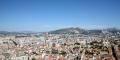
Directly south of Marseille, and to the west of Cassis, is the wild coastline of the Massif des Calanques. Some of France's most beautiful and dramatic scenery can be found along this 12-mile (19km) stretch of coastline; the sea has cut gorges, up to a mile (2km) deep, into the limestone. Dazzling white limestone cliffs overhang the sea and attract rock climbers and deep-sea divers. The mountains rise up 1,850ft (564m) and are a haven for climbers. Walking tours and boat trips can be organised via the tourist board. The highlight of the Calanques is Sormiou, with its beach, seafood eateries and small harbour. Sormiou is separated from another small but enchanting settlement at Morgiou by Cap Morgiou, which offers a panoramic belvedere with splendid views of both the Calanques and the eastern side of the massif. At Morgiou there are tiny creeks for great swimming.

Marseille Beaches

Address: Marseille

The most popular beach near the city centre is the Plage des Catalans. This marks the beginning of Marseille's corniche that ends at the Plage du Prado, the city's main sand beach, where the water is remarkably clean. There is a nice walk along the corniche which takes you past the Anse des Auffes, a picturesque inlet with small fishing boats beached on the rocks and behind the Plage de Prado to the Parc Borély, which has a boating lake, rose gardens, palm trees and a botanical garden (daily 8am to 9pm; free). Along the Malmousque peninsula are a number of tiny bays and beaches that are perfect for swimming when the mistral wind is not inciting the waves.

Château d'If

Address: Marseille

Admission: Castle and Island: EUR4 (adults), concessions available Daily; 9.30am to 5.30pm (October to March), 9.30am to 6.30pm (April to September)

Telephone: (0)4 9159 0230

On the sparsely vegetated island of If is the infamous prison, Château d'If, which is best known as the penal setting for Alexandre Dumas' The Count of Monte Cristo. François I built the fortress here to defend Marseille and its port in the 16th century, and the site later housed a state prison. The cells are horribly well preserved; carvings by Huguenot prisoners can still be seen inside some of the cells. The views back towards Marseille and the mountains beyond are wonderful.

Cassis

Address: Marseille

Cassis is a beautiful resort town just west of Marseille. Hemmed in by high white cliffs, its modern development has been limited and it retains much of the charm lost by its more high-profile neighbours. Built on the side of a hill, the old village is centred around a shady square where the inhabitants come to cool off and play 'pétanque' on summer nights. Portside posing and drinking aside, there's not much to do except sunbathe and look up at the ruins of the town's medieval castle, built in 1381. A popular excursion is to take a boat trip to the calanques - long, narrow, deep fjord-like inlets that have cut into the limestone cliffs. If you're feeling energetic, you can take the well-marked footpath from the Route des Calanques behind the western beach; it's about a 90-minute walk to the furthest and best calanque, En Vau, where you can climb down rocks to the shore. Intrepid pine trees find root-holds, and sunbathers find ledges on the chaotic white cliffs. The water is deep blue and swimming between the vertical cliffs is an experience not to be missed.

Palais des Papes

Address: Place du Palais, 6 Rue Pente Rapide Provence

Admission: March to mid-November EUR10.50; mid-November to February EUR8.50 Open daily but hours vary month to month, see website for details

Telephone: (04) 9027 5000

Towering over Avignon the imposing Palais des Papes (Palace of the Popes) is the symbol of the city's medieval power. The palace consists of the ascetic Old Palace, commissioned by Benedict XII, and the extravagant Gothic New Palace of Clement VI. It was built primarily as a fortress with massive outer walls, battlements and sluices for pouring hot oil onto attackers. Inside the palace, so little remains of the original interior that visitors could be mislead into believing that all the popes and their entourage were as virtuous as the last official occupant, Benedict XIII. In reality the interior was once elaborately decorated, displayed the decadence of the feuding cardinals and their mistresses. The fire of 1413 destroyed most of the decoration and furnishings, but evidence of the once magnificent interior remains including some frescoes, including one painted by Italian artist Matteo Giovannetti in the Great Audience Room. Visitors can take a fascinating tour of the palace taking in the Pope's Bedchamber, the Chapelle St-Martial and the Stag Room. Nearby, dwarfed by the palace, is the 12th-century Cathédrale Notre-Dame des Doms.

Petit Palais

Address: Place du Palais Provence

Admission: Free for permanent collection Tuesday to Sunday, 10am to 6pm

Telephone: (0)1 5343 4000

Just below the Palais des Papes, the Petit Palais contains a wonderful collection of 13th- to 15th-century paintings and sculpture. Most are the work of Italian masters from that era and, as you progress through the 19 rooms, you can observe how they wrestled with and finally conquered the representation of perspective - a revolution from medieval art, where the size of figures depended on their importance rather than position. The highlights of the collection are Botticelli's sublime Virgin and Child and The Angel of the Annunciation by Sano Di Pietro.

Pont d'Avignon

Address: Rhone River, Avignon Provence

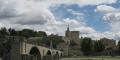
Behind the Petit Palais is the much photographed Pont d'Avignon, known best from the famous children's song of the same name. The bridge was originally built in the 12th century to shorten the journey for the busy traders ferrying their goods between the Mediterranean and Lyon. The torrents of the Rhône regularly damaged and brought down sections of the bridge and builders finally gave up repairing it in 1660, four centuries after it was built. Today only four of the original 22 arches remain. On the first of the bridge's bulwarks is the tiny Chapelle St-Nicholas, and this delicate Romanesque chapel, dedicated to St Nicholas, patron saint of bargemen, is well worth a visit.

Orange

Address: Ten miles (16km) north of Avignon. Provence

Just north of Avignon, Orange was the former seat of the Counts of Orange, a title created in the 8th century and passed to the Dutch crown in the 16th century. The family's most famous member was Prince William, who ascended the English throne in 1689. Today the town is best known for its spectacular Roman theatre and triumphal arch, both of which remain remarkably intact. The rest of Orange isn't strikingly picturesque, however there are pleasant tree-lined streets and squares with some nice cafes and restaurants.

Châteauneuf-du-Pape

Address: The village is 11 miles (18km) north-east of Avignon. Provence

Châteauneuf-du-Pape is a medieval village on the side of a hill, dominated by the ruins of an ancient château towering above. The château was the pope's summer retreat from the Palais and although all that remains are the foundations and two outer walls, it is still an imposing sight and a wonderful viewpoint. The village below is a maze of well-restored medieval buildings and narrow streets that weave around the hillside. Today life in the village often involves working in the surrounding vineyards or selling the famous wine to the many tourists who visit.

Palais des Beaux-Arts

Address: Place de la République Lille

Admission: EUR5 (adults), EUR3 (concessions). Free on the first Sunday of each month Monday 2pm to 6pm; Wednesday, Thursday, Saturday and Sunday 10am to 6pm; Friday 10am to 7pm. Closed Tuesdays

Telephone: (0)3 2006 7800

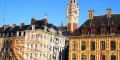
A striking and ornate 19th century building which houses Lille's renowned museum of fine arts, Palais des Beaux-Arts is a masterpiece in itself. Inside the building is a treasure-trove for art lovers, an attraction second only to the Louvre in Paris. The gallery features works by Goya, Donatello, Raphael and Rubens, to name just a few of the masters represented. There are also a number of works by French artists, including three major items: Belisarius Asking for Alms by David; After Dinner at Ornans by Courbet; and Sleep by Puvis de Chavannes. Although the museum contains mainly paintings, there are also some collections of ceramics, relief maps and a large section of Italian and French drawings.

Filitosa

Address: The site lies 11 miles (17km) north of Propriano, and about 25 miles (40km) south of Ajaccio Corsica

Admission: EUR5 Daily 8am to sunset, April to October

Telephone: (04) 9574 0091

The most celebrated prehistoric site in Corsica, Filitosa is worth a visit for its megalithic menhir statues, which have been carved to represent human faces or armed figures. The purpose of these granite structures is still unclear, and many mysteries surround the many ancient structures on the site. Filitosa V, with its sword and dagger, the face of Filitosa IX, and the five menhir statues around the foot of a 1,200-year old olive tree, are the most important structures of the prehistoric site of Filitosa. A small museum offers further menhirs, as well as some ancient tools and pottery found in the caves, dating back to 3,300 BC.

Cours Saleya Food and Flower Market

Address: Between Place Massena and the Old Town Nice

Admission: Tuesday to Sunday from 6am

Nice's most famous market area, the Cours Saleya bustles with activity every day and is a riot of colour and fresh smells. A wonderful attraction for visitors, the market is packed with flowers, fresh produce, souvenir shops and sidewalk cafés. On Mondays the area hosts a large flea market and an antiques market.

Epernay

Address: 40 miles (64km) east of Paris Champagne Country

Admission: Moët et Chandon EUR8; Mercier EUR7.50; Castellane EUR7

Telephone: Moët et Chandon (03) 26 51 2020; Mercier (03) 26 51 2222; Castellane (03) 326 51 1911

Epernay, along with Reims, is one of the great centres of champagne production; dug into the chalk beneath the town are more than 200 miles (322km) of cellars and tunnels containing champagne from the surrounding area including such great brands as Moët et Chandon, Pol Roger, Mercier, and de Castellane. Having been ravaged by war over the centuries, few old buildings remain in the town, but visitors come here to visit the great champagne houses rather than the architecture. Both Moët et Chandon, the world's largest producer of bubbly, and Mercier give guided tours of their cellars in English throughout the day. They are both situated near each other on Avenue de Champagne. Castellane also has daily tours from March to December.

Iles Sanguinaires

Address: Corsica

The four small islands in the Gulf of Ajaccio, with their red rocks and jagged outline are a popular destination for boat trips from Ajaccio. They are a sanctuary for birds, rare fauna and flora, and offer secluded swimming spots and good walking. The islands lie just off Pointe de la Parata, where there are some walks and beautiful coastal scenery.

Les Calanques

Address: Corsica

The mass of intriguing red rock formations along the coastal road between Porto and Piana are known as Les Calanques, and are a highlight of a visit to Corsica. The narrow, twisting road reveals a landscape of spectacular vistas and panoramas that outdo each other at every turn, where wind and sea have eroded the pink granite rock into pillars, huge boulders and weird shapes. The scenery is most spectacular at sunset, when the setting sun highlights the natural red and pink colours of the rock, and the drive is best appreciated in the direction from Piana to Porto.

Reims

Address: Reims is situated 90 miles (145km) east of Paris Champagne Country

Admission: Maison de Pommery EUR8; Mumm EUR7.50; Taittinger EUR7; Veuve Clicquot EUR7

Telephone: Maison de Pommery (03) 26 61 6256; Mumm (03) 26 49 5970; Taittinger (03) 26 85 4535; Veuve Clicquot (03) 26 89 5390

A visitor's first impression of Reims (pronounced Rhance) is of a sprawling industrial town peppered with concrete apartment blocks, the result of World War I bombs and later disastrous town planning. However Reims is an ancient Roman city and the birthplace of the French nation - it contains one of the most impressive Gothic cathedrals in France, the Cathédrale Notre-Dame de Reims, where dynasties of French monarchs were crowned starting with Clovis, first king of the Franks. The neighbouring Basilique St-Rémi is even older and, half Gothic, half Romanesque in style, includes the old royal abbey which is now a museum documenting the history of the town. Most visitors come to Reims not so much for history but for the hedonistic pleasure of visiting the cellars of its great champagne producers. This is the home of the world's best bubbly. The best of the best is to be sampled at the Maison de Pommery, which has more than 10 miles (16km) of tunnels extending 100ft (30m) down into the chalk below its Gothic superstructure. Move on to Mumm, which contains 25 million bottles of slowly fermenting champagne in their vaults, and then Taittinger and Veuve Clicquot. All give a guided tour of the cellars and champagne making process, followed by a tasting.

Château-Thierry

Address: Champagne Country

Château-Thierry is an industrial town 55 miles (89km) east of Paris on the River Marne. The surrounding countryside was the site of many great battles during both World Wars and a number of monuments and cemeteries mark the bravery of thousands of Allied soldiers who fought to liberate France and who now lie interred under her soil. The town is also known as the home of the famous poet and fable writer Jean de la Fontaine (1621-95); the Musée Jean-de-la-Fontaine is one of the most popular literary museums in the world and contains a collection of his personal effects, memorabilia and a number of editions of his works.

Amiens

Address: Champagne Country

Amiens is the ancient capital of Picardy and lies on the River Somme, 75 miles (121km) north of Paris and 65 miles (105km) south of Calais. Walking around the maze of narrow streets, divided by canals, visitors will feel that this is a city past its prime, nevertheless there are a couple of sites worth exploring. The city's centrepiece is the Gothic cathedral, built between 1220 and 1270, and is one of France's finest. The interior contains wonderful examples of medieval masonry and woodwork; 126 slender pillars hold up the vast structure and the stalls are decorated with thousands of carved figures. Like most great churches it has been added to and restored over the centuries. The nearby Musée de Picardie displays the history and art of the region from prehistoric times through to the present day, along with exhibits from the Roman, Greek and Egyptian empires. The art collection includes European paintings and sculptures from the 16th century including works by El Greco, Fragonard, Guardi, and Tiepolo.

Troyes

Address: Champagne Country

Those who are tired of fighting off the summer crowds in Champagne country find a refreshing alternative in the quaint old town of Troyes, a little off the tourist track and therefore exuding plenty of genuine French appeal. In the beautifully restored city centre, sporting quaint narrow streets, Renaissance mansions and pretty old houses, stands one of France's most magnificent Gothic cathedrals. The city also boasts a private collection of art housed in the old Bishops palace, the Musée d'Art Moderne that displays works by Bonnard, Degas and Gauguin.

Cahors

Address: Dordogne and Lot

Situated 55 miles (89km) north of Toulouse in a loop of the Lot River, the ancient city of Cahors was inhabited long before the Romans arrived, and in medieval times was a thriving university town. Across the river is the town's signature piece, the Pont Valentré. This magnificent fortified bridge was built between 1308 and 1500 and features a trio of towers, battlements and seven pointed arches. The Cathédrale St-Etienne dominates the old town and features a sculptured Romanesque north portal, which was carved around 1135. Today the town is best known for its excellent cuisine and the fine deep red wine that is made in the surrounding vineyards. Sunday is market day and a good opportunity to buy some of the local produce. A good excursion from Cahors is the stunning cliff-edge village of St-Cirq-Lapopie, 19 miles (31km) to the east. Perched high above the south bank of the Lot, the village, with its cobbled lanes, half-timbered houses and gardens, is best visited in the evenings when the tour buses have left and the excellent restaurants have more tables available.

Montauban

Address: Dordogne and Lot

Montauban lies on the banks of the River Tarn, 50 miles (80km) north of Toulouse and is one of the most ancient cities in southwest France. Its origins date from 1144 when the count of Toulouse decided to create a bastide here as a bulwark against English and French royal power. The genius of the original medieval town plan is still obvious in the lovely town centre, and though the suburbs now sprawl way beyond the old core, the city is still dominated by the fortified Eglise St-Jacques fort and the 14th-century brick bridge, Pont Vieux. The artist Jean-Auguste-Dominique Ingres (1780-1867) was born in Montauban and many of his works now hang in Musée Ingres, situated in the old 17th-century Bishops Palace, including The Dream of Ossian, originally intended for Napoleon's bedroom in Rome.

Conques

Address: Dordogne and Lot

Conques occupies a spectacular position on the flanks of the steep, densely wooded gorge of the little River Dourdou, a tributary of the Lot, and is one of the great villages of southwest France. The site was chosen as a retreat by a hermit called Dadon in the 7th century, and was named from the Latin concha, meaning shell. Dadon founded a community of Benedictine monks here, one of whom pilfered the relics of the martyred girl, Ste Foy, from the monastery at Agen. Known for her ability to cure blindness and liberate captives, Ste Foy's presence brought pilgrims flocking to Conques and the magnificent Romanesque abbey-church became a prime place on the pilgrimage route to Compostela in Spain. Pilgrims still come today, along with tourists who come to admire the beautiful town.

Rocamadour

Address: Dordogne and Lot

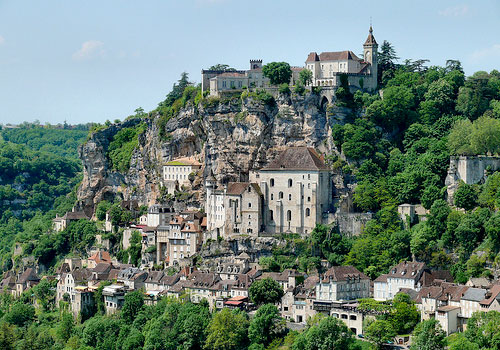
Tiered precariously halfway up a cliffside above a small river, Rocamadour has one of the unique settings of any town in Europe. The town is famed for being the site where the body of St Amadour (who is believed to be Zacchaeus of the Biblical gospel) was discovered, an event that led to a succession of miracles in the town. Since the 8th century it has been an important pilgrimage site; everyone from prince to pauper has ventured here in the hope of curing their ailments at the shrine, which has been plundered several times so the reliquary today bears little relation to the original. Today the town is overrun by tourists and its atmosphere has suffered accordingly, but, despite this, it is a must-see for the stunning views of the Dordogne and its marvellous situation.

Les Eyzies

Address: Dordogne and Lot

In 1868 prehistoric skeletons were discovered in the Vézère valley and the area was found to be one of the richest in the world in ancient sites and deposits. The small market town of Les Eyzies suddenly became the base for exploring this treasure-trove of antiquity, including the many prehistoric painted caves, the most famous and beautiful being at Lascaux, which were discovered in 1940 by boys looking for their dog. The paintings were executed about 30,000 years ago and depict wild boar, deer and majestic bulls. Unfortunately visitors cannot view the actual paintings because the caves have been closed to the general public to prevent deterioration, but a replica gives you a clear picture of the remarkable works. The town has some excellent museums in which prehistoric art and artefacts are on display.

Grenoble

Address: French Alps

The beautiful university town of Grenoble is situated on the Drac and Isère Rivers, and is surrounded by proud mountains, dramatic gorges and hidden valleys. The prosperous, lively and cosmopolitan city is a base for companies involved in the chemical, nuclear research and electronics industries, but more obviously it is home to 40,000 students, many international. There are some excellent walks among the mountains surrounding the city and there are ski slopes within easy driving distance, but for many tourists Grenoble is simply a stopover before heading further into the Alps.

Bayeaux

Address: Normandy

This ancient Viking settlement is situated a few miles inland, between La Havre and Cherbourg, and was the first French town to be liberated in 1944 during World War II. Fortunately it was spared from too much war damage, and remains full of old world character with wooden houses, some elegant stone buildings and cobblestone roads. Many visitors flock here to explore the sites associated with the war's 'Longest Day' including an interesting D-Day museum and the famous landing beaches (less than 10 miles/16km away). A museum celebrating an older, but equally historic battle is located in the vicinity. This, the Musée de la Tapisserie de Bayeux, contains the famous tapestry that tells the story of the Battle of Hastings. The 231ft (69m) strip of embroidered linen depicts scenes of Harold's coronation as the Saxon king of England, him being told of the apparition of a comet (a portent of misfortune), William dressing for war, and Harold's death. (Admission EUR7.60 (adult), free for children under nine; open 9am to 6.30pm, closing at 7pm from May to August). Also worth seeing is the Notre-Dame de Bayeux, a fine Norman Romanesque cathedral, rich in sculpture.

Honfleur

Address: Normandy

By accident or design is not certain, but somehow the quaint fishing village of Honfleur, just across the estuary from busy, bustling La Havre, has managed to make time stand still and presents its many visitors with scenes and experiences largely unchanged for 100 years or more. The town fortunately escaped serious damage during the World War II Normandy landings, and since then development has been minimal. It still functions as a fishing port and follows traditions dating back to medieval times, although it has lost its beach, due to the silting up of the river. Cute Honfleur is certainly worth a visit from La Havre.

Lyon National Opera House

Address: 1 Place de la Comédie Lyon

Telephone: 0826 305 325

This 300-year old structure's glass dome has become a landmark attraction in Lyon, situated between the City Hall and the Rhone River. The first five levels of the opera house are underground while the six higher levels are encased in vaulted glass. The hall seats 1,200 people and boasts six vertically stacked balconies overlooking the orchestra level. This Italian-style hall is lined with black wood and gold detail, and is home to the Lyon Opera Ballet company and the world-renown Opera House Orchestra. The acoustics are so good that it currently makes more recordings than any other French opera house and has released award-winning opera CDs including 12 world premieres, ballets and symphony performances.

Historical Museum of Lyon & International Puppet Museum

Address: 1 Place du Petit College Lyon

Admission: EUR6 (adult), children under 18 free Wednesday to Sunday from 11am to 6.30pm

Telephone: (0)4 7842 0361

To the right of the river Saône lies the Hôtel Gadagne, one of the most prestigious Renaissance mansions in Lyon. It was built between 1511 and 1527 for the two sons of a spice merchant but fell into the hands of the prominent Gadagne family in 1545. Being rich Florentine bankers, they threw many extravagant parties, infamously linking their name to the mansion. In 1902 the city of Lyon bought the mansion and in 1921 the Historical Museum was installed on the premises. It wasn't until 1950 that the International Puppet Museum became an additional attraction to the mansion's contents. The Gadagne Museum houses paintings, sculptures and furniture, as well as archaeological relics dating back from the Middle Ages to the 19th century, illustrating Lyon's vast history. The International Puppet Museum displays hand puppets, stick puppets, marionette puppets and sliding bar puppets originating from countries such as Japan, Cambodia, England, Italy, Belgium, Czechoslovakia and Russia.

Musée des Moulins

Address: Rue Albert Samain, Villeneuve d'Ascq Lille

Admission: EUR6 Monday to Friday 10am to 12pm and 2pm to 5pm. Closed Saturdays, bank holidays, during August and from 15 December to 15 January

Telephone: (0)3 2005 4934

Something different that appeals particularly to the mechanically minded is Lille's museum devoted to windmills. Situated on the highway to Roubaix the site boasts two preserved, working pivoting windmills which visitors can watch in operation grinding corn, as well as a museum detailing the history of windmill technology.

Natural History Museum

Address: 19 Rue de Bruxelles Lille

Admission: Free during the week; EUR2.30 (adult) and EUR1.50 (child) on Sundays 9am to 12pm and 2pm to 5pm, closed Tuesday and Saturday.

Telephone: (0)3 2855 9829

An attraction in Lille particularly enjoyed by children, the Natural History Museum has been drawing the crowds since it opened in 1822. Featuring interesting displays of extinct species, two huge whale skeletons, insectariums and geology collections, the museum is both educational and fun.

Open Air Museum

Address: 143 Rue Colbert, Villeneuve dAscq Lille

Admission: EUR5 Wednesday to Sunday 11am to 7pm (May to October) and 10am to 6pm (November to April)

Telephone: (0)3 2005 5941

Travel back in time with a visit to Lille's living museum, which is a recreation of a local village in days of yore. The Lille Open Air Museum site covers 10 hectares, an attraction where visitors can explore thatched cottages, traditional farmhouses, seed barns and rural craft workshops where artisans demonstrate old skills.

Notre-Dame de la Treille Cathedral

Address: 12 Rue Jean Moulin, off rue de la Monnaie Lille

Admission: Free Monday to Saturday, 10am to 12pm and 2pm to 6.30pm (open all day on Thursday and until 7pm in summer), Sunday, 10am to 1pm and 3pm to 6pm (until 7pm in summer).

A modern architectural attraction, Lille's cathedral (dedicated to the Virgin Mary) is an imposing homogenous structure, begun as a basilica in 1854 in 13th century Gothic style. Building continued slowly, interrupted by wars and financial constraints, but finally in 1999 the lofty building was declared complete after the perfection of the unique main façade, designed by local architect Pierre-Louis Carlier in collaboration with Peter Rice, who engineered the Sydney Opera House. The central marble section supported by steel wires is an impressive sight, particularly viewed from inside or at night, when it is revealed as resembling a pink translucent veil.

Hospice Comtesse

Address: 32 Rue de la Monnaie Lille

Admission: EUR3; free on the first Sunday of every month Monday 2pm to 6pm, Wednesday to Sunday 10am to 12.30pm and 2pm to 6pm. Closed Tuesdays

Telephone: (0)3 2836 8400

In the heart of Lille's old town stands one of the few remaining Flanders buildings founded as a hospital in 1237 by the Countess of Flanders, Jeanne de Constantinople. It remained in service as a hospital until 1939, and today has been turned into an art museum. Works are displayed in the old hospital ward, with its barrel-vaulted ceiling, and other halls where the community of Augustine nuns once lived and worked, providing a haven for the sick. Outside there is a delightful medicinal garden. The collections on display include paintings, tapestries, sculpture and porcelain from the region.

Arc de Triomphe

Address: Centre of the Place Charles de Gaulle, Paris

The world's largest triumphal arch, the Arc de Triomphe de l'Etoile is set at the centre of a star-shaped configuration of 12 radiating avenues. It stands 165ft (51 metres) tall and the names of major victories won during the Revolutionary and Napoleonic periods are engraved around the top of the Arch. The names of less important victories, as well as those of 558 generals, can be found on the inside walls. Since 1920, the tomb of France's Unknown Soldier has been sheltered underneath the arch. Its eternal flame commemorates the dead of the two world wars, and is rekindled every evening at 18 0. On July 14, the French National Day, also known as Bastille Day, a military parade starts at the arch and proceeds down the Champs Elysées.

Les Invalides

Address: 35 Rue du Chevaler-de-la-Barre Paris

Admission: EUR8.50, free for under 18s 10am to 5pm (October to March), 10am to 6pm (April to September). Closed first Monday of every month and public holidays.

Telephone: (0)1 4442 3877

Les Invalides were built by Louis XIV in 1670 as a military hospital to take care of wounded soldiers. This attraction comprises the largest single collection of monuments and museums in Paris all relating to the military history of France. It is a burial site for some of France's war heroes, including the ashes of the greatest French military genius, Napoleon Bonaparte, rest under the dome of Les Invalides and attract many visitors to Paris. Its 13 hectares of building and large church with a golden dome make Les Invalides a classical French architecture masterpiece.

Jardin des Plantes

Address: Blvd Henri IV, Quartier Montpellier Centre Montpellier 34967 Paris

Admission: Daily, 7.30am to 7.30pm

Telephone: (0)1 4079 5601

The Jardin des Plantes is France's main botanical garden. Covering 28 hectares (280,000 m²) the garden was originally planted by Louis XIII's doctor in 1626 as a medicinal herb garden. In 1640, it became Paris's first public garden. In 1739, after a long period of decline, the gardens were expanded greatly and a maze called the Labyrinth was added. It still exists today. The Jardin des Plantes maintains a botanical school which constructs demonstration gardens and trains botanists.

Disneyland Paris

Address: Paris

Admission: General admission: £40 (adults); £34 (children). Concessions available Open daily from 10am – 11pm

Comprising two theme parks, Disneyland Paris is a must for all children visiting the city. With all their favourite characters, exciting rides and much more, children of all ages will love Disneyland Paris. There are also seven Disney-owned hotels for visitors and holidaymakers to choose from to help make their Disneyland Paris experience one to remember.

Musée National d'Histoire Naturelle

Address: 57 rue Cuvier Paris

Admission: EUR8 (adults); EUR6 (children) Wednesday to Monday from 10am - 6pm

Telephone: 01 40 79 54 79

Located in the Jardin des Plantes, the Musée National d'Histoire Naturelle (Natural History Museum) greets visitors with two gigantic whale skeletons at the entrance. With wonderful exhibitions and fascinating displays on botany, archaeology and palaeontology to name a few, the museum will captivate kids' imaginations and educate them as well. The dinosaur exhibits is hugely popular with the younger visitors, but this museum is a must for children of all ages.

Le Jardin d' Acclimatation

Address: Bois de Boulonge Paris

Telephone: 01 40 67 90 82

This children's amusement park sees thousands of tourists every year. Featuring a menagerie and the Exploradome Museum, with fantastic optical illusions and amazing structures, the Jardin d'Acclimatation is a great place for kids to run around and let off some steam.

Parc Asterix

Address: Paris

Admission: One day pass: EUR39 (adults) EUR25 (children under 12) Open daily from 9.30am - 7pm during peak season; 10am - 6pm during off-peak season

Telephone: 0826 30 10 40

Based on the comics by Uderzo and Goscinny, the Parc Asterix, is a theme park located just outside of Paris. It's well known for its large variety of roller-coasters and has begun incorporating rides and themes from historic cultures such as the Romans and the ancient Greeks. The Menhir express is a log flume ride, while other rides include the Goudurix, the Grand Splatch and the Oxygénarium.

France Miniature

Address: Boulevard André Malraux Paris

Admission: Peak season: EUR19.50 (adults); EUR13.50 (children). Off-season: EUR18.50 (adults); EUR12.50 (children)

Telephone: 01 30 16 16 30

Located in Flancourt, France Miniature features over 130 models of famous French attractions, such as the Eiffel Tower, Lourdes and Versailles, for visitors to enjoy. Everything has been created a 1/30 scale and some for the models are even animated. Children will love spending a day out at this miniature country.

Walking in the Pyrénées

The wild mountains of the Pyrénées stretch for 250 miles (402km) from the Atlantic to the Mediterranean and have for many centuries formed a natural frontier: physical, climatic and linguistic, between France and Spain. Second only to the Alps among the great mountain ranges of Western Europe, the Pyrénées are much less frequented, and still offer an exciting combination of knife-edged summits, small glaciers, forested valleys, mountain tarns and little-trodden summer passes. Splendid trails lead to the magnificent cirques and lake-spangled basins of France's Pyrénées National Park. Over on the Spanish side paths lead through the spectacular canyons of the Ordesa-Monte Perdido National Park, one of Europe's oldest. In 1997, the United Nations inscribed a portion of the French and Spanish Pyrénées near the French village of Gavarnie and the Spanish village of Torla on its list of World Heritage Sites. Here, nature over the eons has carved three stupendous glacial cirques including the renowned Cirque de Gavarnie and a 3,000ft (914m) deep canyon called Ordesa - Spain's 'Grand Canyon.'

Hiking

The mountainous island is extremely well suited to walking, and options range from difficult multi-day hikes to strolls along clifftops, and day hikes up into the mountains. The GR20 is reputed to be the best and most challenging long-distance walk in Europe, and is the most famous hike in Corsica. Fifteen days of demanding walking takes hikers along the inland granite spine of mountains dividing the island from Calenzana to Conca. Other well known, but less taxing walks include the Mare e Monti (sea to mountains) and Mare a Mare (sea to sea) trails that last from five, seven and 10 days. The area around Corte and Vizzavona has numerous day walks in the mountains; there are also a number of coastal walks such as the walk to Girolata on the west coast or Le Sentier des Douaniers on Cap Corse, and forests and ravines invite walkers to discover beautiful waterfalls, swimming holes and wonderful views. The GR20 should be walked in summer between May and October, although late snows can prevail until June, which requires a more technical approach.

Diving

Corsica's Mediterranean coastline offers superb diving opportunities. The sea temperature is warmest in August, and calm, clear waters make for excellent visibility. The Reserve Naturelle des Bouches de Bonifacio is the most visited area with outstanding dive conditions. Almost all the gulfs have dive centres and there are sites in and around Ajaccio, Porto Vecchio, Propriano, Cargese, Porto, Calvi and St-Florent. For expert divers, one of the top dive sites is the wreck of a B-17 bomber near Calvi. The peak dive season is between June and August.

Wine tasting

Boasting world-renowned terroirs of Alsace, Champagne, Provence, the Loire Valley and wine capital of the world, Bordeaux, visitors who decide to indulge in a spot of wine tasting in France can sip on some of the world's finest wines while soaking up the luxuriant landscape and dining on magnificent food - a bourgeois paradise!Visitors with a penchant for bubbly should head for Epernay in the centre of the Champagne region where it is possible to visit the vineyards and cellars (known as maisons) of the top producers.Wine connoisseurs can also sample Bordeaux's finest wines at several exporters premises in the city, which serve tourists as a stopover and central transport hub, handy for accessing this famous region which produces arguably some of the world's finest wines.Many of the vineyards in France are fairly small family run businesses lacking in staff to cater for tourists, but the more famous ones, such as Château Mouton-Rothschild organise tastings and tours of the cellars and vineyards while appointments need to be made with other farms, such as Château Margaux. With so many regions to choose from, each famous for their own cultivars, tourists intent on doing wine tasting are best off doing an organised tour so that the best and most recognised farms can be visited, while those opting to drive themselves should take their time to enjoy the fine wines and verdant vineyards of the French countryside.

L'Ardoise

Address: 28 Rue du Mont Thabor (Beaubourg/Les Halles) Paris

Food Type: French

This tiny bistro is simply decorated with a plain white facade and a rustic interior, and is always buzzing with locals. A blackboard menu offers classic French dishes such as calf's liver cooked in sherry vinegar, or scallops cooked in basil oil. There is also a selection of venison on offer, and the puddings are equally enticing. The bill is outrageously inexpensive for the quality of the food. Open Tuesday to Saturday for lunch and dinner, dinner only on Sunday. Reservations essential.

La Tour d'Argent

Address: 15-17 Quai de la Tournelle (Latin Quarter) Paris

Food Type: French

La Tour d'Argent (The Silver Tower) not only serves up mouth-watering dishes, but also has wonderful views over the Seine and Notre-Dame. A restaurant has stood on this site since 1582 and dining here is still an unsurpassed event. A good section of the menu is devoted to duck, and diners who order the house speciality - caneton (pressed duckling) - are issued with a certificate; the practice started in 1890 and they are now at well over a million. Book well in advance, a jacket and tie is required in the evening. Closed Monday, and lunch on Tuesdays.

Guy Savoy

Address: 18 Rue de Troyon (Charles-de-Gaulle-Etoile) Paris

Food Type: French

Guy Savoy's creations are audacious and inventive; the steam-baked Bresse chicken with lemongras and the roasted rib of veal are testament to this. Half-portions allow patrons to sample various dishes on the menu, and the wine list reveals a treasure trove of exceptional vintages. Although the décor is formal, the atmosphere is relaxed and ambient. Book well in advance. Open Tuesday to Friday for lunch and dinner, and for dinner on Saturday; closed Sundays.

Buddha Bar

Address: 8 Rue Boissy d'Anglais (Champs-Élysées) Paris

Food Type: Fusion

The exotic Buddha Bar remains trendy with Parisians and foreigners in the know. A massive gilt Buddha dominates the spacious interior of the restaurant, which offers a variety of Japanese-Californian cuisine; tuna tataki sashimi and pork ribs with hoisin sauce are just two of the menu's many delights. Open for lunch and dinner Monday to Friday, and dinner only on weekends. Book well in advance.

Goumard

Address: 9 Rue Duphot (Madeleine) Paris

Food Type: Seafood

Founded in 1872, the restaurant Goumard has all the charm of a century-old establishment with original oak woodwork, an engraved 1930s glass facade and designer chandeliers. One of the finest seafood restaurants in Paris, the food at Goumard is influenced by Mediterranean and Asian cuisines, served with subtle and delicate sauces - the emphasis is on enhancing the natural flavours of the catch. Open for lunch and dinner Monday to Saturday, reservations required.

Le Grand Véfour

Address: 17 Rue de Beaujolais (Louvre/Tuileries) Paris

Food Type: French

Housed within the arcades of the Palais-Royal, Le Grand Véfour has been entertaining diners since the reign of Louis XV and has welcomed everyone from Napoleon to Danton. The menu is influenced by the cuisine Savoie - a blend of sophisticated and rustic dishes. Favourites include the sole meunière and the wild duck in laurel leaves. Desserts include the signature artichoke crème brûlée. Booking is essential, closed Friday night and weekends.

L'Alcazar

Address: 62 Rue Mazarine (Odéon) Paris

Food Type: Modern Eclectic

L'Alcazar attracts fashionable Parisians looking to dine on seafood or Modern British fare. The huge ground floor restaurant is of course designed more for style than comfort and patrons can see the chefs in action in the open-plan kitchens; the octopus salad and steak tartare are excellent. L'Az bar has regular theme nights with celebrity artists and jazz musicians. Open for lunch and dinner daily, and brunch on Sundays. Reservations recommended.

Le Jules Verne

Address: Eiffel Tower, second floor (the restaurant has its own private elevator access at the south pillar) Paris

Food Type: French

The prestigious Jules Verne Restaurant is located on the second floor of the Eiffel Tower and has an atmosphere that is reminiscent of an airship moored high above Paris. The poached lobster and stuffed chicken are just two of the great dishes on the menu, and the wild strawberry and coconut cake dessert is fantastic. Open for lunch and dinner daily, reservations recommended.

Le Bouillon Racine

Address: 3 Rue Racine (St-Germain-des-Prés) Paris

Food Type: International

Le Bouillon Racine features a sophisticated Belgian menu and an enormous selection of Belgian beer. The food here is hearty and filling, even without the help of several thirst-quenching ales. The menu changes monthly and includes popular dishes like the casserole of mussels, shrimp and baby clams, suckling pig roasted with bitter Orval beer, and rack of lamb roasted in a pale biere blonde. The décor is festive and the service efficient. Reservations essential, open daily for lunch and dinner.

Kong Restaurant and Bar

Address: 1 Rue du Pont Neuf Paris

Food Type: International

Set in an Art Deco building on the banks of the Seine, Kong has beautiful views of the city and is full of surprises - from its Sex and the City stint to the dining area's interesting Japanese Manga décor. The exotic menu offers cuisine such as the Kong Plate (a mixed fish platter), Chilean bass and Japanese beef carpaccio. Open daily for lunch and dinner, with brunch on Sundays. Reservations essential.

There have been a significant number of cases of Swine Flu confirmed in France. French hospitals and health facilities are first class. British, and visitors from other EU countries, are entitled to heavily discounted medical treatment and medicines on presentation of a European Health Insurance Card (EHIC). Otherwise doctors and hospitals often expect immediate cash payment for health services. Medical insurance is advised. Pharmacies will provide some first aid, but charge for it. Rabies also occurs occasionally. In February 2006, France confirmed its first cases of bird flu; all affected birds have been culled and precautionary measures taken. The risk is low for travellers, but close contact with domestic, wild and caged birds should be avoided, and all poultry and egg dishes well cooked.
French culture is of paramount importance to the French and in an increasingly Americanised world they feel duty-bound to protect it. It is appreciated if visitors can speak a few words of French; they do not respond well to being shouted at in English. While the food is second to none, foreigners may find the service in many restaurants sloppy; waiters can appear rude (particularly in Paris) and take their time. This is just the way they are. Traditional games such as pétanque (similar to lawn bowling but played on gravel) are popular in village squares, but the national sports are soccer, rugby and cycling. Smoking in public places is not allowed and will incur heavy fines.
Most restaurants and hotels automatically add a 15% service charge so a tip is not necessary, although another 2-3% is customary if the service has been good. If service is not included then 15% is customary. Taxi drivers expect 10-15% of the fare and hairdressers 10%. Hotel staff generally receive EUR1.50 a day and tips of EUR1 are given to washroom and cloakroom attendants and museum tour guides. Tour bus drivers and guides are also tipped.
Javascript is required to view this map.
Featured Cities in France
Toggle Electricity of France
Description
Round pins, grounding pin and receptacle.
Voltage
230 V
Frequency
50 Hz
Type
E
Toggle Dialing Codes of France

Trip Tools

Toggle edit

International Weather


  • New York City
  • London
  • Hong Kong
  • New York CityRain 9° /Rain
  • LondonShowers 5° /Showers
  • Hong KongPM Rain 19° /PM Rain
© 2004 - 2010 TripExtras.com TripExtras is operated by Core8 Ltd who are an Appointed Representative of Astrenska (UK) Limited which is authorised
and regulated by the Financial Services Authority, FSA Reg No 442233
Top of Page Core8.com