Paris Travel Guide
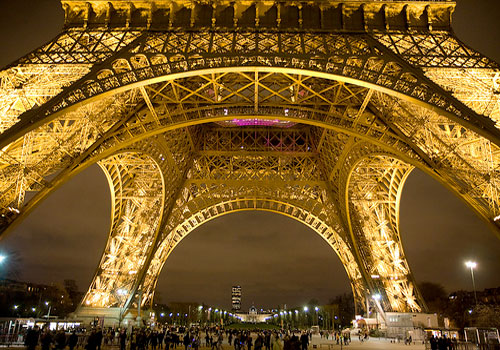
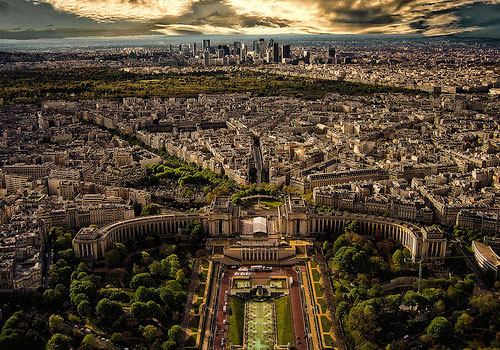
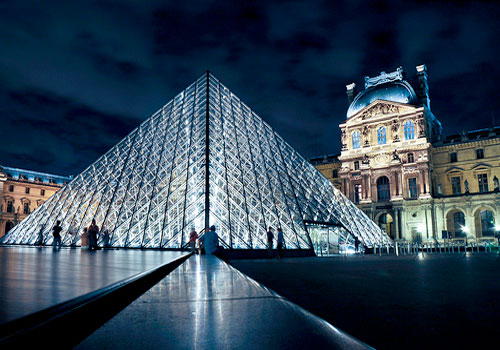
Eiffel Tower
Address: Champ de Mars 7 Paris
Admission: Lift ticket to 2nd floor: €11 (adults), €8.50 (12 to 24 years). Lift ticket to top: €17 (adults), €14,50 (12 to 24 years). Stairs to second floor €7 (adults), €5 (12 to 24 years). Concessions available. Daily: 9am to midnight (mid-June to early September); 9:30am to 11pm the rest of the year. Last entry is 45 minutes before closing time.
Telephone: +33 (0)8 92 70 12 39
Gustave Eiffel, the architect of the Eiffel Tower (Tour Eiffel) could never have guessed that it would become Paris' signature sightseeing attraction and attract more than six million visitors a year. It was built as a temporary structure to commemorate the centenary of the French Revolution and was opened by the Prince of Wales, later King Edward VII of England. The Eiffel Tower was considered an eyesore by many and there were petitions to have it pulled down. It was saved only because it had become an important antenna for telegraphy. It towers 984 feet (300m) above the Champ de Mars and until 1930 was the world's tallest building. The highest of its three levels offers a wonderful panoramic view over Paris.<br /><br /> The Eiffel Tower itself has several restaurants, including the popular Le Jules Verne, with panoramic views of the city, and a champagne bar at the very top. There are also several souvenir shops and a carousel at the base. This is a great way to keep children entertained if you plan to go to the top of the Tower, as the queues can be several hours long. A slightly different (and cheaper) way to enjoy the Eiffel Tower is with a picnic on the lawns with the famous structure providing a picturesque backdrop.<br /><br />
Notre-Dame
Address: 6 Place du Parvis de Notre-Dame Paris
Admission: Free. Daily, 8am to 6.45pm (closes 7.15pm on Saturday and Sunday).
Telephone: (01) 4234 5610
Notre-Dame looms large over the Place de Paris, on the Isle de la Cité, and as the most enduring symbol of Paris is an alluring tourist attraction. Built between 1163 and 1345 the cathedral is considered one of the world's Gothic masterpieces. The massive interior can seat 6,000 people and it is dominated by three spectacular and enormous rose windows and a vast 7,800-pipe organ. The 387-step climb to the top of the towers is worth the effort for the panoramic view of the city and the close-up views of the famous gargoyles. The tower also holds the great bell that was rung by Quasimodo, the fictional hunchback in the novel by Victor Hugo.<br /><br /> Opposite the north door is a museum that displays the cathedral's history, while under the square in front of the cathedral is the crypt that houses Notre-Dame's archaeological museum. The church has no real gift shop, but votive candles are available at points in the cathedral in return for a donation.<br /><br /> For a special experience, visit Notre-Dame on a Sunday morning when many of Paris's museums are closed and services are being held, but be respectful of worshippers, especially when taking photos. Another really special time to visit Notre Dame is on summer evenings for the Night Show, an operatic performance projected on a 100-metre tulle screen hanging in the nave. The performances are held nightly in July and August.<br /><br />
Louvre
Address: 75001, Paris Reception area is under the giant glass pyramid. Paris
Admission: €15 for full-day pass to permanent exhibitions. Free admission the first Sunday of every month (not including the Hall Napoleon). Concessions are available and children under 18 are free. Monday, Thursday, Saturday and Sunday 9am to 6pm. Wednesday and Friday 9am to 9:45pm. Closed Tuesdays. Opening hours for temporary exhibitions vary. The museum is closed 25 December, 1 January and 1 May.
Telephone: (0)1 40 20 53 17
One of the world's great art museums, this vast edifice houses an extraordinary collection of paintings, sculptures and antiquities from all over the world. The permanent collections are divided into Egyptian, Greek, Roman and Asian antiquities, painting, drawings, sculptures and objects d'art.<br /><br /> The Louvre was opened to the public in 1793, soon after the Revolution, to display the spectacular treasures looted from the royal palaces. The best-known attractions in the Louvre are Leonardo da Vinci's enigmatic Mona Lisa, which is protected by bullet-proof glass within its own room; and the ancient Venus de Milo. While the Venus de Milo is one of the highlights of a visit to the Louvre, the Mona Lisa can be a disappointment because people usually imagine it is much bigger than it is - and it is usually surrounded by a crowd. With more than 35,000 works on display, don't even attempt to see it all in one day. The building itself is a work of art and the ceilings, floors and staircases will enthral visitors.<br /><br />
Pompidou Centre
Address: Place Georges Pompidou, entrance by the plaza in Rue Saint-Martin Paris
Admission: Entry to the centre and museum ranges between €14 and €18 for adults, depending on the season. The centre has numerous attractions, exhibitions and shows and prices vary. Check the website for details. Daily (except Tuesdays), 11am to 10pm. Closed 1 May.
Telephone: +33 (0)1 44 78 12 33
Built in the 1970s and named after former French president Georges Pompidou, the futuristic Pompidou Centre is now considered part of the Parisian landscape. The outrageous design, complete with its glass elevators, was the inspiration for the Lloyds Building in London and attracts visitors by the million; it is the city's most popular attraction by far. The building houses the Musée National d'Art Modern (MNAM), which displays a vast collection of 20th-century art, from Fauvism and Cubism to Abstract and Absurd, and its numerous cinemas and theatres have regular musical and dance performances. The square to the west of the building attracts a varied assortment of street performers. While there, visitors should be sure to check out the whimsical Stravinsky Fountain with its 16 water-spraying sculptures.<br /><br />
Musée dOrsay
Address: Entrances on Rue de la Légion dHonneur and Rue de Bellechasse Paris
Admission: Permanent collections: €12 (adults), €9 (reduced). Free for under 18s and EU members under 25. Concessions available. Tuesday to Sunday 9:30am to 6pm, Thursday 9.30am to 9.45pm, closed Mondays and on 1 January, 1 May and 25 December.
Telephone: +33 (0)1 40 49 48 14
This great museum is fairly new by Paris standards. It is situated in a railway station by the Seine and houses a vast collection of works from the significant 1848 to 1914 period. There are important works from the Art-Nouveau movement but the Orsay is best known for its Impressionist and Post-Impressionist art. The collection is arranged chronologically and contains highly regarded works by Monet, Manet and Courbet. Also on permanent display is the famous painting by Gustave Doré entitled and Henri Chapu's marble statue of . The Musee d'Orsay is one of the most famous art museums in the world and one of France's premier attractions. Even the uninitiated will appreciate this world-class museum, and art fanatics will be in heaven. There is a restaurant and a book shop at the museum.<br /><br />
Musée Rodin
Address: 77 Rue de Varenne Paris
Admission: Tickets cost €10 (adult) and €7 (reduced). Tuesday to Sunday 10am to 5:45pm. Closed on Monday.
Telephone: (01) 4418 6110
The Rodin Museum is situated near the Musée d'Orsay and is housed in what was formerly the Hôtel Biron, the beautiful hotel where Auguste Rodin (1840-1917) once lived and worked. Inside are many of Rodin's great marble sculptures including while outside, in the garden, are famous bronzes including The museum also includes many works by Camille Claudel (Rodin's pupil and mistress) and paintings by Van Gogh, Renoir, Manet and Rodin himself. The museum has a gift shop, with reproductions of some of the most famous works.<br /><br />
Musée National Picasso
Address: Hôtel Salé, 5 Rue de Thorigny Paris
Admission: Tickets cost €12.50 (adults), €11 (reduced). Tuesday to Friday 11:30am - 6pm; Saturday and Sunday 9:30am - 6pm.
Telephone: (0)1 85 56 00 36
The Picasso Museum is situated in a 17th century mansion in the heart of Paris. The collection was started in 1973, after the French government accepted Picasso's own collection in lieu of death duties, and was added to after his widow's death in 1990. All the phases of work from the Paris-based artist are represented here including his paintings, drawings, ceramics, sculptures and even poetry. Memorable works include the self-portrait and Nude in an Armchair. Most of Picasso's great paintings, however, are owned by and housed in foreign museums or are in the hands of private collectors. It is an unusual museum - mainly because of the unusual artist - and a must for Picasso enthusiasts and anybody who appreciates art. The mansion which houses the museum is gorgeous and creates just the right atmosphere for the diverse collection.<br /><br />
Versailles
Address: Place dArmes, 78000 Versailles Paris
Admission: There are a number of different ticket options. The Versailles Passport, allowing access to all areas, costs €18 (and €25 for a two-day pass); a ticket for just the palace costs €15 (€13 reduced). April to October: Palace is closed on Mondays and open every other day from 9am to 6:30pm; Trianon Palaces and Marie-Antoinette's Estate closed Mondays and open every other day from 12pm to 6:30pm; Gardens open daily 8am to 8:30pm; Park open daily 7am to 8:30pm. November to March: Palace is closed on Mondays and open every other day from 9am to 5:30pm; Trianon Palaces and Marie-Antoinette's Estate closed Mondays and open every other day from 12pm to 5:30pm; Garden and Park open every day from 8am to 6pm.
Telephone: +33 (0)1 30 83 78 00
The Château de Versailles stands 15 miles (24km) southwest of Paris and is one of France's most noted attractions. Most of the palace was built between 1664 and 1715 by Louis XIV (known as the Sun King), who turned his father's hunting lodge into the grandest palace ever built. The 'Old Château' still exists but is enveloped by the vast white stone façade of the New Château. This lavish statement of monarchical power was to become a symbol of the excess that would lead to the revolution of 1789. Perhaps the most famous room in the palace is the Hall of Mirrors (Galerie des Glaces) where the Treaty of Versailles was signed, signifying the end of the Great War. Within the palace visitors can also see the former royal bedchambers, the grand staircase and other staterooms, and within the vast landscaped park and gardens are many wonderfully ornate fountains and ponds. There is a small train that ferries visitors from the palace to the Grand Trianon and Petit Trianon, former love nests where both the Sun King and Napoleon enjoyed the company of their mistresses.<br /><br />
Fontainebleau
Address: 4 Rue Royale Paris
Admission: There are a variety of ticket options but the full ticket costs €11 (adults), €9 (reduced), free for under 18s, and under 25s if EU members. Closed Tuesdays. October to March: 9:30am to 5pm. April to September: 9:30am to 6pm.
Telephone: 01 60 71 50 70
In the 16th century, Henry II and Catherine de Medici commissioned architects Philibert Delorme and Jean Bullant to build a new palace within the Fontainebleau forest, 40 miles (64km) south of Paris. Italian Mannerist artists Rosso Fiorentino and Primaticcio came to assist in the interior decoration, helping to found the School of Fontainebleau. Visitors will see the long Gallery of François I, which the artists adorned with scenes like and the monarch holding a pomegranate, a symbol of unity, as well as the richly adorned Louis XV Staircase and the monumental fireplace and frescoes in the ballroom. The palace was a refuge for French monarchs from the days of the Renaissance; they valued it because of its distance from the slums of Paris and for the rich hunting grounds that surrounded it. Many important events have occurred here, perhaps none more memorable than when Napoleon stood on the grand steps in front of the palace and bade farewell to his shattered army before departing for Elba. The chateau boasts four museums, beautiful and vast grounds and many treasures. Compared to the glories of Versailles, however, Fontainebleau can be a bit of an anticlimax; it is best to see it before Versailles.<br /><br />
Arc de Triomphe
Address: Centre of the Place Charles de Gaulle Paris
Admission: €12 (adults), €9 (reduced). Open daily: October to March 10am-10:30pm; April to September 10am-11pm.
Telephone: (01) 55 37 7377
The world's largest triumphal arch, the Arc de Triomphe de l'Etoile is set at the centre of a star-shaped configuration of 12 radiating avenues in the heart of the Champs Elysées. It stands 165 feet (51m) tall and the names of major victories won during the Revolutionary and Napoleonic periods are engraved around the top of the Arch. The names of less important victories, as well as those of 558 generals, can be found on the inside walls. Since 1920, the tomb of France's Unknown Soldier has been sheltered underneath the arch. Its eternal flame commemorates the dead of the two world wars, and is rekindled every evening at 6pm. On July 14, the French National Day, also known as Bastille Day, a military parade starts at the arch and proceeds down the Champs Elysées. Visitors can climb to the top of the Arc de Triomphe (or take the elevator) and the views over Paris are spectacular. It is a humbling monument which can't fail to inspire respect and awe and a trip to Paris is not complete without a visit.<br /><br />
Les Invalides
Address: 35 Rue du Chevaler-de-la-Barre Paris
Admission: Tickets cost €11 (adults), €9 (reduced). 10am to 5pm (November to March), 10am to 6pm, and until 9pm on Tuesdays (April to October). Closed first Monday of every month and public holidays.
Telephone: (33) 0810 11 33 99
Les Invalides was built by Louis XIV in 1670 as a military hospital to take care of wounded soldiers and now comprises the largest single collection of monuments and museums in Paris, all relating to the military history of France. It is the burial site of some of France's war heroes, and a number of France's famous dead, including the ashes of the greatest French military commander, Napoleon Bonaparte, which rest under the dome of Les Invalides and attract many visitors to Paris. Its large grounds and church with a golden dome make Les Invalides a classical French architectural masterpiece. There are also impressive collections of weaponry from all periods of French history. Numerous suits of armour, including those made in children's sizes for boy kings, are part of this collection. Military history buffs will be in heaven at Les Invalides and even the less clued-up will be moved by the place.<br /><br />
Jardin des Plantes
Address: Blvd Henri IV, Quartier Montpellier Centre Montpellier 34967 Paris
Admission: Free. Some special gardens or exhibitions carry admission fees. Daily 7:30am to 8pm (summer); 8am to 5:30pm (winter).
Telephone: 01 40 79 56 01 10
The Jardin des Plantes is France's main botanical garden. Covering 28 hectares (280,000sq m), the garden was originally planted by Louis XIII's doctor in 1626 as a medicinal herb garden. In 1640 it became Paris's first public garden. In 1739, after a long period of decline, the gardens were greatly expanded and a maze called the Labyrinth was added. It still exists today. Currently, in addition to being a lovely green lung in the city, the Jardin des Plantes maintains a botanical school which constructs demonstration gardens and trains botanists. The massive grounds house the Natural History Museum which is one of the main attractions for visitors. There is also a small zoo, founded in 1795 to house part of the royal menagerie from Versailles, and now containing small animals in simulated natural habitats. The gardens boast tropical hothouses that are home to a variety of unusual plants, native mostly to Mexico and Australia, and there is also an Alpine Garden, a beautiful Rose Garden, and an Art Deco-style Winter Garden. There is lots to see in the garden and visitors can wander for hours.<br /><br />
Disneyland Paris
Address: 77777 Marne-la-Vallée Paris
Admission: There are many different ticket options and special deals. Check the website for details. Open daily from 10am, closing time varies according to season. Check the website for specific dates.
Telephone: +33 825 30 05 00
Comprising two theme parks, Disneyland Paris is a must for all children visiting the city. The resort is a great place to see all their favourite characters, from Mickey and Minnie, to Buzz and Woody, to a veritable chorus line of princesses. Many of the most loved attractions from the American parks are here, including Sleeping Beauty's Castle, Big Thunder Mountain Railroad, Pirates of the Caribbean, and Dumbo the Flying Elephant. With rides and attractions for children of all ages, everyone will have a great time at Disneyland Paris.<br /><br /> There are also seven Disney-owned hotels for visitors and holidaymakers to choose from to help make their Disneyland Paris experience one to remember. Hotel guests get special perks like extended park hours and character meet-and-greets, and have access to additional attractions for adults like the golf course. On your way to the park, you can visit Val d'Europe, a town specially-built for Disneyland Paris.<br /><br />
Musée National dHistoire Naturelle
Address: 57 rue Cuvier Paris
Admission: Admission costs vary depending on which exhibitions visitors want to see. Check the website for details. Wednesday to Monday 10am-6pm. Closed Tuesday and some French holidays.
Telephone: +33 1 40 79 56 01
Located in the Jardin des Plantes, the Musée National d'Histoire Naturelle (Natural History Museum) greets visitors with two gigantic whale skeletons at the entrance. With wonderful exhibitions and fascinating displays on botany, archaeology and palaeontology, the museum will captivate kids' imaginations and educate them as well. The dinosaur exhibit is hugely popular with the younger visitors, but this museum is a must for children of all ages. The museum is large and actually combines three museums into one (sometimes they are listed independently), including a four-story taxonomy wing called the Hall of Evolution, a gallery dedicated to palaeontology - the study of fossils, including the beloved dinosaur exhibit - and a separate building devoted entirely to mineralogy. You can choose to visit only one of these three museums. There is plenty to enthral little ones (and grown up ones) and the fact that the museum feels a little old-fashioned actually adds to its charm.<br /><br />
Le Jardin dAcclimatation
Address: Bois de Boulonge Paris
Admission: €3 entrance and extra for some of the attractions. Concessions available. Open every day: April to September 10am-7pm; October to March 10am-6pm.
Telephone: 01 40 67 90 85
This children's amusement park attracts thousands of tourists every year. It features a menagerie and the Exploradome Museum, with fantastic optical illusions and amazing structures. The park's attractions include zip-lines, swings, deforming mirrors, paddling pools, radio-controlled boats, a theatre, a small farm, pony and camel rides, an aviary, a butterfly garden and amusement rides. Apart from being loads of fun this wonderland of games and activities is frequently educational. The park offers workshops for children over three that aim not only to amuse but to teach skills and cultivate talents; workshops revolve around things like cooking, gardening, magic and theatre. There are also joint workshops for parents and young children and a few classes for adults only. There are a number of restaurants and cafes on the premises for refuelling. This is a great place for kids to blow off steam at the same time as learning some useful skills, and the activities are wonderful for parent/child bonding too.<br /><br />
Parc Asterix
Address: 60128 Plailly Paris
Admission: There are ticket options available at varied prices. A freedom ticket will cost: €47 (adults) €39 (children under 12). Open daily from 10am-7pm during peak season; 10am-6pm during off-peak season. Open until 11pm on selected summer weekends. The opening times vary according to season and it is best to check the website for details before visiting.
Telephone: +33 826 46 66 26
Based on the famous comics by Uderzo and Goscinny about cheeky Gauls who annoy the Roman Empire, the Parc Asterix is a theme park located just outside of Paris. Kids will love meeting their favourite characters, including, of course, Asterix himself, and his giant friend Obelix. The park is well known for its large variety of roller-coasters and has begun incorporating rides and themes from historic cultures such as the Romans and the ancient Greeks. There are now six different worlds at the park: Gaul, Egypt, Ancient Greece, the Roman Empire, Vikings, and Travel through Time. Apart from the epic rollercoasters, popular rides include the Menhir Express, a log flume ride, the Goudurix, the Grand Splatch and the Oxygénarium. There are lots of shows at the park and entrance to these performances is included in admission tickets. One of the more popular shows is the dolphin and sea lion show. The Parc Asterix will delight children but it is also wonderful for adults and there are plenty of thrilling rides for adrenalin seekers.<br /><br />
France Miniature
Address: Boulevard André Malraux Paris
Admission: Tickets range in price between €12 and €22 depending on season, visitor and special deals available. 10am to 7pm July and August; 10am to 6pm the rest of the year; closed November to February, and selected weeks in March, April, September and October. Check the website for a comprehensive calendar.
Telephone: 01 30 16 16 30
Located in Flancourt, France Miniature features more than 130 models of famous French attractions, such as the Eiffel Tower, Lourdes, St Tropez, Le Mont-Saint-Michel and Versailles, for visitors to enjoy. Everything has been created with a 1:30 scale and some for the models are even animated. The detail of the models is remarkable and a joy for those interested in architecture as well as kids. The miniature world includes mechanised trains, cars and boats and there are tiny people visiting the attractions. Children will love spending a day out at this miniature country which feels like a massive doll's house. There are also some fun games and a small amusement park with several rides on offer. There is a restaurant and a souvenir shop on site but a lovely way to enjoy the park, and save money, is to bring along your own picnic.<br /><br />
Aquaboulevard
Address: 4 to 6 Rue Louis Armand Paris
Admission: Tickets range in price according to the season and day of the week. Adults can expect to pay around €33 and for children under 12; €19. Opening times may vary according to season. Monday to Friday 9am to midnight; Saturday 8am to midnight; Sunday 8am to 11pm.
Telephone: 1 40 60 10 00
The largest water park in Europe, located in the heart of the city of Paris, Aquaboulevard is a great treat for kids (and adults!). One of the big advantages of this attraction is the fact that most of it is indoors, making it fun on sunny or rainy days in Paris; if you are travelling with kids it's a good activity to keep up your sleeve for a rainy day. The park itself includes various waterslides, a spa area with hot baths and Jacuzzis, indoor and outdoor wave pools, a beach area for relaxing, and a wave machine which allows you to try surfing or wakeboarding on a standing wave, among other things. The attractions are not limited to water either: the complex also offers cinemas, a mini-golf course, tennis courts, a fitness centre, play areas, and other indoor attractions. Children under three are not allowed into Aquaboulevard and proof of age should be taken for young kids.<br /><br />
Fete de la Musique
Where: Various,Paris
When: 21 June 2018
Every year on the summer solstice, Paris hosts amateur and professional musicians who perform in a variety of venues around the city, from public squares, streets and parks to opera houses and castles. The festival aims to celebrate music in all forms and is open to anyone. A large free concert is traditionally held featuring some big names in the music world, but on every corner, in doorways, in restaurants and hospitals, museums and courtyards, there are the sounds of music, from jazz, salsa and techno, to choirs, orchestras and steel bands, accompanied by people dancing, eating and drinking. All musicians are encouraged to perform for free. This is a vibrant and exciting time to visit France and visitors will be delighted by the festive atmosphere and the variety of talent on display. The festival started in France but has now spread to at least 100 other countries which is a testament to its popularity and success.<br /><br />
Bastille Day Celebrations
Where: Champs Elysees and Place de la Bastille,Paris
When: 14 July 2018
France's most important national holiday, Bastille Day commemorates the beginning of the French Revolution with ceremonies, dancing, parties and balls all over the city. In the morning there is a grand military parade along the Champs Elysees - the oldest and largest regular military parade in Europe - accompanied overhead by jet formations, and after the day-long festivities, a fireworks display takes place near the Eiffel Tower. The day commemorates the storming of the Bastille prison on the 16 July 1789. Although the French Revolution was a bloody and tragic period of history the revolutionary ideals of freedom, equality and fraternity are proudly celebrated and for France this is a kind of independence day and a celebration of the development of a modern, democratic nation. It is a special day to be in France, particularly Paris, and visitors will be overwhelmed by the patriotism, ceremony and festive atmosphere.<br /><br />
French Open
Where: Roland-Garros Stadium,Paris
When: 21 May - 10 April 2018
Together with Wimbledon, the Australian Open and the US Open, the French Open is one of the four events that together are known as the tennis 'Grand Slam'. The tournament has become the most highly prized clay court title in the world and one of the biggest sporting events in France. Besides the best tennis players in the world, the stadium is also the place to be seen for the fashion conscious. The big matches are packed with celebrities and the vibe in Paris is thrilling. Even those who are not big tennis fans shouldn't miss the chance to attend a match and soak up the atmosphere if in Paris during the tournament.<br /><br />
Le Salon du Chocolat
Where: Metropolitan Pavillion & Altman Building,Paris
When: 31 October - 4 November 2018
An annual festival in celebration of chocolate is a dream come true for chocoholics, and the large convention centre beneath the Louvre hosts just that. There are tastings and chef's demonstrations at a huge variety of international chocolatier stands; opportunities to sample and buy goodies such as truffles, chocolate-dipped fruit kebabs, hot chocolate and cakes; as well as chocolate fashion, sculpture and art. The fashion show featuring chocolate-inspired creations is so popular that it is always held, although many exhibitions and performances change year to year. Past exhibitions have included the history of chocolate, books on chocolate and desserts, and an antique collection of 'teapots' used exclusively for hot chocolate. A Chocoland for children entertains with chocolate makeup and other delicious activities. It is a great day out for the whole family and a unique event to attend. It is a testament to its popularity that it is now held in many cities all over the world.<br /><br />
Prix de lArc de Triomphe
Where: Longchamp Racecourse,Paris
When: 7 October 2018
The Arc de Triomphe, often referred to as just the 'Arc', is France's premier horse race and attracts thoroughbreds and racing enthusiasts from all over the world. Since its inaugural race in 1920, the Prix de l'Arc de Triomphe has become established as the all-aged middle-distance championship of Europe, and today the main event alone offers prize money of more than €4 million. The race was first run in 1920 and many of the winners have gone on to be champions of the sport. The Arc is more than just a horse race though, it is a society event and a great day out for visitors and locals alike. Even those who are not racing fanatics will enjoy the palpable excitement in the atmosphere and the fun of picking a horse to bet on. Food and drink flows freely at the race and some people take the opportunity to dress up.<br /><br />
Autumn Festival
Where: ,Paris
When: 12 September 2018 - 5 January 2019
Held every autumn and continuing for months, this arts festival is a showcase for contemporary art in all forms from around the world, including theatre, film, music, dance, sculpture and literature. It is said to be the largest festival of its kind in the world, which is saying something as art festivals are becoming very popular the world over. Special attention is given to foreign culture as well as experimental work and the development of new talents. Those who are in Paris between September and December will find it worthwhile to check out the festival programme. The incredible variety of talent and genre ensures that there is something to cater to all tastes.<br /><br />
Tour de France
Where: Start changes every year; finish is always in Paris on the Champs-Élysées.,Paris
When: 7 - 29 July 2018
What started off as a far-fetched, unimaginable idea dreamed up by two gentlemen in a Parisian brasserie in 1902, has a century later grown into the world's greatest bicycle race, indeed considered by many to be the greatest annual sporting event on earth. The unique spectacle is ingrained in France's heritage, traditionally ending in Paris, and draws hundreds of local and international cyclists in a battle for dominance over 2,175 gruelling miles (3,500km) every year. The race is split into 21 daily stages and completes a clockwise loop around the country, including treacherous mountain roads in the Pyrenees and the Alps. The famous yellow jersey is worn by the overall General Classification leader who maintains the lowest overall time. Every year the first stage of the race starts somewhere different, either in France or in another country. The race is a joy for spectators and there are many popular parts of the race to watch; spectators gather in numerous villages and cities to cheer on the cyclists and the race is enthusiastically supported.<br /><br />
Nuit Blanche
Where: ,Paris
When: First weekend of October annually
For one night a year in Paris the idea is to stay awake and partake in the observance of night. Many public services, entertainment facilities and tourist attractions, cafes, bars and restaurants stay open throughout the night to help keep people awake. The White Night is a celebration of human culture and communication and encourages people to enjoy one another's company; the point is to appreciate all the things one doesn't find time to do during the daytime rat race, like have long conversations, enjoy drawn out dinners, and play games. It is a wonderful tradition, widely celebrated, and a really special night to find oneself in Paris. Visitors can stroll the famous streets, eat out and even visit certain attractions and it is a good night to socialise and perhaps meet some locals. The Nuit Blanche is primarily an arts festival so the galleries and museums often remain open and let people in free of charge; the city becomes a sort of delightful all-night art exhibition.<br /><br />
Paris Plages (Beaches)
Where: The right bank of the river Siene,Paris
When: Mid-July to mid-August annually
Two thousand tons of sand and some palm trees is all that is needed to annually transform the right bank of the Seine into a manmade beach worthy of the French capital. The Paris Plages (Paris Beaches) is a highly popular, free 'event' instituted by the City Fathers in 2002, that attracts millions of visitors to its shores. Between July and August, land-locked city dwellers can enjoy sun, fun and themed activities, without the usual Parisian price tag. A recent addition is a large swimming pool - good news for those seeking some relief from the summer sun, especially as the dirty water of the Seine itself is not a welcome thought. Other activities on offer include beach volleyball, kayaking, aerobic classes in the pool and free concerts. There are deck chairs strewn about for public use, ice-cream vendors ply the crowds and one can even borrow a book to read while lounging, free of charge. The Paris beach is usually concentrated around three main areas on the river bank: the Louvre/Pont de Sully, Port de la Gare, and Bassin de la Villette.<br /><br />
LArdoise
Address: 28 Rue du Mont Thabor (Beaubourg/Les Halles) Paris
Food Type: French
This tiny bistro is simply decorated with a plain white facade and a rustic interior, and is always buzzing with locals. A blackboard menu offers classic French dishes such as calf's liver cooked in sherry vinegar, or scallops cooked in basil oil. There is also a selection of venison on offer, and the puddings are equally enticing. The bill is outrageously inexpensive for the quality of the food. Open Tuesday to Saturday for lunch and dinner, dinner only on Sunday. Reservations essential.<br /><br />
La Tour dArgent
Address: 15-17 Quai de la Tournelle (Latin Quarter) Paris
Food Type: French
La Tour d'Argent (The Silver Tower) not only serves up mouth-watering dishes, but also has wonderful views over the Seine and Notre-Dame. A restaurant has stood on this site since 1582 and dining here is still an unsurpassed event. A good section of the menu is devoted to duck, and diners who order the house speciality - caneton (pressed duckling) - are issued with a certificate; the practice started in 1890 and they are now at well over a million. Book well in advance, a jacket and tie is required in the evening. Closed Monday, and lunch on Tuesdays.<br /><br />
Guy Savoy
Address: 18 Rue de Troyon (Charles-de-Gaulle-Etoile) Paris
Food Type: French
Guy Savoy's creations are audacious and inventive; the steam-baked Bresse chicken with lemongras and the roasted rib of veal are testament to this. Half-portions allow patrons to sample various dishes on the menu, and the wine list reveals a treasure trove of exceptional vintages. Although the décor is formal, the atmosphere is relaxed and ambient. Book well in advance. Open Tuesday to Friday for lunch and dinner, and for dinner on Saturday; closed Sundays.<br /><br />
Buddha Bar
Address: 8 Rue Boissy dAnglais (Champs-Élysées) Paris
Food Type: Fusion
The exotic Buddha Bar remains trendy with Parisians and foreigners in the know. A massive gilt Buddha dominates the spacious interior of the restaurant, which offers a variety of Japanese-Californian cuisine; tuna tataki sashimi and pork ribs with hoisin sauce are just two of the menu's many delights. Open for lunch and dinner Monday to Friday, and dinner only on weekends. Book well in advance.<br /><br />
Goumard
Address: 9 Rue Duphot (Madeleine) Paris
Food Type: Seafood
Founded in 1872, the restaurant Goumard has all the charm of a century-old establishment with original oak woodwork, an engraved 1930s glass facade and designer chandeliers. One of the finest seafood restaurants in Paris, the food at Goumard is influenced by Mediterranean and Asian cuisines, served with subtle and delicate sauces - the emphasis is on enhancing the natural flavours of the catch. Open for lunch and dinner Monday to Saturday, reservations required.<br /><br />
Le Grand Véfour
Address: 17 Rue de Beaujolais (Louvre/Tuileries) Paris
Food Type: French
Housed within the arcades of the Palais-Royal, Le Grand Véfour has been entertaining diners since the reign of Louis XV and has welcomed everyone from Napoleon to Danton. The menu is influenced by the cuisine Savoie - a blend of sophisticated and rustic dishes. Favourites include the sole meunière and the wild duck in laurel leaves. Desserts include the signature artichoke crème brûlée. Booking is essential, closed Friday night and weekends.<br /><br />
Au Pied de Cochon
Address: 6 rue Coquillière Paris
Food Type: French
Opened in 1947, this Paris restaurant is a traditional all-day Brasserie serving authentic French fare like stuffed pig's trotters, veal kidney flambéed in Cognac, and Provençal-style pan stuffed mussels. The long benches and brass fittings echo the authenticity of the food for a truly Parisian experience. Open 24 hours a day, the restaurant is popular with tourists just come from browsing the Louvre.<br /><br />
L’Alcazar
Address: 62 Rue Mazarine (Odéon) Paris
Food Type: Modern Eclectic
L'Alcazar attracts fashionable Parisians looking to dine on seafood or Modern British fare. The huge ground floor restaurant is of course designed more for style than comfort and patrons can see the chefs in action in the open-plan kitchens; the octopus salad and steak tartare are excellent. L'Az bar has regular theme nights with celebrity artists and jazz musicians. Open for lunch and dinner daily, and brunch on Sundays. Reservations recommended.<br /><br />
Le Jules Verne
Address: Eiffel Tower, second floor (the restaurant has its own private elevator access at the south pillar) Paris
Food Type: French
The prestigious Jules Verne Restaurant is located on the second floor of the Eiffel Tower and has an atmosphere that is reminiscent of an airship moored high above Paris, with spectacular views of the city. The poached lobster and stuffed chicken are just two of the great dishes on the menu, and the wild strawberry and coconut cake dessert is fantastic. Open for lunch and dinner daily, reservations recommended.<br /><br />
Le Bouillon Racine
Address: 3 Rue Racine (St-Germain-des-Prés) Paris
Food Type: International
Le Bouillon Racine features a sophisticated Belgian menu and an enormous selection of Belgian beer. The food here is hearty and filling, even without the help of several thirst-quenching ales. The menu changes monthly and includes popular dishes like the casserole of mussels, shrimp and baby clams, suckling pig roasted with bitter Orval beer, and rack of lamb roasted in a pale biere blonde. The décor is festive and the service efficient. Reservations essential, open daily for lunch and dinner.<br /><br />
Kong Restaurant and Bar
Address: 1 Rue du Pont Neuf Paris
Food Type: International
Set in an Art Deco building on the banks of the Seine, Kong has beautiful views of the city and is full of surprises - from its stint to the dining area's interesting Japanese Manga décor. The exotic menu offers cuisine such as the Kong Plate (a mixed fish platter), Chilean bass and Japanese beef carpaccio. Open daily for lunch and dinner, with brunch on Sundays. Reservations essential.<br /><br />
Café de Flore
Address: 6th Arrondissement Paris
Food Type: Café
The historic Cafe de Flore has been immortalised by more than one French painter. A popular meeting place for post-war intellectuals like Jean-Paul Sartre and Simone de Beauvoir and celebrated artists Camus, Picasso, and Apollinaire, the restaurant has now been overrun with tourists from all over the world. The menu offers salads, sandwiches, pastries and other cafe fare. Cafe de Flore is open daily from 7:30am to 1:30am.<br /><br />


(Data provided outside US and Canada by Foreca, Data provided for US and Canada by WDT)
| Jan | Feb | Mar | Apr | May | Jun | Jul | Aug | Sep | Oct | Nov | Dec | |
| Average High | 6° | 7° | 10° | 13° | 17° | 21° | 23° | 23° | 20° | 15° | 9° | 7° |
| Average Low | 1° | 1° | 3° | 5° | 9° | 12° | 14° | 13° | 11° | 7° | 3° | 2° |
(Data provided outside US and Canada by Foreca, Data provided for US and Canada by WDT)
| Jan | Feb | Mar | Apr | May | Jun | Jul | Aug | Sep | Oct | Nov | Dec | |
| Average High | 43° | 45° | 51° | 57° | 64° | 70° | 75° | 75° | 69° | 59° | 49° | 45° |
| Average Low | 34° | 34° | 38° | 42° | 49° | 54° | 58° | 57° | 52° | 46° | 39° | 36° |
 |
Description Round pins, grounding pin and receptacle. |
Voltage 230 V |
Frequency 50 Hz |
Type E |