Explore Cyprus
Cyprus Travel Guide
There is a great deal packed into a small space on the island of Cyprus in the eastern Mediterranean. Not only does it abound with good beaches and holiday resorts, but its relatively tiny landmass is riddled with the relics of ancient history, from the beehive huts of primitive man to classical Greek and Roman ruins, and everything imaginable in-between.
A thousand years is but a blip in time in the long history of Cyprus, but it was that long ago that the city of Nicosia (also known as Lefkosia) became its capital. Today Nicosia is unique in Europe because it is divided by the 'green line' that bisects the whole island, dividing north from south. The line, which serves as a United Nations peacekeeping buffer, was drawn in 1974, when the Turks invaded and took over the north. Most of the tourism development since then has taken place in the southern Government-controlled sector, and the political divide, even in Nicosia itself, has not dampened the island's appeal as a holiday Mecca.
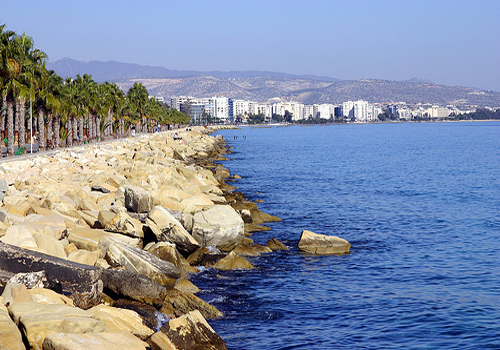
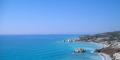
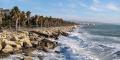
The charms of Cyprus are many and varied. For a start the weather is sunny and dry for most of the year, and the encircling sea is blue, clear and enticing. There are modern luxury hotels in the coastal resort towns, historic restored city precincts to explore, tavernas and nightlife aplenty. Cyprus has remote picturesque mountain villages and monasteries, beautiful churches, Crusader castles and fascinating museums. The local people are extremely welcoming of tourists, happy to share with them their innate love of life and camaraderie. In Cyprus it is possible to mingle with crowds, or seek isolation off the beaten track as the mood takes, even in peak holiday season. For this reason the island is also a favoured destination for honeymooners, a reputation enhanced by the fact that legend has it that Cyprus was where Aphrodite, Greek goddess of love, rose from the sea.
District Museum
Address: Kalogreon Square Larnaca
Admission: £0.75 Monday to Friday 7.30am to 2.30pm; Thursdays 3pm to 6pm (except July and August)
Telephone: 24 304 576
Within walking distance of the town centre is the modern District Museum, which contains an interesting collection of antiquities found in the Larnaca area, dating from the Neolithic to the Roman periods. Well-lit displays feature archaeological finds from Kition, including a ceramic collection with alabaster vases, tools, coins and lamps. Wall cases hold diverse pieces like faience scarabs, limestone seals, bone implements and engraved stone blocks. The museum is open daily.
Ancient Kition
Address: Larnaca
Admission: £0.75 Monday to Friday 7.30am to 2.30pm; Thursdays 3pm to 6pm (except July and August)
In the northwest of Larnaca are some of the ruins of ancient Kition, featuring the remains of five temples dating back to the 13th century BC. Of particular interest is the Phoenician Temple of Astarte, which was built on the ruins of an earlier Bronze Age temple. The lower part of the northern city walls, built of huge stones resembling Mycenaean cyclopean walls, are also still visible.
Church of Ayios Lazaros
Address: Plateia Agiou Lazarou Larnaca
Admission: Free Open daily
Telephone: 24 652 498
The 9th-century church devoted to St Lazarus that stands in Larnaca is an important religious institution on Cyprus. Lazarus is believed to have lived at ancient Kition for 30 years after his resurrection by Jesus Christ, and was ordained Bishop of Kition by Saints Barnabas and Mark. The Church was built by the Byzantine Emperor Leo VI above what was believed to be the empty grave of Lazarus, whose final resting place is in Marseilles, France. Eight days before the Greek Orthodox Easter each year the Baroque wood-carved icon of Saint Lazarus normally stored in the church is carried in a procession through the streets of the town.
Larnaca Medieval Museum
Address: Larnaca Fort Larnaca
Admission: £0.75 Monday to Friday 7.30am to 5pm, until 6pm on Thursdays
This fascinating and well-stocked museum is housed in the Larnaca fort on the city's seafront. The fort was built in 1625 and was used as a prison during the early years of British rule. The fort also operates as the Larnaca Municipal Cultural Centre during the summer.
Choirokoitia
Address: Larnaca
Admission: £0.75 Daily 9am to 5pm (1 September to 31 March); 9am to 7.30pm weekdays, closing at 5pm Saturdays and Sundays (1 April to 31 August)
Telephone: 24 322 710
About 20 miles (32km) from Larnaca on the Lefkosia-Lemesos road, archaeological excavations have revealed one of the oldest Neolithic sites on Cyprus, dating to 7,000 BC. Choirokoitia (also known as Khirokitia) was home to primitive farmers who cultivated wheat and barley. Visitors can explore the settlement's defensive wall, circular houses and tombs. The site is close to the dry Maroni riverbed atop a hill that was once covered in dense vegetation. It was first excavated in 1934, but excavations by French archaeologists are continuing. Four of the beehive-shaped houses made of mud and stone have been reconstructed to show how these early farmers lived. Most of the archaeological finds from Choirokoitia are displayed in the Cyprus Museum in Nicosia.
Stavrovouni Monastery
Address: Larnaca
Admission: Daily 8am to 12pm and 2pm to 5pm (September to March); 8am to 12pm and 3pm to 6pm (April to August). Men only
Telephone: 24 533 630
Perched on top of a solitary mountain, 25 miles (40km) from Larnaca and six miles (10km) off the Lefkosia-Lemesos Road, is the oldest monastery in Cyprus, founded in the 4th century by Saint Helena, mother of Constantine the Great. The monastery contains an important relic, a fragment of the Holy Cross. It is however only accessible to men; women are not allowed to enter.
Lefkara
Address: Larnaca
This beautiful village in the Troodos hills in the west of Larnaca District is famous for its handmade lace, known as lefkaritika. The village, which actually consists of an upper and lower town section, is off the main Nicosia/Limassol highway and features cobbled streets and picturesque architecture. Groups of women sit in the narrow village streets working on their fine embroidery, as they have for centuries. The village is also known for its skilled silversmiths who produce fine filigree work, and there is a small Turkish Delight factory. A folklore museum in the town shows visitors what life was like on Cyprus a hundred years ago. The museum is sited in a restored house and exhibits the furniture and effects of a wealthy family of the time, local costumes and examples of the Lefkara lacework.
Cyprus Archaeological Museum
Address: 1 Mouseiou Street, Old City Nicosia
Admission: EUR3.40 Monday to Saturday 9am to 5pm; Sunday 10am to 1pm
Telephone: 22 302 189
This museum was established to collect, study and display archaeological artefacts from all over the island. Some of the exhibits are as old as 8,500 years. The museum is arranged in chronological order. The first hall contains pottery and implements from the Neolithic and Chalcolithic periods whilst the other rooms trace the history of Cyprus through the ages from the Bronze Age, Hellenic Period, Mycenaean times, and Roman Period to the early Byzantine. A unique feature of the museum lies in the basement, where several graves rest in a dark cellar complete with skeletal remains and grave adornments that have been reconstructed.
Byzantine Museum
Address: Plateia Archiepiskopou Kyprianou, Archbishopric Nicosia
Admission: £1 (adults); student discount available Monday to Friday 9am to 4pm; Saturday 9am to 1pm; closed Sundays
Telephone: 22 430 008
The largest collection of icons on the island of Cyprus is displayed in the Byzantine Museum in the Old City of Nicosia. The icons date from the ninth through to the 18th centuries. The museum also contains an art gallery exhibiting oil paintings, maps and lithographs.
Ethnographic Museum (former Folk Art Museum)
Address: Plateia Archiepiskopou Kyprianou, Archbishopric Nicosia
Admission: £1 Monday to Friday 9am to 5pm; Saturday 10am to 1pm
Telephone: 22 432 578
The colourful collections in this museum represent Cypriot folk art of the 19th and early 20th centuries, and include wood carvings, jewellery, woven goods, tapestries, embroidery, pottery and national costumes. The museum is housed in the Old Bishopric in a 15th-century Gothic building that used to serve as a Benedictine Monastery and then became the palace of the Archbishop.
St John's Cathedral (Agios Ioannis)
Address: Archbishop Kyprianos Square, Archbishopric Nicosia
Admission: Free Monday to Friday 8am to 12pm and 2pm to 4pm; Saturday 8am to 12pm, and during mass
The Orthodox Cathedral in the Old City was built in 1662 by Archbishop Nikiforos, dedicated to Saint John the Theologian. The 18th-century wall paintings show Biblical scenes and illustrate the discovery of the tomb of Saint Barnabas at Salamis. The Cathedral's prize features, however, are the iconostasis of carved wood covered with gold leaf, and the magnificent double-headed eagles.
Old City Walls
Address: Nicosia
The walls that completely encompass the Old City date from the Venetian occupation in the 16th century, and have a circumference of three miles (5km). Eleven heart-shaped bastions are interspersed along the walls, which have only three gates, in the north, south and east. One of the gates, the Famagusta Gate, has been restored and serves as the Lefkosia Municipal Cultural Centre, used for exhibitions, conferences, lectures and occasional performances. The gate's vaulted passage leads on to the moat encircling the Old City, which has been planted to create a garden.
Tamassos
Address: Politiko village Nicosia
Admission: £0.75 Tuesday to Friday 9am to 3pm; Saturday and Sunday 10am to 3pm
Telephone: 22 622 619
Tamassos, 12 miles (19km) south-west of Nicosia, was an ancient city kingdom renowned for its rich copper works. Recent archaeological excavations at the site have produced some exciting finds in the Royal Tombs. These were six limestone sculptures, two representing life-sized sphinxes and four lions, in a crouching position. The sculptures are believed to date to the 6th century BC when Cyprus was under Egyptian control. Visitors to the site can also see the Agios Irakleidios Monastery near Politiko village.
Northern Cyprus
Address: Nicosia
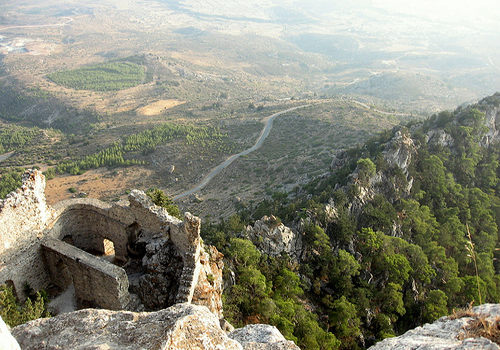
The tourist infrastructure of Northern Cyprus, the area beyond the 'green line', which is currently occupied by Turkey, is less developed than the south and the unspoilt countryside and numerous historic sites make a visit worthwhile for those adventurous enough to explore. Historic Gazimagosa (formerly known as Famagusta) on the east coast, for example, dates from 285 BC and has held an important place in Mediterranean history through the ages. The Medieval walls still stand and the remains of some ancient buildings are visible in the old city. Girne (Kyrenia) on the north coast has an interesting castle and picturesque harbour as well as a Shipwreck Museum, which houses the oldest trading ship yet found and raised from the sea bed, having sunk around 300 BC. Both Kyrenia and Gazimagosa have some modern tourist resort hotels, offering luxury accommodation and safe bathing in the Mediterranean Sea.
Tombs of the Kings
Address: 1 mile (2 km) north-west of Paphos harbour towards Coral Bay, Kato Paphos Paphos
Admission: £1.70 Daily. June to September, 8.30am to 7.30pm; October to May 8am to 5pm.
Telephone: 26 306 295
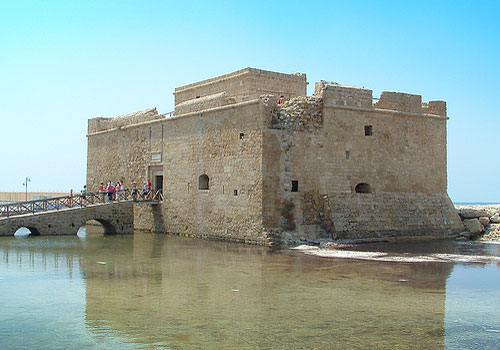
There are actually no kings buried here. Rather the site known as the Tombs of the Kings, one mile (2km) northwest of Paphos harbour towards Coral Bay, was the final resting place of about 100 Ptolemaic aristocrats who lived and died in the city between 3 BC and 3 AD. The tombs are impressive, carved out of solid rock, some featuring Doric pillars and frescoed walls. Archaeological excavations are ongoing at the site, which also features a church known as Paleoekklisia, which sports traces of Byzantine frescoes.
The Mosaics of Paphos
Address: Kyriakou Nikolaou Street Paphos
Admission: £2 Daily 8am to 5pm (September to May), 8am to 7.30pm (June to August)
Telephone: 26 306 217
The striking mosaic floors in a series of ancient Roman noblemen's villas, dating from the third to fifth century AD, are a must-see for visitors to Paphos. The site where the villas are still being excavated can be found about 300 metres from the Paphos harbour. The mosaics featuring mythological scenes are visible in the houses of Dionysus, Orpheus and Aion, and the Villa of Theseus. All were made of small cubes of marble and stone, called tesserae, with glass paste added to widen the range of colour. In the House of Dionysus, for example, 5,985 square feet (556 sq metres) of floor space in 14 rooms are covered with the gorgeous mosaics.
Catacombs
Address: Agio Pavlou Street Paphos
A large pistachio tree marks the entrance to the underground catacombs of Agia Solomoni in Kato Paphos. The tree is a strange sight, festooned as it usually is with pieces of cloth tied onto it by the faithful as offerings, in the hope that this sacred tree will cure various ailments. The catacombs themselves were carved into Fabrica hill, below the ancient Roman city wall, in the 4th century BC, and later became chapels for the early Christians. The underground chapels feature some interesting frescoes and graffiti left by 13th century Crusaders, and there are numerous legends and stories attached to the patron saint Ayia Solomoni. Visitors are advised to take a torch along to explore the catacombs.
Acropolis
Address: Kato Paphos Paphos
Near the modern Paphos lighthouse is sited a complex of ancient buildings, including a Roman Odeon, built in the 2nd century AD, which has been restored and is now used for summer orchestral and stage performances. The Odeon was the focus of the ancient city centre, of which some ruins still remain in the area. South of the Odeon are the remnants of the Roman Temple of Asclepius, the God of Medicine, and north of the lighthouse are the ruins of the ancient town walls.
Baths of Aphrodite
Address: Paphos
A romantic side trip from Paphos is a visit to the natural grotto on the Akamas Peninsula near Polis (30 miles/48km north of Paphos) where legend has it that the Greek goddess of love, Aphrodite, used to take her baths. The serene pool, shaded by a fig tree and surrounded by beautiful examples of maindenhair fern, can be reached by nature trails from Akamas.
Folk Art Museum
Address: 253 Ayios Andreas Street Limassol
Admission: £0.50 Monday to Friday 8.30am to 1.30pm, and 3pm to 5.30pm on Monday, Tuesday, Wednesday and Friday (June to September 4pm to 6.30pm)
Telephone: 25 362 303
A collection of traditional costumes, farm and household tools and a variety of local handicrafts are among the displays at Limassol's Folk Art Museum, contained in a restored house. Authentic Cypriot handicrafts are also offered for sale.
Cyprus Medieval Museum
Address: Limassol Castle, Richard and Berengaria Street Limassol
Admission: £1 Tuesday to Saturday 9am to 5pm; Sunday 10am to 1pm
Telephone: 25 305 419
Limassol Castle, built in the 14th century, stands sentinel over the old harbour on the site of an earlier Byzantine castle. Today it houses the Cyprus Medieval Museum with a host of fascinating exhibits. The castle is renowned for being the place where Crusader Richard the Lionheart married Berengaria of Navarre, and crowned her Queen of England in 1191.
Troodos Mountains
Address: Limassol
The Troodos Mountains, in the interior of Cyprus north of Limassol, offer a selection of four interesting signposted summer walks for nature lovers. The Artemis Trail is circular, extending four miles (7km) in the Black Pine region through the distinctive sub-alpine flora of the area. Orchids can be found under the pines, and one may spot the rare Epipactis condensata. The Atalanta Trail, six miles (9km) long, starts at Troodos and also offers rich plant life, spectacular scenery and birdwatching opportunities. The shorter and easier Caledonia Trail, covering two miles (4km), follows the Kryo Potamo stream about one mile (2km) from Platres, and winds through pine forest, and among plane trees. It also bypasses the Caledonian Falls, which are the only waterfalls on Cyprus. The Persephone Trail, named after the Greek goddess of spring, is about two miles (3km) long and offers lovely views.
Pitsilia
Address: Limassol
A worthwhile day trip from Limassol is to explore the unspoilt villages in the foothills of the Troodos Mountains, in the region known as Pitsilia. A rental car or a hired taxi is necessary because public transport is infrequent. Many of the villages make their own wines, and other products such as honey and cheeses. The picturesque houses, painted churches and red-tiled roofs are striking, and many restored houses have been turned into cafes or restaurants.
Mount Olympus skiing
The Troodos Mountains in central Cyprus offer winter sports under bright-blue Mediterranean skies. Ski in the morning, swim in the afternoon! The main ski slopes are on Mount Olympus (6,401ft/1,951m), about an hour's drive from Nicosia or Limassol and the ski season extends from the beginning of January to the end of March. Visitors should not however expect Alpine standards or piste or snow reliability. An annual international ski contest is held by the Cyprus Ski Federation. The Ski Club also runs lifts, a hiring shop, restaurant and offers ski instruction at its Sun Valley centre.
Trip Tools
Personalise this page
- London:
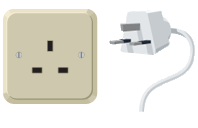
Voltage230 VFrequency50 Hz
- New York City:
Voltage120 V Frequency60 Hz
- Hong Kong:
Voltage220 V Frequency50 Hz