Explore Germany

Germany Travel Guide

As Germany moves forward into the 21st century, leaving behind a history of division and tyranny, it is a nation embracing its newfound liberalism and redefining a modern cultural identity. Yet even today, visitors to the country can't escape feeling profoundly moved by this country's past and the effects it still has on its people.

Situated in the heart of Europe and bordering nine other countries, Germany provides an ideal gateway to any tour of the subcontinent. Its land is wide and varied with turreted castles nestled below snow-capped mountains, lush river valleys, dark and mysterious forests and bustling medieval villages. This is the land of fairy tales, where farmland minstrels headed to Bremen to become musicians, where Sleeping Beauty was woken and Little Red Riding Hood ventured into the woods.

Germany's cities each have something unique to offer the visitor. Each year millions of litres of beer are consumed in Munich during the city's Oktoberfest, where locals and visitors discover true German revelry and 'gemutlichkeit' (a word the locals use to describe a comfortable, sociable environment). Berlin, while still recovering from some of the scars of division, contains many sights from the iconic Brandenburg Gate, to the path of the old Berlin Wall. The city's vibrant nightlife is still evocative of its height in the 1920s and 30s, as characterised by the songs of Marlene Dietrich, the theatre of Brecht and the Film .

Discover the country that gave us Beethoven and Bauhaus, Goethe and Glühwein, Lager and Lederhosen - you won't be disappointed.

The borderless region known as the Schengen area includes the following countries: Austria, Belgium, Czech Republic, Denmark, Estonia, Finland, France, Germany, Greece, Hungary, Iceland, Italy, Latvia, Lithuania, Luxembourg, Malta, The Netherlands, Norway, Poland, Portugal, Slovakia, Slovenia, Spain and Sweden. All these countries issue a standard Schengen visa that has a multiple entry option that allows the holder to travel freely within the borders of all. Also required for non-EEA members are onward or return tickets, sufficient funds to provide financial support, and documents for further travel. Australia, Canada, Israel, Japan, USA and New Zealand do not need to hold onward or return tickets.

Well of Justice (Gerechtigkeitsbrunnen)

Address: Römerberg, Frankfurt Frankfurt

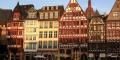
The Well of Justice, or Gerechtigkeitsbrunnen, was built in Frankfurt's central square of Romweberg in 1541. About 70 years later the wells received stone interiors and the Statue of Justice watched over them. In 1612, when Kaiser Matthias was crowned, it was not water, but wine that flowed freely from the stone lions' mouths. In 1887, the wells were renovated and the stone figures copied. The original sandstone statues were moved to the Museum of Local History.

Eschenheimer Turm

Address: Eschenheimer Tor 1 Frankfurt

Telephone: (069) 292 244

The Eschenheimer Turm is one of the few remaining towers of the medieval fortifications that encircled the city of Frankfurt. The 154-foot high (47m) gothic tower was built as part of the medieval wall which encircled the city in the 15th century when approximately 60 towers surrounded the city. Citizens used build high walls and watchtowers to protect Frankfurt from danger.

Brandenburg Gate

Address: Berlin

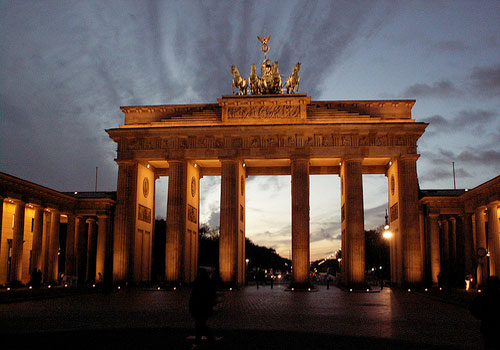
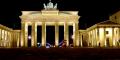
The impressive and symbolic Brandenburg Gate that lay forlorn for so long in the no man's land behind the Berlin Wall, is now once again renovated and accessible, along with the newly reconstructed Pariser Platz that links the gate to the beautiful Unter den Linden Boulevard. The gate is Berlin's only remaining city gate, built of sandstone between 1788 and 1791 with 12 Doric columns according to a design by C.G. Langhans. Six columns support a 36-foot (11m) transverse beam, similar to the propylaeum of the Acropolis in Athens. The massive gate is topped with a stunning statue of the Goddess of Victory facing east towards the city centre (this was added in 1794). The gate is closed to traffic, as is the adjacent Pariser Platz, a gracious square that was once surrounded with beautiful buildings sadly destroyed in the Second World War. Since the fall of the Berlin Wall new buildings have been built, however, to designs closely following those of the originals.

Checkpoint Charlie

Address: Friedrichstraße 43-45 Berlin

Admission: EUR12.50 (adults), EUR5.50 (under 10s) Daily 9am to 10pm; documentary films are screened throughout the day, with showings of the historically significant feature films 'Mit dem Wind nach Westen' daily every two hours and 'Mein Kampf' daily at 7.30pm

Telephone: (030) 253 725-0

The infamous border crossing point in the wall dividing West and East Berlin has now become a shrine to the wall's memory with the addition of a museum, Haus am Checkpoint Charlie. For nearly 30 years, between 1961 and 1990, Checkpoint Charlie in the Friedrichstrasse was the only crossing point between East and West Berlin. The soldier's post can be visited, and tourists can be photographed under the border sign.

Eastside Gallery

Address: Mühlenstraße Berlin

Admission: Free

The remains of the infamous Berlin Wall have now become the largest open-air art gallery in the world. The longest section of the wall, which has been preserved, stretches from Ostbahnhof station to the Oberbaumbrucke, and has been given over to graffiti artists from around the world. A total of 118 artists from 21 countries have exerted their skills on the 4,318-foot (1,316m) long section of the wall, and this collection has become a Berlin landmark and a tourist attraction. Best known paintings are Dimitri Vrubel's Brotherly Kiss and Gunther Shaefer's Fatherland. The gallery is billed as an international memorial for freedom.

Jewish Museum

Address: Lindenstraße 9-14 Berlin

Admission: EUR5 (adults), children under six free; concessions available Monday 10am to 10pm, Tuesday to Sunday 10am to 8pm

Telephone: (0)30 2599 3300

Although relatively new the Jewish Museum in Lindenstrasse has already gained an international reputation for its significant architecture and unique exhibitions that bring history alive. The bulk of the museum is housed in a windowless and doorless steel-clad, silver building, designed by Daniel Libeskind, sited alongside the yellow Baroque edifice of the Berlin Museum. Visitors enter the Jewish Museum through the Berlin Museum to explore the exhibition rooms, which are clustered around a main axis void, designed to signify the empty and invisible aspects of Jewish history.

Hamburger Bahnhof

Address: Invalidenstraße 50- 51 Berlin

Admission: EUR8; children under 16 free. Concessions available. Free admission Thursdays 2pm to 4pm Tuesday to Friday 10am to 6pm; Saturday 11am to 8pm; Sunday 11am to 6pm. Guided tours are conducted on Sundays at 4pm

Telephone: (0)30 397834-11

One of the most popular art galleries in Berlin is housed in a train station. The historic Hamburger Bahnhof, built in 1846 at the Tiergarten, was badly damaged during the Second World War, but has been restored and reopened, with some modern elements added to the architecture, as an exhibition venue for an extensive contemporary art collection. The former station now offers 107,639 square feet (10,000 sq metres) of space filled with works by the likes of Andy Warhol, Josephy Beuys and Roy Lichtenstein. The basis of the exhibition is the Marx private collection, but there are changing exhibitions and good examples of the Italian Transavanguardia and minimalist art on show too.

Potsdamer Platz

Address: Berlin

Admission: Panorama platform: EUR5 The panorama platform is usually open daily, 11am to 8pm. Closed for reconstruction till 2010.

This vibrant square is the heart and soul of the 'New Berlin', which has emerged since the fall of the wall in 1989. The original square was once one of the busiest junctions in Europe with a major train station sited on it. However after damage during the Second World War and being cut through by the divisive wall, it became a decayed wasteland. Since the fall of the wall, however, a building boom has been taking place around the Potsdamer Platz, which now boasts an exciting mix of restaurants, shopping centres, hotels, a casino, theatres and cinemas that draws both Berliners and tourists seeking good food and recreation. Focus of the square is the 22-storey Debis Haus, designed by Renzo Piano, featuring an atrium with cathedral-like dimensions, and its neighbouring Potsdamer Platz Arkaden, a shopping mall with an Imax cinema. The Sony Centre is the most recent addition, consisting of seven buildings around a light-flooded arena, which also houses Berlin's popular Film Museum. The Kollhoff building features a panorama platform, reached by Europe's fastest express elevator, which offers views of the city.

Hofbrauhaus

Address: Platzl 9, behind Marienplatz Munich

Telephone: (0)89 2901 3610

Beer has been swilled at this world-famous tavern site in the centre of Munich since it became a royal brewery in 1605. Equally famous is the Bavarian jollity and conviviality, known as 'gemuchtlikheid', which has emanated directly from the Hofbrauhaus in Munich along with the beer which flows freely there each day, served by robust rosy-cheeked young women clad in Bavarian dress in litre-sized beer steins. The cheerful atmosphere that reigns constantly in the establishment's different halls is helped along by the foot-tapping strains of traditional Bavarian 'oom-pah' bands and drinking songs. When the beer becomes too much, soak it up with a delicious salty pretzel or a German speciality from the menu, such as liver dumplings, potato soup or a variety of delicious sausages.

Marienplatz

Address: Munich

The Marienplatz is the heart of Munich and the site of its most important historic buildings. The square is dominated by the Neo-Gothic Town Hall featuring its famous Glockenspiel, both built in the 19th century. The Glockenspiel delights visitors when it chimes the hours every day at 11am, 12pm and 5pm with its 43 bells, accompanied by moving clockwork figures that display vignettes from Munich's history. The Town Hall has a tower that can be accessed by a lift. The centre of the square - which was once a vibrant farmer's market - features a statue of the Virgin Mary after which Marienplatz was named. Visitors can also explore a toy museum in the Old Town Hall on the square, and the Frauenkirche, Munich's cathedral, dating from the 15th century.

Olympia Park

Address: Spiridon-Louis-Ring 21 Munich

Admission: Tower: EUR4.50 (adults), EUR2.80 (children 6-16); other concessions available The tower is open daily 9am to midnight

Telephone: (0)89 30 67-0

Munich's massive Olympic park complex was constructed for the 20th Olympic Games in 1972, but remains a marvel of modern engineering. Its main stadium is a like a massive tent, which can seat close on 70,000 spectators, topped by the largest roof in the world, extending for 720,000 square feet (66,890 sq metres) and made of tinted acrylic glass. The roof collects rainwater which is used to fill the adjacent Olympic lake. Tent roof tours (with or without an abseiling option) are on offer. Visitors to the site can enjoy a spectacular view from the revolving restaurant and observation terrace which tops the 950-foot (290m) high Olympic Tower. Near the tower is the BMW Museum, which displays the history of Germany's famous automobile manufacturer. Far from being a remarkable 'white elephant', the park is still in constant use as a lively leisure and recreational centre for the city; on more than 200 days of the year it is the venue for rock and pop concerts, sports events, exhibitions and trade fairs.

Nymphenburg Palace

Address: Eingang 19 Munich

Admission: EUR5; Combination ticket: EUR10. Concessions available Daily 10am to 4pm (mid-October to March), and 9am to 6pm (April to mid-October)

About five miles (8km) from the city centre, accessible by tram and bus, is the interesting Schloss Nymphenburg, originally a summer home for the Munich aristocracy. The palace has been expanded, altered and fitted with various eccentricities by succeeding owners over the centuries since building began on it in 1664. Today it is a delight for tourists who revel in exploring the villa and grounds. Inside there are some interesting frescoes in the main hall. An arcaded gallery features a collection of 36 provocative paintings ordered by King Ludwig I showing the most beautiful women of his day. The surrounding park has some surprises too, with some interesting pavilions hidden among the English-style gardens. There are also collections of Ludwig's elaborate coaches on display, and a porcelain museum.

Alte Pinakothek

Address: Barerstrasse 27 Munich

Admission: EUR7 (Sundays EUR1). Free for children under 18 Tuesday to Sunday 10am to 6pm (Tuesday to 8pm)

Telephone: (0)89 23805 216

Munich's art museum houses one of the most important collections in Europe on two floors of a large neo-classical building. Nearly 1,000 paintings are on display featuring the work of the greatest European artists from the 14th to the 18th centuries. Highlights include works by Dutch and Flemish masters, as well as the Italian masters such as Botticelli and Titian. The gallery is massive, consisting of dozens of rooms, and requires a great deal of time to explore thoroughly.

Neuschwanstein

Address: Neuschwanstein Castle is near the Forggensee in the Allgäu, very close to Schwangau. Ticket Centre: Alpseestrasse 12, Hohenschwangau Munich

Admission: Entrance tickets can only be bought at the ticket centre in the village of Hohenschwangau below the castle. EUR9 (adults), EUR8 (concessions) Daily 9am to 6pm (April to September), 10am to 4pm (October to March)

Telephone: (0)83 629 3988-0

The fairytale castle built by King Ludwig II (known as 'Mad King Ludwig' until his death in 1886) has become the trademark of the German state of Bavaria, with its Gothic wedding-cake tiers and towers. Day tours to the castle are available from Munich, or self drive via Garmisch. From the parking lot there is a steep half-mile (one km) climb to the castle, but one can ride in a horse-drawn carriage. The interior of the castle is as extravagant as its outer aspect, particularly the King's apartments, which are decorated entirely with hand-embroidered silk, elaborate wall and ceiling paintings, and carvings.

Berchtesgaden

Address: Munich

The name Berchtesgaden is most closely associated with Adolf Hitler's country house, but it is in fact a delightful Bavarian alpine village with ancient winding streets and a medieval marketplace, popular as a side trip from Munich. Hitler's holiday house, the Berghof, is actually at Obersalzberg about half a mile (2km) up the Kehlstein Mountain. Afternoon bus tours to the Fuhrer's playground can be undertaken from the tourist office in the village, but there is little to see besides some underground bunkers which are open to the public. Most tourists, however, do delight in visiting the Kehlsteinhaus or Eagle's Nest, a remarkable building perched precariously atop the mountain, which was originally commissioned by Martin Bormann as a 50th birthday present for Hitler. The notorious Nazi leader seldom visited it because of his fear of heights. Today it is the site of an excellent Bavarian restaurant and provides breathtaking views at the end of a stunning winding mountain road. The town of Berchtesgaden itself has some interesting attractions, besides its 16th-century architecture and enticing inns. There is a small wood-carving museum at Schloss Aldelsheim which can be viewed on a guided tour offered on weekdays at 10am and 3pm. Wood sculptures, Renaissance furniture and some art works are worth seeing at the Konigliches Schloss, which was originally an Augustinian monastery. The most fun to be had, however, is in the salt mines to the east of the town, which offers guided tours. Visitors wear protective clothing and ride on wagons to the mine, then explore the mine on foot and ride miner's slides, finishing with a trip on the salt lake ferry. The tours run daily, all year round. The mine has been in operation since 1517. Berchtesgarten also boasts a world-class ice-skating rink, the Eisstadion, which is sought after by winter sports enthusiasts in the winter months, along with the skiing opportunities in the surrounding area.

Dachau Memorial Site

Address: Alte Römerstraße 75, Dachau Munich

Admission: Free Tuesday to Sunday 9am to 5pm. An English version of a documentary film, 'KZ-Dachau' is screened at 11.30am, 2pm and 3.30pm

Telephone: (0)8131/66 99 70

About 10 miles (16km) to the northwest of Munich on the Stuttgart Autobahn is the town of Dachau, once a quiet artists' community that became the site of the first notorious Nazi 'death camp', where thousands of perceived enemies of the Third Reich were imprisoned, starved, and killed between 1933 and 1945. The camp has now been turned into a memorial museum to the prisoners (67,000 were liberated alive by the US Army on April 28, 1945). The museum contains three memorial chapels. The Lagerstrasse, the main camp road, still exists lined with poplar trees but only two of the original 32 barracks that lined it remain, having been rebuilt to illustrate the conditions endured by the prisoners. The original kitchen, laundry and shower block is now a museum containing exhibits, photographs and documents depicting the persecution of Jews and other prisoners.

Garmisch-Partenkirchen

Address: Munich

Germany's top winter sports destination, Garmisch-Partenkirchen is a busy centre that has retained the charm of the older town of the twins, Partenkirchen. About 20 trains a day arrive at the Garmisch-Partenkirchen Bahnhof from Munich, and many more visitors come by bus or self-drive via the A95 Autobahn to enjoy the delights of the Bavarian Alps. Pride of the city is the Olympic Ice Stadium and the larger Ski Stadium which were built for the 1936 Winter Olympics and are still put to good use by winter sports enthusiasts. The area is picturesque and scenic, both in winter and summer. In summertime it is a popular spot for hiking and mountain climbing expeditions. A tourist office assists visitors in making the most of their visit and seeing the local attractions.

Chiemsee

Address: Munich

Admission: The 'Neues Schloss' is open daily 9am to 5pm (April to September); 10am to 4pm (off-season)

One of the most beautiful lakes in the Bavarian Alps, Chiemsee boasts two islands and is lined with resorts. It can be reached by train from Munich in an hour, or by road via the A8 Autobahn. Visitors can take a steamer cruise around the lake from Prien on the west shore to explore the islands in the lake. Frauenchiemsee is the smaller island, site of a quaint fishing village with some colourful traditional customs, and a Benedictine nunnery known for its liqueur. The larger island, Herrenchiemsee, bears one of King Ludwig's famous fairytale castles. This one was never completed, but was intended to be a replica of the palace of Versailles. The centre of the palace still stands, complete with a splendid hall of mirrors and surrounded by gardens and woodland. It is an extremely popular tourist attraction with its gaudy splendour.

Romantic Road

Address: Munich

To experience the best of medieval Germany hundreds of visitors drive, bus or cycle their way along the Romantic Road, a 180-mile (290km) route between Munich and Frankfurt that links together a string of quaint, well-preserved walled towns dating back a thousand years or more. The towns en route have banded together to market their attractions and ensure Romantic Road travellers are well informed and accommodated. Bicycles can be rented at any train station along the road, and tourist offices along the route provide maps and information. Best known of the towns on the Romantic Road is Rothenburg in the Tauber River Valley. Other favourites among the cute towns are Dinkelsbuhl and Nordlingen.

Goethe-Haus

Address: Großer Hirschgraben 23-25 Frankfurt

Admission: EUR5 (adults); EUR1.50 (children 7-18) Monday to Saturday 10am to 6pm, Sunday 10am to 5.30pm

Telephone: (0)69 138 80-0

The house where Johan Wolfgang von Goethe, Germany's world-famous poet and writer, was born in 1749 is now a shrine to his memory, preserved as an example of how the well-to-do lived in the late Baroque era. The house, which is a reconstruction because the original was destroyed during the Second World War, consists of two neighbouring half-timbered houses in Grosser Hirschgraben, and is sited next to the Goethe Museum, which contains a huge library of books, documents and graphics relating to the poet.

Botanical Gardens

Address: Siesmayerstrasse 61 Frankfurt

Admission: EUR5 (adults), EUR2 (children 6-17); EUR9.50 for special events including festivals and certain exhibitions. Concessions available Daily 9am to 6pm between March and October, with earlier closing during winter months

Telephone: (0)69 2123 3939

The well ordered and interesting Botanical Garden in Frankfurt is administered by the University. The gardens are designed to take visitors on a journey through different areas of the plant kingdom, from the hardwood forests of North America to the barren savannah of Africa. The gardens cover more than eight hectares (20 acres) and contain more than 6,000 different botanical species, from exotic rainforest flowers to European weeds.

Wiesbaden

Address: Frankfurt

Germany's most favoured spa resort lies about 25 miles (40km) west of Frankfurt in a valley between the Rhine River and Taunus Mountains. The town has been a spa resort since the time of the ancient Romans, with its 26 hot springs averaging temperatures of around 50°C (122°F). Besides being known for its luxurious spa hotels, Wiesbaden is also a cultural centre, its events being concentrated around the major Kurhaus concert hall complex. The complex includes a casino and restaurant, conference and exhibition facilities.

The Rhineland

Address: Frankfurt

The wide, deep and sluggish Rhine River flows from Switzerland into the sea in the Netherlands, and most of its length in the process meanders through the mountains and plains of Germany. The river has always served as a major trading route, and it is also a favourite with tourists who enjoy cruising it, particularly along its scenic mid-section between Mainz and Koblenz. Boarding a steamer in Mainz, about 25 miles (40km) south west of Frankfurt, one journeys through steep vine-covered hillsides dotted with romantic towns and castles, many associated with fascinating legends and fables.

Trier

Address: Frankfurt

Telephone: Tourist Information: (0)651 978080

A taste of ancient Rome is a popular tourist attraction in the German city of Trier, 120 miles (193km) south west of Frankfurt. Trier was founded as a colonial capital under Roman Emperor Augustus in 16 BC, making it Germany's oldest city. The city became an important political and cultural centre, and many Roman buildings and monuments remain to be explored by visitors. The city is also a good starting point for trips into the Mosel Valley, and cruises on the scenic Mosel River, which is Germany's main wine-producing region.

Heidelberg

Address: Frankfurt

The historic university town of Heidelberg, about 55 miles (89km) south of Frankfurt, is billed as a city of music and romance. It is one of the few German cities that escaped relatively unscathed from air raids during World War II, and still has numerous buildings from the Middle Ages and Renaissance to explore. The modern part of the city around the Bismarckplatz has some good hotels and restaurants, and enticing shopping plazas. The city is built along the banks of the Neckar River, and has a colourful atmosphere lent by its large student population, particularly in the student quarter with its narrow streets and lively inns. The university was established in 1386.

Altona Fish Market

Address: The market is between Hexenberg and Grosse Elbstrasse Hamburg

Admission: Daily 5am to 12pm; from 7am in winter

Telephone: (0)40 38012-0

It may be billed as a fish market, but there is just about anything and everything on sale at this lively, colourful Hamburg market that takes place early on Sunday mornings, and has done since 1703. There is a restaurant in the historic Fish Auction Hall, along with some live musical entertainment, to rejuvenate tired shoppers.

Hamburg Warehouse Complex

Address: Hamburg

The world's oldest warehouse complex, built of red brick with gables and turrets, is a century old and still in use for storing exotic goods from around the world. Known as the Speicherstadt in German, this historic section of the Free Port between the Deichtorhallen and Baumwall has been turned into a tourist attraction by the addition of an open air theatre, a spice museum, a miniature exhibition and an old Russian submarine open for exploration. Another attraction is the 'Hamburg Dungeon', an interactive experience showcasing the more unpleasant and gory aspects of the city's history. The Speicherstadt is illuminated at night, creating an enchanting spectacle, particularly viewed from a boat on a harbour night tour.

Hamburger Kunsthalle

Address: Glockengießerwall Hamburg

Admission: General admission: EUR6 (adults); including special exhibitions: EUR8.50 (adults). Concessions available Tuesday to Sunday 10am to 6pm; Thursday 10am to 9pm

Telephone: (0)40 428 131 200

Hamburg's premier art gallery offers the chance to view works across the time spectrum from the Middle Ages through to the present day. The Kunsthalle's main aim is to educate about art, rather than showcase particular art treasures, and exhibitions are constantly changing to introduce new forms of art.

Blankenese

Address: Hamburg

This quaint destination on the steep Elbe hillside was once a fishing village favoured by retired ship captains. Today it has become popular with locals as a weekend outing, and visitors also throng the narrow alleys and stairways between picturesque houses packed together on the cliffside. The village offers an abundance of cafes and restaurants where patrons can relax and watch ships steaming in and out of the harbour. There is a ferry service to Blankenese from St Pauli-Landungsbrucken in Hamburg's Free Port.

Museum of Hamburg History

Address: Holstenwall 24 Hamburg

Admission: EUR7.50 (adults), EUR4 (Friday special for adults), children and students under 18 free. Concessions available Tuesday to Saturday 10am to 5pm, Sundays 10am to 6pm

Telephone: (0)40 428 132 2380

The museum gives a detailed description of the city of Hamburg from the 8th through to the 20th centuries. Scale models have been used to illustrate the changing shape of the city's famous harbour. Exhibits also include reconstructions of various typical rooms, such as the hall of a 17th-century merchant's home to an air raid shelter from World War II.

Reeperbahn

Address: Hamburg

Hamburg's notorious red light district to the east of the city centre in the St Pauli zone has become its second-greatest tourist attraction, according to the city management. The Reeperbahn (Rope Street) is where rope used to be produced for the ships in the harbour. It is now a half-mile long street which, along with its cross-streets, is filled with bright lights and flirtatious prostitutes, crammed with bars and establishments offering erotic entertainment. The Reeperbahn became the neighbourhood where sailors of old were encouraged to seek entertainment after they were banned from invading the city's more respectable areas in the 19th century. The district also boasts an Erotic Art Museum (at Nobistor 10A), which is privately owned and restricted to persons over 16.

Sylt

Address: Hamburg

The island of Sylt is Germany's most northern point, lying off the northwestern coast in the North Sea. The island boasts some lovely sandy beaches and stunning views, and its main town, Westerland, has become a popular seaside resort. The island also has miles of bicycle paths meandering through pine forests. The island offers plenty of entertainment for tourists, including shops, spas and exclusive restaurants. Trains arrive several times a day from Hamburg. The island is connected to the mainland by the six-mile (10km) long Hindenburgdamm bridge.

Hameln

Address: Hamburg

Hameln, the famous town of the Pied Piper tale told to children around the world, is a popular tourist destination in Lower Saxony, northern Germany, lying beside the River Weser. The old town centre has been reconstructed with several Renaissance buildings, and some wood-frame historic buildings, all adding to the fairytale atmosphere that brings alive the legend of the piper who offered to rid the town of rats, and ended up stealing all the children. A short musical version of the story is performed each Wednesday in the old town between May and September at 4.30pm. The Pied Piper himself conducts tours around the town!

Lübeck

Address: Hamburg

Lübeck lies 41 miles (66km) north east of Hamburg, close to the Baltic coast. Not only is this historic town the home of a couple of noted Nobel Prize winners, but as a living monument to the wealthy Hanseatic merchants of the 13th century, it sports some architectural treasures that have ensured its status as a UNESCO World Heritage Site. The town's famous sons were Willy Brandt, the West German chancellor who won the Nobel Peace Prize in 1971, and Thomas Mann, whose novel Buddenbrooks won the Nobel Prize for Literature in 1929. As far as the architecture goes, the town is known for its steeples and spires, high-gabled houses, strong towers and massive gates. The town is also billed as the world capital of marzipan, having been the spot where this delightful confection was first devised (there is a legend attached, of course). Samples of marzipan are freely available in Lübeck.

LEGOLAND Discovery Centre

Address: Sony Centre, 4 Potsdamer Platz Berlin

Admission: EUR15.95 (adults), EUR12.95 (children 3-11); concessions available Daily 10am to 5pm; closed 25 December

Telephone: (0)30 30 1040-10

The newly opened LEGOLAND Discovery Centre is the first indoor LEGOLAND in the world and provides an interactive journey through a land of colour, creativity, learning and play. There is a fun factory, where real LEGO bricks are made, a 4-D cinema show, opportunities for visitors to make their own creations, Miniland Berlin, a themed ride and much more all under one roof.

Freiburg

Address: The Black Forest

Black Forest cake and cuckoo clocks are what most visitors travel to Freiburg for, but the beautiful city has far more to offer than the expected. The recommended way to explore the town and environs is by bicycle (there are plenty for hire) along more than 93 miles (150km) of bicycle paths. What one will find is a wealth of ancient history, some delicious food and wine, and breathtaking natural beauty. The city (really a large town) is known for its university, magnificent cathedral and medieval treasures, and a somewhat bohemian vibe with its street musicians and pavement artists. The Altstadt (Old City) is picturesque, featuring canals and dozens of historic buildings. A cable car carries passengers on scenic trips up the Schauinsland Mountain from the Stadtgarten to enjoy the view from the mountaintop restaurant. Freiburg hosts a music festival in mid-June each year, followed by a wine festival at the end of June and a wine-tasting festival in mid-August. Visitors very much enjoy the local Black Forest cuisine on offer at Freiburg's restaurants.

The Story of Berlin

Address: Kurfürstendamm 207-208 Berlin

Admission: EUR9.80 (adults), EUR3.50 (children aged 6-13). Other concessions available Daily 10am to 8pm. Last guided tour at 6pm

Telephone: (0)30 887 20 100

One of Berlin's most popular attractions, the unusual exhibition recounts the history of the German capital city from its foundation until the fall of the Wall. The Story of Berlin is divided into 25 themed rooms and pays attention to the feelings, thoughts and living conditions of common Berliners. One of its main attractions is the nuclear bunker that was built during the Cold War in the 1970s. Guided tours are available every hour.

Pforzheim

Address: The Black Forest

Founded by the Romans as a mercantile centre on the northern edge of the Black Forest, Pforzheim, at the confluence of the Wurm, Enz and Nagold Rivers, is today the centre for traditional jewellery and clock-making. The town features a fascinating Technisches Museum to commemorate the important role time-keeping has played in Pforzheim's history. The museum features a reconstruction of a clock-making studio in the 19th century. Jewellery is also important in the town and the Schmuckmuseum collection features pieces dating from the 3rd century BC through to modern times. Pforzheim also has an interesting Alpine Garden which has 100,000 or more varieties of high-altitude plants growing in a natural setting beside the Wurm River.

Triberg

Address: The Black Forest

The true spirit of the Black Forest is brought to life in the Schwarzwald-Museum of Triberg, which documents the old traditions and lifestyle of this unique region, with displays of costumes, handcrafts (including clocks) and furnishings. It also boasts Europe's biggest barrel organ collection. Nearby Gutach contains original Black Forest homes up to four centuries old at the Freilchtmuseum Schwarzwalder. An exceptional waterfall at Gutach drops down the mountainside in seven stages, accessible by a walking trail. South of Triberg a huge variety of elaborate Black Forest clocks is on display at the German Clock Museum, to be found at Gerwigstrasse in the village of Furtwangen.

Gendarmenmarkt

Address: Berlin

Said to be one of the most beautiful squares in Europe, the Gendarmenmarkt is certainly one of Berlin's most impressive squares that was created as a market place in the 17th century. During World War II most of the buildings were destroyed, but have since been returned to their former glory. The square is dominated by the beautiful Konzerthaus (concert house), which is home to the Berlin Symphony Orchestra, as well as the twin churches of Deutscher Dom and Franzosischer Dom, the identical German and French Cathedrals. Gendarmenmarkt is also host to Berlin's best Christmas market and various concerts. Surrounding the plaza are a number of cafes and restaurants.

Charlottenburg Palace

Address: Spandauer Damm 10-22 Berlin

Admission: Old palace: EUR10; new wing: EUR6 including audio guide Tuesday to Sunday 9am to 5pm. The new wing is open 10am to 5pm (April to October) and 11am to 5pm (November to March); closed Mondays

Telephone: (0)3 319 694 200

Schloss Charlottenburg is the largest palace in Berlin, an 18th-century baroque structure that was originally constructed as the summer home for Sophie Charlotte, the wife of Elector Frederick III who became the first Prussian king. The splendid interiors are festooned with art masterpieces, while the surrounding gardens contain a mausoleum, pavilion and the Belvedere, which houses the porcelain museum.

Berliner Dom

Address: Am Lustgarten, Museum Island Berlin

Admission: EUR5, or EUR8 with audio guide; concessions available Guided tours: Monday to Saturday 9am to 8pm, Sunday 12pm to 8pm

Telephone: (0)30 20269 119

The Berlin Cathedral was built between 1895 and 1905 and is a magnificent basilica that stands on the site of several earlier structures. Inside, the crypt contains over 80 sarcophagi of Prussian royals, while other areas of interest are the pulpit, the organ, and the stained glass windows. Visitors can climb the dome, which is decorated with intricate mosaics.

Pergamon Museum

Address: Am Kupfergraben 5, Museum Island Berlin

Admission: EUR8 (adults), free for children under 16 Daily 9am to 6pm, until 10pm on Thursday, Friday and Saturday

Telephone: (0)30 2090 5577

This huge museum has three main departments, the Antiquity Collection, Islamic Art Museum and the Middle East Museum that house parts of reconstructed monumental buildings transported from original excavation sites from ancient lands. The Antiquity Collection contains the Pergamon Altar from the second century BC, as well as the Market Gate of Miletus from Roman antiquity. The main attraction in the Islamic Art Museum is the Mshatta façade originating from a Jordanian desert palace, while the Middle East Museum boasts the Ishtar Gare and the Procession Way of Babylon, as well as the throne room façade of Nebuchadnezzar II.

Liebieghaus

Address: Schaumainkai 71 Frankfurt

Admission: EUR8 (adults); EUR6 (concessions). Children under 12 are free Tuesday and Friday to Sunday 10am to 6pm; Wednesday, Thursday 10am to 9pm. Free tours every Wednesday at 7pm and Sunday at 11am

Telephone: (0)69 650049-0

Situated on the south bank of the river Main, the Liebieghaus was built in 1896 for Czech Baron Heinrich Liebieg, but today is the home of Frankfurt's Museum of Sculpture. Exhibits include sculptures from ancient times, such as Sumeria, Egypt, Greece and Rome to more modern Baroque, Rococo and Renaissance examples. A range of Egyptian and Asian pieces also feature in the range as well as a few works of some world-renowned artists.

German Film Museum (Deutsches Filmmuseum)

Address: Schaumainkai 41 Frankfurt

Admission: EUR2.50 (adults), EUR1.30 (children); Film screenings EUR6 (adults), EUR5 (children) Tuesday, Thursday, Friday, Sunday 10am to 5pm; Wednesday 10am to 7pm; Saturday 2pm to 7pm

Telephone: (0)69 961 220 220

One of Germany's finest film museums, the Deutsches Filmmuseum shows old films from its collections continuously. These can be viewed on the second floor of the museum while the downstairs rooms tell the story of Germany's filmmaking history while exhibits are also on display, including models illustrating how special effects are shot as well as Emile Reynaud's 1882 Praxinoscope and Edison's Kinetoscope from 1889.

Historical Museum (Historisches Museum)

Address: Saalgasse 19 Frankfurt

Admission: EUR4 (adults), EUR2 (children over 6 years). Concessions available Tuesday to Sunday 10am to 6pm, Wednesday 10am to 9pm

Telephone: (0)69 212 355 99

The Historical Museum (Historisches Museum) has many permanent exhibitions on display featuring objects and works of art ranging from the Middle Ages to present day. The museum's changing exhibitions covers a range of themes such as cultural history, art history and general history. Collections feature examples of gold and silver crockery and jewellery; pottery and porcelain; paintings, photographs; and scaled-down models of the Altstadt at various periods of its development. The Children's Museum, which lies adjacent to the Historical Museum, features a variety of special offers and exhibitions for youngsters of all ages.

Städel Gallery

Address: Schaumainkai 63 Frankfurt

Admission: EUR10 (adults); EUR8 (children 12-16). Concessions available Tuesday, Friday, Saturday, Sunday 10am to 6pm; Wednesday, Thursday 10am to 9pm

Telephone: (0)69 605 0980

Frankfurt's most important art gallery is the Städel Gallery, containing a fantastic collection of most European schools of painting. The first floor features the works of German painters of the 19th and 20th centuries, as well as famous French Impressionists such as Renoir and Monet. The second floor offers visitors the pleasure of viewing an outstanding collection of Flemish primitives, 17th-century Dutch artists, and 16th-century German masters such as Dürer, Grünewald, Memling, Elsheimer, and many others with one of the most impressive paintings being Jan van Eyck's Madonna (1433).

Frankfurt Zoo

Address: Alfred-Brehm-Platz 16 Frankfurt

Admission: EUR8 (adults), EUR4 (children 6-17). Concessions available. Last Saturday of the month: EUR6 (adults), EUR3 (children) Open daily 9am to 7pm in summer and 9am to 5pm in winter

Telephone: (0)69 212 33735

The Frankfurt Zoo, located in Ostend, was nearly totally destroyed in the Second World War when only 20 animals survived. It was rebuilt in the early 1950s and since then has grown its features to include several innovative new sections such as the highly popular Big Cat Jungle and the Exotarium which houses fish, insects, reptiles and penguins, all kept in their natural surroundings. Frankfurt Zoo is home to over 3,200 different animals across 600 species and is renowned for keeping them in environments that most closely resemble their own natural habitats. It has a reputation as one of the most attractive, pleasant and popular zoo faciltiies in Europe. Away from the fauna there are two restaurants as well as a terrace to enjoy in the summer months. A major draw card for the zoo and one of its most unique features is Grzimek House which is home to nocturnal animals who think it's night-time during the day.

Palace Square (Schlossplatz)

Address: Stuttgart

The symbolic heart of Stuttgart, the Schlossplatz or Palace Square, is a popular meeting point for locals and travellers alike, the beautifully baroque New Palace providing a majestic backdrop. The former residence of kings, the New Palace was built between 1746 and 1806 and is now a base for the state government of Baden- Wurttemberg. If the New Palace feels a bit French it's because the Duke Carl Eugen of Wurttemberg wanted to create a Versailles in Stuttgart. The König Wilhelm Jubilee Column, rising in the fore, was erected in 1841 in honour of King Wilhelm's silver jubilee (25 years of reign), and the statue of Concordia, the Roman goddess of harmony at the pinnacle, added in 1863. The two fountains were built at the same time, the eight cherubs each representing one of Württemberg's rivers.

Old and New State Gallery

Address: 30-32 Konrad-Adenauer Street Stuttgart

Admission: EUR5.50 (adults), free for children under 12 Wednesday, Friday, Saturday, Sunday 10am to 6pm; Tuesday and Thursday 10am to 8pm; closed Monday

Telephone: 711 470 40250

Built between 1838 and 1843 under King Wilhelm I of Wuerttemberg, the Old State Gallery features a presitigous range of paintings, drawings, sculptures, watercolours and prints from the 14th to the 19th centuries, with Jerg Ratgeb, Canaletto, Memling and Rembrandt taking centre stage. Connected to the Old State Gallery on the same level is the New State Gallery, dedicated to the art of the 20th century. Looking at important schools within various art movements like the Fauvism, German Expressionism, Die Brucke and Cubism, works by masters such as Picasso, Beckmann, Schlemmer, Beuys, Kiefer and Klee, can be found here.

Kunstmuseum Stuttgart

Address: Kleiner Schlossplatz 1 Stuttgart

Admission: EUR5 (adults), EUR3.50 (concessions). Free for children under 12 Tuesday to Sunday from 10am to 6pm, Wednesday and Friday 10am to 9pm. Closed Mondays

Telephone: 711 216 2188

Centrally located, Kunstmuseum Stuttgart is a work of art in itself. Its modern cuboid design transforms from a glass hexahedron during the day to reveal a colourful skeletal interior when lit up at night. Opened in 2005, the Kunstmuseum Stuttgart is renowned for its prestigious collection of work by Otto Dix, the renowned German artist remembered for his realistic depictions of Weimar society and the brutality of war. The colourful and abstract art of Willi Baumeister and the mixed media work of contemporary artist Dieter Roth are also on display at the Kunstmuseum Stuttgart, along with ever changing international exhibitions. Don't miss the museum shop and bookshop, or have a light snack at the onsite restaurant.

Mercedes-Benz Museum

Address: Mercedesstrasse 100 Stuttgart

Admission: EUR8 (adults), EUR4 (concessions) Tuesday to Sunday from 9am to 6pm. Closed Mondays

Telephone: 711 173 0000

Opened shortly before the start of the Football World Cup in Germany, the impressive Mercedes-Benz Museum is housed in a slick, contemporary building, an icon of modern architecture. With an exhibition space of almost 182,986 ft² (17,000 m²) covering seven storeys, the museum takes visitors on a chronological journey through the history of the Mercedes automobile. Combining world events occurring at the same time as Benz breakthroughs and displaying over 160 different vehicles from racing cars and concept cars to the pope mobile and airplane engines, there is much for the automobile aficionado to see.

Wilhelma Zoo

Address: Neckartalstrasse Road Stuttgart

Admission: EUR12 (adults), EUR6 (children) Daily from 8.15am to 4pm or 6pm, depending on the season

Telephone: 711 54020

Europe's only combined zoological and botanical garden, the Wilhelma Zoo never fails to leave a lasting impression on the hearts and minds of all who explore her confines. Initially built as a Moorish garden for King Wilhelm 1 in the 19th century, the beautiful botanical garden is extraordinary all year round. Countless exotic plants, a range of climatic biospheres in magnificent greenhouses, a petting zoo, insect exhibit, aquarium with crocodile hall, modern ape house, bear facilities, walk-in bird flight facility and wild animal enclosures are some of the exhilarhating sights to be enjoyed. Ideal for children and adults, there are a host of ice cream stands, cafeterias and playgrounds to keep the whole family entertained for the entire day. The Wilhema Zoo is home to 8,000 animals, including polar bears and elephants, and 5,000 different species of plants.

Mineral Baths

Address: Stuttgart

Sitting on one of the largest mineral water reserves in Europe, the inhabitants of Stuttgart have been enjoying its liquid vitality for more than two millennia. Relaxing in a hot, steamy mineral bath is a good way to spend some of your down time in the city. Das Leuze, Mineralbad Cannstatt and Mineral Bath Berg all feature hot and cold mineral baths, saunas, hot tubs and swimming pools. Das Leuze is geared toward families with its playground, childrens pool and bright colours, while Mineralbad Cannstatt caters more for adults looking for a haven of relaxation. Mineral Bath Berg is a 1950s gem, its iron-rich waters recognised by the state as a 'heilbad' for its medicinal properties.

Porsche Museum

Address: Porscheplatz 1 Stuttgart

Admission: Free Monday to Friday 9am to 4pm, Saturday and Sunday, 9am to 5pm

Telephone: 711 25685

Just like their cars, the 'small but good' Porsche Museum in Stuttgart is a retrospective of more than 75 years of Porsche engineering and memorabilia. The 20 or so exhibits from the first Porsche-branded car to series cars and the Formula 1 champions of the mid 1980s; the various Porsche models are switched several times a year. Following in the footsteps of other automobile titans, the Porsche Museum is turning over a new leaf with construction on a 60,277 square feet (5,600 square meters) architectural landmark to house some of its 300 strong collection. The new museum will be inaugurated toward the end of 2008, boasting the latest in automobile exhibition technology and quadrupling the number of pristine Porsches on display.

Tiergarten

Address: Berlin

The world's largest inner-city park, and housing both the parliamentary and governmental institutions, Tiergarten combines the attractions of the Berlin's largest park with its zoo. The residence of the German President and the Carillon are also located in the park. Tiergarten is also a great place for families to enjoy and relax under the shade of a tree with a picnic, or throw a Frisbee. And when the little ones get bored of that, head off to the Berlin Zoo for the afternoon.

Museum fuer Naturkunde (Nature Museum)

Address: Invalidenstr. 43 Berlin

Admission: EUR6 (adults); EUR3.50 (children); Concessions available Tuesday to Friday from 9.30am – 5pm; Saturday, Sunday, Public Holidays 10am to 6pm. Last admission 30 minutes before the museum closes. Closed Monday

Telephone: (0)30 209 38591

Boasting over 30 million objects throughout its geological, palaeontological and zoological collections, the Museum fuer Naturkunde is the biggest of its kind in Germany and one of the five largest in the world. Children of all ages will enjoy discovering the dinosaurs and learning while they wander around the exhibition halls, which take up a massive 6,600 square metres (71,000 square feet).

Domaene Dahlem

Address: Königin-Luise-Straße 49 Berlin

Admission: Museum: EUR3 (adults); EUR1.50 (children) The museum is open daily from 10am to 6pm. Closed Tuesdays

Telephone: (0)30 666 3000

This open-air museum is a must for lovers of farmyard animals. Children will love visiting this working farm and learning while enjoying playing with piglets and kids, (of the baby goat variety). On Saturdays the farm features an organic market and parents can even relax in the beer garden sipping on a pint of their favourite brew while the children run around or take a tractor ride.

Berlin Zoo-Aquarium

Address: 32 Budapester Street Berlin

Admission: Aquarium: EUR12 (adults); EUR6 (children). Zoo and Aquarium: EUR18 (adults); EUR9 (children). Concessions available Open daily from 9am to 6pm

Telephone: (0)30 254 010

Children and families love nothing more than trips to the zoo or the aquarium and Berlin's stunning Zoo-Aquarium combines both! It offers visitors the opportunity to marvel at some spectacular animals, and with largest number of species of its kind and an immense biodiversity, this building provides terrariums and aquariums for over 9,000 animals of almost 800 species, such as Blacktip Reef sharks, tuataras, Solomon Island skink, and electric eels. In the zoo, children will love the magical animals, such as polar bears, camels and lions.

Grips-Theater

Address: Altonaerstrasse 22 Berlin

Admission: EUR4 - EUR18, depending on the show. Most shows start at 7:30pm, but there are some matinees from time to time. Theatre closes from late June – mid-August

Telephone: (0)30 397 474 77

The renowned and respected Grips-Theater is a fantastic place to take the kids while on holiday in Berlin. Children will enjoy the spectacular shows and dancing and entertainment.

Palmengarten

Address: Siesmayerstraße 63 Frankfurt

Admission: EUR6 (adults); EUR2 (children) November – January: 9am – 4pm; March to October: 9am – 6pm

Telephone: 069 212 33391

This spectacular garden was opened to the public in 1871 and features 50 acres (20 hectares) of flora from rain forest and mangrove, to savannah and thorn forest vegetation. During the summer months, families can rent rowboats on the pond, tour the post-war reconstructed greenhouses, stop and smell the roses in the rose garden, and on warm summer evenings, head to the bandstand to enjoy some live music or dancing. Children will love Palmengarten as there's plenty to see and loads of space to run around and let off some steam. Guided tours of the gardens are available in English, French and Spanish.

Children's Museum of Frankfurt

Address: An der Hauptwache 15 – Mezzanine Frankfurt

Admission: EUR4 (adults); EUR2(children) Open Tuesday to Sunday from 10am - 6pm

Telephone: 069 2123 5154

The Children's Museum of Frankfurt gives provides an interactive and exciting glimpse of what life is like under the streets of Frankfurt. Exhibitions take in the various geology, biology and archaeology of the city.

Senckenberg Museum of Natural History

Address: Senckenberganlage 25 Frankfurt

Admission: EUR6 (adults); EUR3 (children) Open daily from 9am – 5pm; Wednesdays: 9am – 8pm; Saturday Sunday & public Holidays: 9am – 6pm

Telephone: 069 7542 0

One of the biggest natural history museums in Germany and a UNESCO World Heritage Site, the Senckenberg Museum of Natural History features exhibits of recent biodiversity of life and evolution of organisms as well as the Earth. A popular attraction of the museum is the fascinating paleontology exhibit which features fossils that date back over 50-million years. Children of all ages will love exploring this fascinating museum and learning about the evolution of not only world, but also mammals and other life.

Struwwelpeter Museum

Address: Schubertstr. 20 Frankfurt

Admission: EUR2 (adults); EUR1 (children) Open Tuesday to Sunday from 10am – 5pm

Telephone: 069 747 969

The Struwwelpeter Museum features memorabilia of the children's books, Struwwelpeter ('Slovenly Peter'), which were written and illustrated in the early 19th century by Dr. Heinrich Hoffman. These tales reflect the draconian parenting style of this bygone age, although today modern kids are more likely to be amused by the macabre morality of stories like the boy who played with scissors and cut off all his fingers! The museum has a children's theatre where kids can enjoy watching a performance of stories such as 'The little dog Schnuffel' or 'The Little Elephant' or children can dress up in costumes and play in the playroom.

Struwwelpeter Museum

Rebstock Bath

Address: BäderBetriebe Frankfurt GmbH Frankfurt

Telephone: 069 271 089 1111

A visit to the Rebstock pool on a hot summer's day in Frankfurt is a must for children of all ages. It features a huge 394-foot (120m) water slide, wave pool, hot tubs, saunas and even an Olympic lap pool. For parents looking to relax and make use of some of the other facilities such as massage or steam bath, there are child care facilities, children's playground and volleyball court, so parents can relax and enjoy themselves while the kids let off some steam.

Nocti Vagus Dark Restaurant

Address: Saarbrücker Str. 36-38 Berlin

Food Type: Modern Eclectic

This restaurant serves food in completely dark rooms by blind waiters. The idea is that diners will concentrate more on the taste of the food if other senses are deprived and strangely, it seems they are right. The unseen food is delicious and the quirky way to sit through a meal is usually accompanied by the sound of giggles.

Dachgarten

Address: Platz de Republik 1 Berlin

Food Type: Local

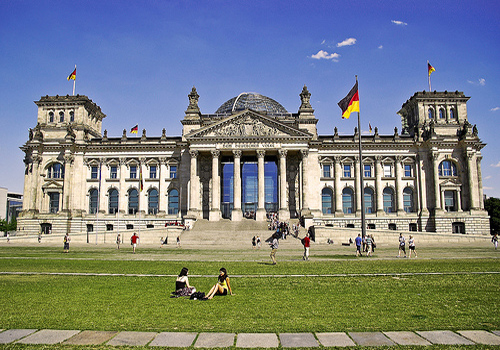
One of the latest 'in' places to dine in Berlin is the Dachgarten in the rooftop dome of the new futuristic Parliament building (the Reichstag). From the dome, in the historic centre of Berlin, there are amazing views across the city. The menu is delightful too, including healthy traditional cuisine like the light fish and venison dishes. Reservations are vital unless you wish to join a long queue.

Bamberger Reiter

Address: Regensburgerstrasse 7, Schöneberg Berlin

Food Type: Local

The renowned chef at the Bamberger Reiter, one of Berlin's leading restaurants, insists on using only fresh market produce to create his masterpieces of Austrian and new German cuisine, for a menu that changes daily. The restaurant is known for having the freshest fish in town and set menus of between five and eight courses are recommended daily, besides a range of à la carte choices. Typical dishes are roulade of quail, rack of lamb, bass with Riesling sauce, and the like. The décor is understated 'old Germany', resplendent with fresh flowers. The restaurant does not serve lunch and is closed Sundays and Mondays. Bookings are essential.

Grossbeerenkeller

Address: Grossbeerenstrasse 90, Kreuzberg Berlin

Food Type: Local

To experience some authentic old-fashioned warm Berlin hospitality, not to mention some great rib-sticking traditional dishes, dive into the dark depths of the cellar restaurant Grossbeerenkeller. With dark oak furniture and antlers adorning the walls, the setting is original to complement wholesome meals of diced pork with fries and herb sauce, or boiled salt pork and green cabbage. Owner/bartender Ingebork Zinn-Baier's fried potatoes are said to be the best in the city. The cellar is closed Sundays and does not accept credit cards.

Diekmann im Weinhaus Huth

Address: Alte Potsdamer Strasse 5, Tiergarten Berlin

Food Type: French

Emulating a Paris bistro the Weinhaus Huth is an interesting dining venue not because of its décor or a particularly outstanding menu, but because the building which houses it is the only original standing building left on the Potsdamer Platz, having survived the ravages of war and the demolition of the Berlin Wall. It is now surrounded by the shining new Sony centre and draws tourist interest. Highlights on the menu include tarte flambee and fresh oysters.

XII Apostel

Address: Bleibtreustrasse 49 Berlin

Food Type: Italian

You cannot beat the thin base pizzas that keep customers flocking to this lively restaurant in Charlottenberg. The XII Apostel is trendy and popular because of its novel idea of offering 12 pizza varieties, one named for each apostle of Jesus Christ. The biggest and tastiest is reputedly the Judas. The décor is flashy Italian Renaissance and the atmosphere is usually busy and bustling.

Zur Letzten Instanz

Address: Waisenstrase 14-16, Mitte Berlin

Food Type: Local

This historic establishment off Alexanderplatz should be on any visitor's sightseeing list not only for its hearty German comfort food (like Eisbein, potato dumplings, suckling pig and red cabbage) and tankards of beer, but also because it is the oldest restaurant in Berlin, documented as far back as 1525. The name, Zur Letzten Instanz, was inspired by a nearby courthouse and means 'without further appeal'. Napoleon is said to have dined here.

Florian

Address: Grolmanstrasse 52 Berlin

Food Type: Local

For more than 20 years Florian has been regarded as one of the top restaurants in the popular Savignyplatz, offering a daily changing menu based on Swabian (ancient German) cuisine with a French touch. The restaurant's legendary dish is Nurnberg grilled sausages and sauerkraut. The relaxed, friendly ambience draws a clientele of writers, artists and filmmakers who arrive late and stay till the small hours. Reservations are essential.

Schwarzenraben

Address: Neue Schonhauserstrasse 13, Prenzlauer Berg Berlin

Food Type: Italian

Two Italian brothers prepare the original new Italian cuisine in this chic and trendy restaurant where people come to see and be seen. The long, narrow dining room is not particularly attractive or comfortable, and it can be noisy, but it is the place to be in Berlin, whether dining upstairs or relaxing in the downstairs cocktail bar. Among the specialities are sea bass baked between eggplant slices, wild boar pâté with chocolate, or gnocchi with sausage and green olives. The chefs profess to know 150 fish recipes by heart, and stock 20 different types of salami. Reservations are essential.

Ganymed

Address: Schiffbauerdamm 5, Berlin-Mitte Berlin

Food Type: Local

Traditionally a popular spot to dine after the theatre, Ganymed has been around for decades serving good if not gourmet food in generous portions, gamely continuing to do business in East Berlin throughout the Cold War years. There are two formal dining rooms, one overlooking the Spree. Examples of menu highlights are goose liver terrine, Eisbein, schnitzels, mussels in Choron sauce and pheasant breast wrapped in Black Forest ham.

Apfelwein Wagner

Address: Schweizer Strasse 71 (Sachsenhausen) Frankfurt

Food Type: Local

This huge, wood-panelled old apple wine tavern is a classic that produces hearty German dishes, which are better than the many other similar taverns in the popular Sachsenhausen area. Dishes like the pork shoulder with sauerkraut, and liver dumpling can be enjoyed with a slow glass of apfelwien, or a choice of beer or cider. There is also a Menu of the Week with a special dish of the day each day. The atmosphere is fun, boisterous and crowded; seating is at communal tables with a mix of locals and visiting German businessmen. Open daily from 11am.

Erno's Bistro

Address: Liebigstrasse 15 (Westend) Frankfurt

Food Type: French

Erno's is one of the best restaurants in town and something of a Frankfurt culinary institution offering classic French cuisine such as lobster broth, quail spit and fresh fish dishes. There is an excellent wine list to make the meal even more memorable, as well as some sensational desserts. Erno's is a chic gourmet rendezvous that is always busy, so reservations are essential. Closed weekends.

Maingau Stuben

Address: Schifferstrasse 38-40 (Sachsenhausen) Frankfurt

Food Type: French

This upmarket restaurant is presided over by chef Werner Döpfner who serves contemporary dishes in a candlelit setting. Maingau Stuben is famous for its fresh fish and game meat that is carved at the table, and the cellar is full of rare German wines. Closed Monday. No lunch Saturday. No dinner Sunday.

Restaurant Français

Address: Frankfurter Hof Hotel, Am Kaiserplatz (City Centre) Frankfurt

Food Type: French

This stately restaurant is very conscious of upholding the high standard of the five-star hotel that it complements. It is an ideal venue for a formal, discreet occasion with a quiet and sophisticated atmosphere, elegant furnishings, attentive service and high quality food that is beautifully prepared and presented. The menu offers international fare that is light and French-inspired with delicacies such as quails in champagne and grape sauce. Open Monday to Friday. Reservations required.

Silk

Address: Hordend Strasse 30B, the Westend Frankfurt

Food Type: Modern Eclectic

The aptly named Silk is a 'bed restaurant' where patrons semi-recline on white leather beds and are served magnificent food in a setting of harmonious colours and soft lighting. Enclosed inside the CocoonClub, Silk pulls out all the stops to revolutionise the dining experience and is most likely the only restaurant in the world where the DJs outnumber the chefs. The restaurant features a waterbed, which is arguably the best 'table' in the restaurant, surrounded by a virtual aquarium. The fusion of high-class experimental cuisine, architecture and electronic music makes for a unique experience. Guests dine together with reception at 7.45pm and dinner service at 8.30pm, lasting for most of the evening. Dishes served up include such fare as lobster spiked with mango, Serrano ham, and lemon grass, as well as a rack of lamb with a sauerkraut risotto. The prix-fixe menu consists of several courses encouraging diners to make an evening of it. Silk is open Tuesday to Thursday until 3am and Friday and Saturday until 7am.

Bombay Gate

Address: Abtsgaesschen 8 / Ecke Wallstrasse Frankfurt

Food Type: Indian

Known locally as one of the finest Indian restaurants in Frankfurt, Bombay Gate uses only the freshest ingredients and spices and the mouth-watering aromas are enough to transport diners to Mumbai itself. With fine white linen tablecloths and an elegant and exotic atmosphere, diners can relax and enjoy authentic and inventive Indian dishes. Open Monday to Friday for lunch and dinner, Saturday and Sunday dinner only. Reservations accepted.

Alte Kanzlei

Address: Nidenau 50 Frankfurt

Food Type: Italian

Located in the Westend, the Alte Kanzlei is one of those restaurants that evokes a deep sense of history, and the deep mahogany wooden interior coupled with the crisp linen tablecloths and fine silverware creates a sophisticated, yet romantic ambience. Established in 1974, this classic Italian eatery specialises in serving authentic Italian fare from the region of Calabria. Try the spaghetti with prawns and lobster sauce or the veal fillet in pepper crust served with a chive sauce. Open Monday to Friday for lunch and dinner. Saturday dinner only. Closed Sundays. Reservations essential.

Opéra

Address: Opernplatz 1 Frankfurt

Food Type: International

Located on the first floor of the Old Opera House, there's no guessing where this restaurant gets its name. With a wonderfully historic and ornate décor and exciting and traditional cuisine, this restaurant has become one of Frankfurt's most popular. Diners can sample delicious Asian fare such as the Teriyaki from Yellowfin tuna on fried vegetables with Asian egg noodles or a traditional German Milchkalbrücken wiener schnitzel served with fried potatoes or potato salad and fresh leaf salad. Open daily for lunch and dinner. Reservations recommended.

Jewel of India

Address: Wilhelm-Hauff-Str. 5 Frankfurt

Food Type: Indian

One of Frankfurt's favourite Indian eateries, Jewel of India prepares traditional Indian cuisine and does not disappoint. The warm interior with burnt orange and yellow tapestries adorning the walls, juxtaposed by the cream linen tablecloths creates a warm and cosy dining environment. With favourites such as the Chicken mango curry, Rogan Josh and lamb Vindaloo, lovers of classic Indian cuisine will find themselves returning again and again. Open Monday to Friday for lunch and dinner, and Saturday and Sunday dinner only. Reservations recommended.

Mirador

Address: Bergerstraße 65 Frankfurt

Food Type: Spanish

This popular Spanish eatery has earned a reputation as one of Frankfurt's most popular restaurants with both young and old. The terrace affords patrons the opportunity to dine al fresco and the friendly waitstaff are attentive and helpful. The tapas served here is delicious! Try the Spanish omelette for breakfast or the tagliatelle with mozzarella and parma ham for a heartier meal. Open daily for lunch and dinner.

Café Glockenspiel

Address: Marienplatz 28 Munich

Food Type: International

For breathtaking views of Munich, the ideally situated and aptly-named Café Glockenspiel overlooks the famous Glockenspiel clock. With friendly and efficient wait staff and delicious and wholesome fare, the café is the most frequented in Munich and is a popular meeting place for locals and tourists alike and a great location to enjoy a spot of people watching either over a meal, sunny breakfast, coffee or after work drinks. Open daily for breakfast, lunch and dinner. Bookings recommended.

Hirschgarten

Address: Hirschgarten 1, Nymphenburg Munich

Food Type: German

A popular beer garden that sees locals mingling with international visitors, Hirschgarten is the largest open-air restaurant in Munich featuring hunting lodges and lakes and is an ideal location for tourists to mingle with the locals - over a couple (or more) of pints! Star off with potato, marjoram and bacon soup followed by prime boiled beef with fresh horseradish and salted boiled potatoes or the mouth-watering Roast venison from the haunch with a mushroom cream sauce, Swabian egg pasta and lingonberries. For something sweet try caramelised pancake slices with raisins and apple sauce. Delicious! Open daily for breakfast, lunch and dinner.

Tantris

Address: Johann Fichte Straße 7, Schwabing Munich

Food Type: Mediterranean

Serving some of Schwabing's finest haute cuisine, and boasting one of Munich's best chefs, the exterior of this restaurant is misleading, but step inside and you are magically transported into another world where fine wines and décor are accentuated with tantalisingly tasty and attractive dishes. The menus can cover three to eight courses and are offered for lunch and dinner. Try the Terrine of duck liver with braised figs and roasted duck breast, medallion of young venison saddle with red cabbage and semolina dumpling and let your taste buds be thrilled by the chocolate soufflé with marinated port wine figs and vanilla-brittle ice cream. Perfection! Open Tuesday to Saturday for lunch and dinner. Reservations essential.

There are no serious health risks in Germany. The German health service is excellent. There is a reciprocal health agreement with the UK and most EU countries, whose citizens are entitled to free medical and dental treatment on presentation of a European Health Insurance Card (EHIC). Nationals of other countries should take out medical insurance.
Visitors should carry passports with them at all times. Smoking in public places such as bars and restaurants is illegal.
German laws stipulates that all prices, menus and bills include both tax and a service charge, so tipping is not necessary in restaurants. Cleaning staff, hairdressers, taxi drivers etc. appreciate small tips.
Javascript is required to view this map.
Featured Cities in Germany
Toggle Electricity of Germany
Round pins. Description
Round pins.
Voltage
230 V
Frequency
50 Hz
Type
C
"Schuko" plug and receptable with side grounding contacts. Description
"Schuko" plug and receptable with side grounding contacts.
Voltage
230 V
Frequency
50 Hz
Type
F
Toggle Dialing Codes of Germany
Trip Tools
Toggle edit

International Weather


  • New York City
  • London
  • Hong Kong
  • New York CitySunny 28° /Sunny
  • LondonCloudy 15° /Cloudy
  • Hong KongThunder Storms 27° /Thunder Storms
© 2004 - 2010 TripExtras.com TripExtras.com is a trading style of Core8 Ltd which is an Appointed Representative of Astrenska Ltd. Astrenska Ltd is authorised and regulated by the Financial Services Authority under firm reference number 442233.
Top of Page Core8.com